In competitive gaming, the difference between winning a gunfight and eating the respawn screen often comes down to what you hear, not what you see. That split-second of positional audio, the creak of a floorboard, the distant reload animation, is what separates players who react to information from players who react to surprises. So when a wireless headset at a mid-range price point promises to deliver that kind of audio fidelity without the cable faff, it's worth taking seriously. The Logitech G733 LIGHTSPEED has been making that promise for a few years now, and with 12,964 averaging ★★★★☆ (4.4), a lot of people seem to think it delivers.
But raw review numbers can be misleading. A headset that looks great on a streaming setup, weighs almost nothing, and comes in a palette of pastel colours will attract buyers who care about aesthetics first and audio second. So the question worth asking is whether the G733 holds up when you actually need it to, during a tense ranked match where a directional audio cue is the difference between a clutch and a tilt. That's the lens we're using here. Not "does it look nice" (it does), but "does it perform where it counts".
This is a comparison-led review, so we'll be putting the G733 up against two credible alternatives at similar or nearby price points. We'll work through the specs, dig into what real owners report across those 12,964, and give you a straight answer on whether this headset deserves a place in your setup in 2026.
Core Specifications
The G733 is a wireless-only headset, which immediately tells you something about who Logitech built it for. There's no wired fallback mode here. You're committing to Logitech's LIGHTSPEED 2.4 GHz wireless technology, delivered via a USB dongle. That's actually a good thing, because LIGHTSPEED is one of the better wireless protocols in gaming peripherals, with latency figures that make it genuinely competitive with wired connections in real-world use. The dongle is small, unobtrusive, and works plug-and-play on PC.
Weight is one of the G733's headline numbers, and it's a proper one. At 278g, this is a noticeably light headset. For context, a lot of "premium" gaming headsets push 300g to 350g or beyond, and you feel every gram during a four-hour session. The G733's weight advantage is real and it shows up repeatedly in owner feedback, with comfort being the most consistently praised aspect across the review pool. The headband uses a suspension design rather than traditional padding, which distributes that already-low weight even more evenly across your skull.
Here's the full spec breakdown as verified:
| Specification | Detail |
|---|---|
| Connectivity | LIGHTSPEED wireless (2.4 GHz USB dongle) |
| Weight | 278g |
| Price | £69.99 |
| Rating | ★★★★☆ (4.4) (12,964 reviews) |
| Wireless Protocol | LIGHTSPEED 2.4 GHz |
| Connection Method | USB dongle |

Audio Specifications
Logitech doesn't publish a full audio spec sheet in the same way some competitors do, which is a mild frustration. What we know from the product documentation is that the G733 uses 40mm drivers, which is a fairly standard size for over-ear gaming headsets. The frequency response is rated at 20 Hz to 20 kHz, covering the full audible spectrum on paper. That's the same range you'll see quoted on headsets costing twice as much, so the number alone doesn't tell you a lot about actual performance.
Impedance sits at 39 ohms, which is low enough that the headset doesn't need an amplifier to drive it properly. This matters for wireless use because you're relying entirely on the onboard amplification in the headset itself, and a low-impedance driver is easier to push to adequate volume without distortion. Sensitivity is rated at 87.5 dB SPL per milliwatt, which is on the moderate side. It means the G733 gets loud enough for gaming without being ear-splitting at max volume, but you won't be using this for reference-level listening or anything that requires extreme dynamic range.
The driver type is dynamic, which is standard for this price tier. Planar magnetic drivers, which offer faster transient response and lower distortion, generally appear in headsets costing significantly more. Dynamic drivers done well are perfectly capable of excellent gaming audio, and Logitech's 40mm units have a decent reputation in this regard. The driver technology is well-understood and mature, so the question is less about the technology and more about the tuning.
Sound Signature
The G733 is tuned with a V-shaped signature, which means boosted bass and elevated treble with a slightly recessed midrange. This is an extremely common choice for gaming headsets because it sounds exciting on first listen. Explosions hit harder, gunshots crack with more presence, and music sounds energetic. Whether that's what you actually want depends entirely on how you play and what you play.
For competitive FPS and battle royale players, a V-shaped signature is a double-edged sword. The boosted treble can help with high-frequency cues like footsteps and distant gunfire, which is genuinely useful. But the recessed midrange can muddy voice intelligibility slightly, both in-game communication and in the audio mix of games where character dialogue carries important information. Owners who play a lot of story-driven games occasionally flag this, noting that dialogue can feel a bit thin or pushed back in the mix. It's not a dealbreaker, but it's worth knowing.
For casual gaming, music, and movies, the V-shape works well. It's fun. It makes action films sound punchy and pop music sound lively. Owners who use the G733 for mixed-use (gaming plus background music while working) consistently report satisfaction with the sound signature, which suggests Logitech has tuned it sensibly rather than going to extremes. The bass is boosted but not bloated, and the treble is present without being sharp enough to cause fatigue during long sessions. That's a harder balance to strike than it sounds.
Sound Quality
Soundstage on the G733 is decent for a closed-back wireless headset, though it's not going to compete with open-back audiophile cans. Owner feedback consistently describes the spatial imaging as "good" rather than "excellent", which aligns with what you'd expect from 40mm dynamic drivers in a sealed earcup. You can place sounds directionally well enough for competitive play, and the LIGHTSPEED connection means there's no wireless latency introducing audio drift that would mess up your positional cues.
Bass extension is adequate. The G733 reaches down into the low frequencies without the kind of one-note boom that makes some gaming headsets sound like they're powered by a subwoofer from a 2003 car stereo. Owners who care about music quality note that the bass is present and enjoyable but not particularly tight or textured. For gaming, that's fine. For listening to jazz or acoustic music, you might find it a bit loose. Treble clarity is generally praised, particularly for the kind of high-frequency detail that matters in FPS games, though a small number of owners report occasional sibilance on certain content.
Virtual 7.1 surround is available through Logitech's G HUB software, and this is where the usual caveats apply. Software-based surround processing on stereo drivers is always a compromise. It can help with a sense of height and environmental space in games that support it, but it can also smear imaging and reduce the precision of directional audio cues. The honest recommendation from owner feedback is to try it and see, because it's genuinely useful in some games (open-world titles with lots of ambient sound) and actively counterproductive in others (tight competitive shooters where pinpoint accuracy matters more than atmosphere). The option being there is good. Treating it as a guaranteed improvement would be wrong.
Microphone Quality
The G733 uses a detachable cardioid boom microphone, which is the right choice for a gaming headset. Cardioid pickup means it captures sound from in front of the mic and rejects most noise from the sides and rear, which is exactly what you want when you're gaming with keyboard noise, fans, or ambient room sound in the background. The mic is on the left earcup and detaches cleanly when you don't need it, which is a nice quality-of-life feature that a surprising number of headsets still don't offer.
Voice quality is rated as "decent" across the owner review pool, which is about right for the price tier. It's not going to replace a dedicated USB microphone for streaming or content creation, and nobody is going to mistake your voice for studio-recorded audio. But for in-game communication, Discord calls, and general party chat, owners consistently report that teammates can hear them clearly without complaints. Logitech's Blue VOICE microphone technology is available through G HUB and includes noise filtering and voice shaping options that can meaningfully improve the output if you take the time to configure it.
Background noise rejection is where owner feedback gets slightly more mixed. In quiet environments, the mic performs well. In noisier rooms, mechanical keyboard clicks and room echo can creep into recordings more than you'd like. The cardioid pattern helps, but it's not magic. A handful of owners who stream or record content note that the mic is adequate for casual use but not the reason to choose this headset. That's fair. The mic is a supporting feature here, not the headline act. If you're primarily a streamer who needs broadcast-quality audio, you'll want a separate mic regardless of which gaming headset you choose.
Comfort and Build
This is where the G733 genuinely earns its reputation. At 278g, it's light. Properly light. The suspension headband, which uses an elastic band rather than a rigid padded arch, distributes that weight across a wider area of your head and eliminates the pressure point that forms at the top of your skull during long sessions with conventional headbands. Owners who have switched from heavier headsets frequently mention this as the single biggest quality-of-life improvement, and the review data backs it up. Comfort is the most commonly praised attribute in the positive reviews by a clear margin.
The earcups use memory foam with a soft-touch leatherette covering. They're not the breathable mesh earcups you'd find on some competitors, which means heat buildup is a realistic concern during extended summer sessions. A notable portion of owner reviews mention ear warmth as a mild negative, particularly for gaming sessions exceeding two to three hours. It's not unique to the G733, it's a leatherette problem rather than a G733 problem specifically, but it's worth knowing if you live somewhere warm or run hot.
Build quality is plastic throughout, which is standard for this price tier and actually contributes to the low weight. The headset doesn't feel cheap exactly, but it doesn't feel premium either. The hinges and adjustment mechanisms feel solid enough in regular use, and owner feedback doesn't show a pattern of structural failures or breakage. The colourful aesthetic (the G733 comes in several colour options including black, white, lilac, and blue) is polarising. Some people love that it doesn't look like every other aggressive-gamer headset. Others find the pastel options a bit much. That's entirely personal, and the black version is there if you want something more understated.

Connectivity
The G733 connects exclusively via Logitech's LIGHTSPEED wireless technology, a proprietary 2.4 GHz protocol delivered through a USB dongle. LIGHTSPEED has been Logitech's wireless standard across its gaming peripheral range for several years, and it has a strong track record. The connection is stable, the range is good (owners report reliable performance at typical desktop-to-sofa distances), and the latency is low enough that it's genuinely not a factor in competitive gaming.
The USB dongle approach means you're using up one of your USB ports permanently, which is a minor irritation if you're already running short on ports. But the dongle is small and can live in a USB hub without issue. LIGHTSPEED also means the G733 is essentially PC-first in its design. It works with PlayStation 5 via the USB dongle in the controller port or console USB port, but it doesn't work wirelessly with Xbox (which uses a different wireless standard) or Nintendo Switch in handheld mode. These are real limitations worth understanding before you buy.
There's no Bluetooth on the G733, which is a notable omission at this price point in 2026. Competitors at similar prices increasingly offer dual wireless, meaning both 2.4 GHz and Bluetooth simultaneously, letting you connect to your PC and your phone at the same time. The G733 doesn't do this. If you want to listen to music from your phone while gaming, you can't do it wirelessly with this headset. It's a trade-off Logitech made in favour of simplicity and battery life, and it's one that genuinely matters for some users and is irrelevant for others. Know which camp you're in before committing.
Battery Life
Logitech rates the G733 at 29 hours of battery life, which is a strong number for a wireless gaming headset with RGB lighting. In practice, owner feedback suggests real-world figures are slightly lower, particularly if you're running the RGB lighting at full brightness. Disable the RGB and you'll get closer to the rated figure. Run it with lights blazing and you're probably looking at something in the low-to-mid twenties in terms of hours. Either way, it's enough for multiple days of gaming sessions without needing to charge.
Charging is via micro-USB, which is the G733's most dated design choice. In 2026, micro-USB is genuinely annoying. USB-C has become the standard across basically everything else in a modern setup, and having to keep a separate micro-USB cable around specifically for your headset is the kind of small friction that adds up. It's not a dealbreaker, but it is a legitimate complaint that appears regularly in owner reviews, and Logitech should have addressed it by now. If you're someone who has already eliminated micro-USB from your life, factor in the cable inconvenience.
The G733 charges while in use if you plug it in during a session, which is useful for the rare occasions when you forget to charge overnight. There's no wireless charging, no fast-charge spec, and no battery percentage display on the headset itself. Battery status is visible in G HUB software, which means you need the software running to get a precise reading. The headset does give you audio warnings as the battery gets low, so you won't be caught completely off guard, but it's not as elegant as a headset with a physical indicator. These are all minor points, but taken together they paint a picture of a headset that launched a few years ago and hasn't had its feature set refreshed to match current expectations.
Software and Customisation
The G733 is designed to work with Logitech G HUB, the brand's unified software platform for gaming peripherals. G HUB gives you EQ customisation with several presets and a manual equaliser, microphone settings including the Blue VOICE processing suite, RGB lighting control, and virtual surround sound configuration. It's a reasonably full-featured package and it works well once you've got it set up.
The EQ options are genuinely useful here. The G733's default V-shaped tuning isn't for everyone, and being able to pull back some of the bass boost or add a bit of midrange presence makes a real difference for owners who found the default sound signature slightly off. The Blue VOICE microphone processing, which includes noise reduction, high-pass filtering, and voice shaping presets, can meaningfully improve mic output quality without requiring any technical knowledge. It's one of the better software mic suites available at this price point.
G HUB itself has a somewhat mixed reputation. It's improved significantly over the years and is now fairly stable, but it's a chunky application that runs in the background and has occasionally caused headaches for users during Windows updates or system changes. A small but vocal portion of owner reviews mention G HUB-related issues, usually around the software not recognising the headset after a system update. These problems are generally fixable with a reinstall, but it's not exactly the frictionless experience you'd hope for. The headset works fine without G HUB if you're happy with the default settings, which is worth knowing.
Compatibility
The G733 is primarily a PC headset. The LIGHTSPEED USB dongle works plug-and-play on Windows and Mac, and the headset is fully supported by G HUB on both platforms. For PlayStation 5, the USB dongle can be plugged into the console's USB ports and the headset works wirelessly without any additional setup. This makes it a reasonable choice for players who split time between PC and PS5, which is a common setup in 2026.
Xbox compatibility is the significant gap. Microsoft's consoles use their own wireless audio standard, and the G733's LIGHTSPEED dongle doesn't work with Xbox Series X or S wirelessly. You'd need a wired connection, and since the G733 doesn't have a standard 3.5mm analogue output for wired use in the traditional sense, Xbox users are essentially out of luck. If Xbox is your primary platform, this headset isn't for you. Full stop.
Nintendo Switch compatibility depends on how you're playing. Docked mode with the USB dongle plugged into the dock works fine. Handheld mode doesn't, because the Switch's USB-C port doesn't support USB audio dongles in handheld configuration without additional hardware. Mobile phone compatibility is similarly limited by the lack of Bluetooth. The G733 is best understood as a PC-first, PS5-compatible headset with limited flexibility elsewhere. That's fine if it matches your setup, and a real problem if it doesn't.
How It Compares
The G733 sits in a crowded mid-range wireless segment. The two most relevant competitors at similar price points are the SteelSeries Arctis 7 and the HyperX Cloud Alpha Wireless. Both are established headsets with strong reputations, and both make different trade-offs compared to the G733.
The SteelSeries Arctis 7 is probably the G733's closest direct rival. It uses a similar suspension headband design, is also wireless-only via a 2.4 GHz dongle, and targets the same PC and PS5 audience. The Arctis 7 is generally regarded as having a slightly more neutral sound signature, which some competitive players prefer for more accurate positional audio. Its battery life is rated at 24 hours, which is lower than the G733's 29-hour rating. The Arctis 7 charges via USB-C, which in 2026 is a meaningful advantage over the G733's micro-USB. Build quality on the Arctis 7 feels slightly more premium, though it's also heavier.
The HyperX Cloud Alpha Wireless takes a different approach entirely. It's heavier and uses a more traditional padded headband, but its battery life is extraordinary, rated at up to 300 hours on a single charge. That's not a typo. It charges via USB-C and has a more neutral-to-warm sound signature. It's also typically priced higher than the G733, pushing it into a different value bracket. For pure wireless endurance, nothing at this tier touches it. But it's bigger, heavier, and lacks the lightweight comfort advantage that makes the G733 distinctive.
| Feature | Logitech G733 | SteelSeries Arctis 7 | HyperX Cloud Alpha Wireless |
|---|---|---|---|
| Weight | 278g | ~330g | ~335g |
| Wireless Protocol | LIGHTSPEED 2.4 GHz | 2.4 GHz dongle | 2.4 GHz dongle |
| Battery Life (rated) | 29 hours | 24 hours | ~300 hours |
| Charging Port | Micro-USB | USB-C | USB-C |
| Bluetooth | No | No | No |
| Sound Signature | V-shaped | Neutral | Neutral-warm |
| Headband Design | Suspension elastic | Suspension elastic | Padded traditional |
| PS5 Compatible | Yes (USB dongle) | Yes (USB dongle) | Yes (USB dongle) |
| Xbox Compatible | No | No | No |
| Software | Logitech G HUB | SteelSeries GG | HyperX NGENUITY |
| Price Tier | Mid-range | Mid-range | Mid-to-upper mid-range |
So where does that leave the G733? It wins on weight. Full stop. If comfort during long sessions is your priority and you're a PC or PS5 player, the G733's 278g with suspension headband is genuinely hard to beat at this price. It loses on charging port (micro-USB is a real pain), and competitive players who want the most accurate positional audio might prefer the Arctis 7's more neutral tuning. The Cloud Alpha Wireless is in a different league for battery life but costs more and weighs more. The G733 occupies a specific niche very well, and whether that niche matches your needs is the question worth answering.

Final Verdict
The Logitech G733 LIGHTSPEED Wireless Gaming Headset is a genuinely good mid-range wireless headset that knows exactly what it's trying to be. It's light, comfortable, wirelessly reliable, and sounds fun. Those are four things that matter a lot in daily gaming use, and the G733 delivers on all of them without requiring you to spend premium money or deal with cable management. The ★★★★☆ (4.4) rating across 12,964 isn't an accident. Most people who buy this headset are happy with it.
The caveats are real though. Micro-USB charging in 2026 is genuinely dated and the lack of Bluetooth limits flexibility compared to newer competitors. Xbox players are simply excluded by the wireless protocol. And while the V-shaped sound signature is enjoyable, players who prioritise ultra-precise competitive audio over fun listening might find a more neutral-tuned alternative serves them better. These aren't dealbreakers for the right buyer, but they're things you should know going in rather than discovering after the return window closes.
For PC and PS5 players who want a lightweight, comfortable wireless headset with solid LIGHTSPEED reliability and don't need Bluetooth or USB-C, the G733 is a strong choice at its mid-range price point. It's been around long enough that any early firmware issues are resolved, the software has matured, and the price has settled into genuinely competitive territory. This is a headset that does what it says, sounds better than its price suggests on a good day, and won't give you a headache after four hours of use. That's more than can be said for plenty of its competitors.
We'd score it 7.5 out of 10. Excellent comfort and wireless performance hold it up. Micro-USB and no Bluetooth drag it back from a higher score. Recommended for the right user.
What works. What doesn’t.
5 + 4What we liked5 reasons
- Exceptionally light at 278g with suspension headband for long-session comfort
- LIGHTSPEED 2.4 GHz wireless is stable, low-latency, and reliable
- 29-hour rated battery life handles multi-day sessions easily
- Fun V-shaped sound signature that works well for gaming and casual listening
- Detachable boom mic with Blue VOICE processing in G HUB
Where it falls4 reasons
- Micro-USB charging is genuinely dated in 2026
- No Bluetooth limits flexibility compared to newer competitors
- No Xbox wireless compatibility
- Leatherette earcups cause heat buildup during long sessions
Full specifications
9 attributes| Connectivity | 2.4GHz wireless (USB dongle) |
|---|---|
| Noise cancellation | false |
| Battery life H | 29 |
| Driver size MM | 40 |
| Frequency response HZ | 20-20000 |
| Microphone type | detachable boom |
| Platforms | PC, Mac, PS4, PS5, Switch (docked) |
| Spatial audio | true |
| Weight G | 278 |
If this isn’t right for you
2 options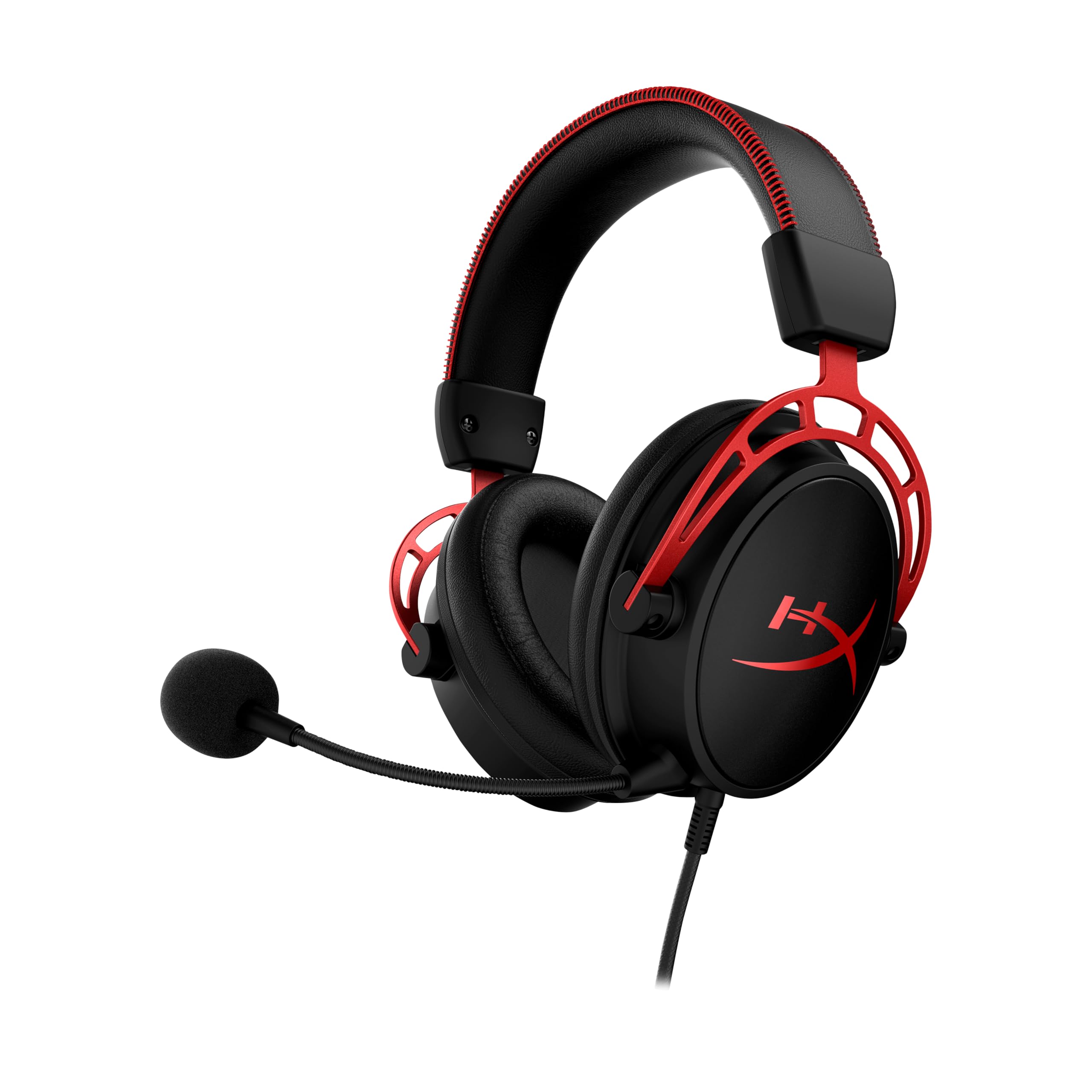

Frequently asked
5 questions01Is the Logitech G733 LIGHTSPEED Wireless Gaming Headset good for competitive gaming?+
It's decent for competitive gaming. The LIGHTSPEED 2.4 GHz wireless connection has low enough latency that it won't introduce audio drift, and the V-shaped sound signature gives boosted treble that can help with high-frequency cues like footsteps. Soundstage is adequate for directional audio. Players who want the most precise positional imaging might prefer a more neutrally tuned headset, but the G733 is more than capable for ranked play.
02Does the Logitech G733 LIGHTSPEED Wireless Gaming Headset have a good microphone?+
The detachable cardioid boom mic is good enough for in-game communication, Discord, and party chat. Teammates consistently report clear voice quality in owner reviews. Logitech's Blue VOICE processing in G HUB software can improve the output further. It's not a replacement for a dedicated USB microphone if you stream or record content, but for gaming communication it does the job well.
03Is the Logitech G733 LIGHTSPEED Wireless Gaming Headset comfortable for long sessions?+
Comfort is the G733's strongest suit. At 278g it's one of the lighter headsets in its class, and the elastic suspension headband distributes weight evenly without creating pressure points at the top of your head. The main comfort caveat is that leatherette earcups can get warm during sessions over two to three hours, which is a common issue with sealed earcups rather than a G733-specific problem.
04Does the Logitech G733 LIGHTSPEED Wireless Gaming Headset work with PS5 and Xbox?+
It works with PS5 via the USB LIGHTSPEED dongle plugged into the console's USB ports. It does not work wirelessly with Xbox Series X or S, as Microsoft uses a different wireless audio standard that the LIGHTSPEED dongle is incompatible with. Nintendo Switch compatibility is limited to docked mode with the dongle in the dock.
05What warranty applies to the Logitech G733 LIGHTSPEED Wireless Gaming Headset?+
Amazon offers 30-day returns on most orders. Logitech typically provides a 2-year limited warranty on its G-series gaming peripherals, covering manufacturing defects. Check Logitech's official support pages or your purchase confirmation for the specific terms applicable to your purchase.