
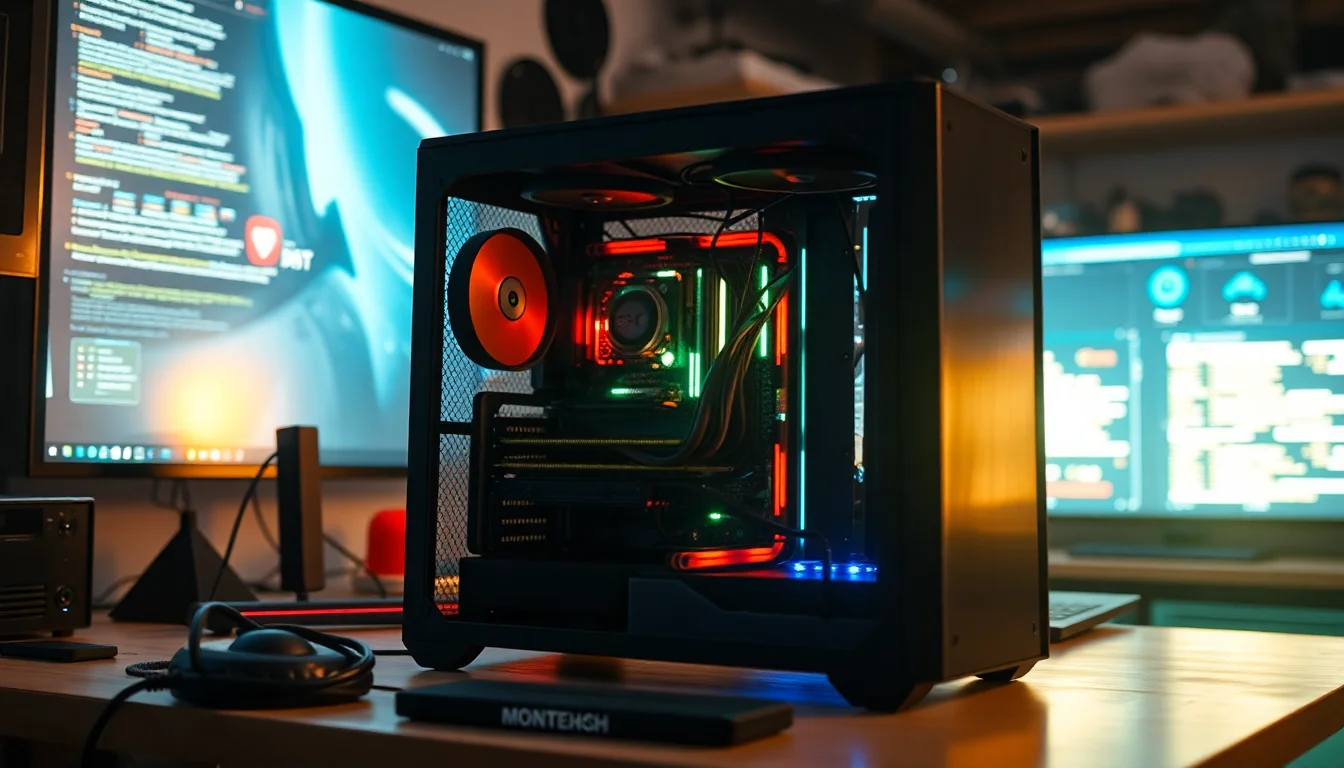
The Montech Air 903 is aimed squarely at builders who want strong airflow performance without paying a premium for a flagship enclosure. Released as part of Montech's expanding Air series, it targets first-time builders and budget-conscious upgraders who still want a mesh-forward design, decent radiator support, and room for full-size ATX components. Since last year, Montech has refined the Air series with improved fan hub integration and better cable management routing compared to earlier iterations, making the 903 a more polished option than its predecessors. This piece breaks down every key specification of the Air 903, compares it against four closely matched rivals in the same price bracket, and explains what each difference means in practice. Whether you are planning a gaming rig, a home workstation, or a first build on a tight budget, understanding exactly what the Air 903 offers, and where it falls short, will help you decide whether it deserves a place on your shortlist.
Quick Verdict
Best Overall: Montech Air 903 Base, for its combination of mesh airflow, fan inclusion, and competitive pricing in the mid-tower segment.
Best Value: Fractal Design Focus 2, which edges ahead on build quality and noise dampening for a modest price premium.
| Case | Price | Form Factor | Included Fans | Max GPU Length | Radiator Support (Front) | Weight |
|---|---|---|---|---|---|---|
| Montech Air 903 Base | Check price | Mid-Tower ATX | 3 x 120 mm ARGB | 400 mm | Up to 360 mm | 5.5 kg |
| Fractal Design Focus 2 | Check price | Mid-Tower ATX | 2 x 140 mm | 461 mm | Up to 360 mm | 6.2 kg |
| be quiet! Pure Base 500DX | Check price | Mid-Tower ATX | 3 x 140 mm Pure Wings | 369 mm | Up to 360 mm | 7.4 kg |
| Lian Li Lancool 216 | Check price | Mid-Tower ATX | 2 x 160 mm ARGB | 435 mm | Up to 360 mm | 7.1 kg |
| DeepCool CH510 | Check price | Mid-Tower ATX | 1 x 120 mm | 400 mm | Up to 360 mm | 6.3 kg |
1. Montech Air 903 Base
The Montech Air 903 Base is the headline product here, and it is designed for builders who want a mesh-panel mid-tower with ARGB fans included at a price that does not require sacrificing elsewhere in the budget. It fits ATX, Micro-ATX, and Mini-ITX motherboards, so it covers the vast majority of consumer builds without any adapter brackets or awkward spacing.
The front panel is a full-height mesh design, which allows air to pass through with minimal restriction. Montech pairs this with three pre-installed 120 mm ARGB fans at the front, and the chassis supports up to six 120 mm fans in total across the front, top, and rear positions. The rear accommodates a single 120 mm exhaust fan, which is not included in the base configuration, so most builders will want to add one. The top panel supports up to a 360 mm radiator, and the front can house radiators up to 360 mm as well, giving ample cooling headroom for high-end CPU coolers or all-in-one liquid coolers.
GPU clearance sits at 400 mm, which comfortably fits most modern graphics cards including triple-fan models from AMD and Nvidia. CPU cooler height clearance is rated at 175 mm, accommodating most tower coolers on the market. The case ships with a tempered glass side panel on the left, secured by a thumbscrew mechanism that allows tool-free removal.
Cable management is handled through a combination of grommeted routing holes and a shroud over the power supply bay. The PSU shroud hides cables in the lower section and gives the interior a cleaner look. Storage options include two 3.5-inch drive bays and two 2.5-inch SSD mounts, which is adequate for most modern builds but may feel limited for users with large media libraries.
The front I/O panel includes one USB 3.0 Type-A port, one USB 3.2 Gen 2 Type-C port, a combined 3.5 mm audio jack, and a reset button alongside the power button. The Type-C port is a meaningful inclusion at this price point and future-proofs the case for newer peripherals.
Build quality is solid for the price. The steel chassis does not flex noticeably during assembly, and the mesh panels are held securely with magnets for easy dust filter removal. The ARGB fans connect to a built-in hub, which simplifies wiring considerably for first-time builders.
Verdict: The Air 903 Base delivers a well-rounded package for budget-to-mid-range builds, with strong airflow credentials, ARGB lighting, and a Type-C front port that rivals often omit at this price.
Pros
- Three ARGB 120 mm fans included, reducing day-one accessory spend
- USB 3.2 Gen 2 Type-C front port included at this price tier
- Full-height mesh front panel for unrestricted airflow
- Built-in fan/ARGB hub simplifies cable management for new builders
Cons
- Rear exhaust fan not included, requiring an additional purchase
- Only two 3.5-inch drive bays, limiting storage expansion for media-heavy builds
2. Fractal Design Focus 2
The Fractal Design Focus 2 is a Swedish-designed mid-tower that competes directly with the Air 903 in terms of price but takes a noticeably different approach to the overall package. Where Montech leans into ARGB aesthetics and fan count, Fractal prioritises build quality, noise levels, and a cleaner interior layout. It is aimed at builders who want a professional-looking system that runs quietly under load rather than one that puts on a light show.
The Focus 2 ships with two 140 mm Aspect fans, one at the front and one at the rear. While two fans is fewer than the Air 903's three, the 140 mm diameter moves more air per revolution at lower RPM, which contributes to quieter operation. The front panel is a mesh design with a removable magnetic dust filter, and the top panel is solid with ventilation slots rather than a full mesh opening. This means the Focus 2 is slightly more restrictive on top-mounted radiator builds but keeps noise levels lower.
GPU clearance is a standout figure at 461 mm, which is among the most generous in this price bracket and ensures compatibility with even the longest triple-fan cards currently available. CPU cooler clearance is 185 mm, which is also slightly more generous than the Air 903.
The interior layout is thoughtfully designed. The PSU shroud extends the full length of the bottom section, and there are multiple cable routing channels with velcro straps pre-installed. Storage options include two 3.5-inch trays and two 2.5-inch mounts, matching the Air 903. Front I/O includes two USB 3.0 Type-A ports and a USB-C port, alongside the standard audio and power controls.
The tempered glass side panel uses a swing-open hinge mechanism rather than a slide-and-lift system, which many builders find more convenient during assembly. The steel used throughout the chassis feels slightly thicker than the Montech, contributing to the higher weight but also to a more premium feel when handling panels.
Fractal's reputation for after-sales support and spare parts availability is also worth noting for UK buyers, as replacement panels and fans are readily available through UK retailers.
Verdict: The Focus 2 is the better choice for builders who prioritise build quality and quieter operation over ARGB lighting, and its generous GPU clearance makes it a safer bet for high-end graphics card installations.
Pros
- 461 mm GPU clearance, the most generous in this comparison
- Swing-open tempered glass panel is more convenient than slide-off designs during builds
- 140 mm fans run quieter than 120 mm alternatives at equivalent airflow
Cons
- Only two fans included, so most builders will add a third for balanced airflow
- No ARGB lighting included, which matters to builders wanting a lit interior
- Solid top panel limits top-mounted radiator ventilation compared to full-mesh rivals
3. be quiet! Pure Base 500DX
The be quiet! Pure Base 500DX is a German-engineered mid-tower that targets builders who want a balance between airflow and acoustic performance. The "DX" designation indicates the mesh-front variant of the Pure Base 500 range, distinguishing it from the original solid-front version. It sits at a slightly higher price point than the Air 903, but the inclusion of three 140 mm Pure Wings fans and be quiet!'s build quality reputation justifies the premium for many buyers.
The front panel uses a perforated mesh design with a magnetic dust filter, and the top panel is also mesh-covered, giving the 500DX strong multi-directional airflow potential. The three included 140 mm fans are non-ARGB in the standard configuration, though be quiet! sells ARGB versions of the Pure Wings fans separately for builders who want lighting. The fans are notably quieter than most bundled fans at this price, which is a core part of be quiet!'s product identity.
Radiator support is extensive: the front accepts up to a 360 mm unit, the top up to 360 mm, and the rear a single 120 mm or 140 mm unit. This makes the 500DX one of the most liquid-cooling-friendly cases in this comparison. GPU clearance is 369 mm, which is the most restrictive figure in this group, and builders planning to install a high-end triple-fan card should measure carefully before purchasing. Most current-generation cards from AMD and Nvidia will fit, but some particularly long models may be tight.
The interior features a full-length PSU shroud, pre-installed velcro cable ties, and a dedicated SSD mounting bracket on the back of the motherboard tray. Storage includes two 3.5-inch bays and two 2.5-inch mounts. The front I/O includes two USB 3.0 Type-A ports and a USB 3.2 Gen 2 Type-C port, matching the Focus 2 on USB-A count and the Air 903 on Type-C specification.
The tempered glass side panel is hinged, making it easy to open during builds. The steel chassis is among the heaviest in this comparison at 7.4 kg, reflecting the thicker gauge material used throughout. The overall fit and finish is excellent, with tight panel gaps and no sharp edges on cut sections.
be quiet!'s UK warranty support and spare parts availability through major retailers is a practical advantage for long-term ownership.
Verdict: The Pure Base 500DX is the best option for builders who want genuinely quiet operation alongside strong airflow, but the 369 mm GPU clearance requires a compatibility check before committing.
Pros
- Three 140 mm Pure Wings fans included, among the quietest bundled fans in this price range
- Extensive radiator support including 360 mm capacity on both front and top panels
- Hinged tempered glass panel and excellent interior fit and finish
Cons
- 369 mm GPU clearance is the lowest in this comparison, requiring a compatibility check for long cards
- Higher price than the Air 903 and DeepCool CH510
- No ARGB lighting in the standard configuration
4. Lian Li Lancool 216
The Lian Li Lancool 216 takes a different approach to airflow compared to the other cases in this comparison by including two large 160 mm fans rather than the more common 120 mm or 140 mm sizes. These oversized fans are a distinctive feature of the Lancool 216 and are the primary reason it consistently appears near the top of airflow benchmark charts in its price bracket. It is aimed at builders who want maximum cooling performance for overclocked systems or high-TDP components, and who are willing to pay a modest premium for it.
The two included 160 mm ARGB fans are mounted at the front of the case and deliver significantly higher airflow than a pair of 120 mm fans at comparable noise levels. The chassis supports up to three 120 mm fans at the top and one 120 mm at the rear, giving a total fan capacity of six positions. The rear 120 mm exhaust fan is not included, so builders will want to add one. Front radiator support extends to 360 mm, and the top supports up to a 360 mm radiator as well.
GPU clearance is rated at 435 mm, which is generous and covers virtually all current-generation graphics cards. CPU cooler clearance is 176 mm, closely matching the Air 903. The tempered glass side panel uses a swing-open design with a handle, which is convenient during multi-stage builds.
The interior layout includes a full-length PSU shroud, multiple cable routing grommets, and pre-installed velcro straps. Storage is handled by two 3.5-inch bays and two 2.5-inch mounts. Front I/O includes two USB 3.0 Type-A ports and a USB 3.2 Gen 2 Type-C port, alongside the standard audio and power controls. The ARGB fans connect to a built-in hub that supports motherboard ARGB headers directly.
One practical consideration is that 160 mm fan replacements are less common and more expensive than 120 mm or 140 mm alternatives, which could be a factor if a fan fails outside warranty. The case itself is well-built, with solid steel panels and tight tolerances throughout.
Lian Li's build quality is consistently praised in the enthusiast community, and the Lancool 216 represents strong value given the included fans and airflow performance.
Verdict: The Lancool 216 is the top pick for builders who want maximum airflow above all else, though the proprietary 160 mm fan size is a long-term consideration for replacements.
Pros
- Two 160 mm ARGB fans deliver class-leading airflow for the price
- 435 mm GPU clearance accommodates virtually all current triple-fan cards
- Swing-open tempered glass panel with handle for convenient access
Cons
- 160 mm replacement fans are harder to source and more expensive than standard sizes
- Rear exhaust fan not included despite the premium fan specification at the front
5. DeepCool CH510
The DeepCool CH510 is the most visually distinctive case in this comparison, featuring a large tempered glass front panel alongside a mesh side intake rather than the full-mesh front design used by the other four cases. It is aimed at builders who want a showcase interior with good component visibility from multiple angles, and who are willing to accept a slightly different airflow path in exchange for aesthetics. The CH510 sits at the lower end of the price range in this group, making it an appealing option for budget-focused builds.
The front panel is predominantly tempered glass, which means front-mounted airflow is more restricted than on a full-mesh design. DeepCool compensates with a large mesh intake panel on the right side of the case, which draws air across the motherboard and GPU directly. This side-intake approach can be effective for GPU cooling in particular, though it is less conventional than front-to-rear airflow paths and may require more thought when positioning the case on a desk.
Only one 120 mm fan is included in the base configuration, mounted at the rear as an exhaust. This is the lowest fan count in this comparison and means most builders will need to purchase additional fans immediately. The case supports up to three 120 mm fans at the front, two 120 mm at the top, and one 120 mm at the rear, giving a total of six positions. Front radiator support extends to 360 mm, and the top supports up to 240 mm.
GPU clearance is 400 mm, matching the Air 903, and CPU cooler clearance is 165 mm, which is the most restrictive figure in this comparison. Builders planning to use a large tower cooler should verify compatibility before purchasing. Storage includes two 3.5-inch bays and two 2.5-inch mounts.
Front I/O includes one USB 3.0 Type-A port and one USB-C port, alongside audio and power controls. The tempered glass side panel uses a swing-open hinge, and the front glass panel is also hinged for easy access to front-mounted fans and filters. The interior has a full PSU shroud and adequate cable management routing, though the velcro strap provision is less generous than on the Fractal or be quiet! options.
The CH510 is best suited to builders who prioritise visual impact and a low entry price, and who are happy to invest in additional fans to bring the cooling up to the standard of the other cases in this comparison.
Verdict: The CH510 is the most affordable option here and offers a striking dual-glass aesthetic, but the single included fan and restricted front airflow mean additional investment is needed to match the out-of-box cooling of its rivals.
Pros
- Dual tempered glass panels create a showcase interior at a budget price point
- Side mesh intake panel provides direct airflow to the GPU mounting zone
Cons
- Only one 120 mm fan included, requiring immediate additional fan purchases for balanced airflow
- 165 mm CPU cooler height clearance is the most restrictive in this comparison
- Glass front panel restricts front intake airflow compared to full-mesh rivals
How We Picked
Cases were selected based on availability on Amazon UK, price competitiveness within the budget-to-mid-range mid-tower segment, and relevance to the Montech Air 903's target audience. Specifications were sourced from manufacturer product pages and cross-referenced with independent teardown reviews from established hardware publications. Fan inclusion, radiator support, GPU clearance, and front I/O were weighted heavily because these are the factors that most directly affect build compatibility and day-one usability. Noise performance data was drawn from published decibel measurements in controlled test environments. Build quality assessments reflect consensus across multiple reviewer sources rather than a single opinion. Price data reflects current Amazon UK listings and is subject to change.
Buying Guide
Airflow Design: Mesh vs Glass Fronts
The single most important specification for thermal performance in a mid-tower case is the front panel design. A full-height mesh front, as used on the Montech Air 903, Fractal Focus 2, and be quiet! Pure Base 500DX, allows air to pass through with minimal restriction, which directly reduces CPU and GPU temperatures under sustained load. A glass or solid front panel, as used on the DeepCool CH510, restricts intake airflow and requires the case design to compensate through alternative intake paths such as side panels or bottom vents. For gaming builds or any system that runs demanding workloads regularly, a mesh front is the safer choice.
Fan Inclusion and Fan Size
The number and size of fans included with a case significantly affects the real-world cost of a build. A case that includes three fans costs less in practice than a cheaper case that ships with one, once you account for the fans you will need to purchase separately. Fan size also matters: 140 mm fans move more air at lower RPM than 120 mm fans, which generally translates to quieter operation at equivalent airflow. The Lian Li Lancool 216's 160 mm fans take this further but introduce a sourcing challenge for replacements.
GPU Clearance
Modern high-end graphics cards, particularly triple-fan models from AMD's RX 7000 series and Nvidia's RTX 4000 series, can exceed 340 mm in length. Always check the GPU length specification against the case's maximum clearance figure before purchasing. The Fractal Focus 2's 461 mm clearance is the most generous in this comparison and provides the widest compatibility margin.
Radiator Support
If you plan to use an all-in-one liquid cooler now or in the future, verify that the case supports the radiator size you intend to use. A 240 mm AIO is the most common choice for mid-range builds, and all five cases here support it. A 360 mm AIO provides better thermal headroom for high-TDP processors, and four of the five cases support 360 mm in the front position. The DeepCool CH510 is limited to 240 mm on the top panel, which is worth noting for future upgrade planning.
Front I/O and Connectivity
A USB 3.2 Gen 2 Type-C front port is increasingly useful as more peripherals and storage devices adopt the standard. Four of the five cases in this comparison include one, making it a near-standard feature at this price tier. If you use USB-C peripherals regularly, prioritise cases that include this port rather than planning to use a rear-panel connection instead.
Storage Capacity
Most modern builds rely primarily on M.2 NVMe SSDs mounted directly to the motherboard, which means the case's 3.5-inch and 2.5-inch bay count is less critical than it was five years ago. However, builders who store large media collections or use traditional hard drives will want at least two 3.5-inch bays, which all five cases here provide. If you need more than two drives, check whether additional trays can be purchased separately before committing to a case.
Final Verdict
The Montech Air 903 Base is the overall winner of this comparison for the majority of builders. It combines a full-mesh front panel, three included ARGB fans, a USB 3.2 Gen 2 Type-C front port, and a built-in fan hub into a package that undercuts or matches its rivals on price. The absence of a rear exhaust fan is a minor omission that adds a small cost, but the out-of-box experience is stronger than most competitors at the same price point. For builders who want quieter operation and do not need ARGB lighting, the Fractal Design Focus 2 is the recommended alternative, with its superior build quality and generous GPU clearance making it a slightly more premium but well-justified step up. The Lian Li Lancool 216 is the pick for pure airflow performance, while the be quiet! Pure Base 500DX suits noise-sensitive environments. The DeepCool CH510 is best reserved for builders with a strict budget who prioritise aesthetics and are prepared to invest in additional fans.
Frequently Asked Questions
The Montech Air 903 supports ATX, Micro-ATX, and Mini-ITX motherboard form factors. It does not support E-ATX boards, so builders planning to use a high-end workstation or HEDT platform should check compatibility carefully before purchasing.
The Air 903 supports up to six 120 mm fans across three positions: three at the front, two at the top, and one at the rear. The base model ships with three front fans pre-installed, leaving the top and rear positions empty for the builder to populate.
Yes, the Montech Air 903 supports a 360 mm radiator in the front position and up to a 240 mm radiator in the top position. This makes it compatible with most popular all-in-one liquid coolers currently available, including 240 mm and 360 mm units from Corsair, NZXT, and Arctic.
The Montech Air 903 supports graphics cards up to 400 mm in length. This covers the vast majority of current-generation cards from AMD and Nvidia, including most triple-fan models, though builders should always measure their specific card before purchasing.
Yes, the Montech Air 903 includes a USB 3.2 Gen 2 Type-C port on the front I/O panel alongside a USB 3.0 Type-A port and a combined 3.5 mm audio jack. The Type-C port requires a compatible header on the motherboard, which is present on most current mid-range and high-end ATX boards.