Gaming headsets have evolved dramatically over the past year, with budget options now delivering features once reserved for premium tiers. If you stream on Twitch, YouTube or Discord, a quality headset under £75 is no longer a compromise, it's the smart choice. This year's crop of streaming headsets emphasises low-latency wireless connectivity, clear microphones optimised for voice capture, and cross-platform compatibility across PC, PlayStation and Xbox. Here's which budget headsets genuinely deliver broadcast-quality audio without inflating your setup costs.
Quick Verdict
Best Overall: Tatybo 2.4Hz Wireless Gaming Headset, delivers 7.1 surround sound, 40+ hour battery life, and rock-solid 2.4GHz connectivity at an unbeatable price point.
Best Value: FIFINE Gaming USB Headset, USB and 3.5mm connections in one headset, 7.1 surround via USB and a detachable gooseneck boom mic with in-line volume and mute.
Specification Comparison
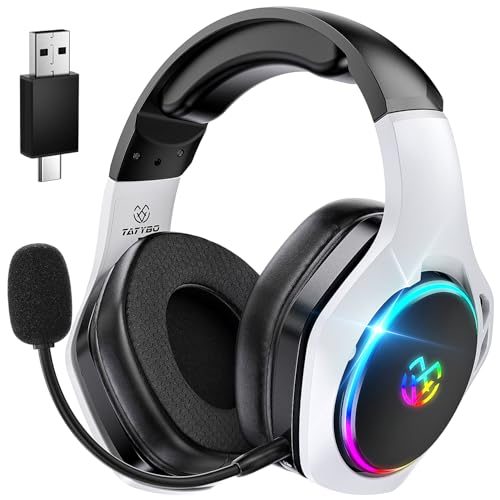
The Tatybo wireless headset is purpose-built for streamers who demand professional-grade audio without premium pricing. This 2.4GHz wireless model excels at delivering immersive 7.1 surround sound across PC, PlayStation 5, PlayStation 4, Nintendo Switch and Xbox platforms. The headline feature is the 40+ hour battery life, meaning you can stream multiple sessions before recharging, drastically reducing downtime between broadcasts.
Streamers will appreciate the detachable boom microphone, which isolates voice frequencies and rejects background noise, critical for clean vocal capture during extended streaming marathons. The headset pairs instantly with the USB dongle and maintains a rock-solid 2.4GHz connection without latency issues, even in congested wireless environments. The closed-ear design provides passive isolation, allowing you to hear in-game audio clearly whilst minimising bleed into your microphone.
Audio quality is punchy rather than analytical. The 40mm drivers emphasise mid and high frequencies where vocal dialogue and sound effects live, making this particularly suited to competitive shooters and story-driven games where communication matters. For streaming, the 7.1 surround processing adds perceived depth without overwhelming the mix. Build quality feels durable, with reinforced headband hinges and soft memory foam ear cushions that won't fatigue during eight-hour streaming sessions.
The only minor limitation is the lack of on-headset volume controls, forcing you to adjust levels via software or the dongle menu. For the price point, this is a negligible trade-off. This is the headset to choose if wireless freedom, battery endurance and cross-platform versatility are your streaming priorities.
Pros
- 40+ hour battery life means minimal charging interruptions during streaming weeks
- 2.4GHz wireless offers lag-free connectivity on PC, PS5, and Nintendo Switch simultaneously
- 7.1 surround sound processing adds immersion without muddying vocal frequencies
- Detachable boom mic isolates voice and minimises mechanical noise from keyboard and mouse
Cons
- No inline volume control on the headset itself, adjustments must be made via software
- 7.1 surround is virtual processing rather than true multi-driver design, limiting spatial precision
The FIFINE gaming headset bridges the gap between budget wired simplicity and immersive audio, offering both USB and 3.5mm connectivity in a single package. The dual-connection approach suits streamers with multiple devices, USB to primary PC, 3.5mm to console or mobile device, without requiring a headset swap between platforms. This flexibility makes it invaluable for multi-platform streaming setups targeting both Twitch PC and PlayStation audiences simultaneously.
The headline specification is the 7.1 surround sound processing via USB, achieved through 50mm drivers and digital surround virtualisation. This outperforms rival budget options in spatial cue delivery, critical for competitive gaming streams where enemy footsteps and grenade audio cues directly impact gameplay visibility. The detachable boom microphone features a flexible gooseneck design, permitting precise positioning closer to your mouth for improved voice isolation.
Build quality emphasises durability. The headband is reinforced with metal bracketing rather than plastic, reducing flex and creaking during extended use. The ear cups feature protein leather padding instead of standard foam, offering improved breathability and longevity. The cable includes an in-line volume control and microphone mute button, giving you playback and chat control without fumbling with software settings during live streams.
The FIFINE's primary advantage over pure wired competitors is the 7.1 surround implementation. Compared to the Tatybo, you sacrifice 40+ hour wireless battery life but gain a hardwired, zero-latency connection and more robust build quality. The 50mm drivers are marginally larger than competitors at this price tier, translating to slightly deeper bass response and fuller vocals in music interludes between gameplay segments.
For streamers streaming from a desk-bound setup and demanding immersive audio layered atop professional microphone clarity, the FIFINE offers excellent value. It's the middle ground between minimalist wired options and wireless all-in-ones.
Pros
- Dual USB and 3.5mm connectivity supports simultaneous multi-platform streaming without device swaps
- 7.1 surround sound via 50mm drivers provides superior spatial audio for competitive gaming streams
- In-line volume and mute controls enable quick playback and chat adjustments during live broadcasts
- Metal-reinforced headband and protein leather ear cups outlast cheaper foam-heavy alternatives
Cons
- Wired connection limits mobility compared to wireless competitors, constraining streaming movement
- 7.1 surround is virtualised via software rather than true multi-driver design, reducing spatial precision in competitive audio cues
The HyperX Cloud Alpha represents the premium end of the under-£75 budget, and for good reason. This wired 3.5mm headset carries the HyperX reputation for durability and audio accuracy, backed by extensive esports team endorsements and professional streamer adoption. The Cloud Alpha's competitive advantage lies in its dual-chamber 50mm driver design, which physically separates bass and mid-range frequencies to prevent audio muddiness during intense multiplayer sequences.
For streamers prioritising audio fidelity over convenience, the Cloud Alpha delivers. The stereo drivers produce remarkably clear dialogue and environmental cues. Footsteps register distinctly from gunfire, allowing viewers to understand the in-game situation from audio alone. The detachable boom microphone captures voice cleanly without the hyper-processed quality of cheaper USB alternatives. HyperX designs its microphones for gaming communication, emphasising the 300Hz to 4kHz band where human speech intelligibility lives.
Build quality is robust. The aluminium headband framework resists bending and creasing, crucial for headsets thrown into backpacks and travel cases between streaming venues. The memory foam ear cushions maintain shape after months of daily use, unlike cheaper alternatives that compress and harden. The 3.5mm connection is passive, meaning zero software overhead or driver downloads, plug into any device with a headphone socket and it works immediately.
The Cloud Alpha's weakness is its lack of surround sound processing. At this price tier, cheaper competitors offer virtual 7.1 surround, which some viewers perceive as more immersive. However, HyperX's philosophy prioritises accuracy over gimmickry. Competitive esports streamers universally favour the Cloud Alpha's stereo precision. For gameplay where audio accuracy matters, identifying enemy positions, detecting loot notifications, the Cloud Alpha's dual-chamber drivers outperform virtual surround at the same price point.
The in-line volume control permits quick adjustments without alt-tabbing. The detachable boom is fully removable, allowing integration with professional boom stands if you're upgrading your streaming rig. Choose the Cloud Alpha if your streaming audience values audio clarity and you prioritise esports content or dialogue-heavy games.
Pros
- Dual-chamber 50mm driver design separates bass and mids, preventing audio muddiness in intense multiplayer sequences
- Robust aluminium headband and long-lasting memory foam withstand daily streaming use and travel
- Detachable boom microphone captures clean voice dialogue optimised for gaming communication
- Zero-latency 3.5mm connection works immediately on any device without drivers or pairing
Cons
- Stereo-only audio lacks the perceived immersion of 7.1 surround alternatives at similar price points
- 3.5mm wired connection tethers you to a fixed desk, limiting movement during extended broadcasts
4. JAMSWALL Gaming Headset
The JAMSWALL represents the absolute budget entry point for streaming-capable headsets, offering basic features at minimal outlay. This 3.5mm wired option targets streamers with severe budget constraints who prioritise basic functionality over advanced features. The fixed boom microphone cannot be detached or repositioned, but it captures sufficient voice clarity for casual streaming without requiring external noise gates or processing.
The 40mm drivers deliver stereo audio with a slight bass emphasis, suitable for casual gaming streams where audio fidelity takes a back seat to game performance. The closed-ear design provides passive isolation adequate for bedroom streaming environments with minimal background noise. The headband features a standard plastic construction with soft vinyl padding, comfortable for four to five-hour streaming sessions but potentially fatiguing during marathon stream-a-thons.
Compatibility is universal. The 3.5mm connection works across PC, PlayStation, Xbox, Nintendo Switch and mobile devices without any adapters beyond standard audio splitters. No batteries, no dongles, no software required. For budget streamers managing multiple devices or frequently changing platforms, the zero-configuration approach has genuine value.
The fixed boom microphone is the critical limitation. You cannot adjust the microphone position closer to your mouth or away from mechanical noise sources. This constrains voice isolation compared to detachable boom alternatives. The plastic headband lacks reinforcement, making it vulnerable to cracking if flexed excessively or dropped during transport. Cheapest in the field, yes, but also the lowest durability ceiling.
JAMSWALL suits casual streamers with minimal budgets who accept compromised comfort and microphone flexibility in exchange for lowest possible price. For serious streaming ambitions, stepping up to the FIFINE returns substantially improved microphone quality and build durability.
Pros
- 3.5mm universal compatibility works across PC, PlayStation, Xbox, Switch and mobile without adapters
- Zero configuration required, plug in and stream immediately on any device with a headphone socket
- Lowest price point in this roundup, ideal for cash-strapped first-time streamers
Cons
- Fixed boom microphone cannot be repositioned, limiting voice isolation and noise rejection
- Plastic headband and vinyl padding lack durability compared to reinforced alternatives in the same price range
- Stereo-only audio with no surround processing, limiting immersion during competitive or story-driven gameplay
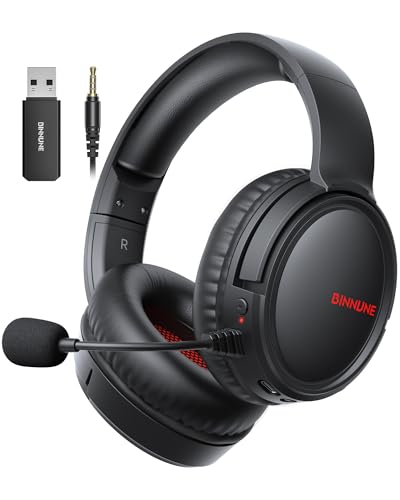
The BINNUNE BW02 sits between ultra-budget wired options and the Tatybo flagship, offering wireless convenience with modest battery life. The 2.4GHz wireless connection eliminates cable tethering, crucial for streamers who roam during broadcasts or switch between desk and console configurations. The 35-hour battery life, whilst shorter than Tatybo's 40+ hours, still provides five to seven days of casual streaming before requiring a charge.
The detachable boom microphone captures stereo voice clarity sufficient for casual gameplay streams. The 40mm drivers deliver balanced audio across the frequency spectrum, avoiding the bass emphasis of cheaper competitors and the treble sharpness of esports-focused models. This neutrality suits streamers broadcasting diverse content, from story-driven single-player games to multiplayer action, without requiring audio EQ adjustments between segments.
Build quality mirrors the BINNUNE approach: functional rather than premium. The plastic headband features soft padding adequate for four-hour sessions, though extended marathon streaming may cause mild discomfort. The ear cups are compact, suited to streamers with smaller heads but potentially restrictive for larger users. The wireless dongle is compact and low-profile, not obstructing USB ports on congested motherboards.
The BW02's appeal lies in wireless flexibility at a price point cheaper than Tatybo. Compared to the Tatybo's 7.1 surround, the BW02 delivers stereo audio only, eliminating perceived immersion but improving microphone focus by concentrating processing power on voice clarity rather than spatial virtualisation. For streamers prioritising wireless movement over surround immersion, the BW02 represents exceptional value.
Compatibility spans PC, PlayStation 5, PlayStation 4, Nintendo Switch and Mac via the USB dongle. The wireless connection is solid with minimal dropouts in typical home environments. Choose the BW02 if wireless freedom matters more than 40+ hour battery endurance or 7.1 surround immersion.
Pros
- 2.4GHz wireless eliminates cable tethering, enabling streamers to roam during extended broadcasts
- 35-hour battery life provides five to seven days of casual streaming between charges
- Neutral stereo frequency response suits diverse streaming content without requiring EQ adjustments between games
- Compact wireless dongle avoids cluttering congested PC motherboard USB ports
Cons
- Stereo-only audio lacks 7.1 surround immersion compared to Tatybo at only slightly higher price
- Plastic headband and compact ear cups limit comfort during marathon eight-hour streaming sessions
Buying Guide
Wireless versus Wired: Wireless 2.4GHz headsets like Tatybo offer movement freedom and 30+ hour battery life, ideal for roaming streamers. Wired USB options like the FIFINE eliminate charging overhead and latency concerns, suited to desk-bound setups. Budget wireless models typically achieve 35+ hour batteries; premium wired options outperform in microphone isolation due to dedicated USB audio processing.
Microphone Isolation: Streaming demands clear voice capture over background clacking and mechanical noise. Detachable boom microphones with flexible gooseneck positioning (FIFINE) enable precise placement close to your mouth, improving isolation compared to fixed booms (JAMSWALL). USB-connected microphones benefit from dedicated audio processing that actively filters low-frequency mechanical noise. 3.5mm wired alternatives rely on passive microphone design, requiring careful boom positioning to compensate.
Surround Sound Practicality: 7.1 surround sound processing via virtual drivers (Tatybo, FIFINE) adds perceived immersion during story-driven games and cinematic trailers. Competitive gamers often prefer stereo audio, as surround virtualisation can obscure spatial audio cues (enemy footstep direction) versus true dual-chamber stereo designs (HyperX Cloud Alpha). For mixed-content streaming, 7.1 surround offers viewer engagement without compromising gameplay audio clarity.
Durability and Comfort: Budget headsets under £30 typically employ plastic headbands and standard foam ear cups, comfortable for four-hour sessions but fatiguing during marathon streams. Reinforced metal headbands and protein leather padding (FIFINE) add £15-20 but extend comfortable session length to eight hours. For full-time streaming, durability investments pay dividends through reduced replacement frequency.
Platform Compatibility: Verify your primary streaming device. PC streamers benefit from USB or 2.4GHz wireless. PlayStation streamers require 3.5mm or USB compatibility. Nintendo Switch support demands 3.5mm jack functionality. Most budget alternatives support multiple platforms; verify specific device compatibility before purchasing. Cross-platform wireless (Tatybo, BINNUNE) suits multi-device streamers but demands USB dongle space on your motherboard.
The Tatybo 2.4Hz Wireless Gaming Headset wins as overall champion for streaming under £75. It combines wireless freedom, 40+ hour battery life, cross-platform compatibility and 7.1 surround immersion in a single package, ticking every box for streamers managing multiple devices or roaming setups. The detachable boom microphone isolates voice clearly, and the 2.4GHz connection delivers zero-latency performance equivalent to much pricier models.
For the best value from a wired setup, the FIFINE Gaming USB Headset pairs USB and 3.5mm connections with a detachable gooseneck boom microphone and in-line mute, so you can control chat without touching software mid-stream.
If you're beginning your streaming journey with severe budget constraints, the JAMSWALL offers plug-in functionality at minimum cost. As your stream grows and comfort becomes critical during marathon sessions, you'll quickly graduate to FIFINE or Tatybo alternatives offering superior durability and microphone performance. None of these headsets require premium subscription software or cloud integration; all function immediately upon connection, reducing setup friction and technical barriers to starting your stream.
Choose wireless for roaming flexibility, USB for uncompromising microphone clarity, wired 3.5mm for universal compatibility. All five options deliver functionality well beyond their price point, making the under-£75 budget segment particularly strong for value-conscious streamers in 2024.