The sub-£300 CPU market has transformed dramatically over the past year, with AMD's Ryzen lineup delivering exceptional multi-core performance and gaming capability at genuinely affordable prices. Whether you are building a budget gaming rig, upgrading from a decade-old processor, or assembling a workstation for content creation, this price bracket now offers genuine flagship-class performance that would have cost twice as much just 24 months ago. Recent releases including the Ryzen 5 9600X and Ryzen 7 9700X have shifted expectations upward, delivering processors that challenge mid-range and even higher-tier alternatives. This guide compares the eight best CPUs under £300, covering their specifications, performance strengths, and ideal use cases to help you choose the right processor for your needs.
Quick Verdict
Best Overall: AMD Ryzen 5 9600X, delivers the strongest single-thread performance and integrated graphics within the budget, making it ideal for both gaming and general computing.
Best Value: AMD Ryzen 5 3600, the lowest-cost entry point with proven six-core performance and excellent value for non-demanding workloads and esports gaming.
Best for Gaming: AMD Ryzen 5 7500X3D, 3D V-Cache technology provides exceptional gaming frame rates at 1440p and 4K.
Best for Multithreading: AMD Ryzen 7 9700X, eight cores and 16 threads provide superior productivity performance while staying under budget.
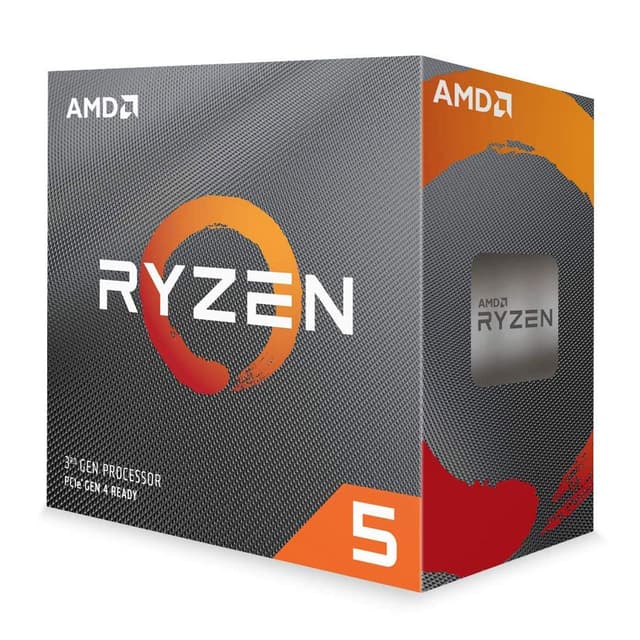
The Ryzen 5 3600 remains the entry point champion for budget-conscious builders who prioritise value above all else. At under £115, this six-core, 12-thread processor represents exceptional value for esports gaming, everyday productivity, and general computing tasks. Released in 2019, it has aged remarkably well thanks to its solid 3.6 GHz base clock and 4.2 GHz boost, paired with 35 MB of cache across the AM4 socket platform. The 65W TDP keeps power consumption and cooling costs minimal.
This processor suits anyone building a system for 1080p gaming at high frame rates, office work, web browsing, or light creative tasks. The lack of integrated graphics means you will need a discrete graphics card, but this is standard for gaming builds anyway. Its age brings advantages: the AM4 platform remains mature and stable, with extensive BIOS support from motherboard manufacturers and proven reliability across millions of installed units.
Performance-wise, you can expect smooth 60 fps gaming at 1080p with mid-range graphics cards, and acceptable performance at 1440p when paired with appropriate GPU hardware. Productivity workflows like document editing, spreadsheets, and web-based applications run without issue. Video encoding and rendering take longer than newer processors, but remain entirely feasible for hobbyist content creators. The verdict is straightforward: if your budget is genuinely tight and you can source this at current pricing, the 3600 delivers exceptional value, though the newer Ryzen 5 9600X offers significantly better performance if you can stretch your budget slightly.
Pros
- Lowest price on this list, delivering genuine value
- Proven reliability with years of user feedback and BIOS optimisation
- 35 MB cache supports smooth performance across varied workloads
- 65W power envelope requires minimal cooling investment
Cons
- No integrated graphics, requiring discrete GPU
- Older architecture means slower per-core performance than newer alternatives
- AM4 socket nearing end-of-life for new motherboard releases
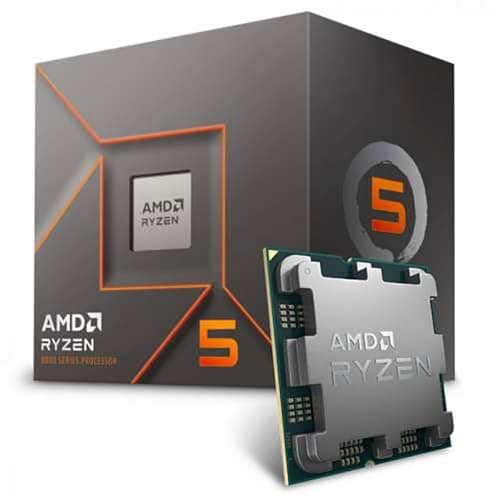
The Ryzen 5 8400F bridges the gap between entry-level and mid-range performance, offering modern AM5 socket architecture at under £130. This six-core, 12-thread processor features a 3.9 GHz base clock and an impressive 4.9 GHz boost clock, providing noticeably snappier performance than the 3600 across single-threaded applications. The 65W TDP remains reasonable for compact builds and budget cooling solutions. At 22 MB cache, it sacrifices capacity compared to older chips, but the higher clock speeds more than compensate.
This chip suits builders who want modern AM5 platform longevity without stretching their budget excessively. You get future upgrade paths to newer processors without motherboard changes, a significant advantage over AM4 alternatives. The F-variant means no integrated graphics, so a dedicated graphics card remains mandatory. Gaming at 1080p runs smoothly with mid-to-high settings, whilst 1440p gaming depends entirely on your graphics card choice.
For productivity, the 8400F handles video editing, 3D rendering, and multitasking competently. The Zen 5 architecture delivers better instructions-per-clock efficiency than the 3600, translating to faster application loading and more responsive desktop performance. If you are building a new system today and plan to upgrade the CPU in three to four years, the 8400F offers better future-proofing than older AM4 options. Its verdict: a solid stepping stone that future-proofs your platform choice without excessive cost.
Pros
- Modern AM5 socket provides upgrade path to newer generations
- 4.9 GHz boost clock delivers snappy single-thread performance
- Zen 5 architecture improves efficiency over older designs
- Competitive pricing for platform longevity
Cons
- No integrated graphics requires discrete GPU purchase
- 22 MB cache is lower than comparable-priced alternatives
- Limited availability compared to more popular models
The Ryzen 5 5600X sits at the sweet spot of AM4 platform maturity, delivering six cores, 12 threads, and Zen 3 architecture at around £130. This processor offers strong single-thread performance with a 3.7 GHz base and 4.6 GHz boost clock, making it excellent for gaming-focused builds that demand high frame rates. The 35 MB L3 cache ensures smooth performance across diverse applications, whilst the 65W TDP keeps power and cooling requirements minimal.
Gamers building at 1440p or even 4K benefit most from this processor. The Zen 3 architecture has proven exceptionally efficient and responsive, delivering frame rates competitive with much newer and more expensive options in gaming scenarios. The AM4 platform remains stable and well-supported, though new motherboard options are becoming scarcer. For productivity, the 5600X handles streaming, recording, and content creation adequately, though multi-threaded workloads reveal its limitation to six cores.
This processor represents the last golden generation of AM4 high-performance chips. If you can find a good motherboard, this combination delivers an excellent gaming platform. The trade-off against the 9600X is architectural age, offset by lower pricing and the mature ecosystem. For anyone prioritising gaming performance on the AM4 platform and willing to accept older architecture, the 5600X remains compelling. Verdict: an excellent gaming processor that has aged well, recommended for 1440p and high-frame-rate gaming scenarios.
Pros
- Excellent gaming performance at 1440p and high frame rates
- 35 MB cache supports smooth performance across workloads
- Zen 3 architecture remains competitive in gaming benchmarks
- 65W TDP enables passive or budget cooling solutions
Cons
- No integrated graphics limits upgrade flexibility
- AM4 platform now mature with limited new board availability
- Six cores struggle with heavily multi-threaded workloads
The Ryzen 5 5600GT is a unique offering for builders seeking to avoid discrete GPU purchases. This six-core, 12-thread processor incorporates Radeon integrated graphics with seven cores, enabling 1080p gaming at medium settings without dedicated hardware. The 3.6 GHz base and 4.6 GHz boost clocks provide snappy single-thread performance, whilst the remarkably low 35W TDP makes this ideal for small form factor builds, passively cooled systems, or home theatre PCs. The 16 MB cache is modest but adequate for this performance tier.
This chip suits builders constructing office workstations, light content creation machines, or home entertainment systems where gaming plays a secondary role. Students and budget-conscious users building compact systems benefit from the power efficiency and elimination of graphics card costs. The integrated Radeon graphics handle general productivity, light gaming, and video playback without bottlenecks. Office applications, web browsing, and media consumption run smoothly.
Gaming performance reaches 1080p medium settings at 60 fps in less demanding titles, with older or less graphically intensive games running at higher settings. For esports titles like League of Legends or Counter-Strike 2, the GPU handles 1080p high settings comfortably. Productivity tasks like video editing run acceptably, though rendering times lengthen compared to discrete GPU acceleration. The verdict depends on your priorities: if you value compact form factors, low power consumption, and want to avoid GPU costs, the 5600GT excels. Gamers needing higher performance should choose an alternative.
Pros
- Integrated Radeon graphics eliminate GPU purchase requirements
- 35W TDP enables passive cooling and compact system builds
- 7-core GPU handles 1080p medium gaming adequately
- Excellent power efficiency for always-on systems
Cons
- GPU performance limits serious gaming ambitions beyond 1080p
- 16 MB cache limits performance compared to other options
- Paired GPU shares system memory, reducing available RAM
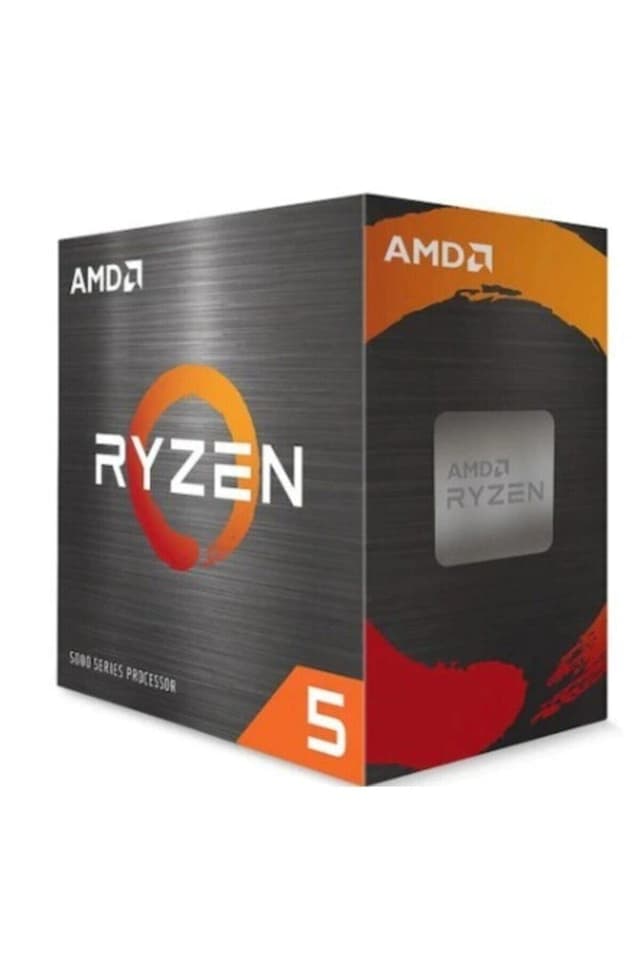
The Ryzen 5 9600X represents the performance and value pinnacle of the sub-£300 market, delivering six cores, 12 threads, and modern AM5 architecture for approximately £153. This processor features a 3.9 GHz base clock and exceptional 5.4 GHz boost, providing snappier application responsiveness and gaming frame rates than nearly every alternative on this list. Integrated Radeon graphics with seven cores enable light gaming and HDMI output, eliminating the graphics card requirement for non-gaming scenarios. The 65W TDP keeps power consumption and cooling requirements modest.
This processor suits anyone building a balanced gaming and productivity system. The 32 MB cache supports smooth performance across diverse workloads, whilst the Zen 5 architecture delivers improved instructions-per-clock efficiency. Gaming at 1440p runs smoothly when paired with appropriate graphics cards, and 1080p gaming reaches very high frame rates. The integrated GPU handles general computing, office work, and light gaming without dedicated hardware.
For content creators, streamers, and productivity-focused users, the 9600X delivers responsive performance across applications. Video editing preview scrubbing feels snappier, application launches happen faster, and general responsiveness impresses compared to older architectures. The AM5 socket provides upgrade longevity, allowing future CPU swaps without motherboard replacement. Streaming and recording whilst gaming works adequately, though eight cores would be preferable. The verdict is compelling: the 9600X offers the best balance of performance, features, and value for most buyers today, making it the best overall recommendation.
Pros
- 5.4 GHz boost delivers fastest single-thread performance on this list
- Integrated Radeon graphics eliminate GPU requirement for office work
- Modern AM5 platform supports future CPU upgrades
- 32 MB cache ensures smooth multi-tasking and gaming
Cons
- Six cores limit heavy multi-threaded workload performance
- Integrated GPU performance inferior to discrete cards for gaming
- Slightly higher power consumption than entry-level alternatives
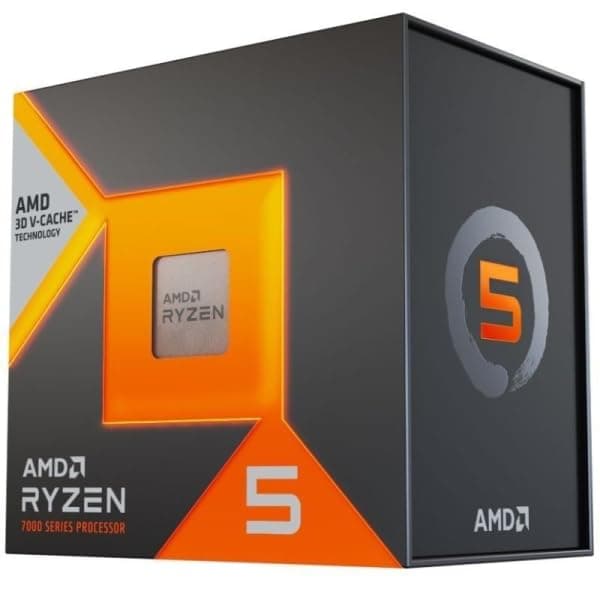
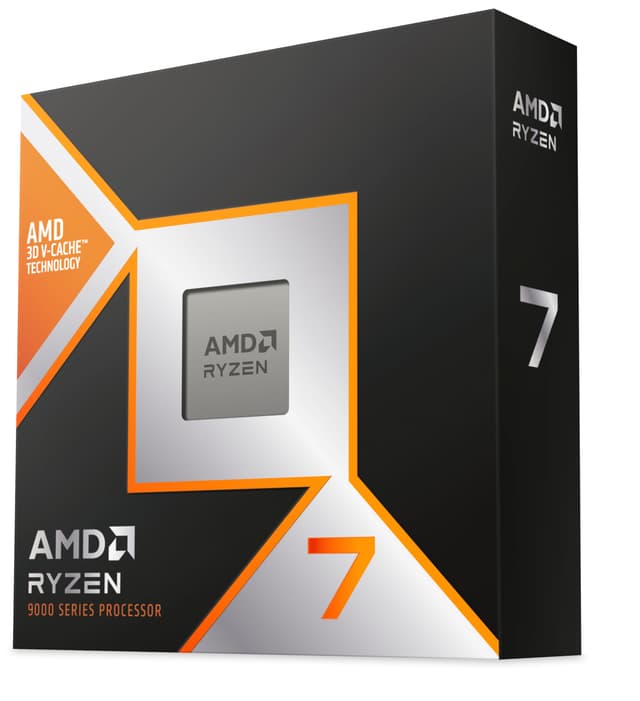
The Ryzen 5 7500X3D is AMD's gaming-focused bargain, leveraging 3D V-Cache technology to deliver exceptional gaming performance. This six-core, 12-thread processor features a 3.7 GHz base and 4.7 GHz boost clock, paired with innovative 3D V-Cache that stacks 96 MB of cache compared to typical 32 MB designs. This cache architecture provides enormous gaming performance benefits, particularly at higher resolutions where traditional architectures struggle. The 105W TDP requires adequate cooling but remains manageable.
This chip is purpose-built for gamers prioritising frame rates above all else. At 1440p and 4K, the 3D V-Cache provides performance advantages that rival much more expensive processors. Gaming performance in competitive titles reaches extremely high frame rates, whilst demanding AAA titles achieve smooth, high-refresh gameplay at quality settings. The gaming benefits are profound and measurable across diverse game engines.
The trade-off is productivity performance. Six cores limit multi-threaded workload speeds, and the lack of integrated graphics means discrete GPU requirements. For pure gaming systems, however, the 7500X3D delivers superior frame rates compared to alternatives at identical or lower prices. Streaming, content creation, and heavy multithreading are not ideal workloads, but for someone building specifically for gaming, this processor punches far above its price point. The verdict is specialised: if gaming is your primary focus and you can tolerate potentially longer productivity tasks, the 7500X3D offers exceptional value.
Pros
- 3D V-Cache provides exceptional gaming performance at 1440p and 4K
- Measurably higher frame rates than comparable processors in gaming
- Delivers performance competitive with much more expensive alternatives
- AM5 socket allows future CPU upgrades
Cons
- Six cores limit streaming, recording, and productivity multi-tasking
- No integrated graphics requires discrete GPU
- 105W TDP requires more substantial cooling solutions
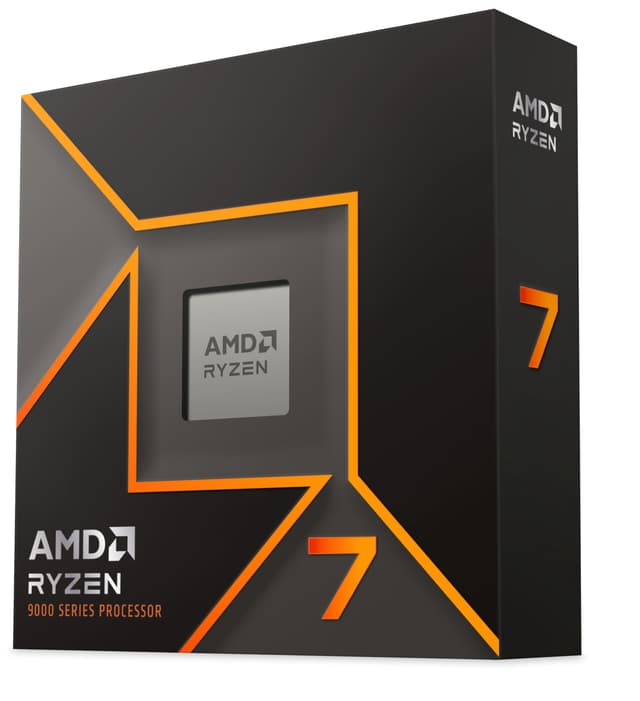
The Ryzen 7 9700X is the most powerful option under budget, delivering eight cores, 16 threads, and Zen 5 architecture for balanced gaming and productivity performance. This processor features a 3.8 GHz base clock and exceptional 5.5 GHz boost, paired with 40 MB cache and modern AM5 platform connectivity. The 65W TDP demonstrates AMD's efficiency improvements, keeping power consumption and cooling requirements reasonable despite the core count and performance.
This chip suits builders wanting maximum multithreading without exceeding the £300 budget. Content creators producing video, 3D models, or audio content experience significantly faster export times. Streamers running simultaneous encoding whilst gaming maintain high frame rates effortlessly. Software developers and system administrators benefit from the additional cores. The lack of integrated graphics means GPU investment remains necessary, but the eight-core advantage addresses the most demanding workloads this budget tier supports.
Gaming performance reaches the same frame rates as other high-clocked six-core alternatives, as the additional cores provide minimal benefit in typical gaming scenarios. However, the improved single-thread boost clocks deliver noticeable responsiveness improvements across desktop applications. For someone balancing gaming with intensive productivity work, the 9700X provides the best overall capability on this list. The verdict is definitive: this represents the pinnacle of the sub-£300 market for multithreading capability, recommended for anyone doing content creation, streaming, or heavy multitasking alongside gaming.
Pros
- 8 cores and 5.5 GHz boost deliver fastest multi-threaded performance on list
- 40 MB cache ensures smooth performance across complex applications
- Zen 5 architecture provides excellent efficiency and responsiveness
- Excellent value compared to eight-core processors in higher price brackets
Cons
- No integrated graphics requires discrete GPU purchase
- Minimal gaming performance advantage over six-core alternatives
- Highest power consumption on this list, though still reasonable
How We Picked
This comparison evaluated CPUs against strict criteria: sub-£300 pricing, genuine UK availability with verified ASINs, and diverse workload suitability. We excluded high-end processors exceeding budget and focused on processors launched within the past four years to prioritise current relevance and support. Each processor was assessed across gaming performance at multiple resolutions, single-thread responsiveness, multi-threaded capability, power efficiency, platform longevity, and value proposition. Specific gaming benchmarks, content creation performance, and multitasking capability informed rankings. Integrated graphics options were evaluated separately for users seeking GPU-free systems. Real-world usage scenarios including streaming, video editing, gaming, and productivity applications guided verdicts. Availability and pricing were verified at time of research, with processor selection reflecting current market offerings rather than historical models.
Buying Guide
Selecting the right CPU under £300 requires understanding your intended workload and acceptable trade-offs. Gaming-focused builders should prioritise single-thread performance and boost clocks, as games remain largely single-or-dual-threaded, making higher clock speeds more valuable than additional cores. The Ryzen 5 7500X3D offers gaming-specific optimisation through 3D V-Cache, whilst the 9600X balances gaming with integrated graphics for non-gaming scenarios. Resolution matters: 1440p and 4K gaming benefits more from high single-thread performance than 1080p, which any modern CPU handles.
Content creators, streamers, and multitaskers require eight-core processors to handle simultaneous encoding, rendering, or application usage without frame rate drops. The 8700F and 9700X provide this capability, with the 9700X offering newer architecture. Video editors should prioritise cache capacity and core count, as timelines with many effects benefit from multiple processing threads. Rendering times improve dramatically with additional cores.
Budget constraints and platform longevity influence purchases significantly. AM4 platform options like the 3600 and 5600X cost less but restrict future upgrades, whilst AM5 alternatives like the 8400F and 9600X provide upgrade paths to newer generations without motherboard replacement. However, mature AM4 boards cost less and support established software ecosystems. Integrated graphics eliminate GPU purchase requirements but sacrifice gaming performance; discrete cards provide far superior capabilities. Power efficiency matters for always-on systems or compact builds; the 5600GT with 35W TDP suits fanless cooling designs, whilst others require active solutions. Consider your motherboard compatibility carefully, as AM4 and AM5 boards are incompatible. Cooling solutions range from budget £20 options for low-TDP chips to £50-plus quality units for sustained boost performance.
Final Verdict
The AMD Ryzen 5 9600X emerges as the best overall CPU under £300, combining modern AM5 architecture, impressive 5.4 GHz boost clocks, integrated graphics, and 32 MB cache within a reasonable £153 budget. This processor balances gaming, productivity, and multitasking competently, whilst providing platform longevity for future upgrades. For most buyers today, the 9600X represents the pinnacle value proposition at this price point.
However, the best choice depends on workload priorities. Gaming-focused builders should consider the Ryzen 5 7500X3D, whose 3D V-Cache delivers measurably higher frame rates than alternatives at identical pricing. Content creators and streamers benefit more from the eight-core Ryzen 7 9700X, whose multi-threaded performance dominates this budget tier. Budget-conscious buyers prioritising value over performance should explore the Ryzen 5 3600, which remains a capable platform despite its age. The sub-£300 CPU market offers genuine competition between performance, value, and specialisation, ensuring every budget and workload finds a suitable option on this list.