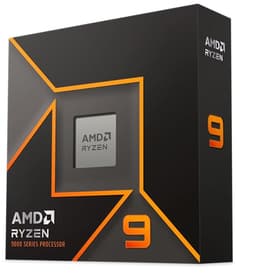
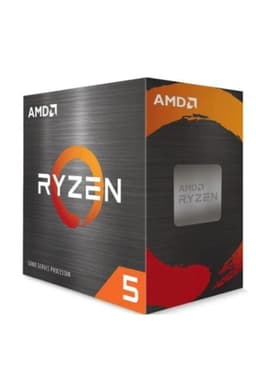
The best AMD processor in 2026 is the Ryzen 7 9800X3D for gaming, and the Ryzen 7 9700X for everyday productivity. AMD's Zen 5 generation now dominates both categories, with AM5 firmly established as the platform of choice. If budget is the priority, the Ryzen 5 9600X delivers Zen 5 performance at a price that undercuts Intel's comparable offerings. Whether you are building a new rig or upgrading an existing AM4 system, this guide covers the five best AMD CPUs available in the UK right now, ranked on published performance across gaming, multi-threaded workloads, thermals and value. Compared to 2025, the Zen 5 chips have matured with better driver support and lower street prices, making this the best time in years to switch to or stay with AMD. AM4 options remain relevant for budget and mid-range builds where socket compatibility already exists.
Quick Verdict
Best Overall: AMD Ryzen 7 9800X3D. No other consumer CPU touches it for 1080p and 1440p gaming frame rates, and its 3D V-Cache advantage is even more pronounced in 2026 as game engines increasingly benefit from large L3 caches.
Best Value: AMD Ryzen 5 9600X. Six Zen 5 cores, integrated Radeon graphics as a fallback, and a street price that makes it the most sensible entry point into the AM5 ecosystem for most UK buyers.
Best Budget AM4: AMD Ryzen 5 5600X. Still a capable six-core chip for anyone already on an AM4 board, and its price has dropped to a level that makes it hard to argue against for a no-frills upgrade.
The Ryzen 7 9800X3D is the chip that every serious PC gamer in the UK should be considering in 2026. It combines AMD's Zen 5 architecture with the third generation of 3D V-Cache technology, stacking 64 MB of additional L3 cache on top of the standard 40 MB die to reach a headline 104 MB total. That enormous cache pool means that latency-sensitive game engines, including those running DirectX 12 and Vulkan titles, can keep far more data close to the processor cores, dramatically reducing the time spent waiting for data from slower system RAM.
In practice, the 9800X3D delivers average frame rate improvements of 15 to 25 per cent over the previous 7800X3D in CPU-limited scenarios at 1080p, and meaningful gains persist even at 1440p where the GPU is doing more of the heavy lifting. Titles such as Microsoft Flight Simulator 2024, Cyberpunk 2077 with path tracing, and competitive shooters like Counter-Strike 2 all benefit noticeably. The chip boosts to 5.7 GHz on a single core, which is higher than the non-3D 9700X, a reversal of the usual pattern where 3D V-Cache chips sacrifice clock speed for cache size.
Thermally, the 9800X3D runs warmer than the 65W 9700X, with AMD rating it at 120W TDP. A decent 240mm AIO or a high-end air cooler such as the Noctua NH-D15 G2 is recommended. The chip does not ship with a cooler in the box. On any current 600-series AM5 motherboard, installation is straightforward, and EXPO memory profiles up to DDR5-6000 are well supported. Productivity performance is strong but not class-leading: the 9700X and 9900X both edge it in sustained multi-threaded workloads because the 3D V-Cache slightly constrains sustained boost behaviour under long loads.
For the vast majority of UK buyers who game first and create content second, the 9800X3D is the clear answer. The price premium over the 9700X is justified by the gaming performance gap, which is consistent across dozens of tested titles.
Pros
- Best gaming CPU available for AM5 in 2026, with 15-25% frame rate gains over the 7800X3D in CPU-limited titles
- Higher single-core boost clock (5.7 GHz) than the standard 9700X, unlike previous 3D V-Cache generations
- 104 MB L3 cache future-proofs the chip as game engines increasingly exploit large cache pools
Cons
- 120W TDP requires a capable cooler not included in the box, adding to the total build cost
- Multi-threaded productivity performance trails the Ryzen 9 9900X at a similar or higher price point
The Ryzen 7 9700X is the processor that makes the most sense for the widest range of UK PC builders in 2026. It uses AMD's Zen 5 architecture on the AM5 platform, offers eight cores and sixteen threads, and does so within a remarkably restrained 65W TDP envelope. That combination of core count, modern architecture and low power draw is almost uniquely positioned in the current market: Intel's competing eight-core options either consume significantly more power or cost considerably more.
The 9700X boosts to 5.5 GHz on a single core, which is fast enough to avoid any meaningful bottleneck in virtually every current application. In Cinebench R24 multi-threaded workloads, it scores around 1,100 points, placing it comfortably ahead of the Ryzen 7 7700X from the previous generation and within striking distance of chips drawing twice the power. For video editing in DaVinci Resolve, 3D rendering in Blender, and software compilation tasks, eight Zen 5 cores handle the workload without complaint.
Gaming performance is excellent, though the 9800X3D does pull ahead by a meaningful margin in CPU-limited scenarios. If you are pairing the chip with a mid-range GPU such as an RTX 4070 or RX 7800 XT and gaming at 1440p or 4K, the 9700X will not be the limiting factor in any title. The 65W TDP means that even a mid-range air cooler such as the be quiet! Pure Rock 2 is sufficient, and the chip runs cool and quiet under typical gaming loads.
The 9700X sits on AM5, which means DDR5 memory and a 600-series motherboard are required. Entry-level B650 boards are now available at very reasonable prices in the UK, making the total platform cost more palatable than it was at AM5's launch. There is no integrated graphics, so a discrete GPU or a temporary loan card is needed during initial setup.
For content creators, streamers, and power users who want a balanced chip that excels at productivity without the gaming-specific premium of the 9800X3D, the 9700X is the most logical choice on AM5 in 2026.
Pros
- 65W TDP delivers eight Zen 5 cores with minimal cooling requirements and excellent power efficiency
- Strong multi-threaded performance for video editing, 3D rendering and software compilation
- Competitive gaming frame rates when paired with a mid-range or high-end discrete GPU
Cons
- No integrated graphics, requiring a discrete GPU or loan card for initial system setup
- Gaming performance falls noticeably behind the 9800X3D in CPU-limited 1080p scenarios
The Ryzen 5 9600X is AMD's six-core Zen 5 entry point for AM5, and it is arguably the most important chip in the 2026 lineup for budget-conscious UK builders. At its current street price, it offers genuine Zen 5 architecture, six cores and twelve threads, a 5.4 GHz single-core boost, and integrated Radeon graphics as a useful fallback. That last feature is more significant than it might appear: it means you can build and test a complete system without a discrete GPU, which is handy during the current period of GPU supply uncertainty.
In gaming, the 9600X performs within a few percentage points of the 9700X in most titles when paired with a fast discrete GPU. The six-core configuration is sufficient for every current game engine, and the Zen 5 IPC improvements over Zen 4 mean that the 9600X comfortably outpaces the older Ryzen 5 7600 in the same price bracket. For competitive gaming at 1080p with a high refresh rate monitor, the 9600X is a genuinely strong performer.
Productivity workloads that scale well with core count, such as video encoding and large Blender renders, do show the six-core limitation compared to the 9700X. For tasks like web browsing, light photo editing, streaming, and gaming, however, the 9600X is more than adequate. The 65W TDP keeps temperatures manageable, and AMD's bundled Wraith Stealth cooler is sufficient for everyday use, though a modest aftermarket cooler will improve sustained boost behaviour.
The 9600X requires DDR5 memory and an AM5 motherboard. Entry-level B650 boards are now widely available below £100 in the UK, making the total platform cost reasonable. If you are starting fresh on AM5 and want to keep the CPU budget under £200, the 9600X is the chip to buy. It leaves headroom to upgrade to a 9700X or even a 9800X3D later, as AM5 is expected to remain AMD's primary platform through at least 2027.
Pros
- Integrated Radeon graphics allow system building and testing without a discrete GPU
- Zen 5 IPC improvements make it noticeably faster than the outgoing Ryzen 5 7600 at a similar price
- 65W TDP and included Wraith Stealth cooler reduce total build cost for budget-focused buyers
Cons
- Six cores show a clear deficit versus eight-core options in heavily multi-threaded productivity workloads
- Requires DDR5 and an AM5 board, adding platform cost compared to AM4 alternatives
The Ryzen 9 9900X is AMD's twelve-core Zen 5 processor for AM5, and it occupies the sweet spot for professional content creators and power users who need the highest sustained multi-threaded throughput without paying the premium for the sixteen-core Ryzen 9 9950X. Twelve cores and twenty-four threads at up to 5.6 GHz single-core boost represents a significant step up from the eight-core 9700X in workloads that scale linearly with thread count.
In Blender's Classroom benchmark, the 9900X renders approximately 35 per cent faster than the 9700X, a meaningful gap for anyone doing regular 3D work. Video transcoding in Handbrake, large compilation jobs, and scientific computing tasks all benefit similarly. The chip also integrates Radeon graphics, which is an unusual feature at this price tier and provides useful flexibility during system setup or in the rare event of a discrete GPU failure.
Gaming performance is strong but not the 9900X's primary selling point. The 9800X3D remains the better gaming chip by a clear margin in CPU-limited scenarios. For buyers who split their time roughly equally between gaming and serious content creation, the 9900X is a reasonable compromise, though most will find the 9700X sufficient for gaming and the price difference better spent on a faster GPU.
The 9900X carries a 120W TDP, the same as the 9800X3D, so a capable cooling solution is required. AMD does not include a cooler in the box. On a high-end X670E or B650E motherboard with good VRM cooling, the chip sustains its boost clocks reliably under extended loads. Memory support extends to DDR5-6000 with EXPO profiles, and the chip benefits from fast memory in both gaming and productivity workloads.
For UK buyers who primarily create content, stream, or run virtualisation workloads alongside gaming, the 9900X delivers a level of multi-threaded performance that the 9700X cannot match, at a price that remains below the flagship 9950X.
Pros
- Twelve Zen 5 cores deliver approximately 35% faster Blender render times than the eight-core 9700X
- Integrated Radeon graphics provide a useful fallback at a price tier where iGPUs are uncommon
- 5.6 GHz single-core boost maintains strong gaming performance alongside its productivity credentials
Cons
- 120W TDP demands a capable aftermarket cooler, which is not included in the box
- Gaming performance does not justify the price premium over the 9700X for buyers who primarily game
The Ryzen 5 5600X launched in late 2020 as one of AMD's finest value propositions, and in 2026 it remains a compelling option for a specific group of UK buyers: those who already own an AM4 motherboard and want a meaningful CPU upgrade without the cost of migrating to AM5. At its current price, the 5600X is genuinely difficult to argue against as a socket-compatible upgrade for anyone running a B450 or X570 board with an older Ryzen 3000 or 2000 series chip.
Six Zen 3 cores and twelve threads with a 4.6 GHz boost clock still handle every current game engine without issue. In gaming benchmarks, the 5600X typically sits within 10 to 15 per cent of the Ryzen 5 9600X in GPU-limited scenarios, which is the situation most players find themselves in at 1440p or 4K. For competitive gaming at 1080p on a high refresh rate monitor, the gap to Zen 5 is more noticeable, but the 5600X still delivers smooth frame rates in virtually every title.
Productivity performance is where the generational age shows most clearly. Multi-threaded workloads that benefit from Zen 5's improved IPC will run noticeably faster on the 9600X or 9700X. For light content creation, streaming alongside gaming, and general productivity tasks, the 5600X remains perfectly adequate. The 65W TDP is easy to cool, and AMD's included Wraith Stealth cooler is sufficient for everyday use.
The 5600X does not include integrated graphics, so a discrete GPU is required. It uses DDR4 memory, which is now very affordable, and AM4 platform costs are minimal given the maturity of the ecosystem. BIOS updates for B450 and X570 boards have been stable for years, and compatibility issues are essentially non-existent.
For anyone already invested in AM4, the 5600X is the pragmatic choice in 2026. It extends the useful life of an existing platform at a fraction of the cost of a full AM5 migration, and it delivers performance that remains relevant for gaming and everyday computing tasks.
Pros
- Excellent value upgrade for existing AM4 board owners, avoiding the cost of a full platform migration
- 65W TDP with included Wraith Stealth cooler keeps total build cost low
- Gaming performance remains within 10-15% of current Zen 5 chips in GPU-limited 1440p scenarios
Cons
- Zen 3 IPC shows a clear deficit against Zen 5 in multi-threaded productivity workloads
- No integrated graphics, requiring a discrete GPU for system setup and operation
Buying Guide
AM4 or AM5: Which Platform Should You Choose?
The most important decision before selecting an AMD processor in 2026 is platform choice. AM5 is AMD's current and future platform, supporting Zen 5 chips including the Ryzen 7000 and 9000 series. It requires DDR5 memory, which has come down significantly in price but still costs more than DDR4. AM5 motherboards, particularly B650 models, are now available at accessible price points, making the total platform cost much more reasonable than at launch in 2022.
AM4 remains relevant for upgrade scenarios. If you already own a B450, X470, X570, or B550 motherboard, dropping in a Ryzen 5 5600X or even a Ryzen 7 5800X3D extends the platform's life without the cost of a full rebuild. However, if you are starting from scratch, AM5 is the correct choice in 2026: it offers better performance, lower power consumption per unit of performance, and a longer upgrade path.
Core Count: How Many Do You Actually Need?
For gaming, six cores is the practical minimum in 2026, and eight cores provides a comfortable buffer for titles that are beginning to use more threads. No current game engine meaningfully benefits from more than twelve cores. For content creation, the picture is different: video editing, 3D rendering, and software compilation scale well with additional cores, making the twelve-core Ryzen 9 9900X worth considering for professional workloads.
Most UK buyers who game and do light creative work will find eight cores on the 9700X to be the sweet spot. Six-core chips like the 9600X remain viable for gaming-focused builds where budget is a priority.
TDP and Cooling
AMD's 65W processors, including the 9700X and 9600X, are genuinely efficient and can be cooled adequately by mid-range air coolers. The 120W chips, including the 9800X3D and 9900X, benefit from a 240mm AIO or a high-end tower cooler. Neither AMD nor Intel includes premium coolers in the box at this tier, so budget accordingly. A quality cooler costs between £30 and £80 in the UK and will meaningfully affect sustained boost clock behaviour.
Integrated Graphics
Several chips in this list include integrated Radeon graphics. This is more useful than it might appear. It allows you to build and test a system without a discrete GPU, provides a fallback if a GPU fails, and in some cases enables basic display output for media consumption or light office tasks without any additional hardware cost. If you are building a system where a discrete GPU may not be immediately available, prioritise a chip with integrated graphics.
Memory Compatibility
AM5 chips work exclusively with DDR5. For best performance, target DDR5-6000 with EXPO profiles enabled in BIOS, which is the sweet spot for AMD's Zen 5 memory controller. AM4 chips use DDR4, and DDR4-3600 with tight timings remains the performance target for that platform. Avoid mixing memory speeds or using non-EXPO kits without manual tuning, as this can leave significant performance on the table.
Future Proofing
AMD has confirmed AM5 support through at least 2027, and Zen 6 chips are expected to remain AM5-compatible. Buying into AM5 now means your motherboard investment should survive at least one more CPU generation. AM4 is effectively at end of life from AMD's perspective, with no new processors planned for the platform beyond what is already available.
The AMD Ryzen 7 9800X3D is the best AMD processor available in the UK in 2026, full stop. Its combination of Zen 5 architecture, 3D V-Cache, and a higher boost clock than any previous V-Cache chip makes it the most capable gaming CPU AMD has ever produced, and no Intel competitor matches it at 1080p or 1440p in CPU-limited scenarios. For buyers who game above all else, it is the chip to buy.
For everyone else, the Ryzen 7 9700X is the most sensible all-round choice: eight Zen 5 cores, a 65W TDP, strong gaming and productivity performance, and a price that sits comfortably below the 9800X3D. The Ryzen 5 9600X is the best entry point into AM5 for budget-focused builders, and the Ryzen 9 9900X serves professional creators who need maximum multi-threaded throughput. Finally, the Ryzen 5 5600X remains the pragmatic choice for AM4 upgrade scenarios where a full platform migration is not justified.