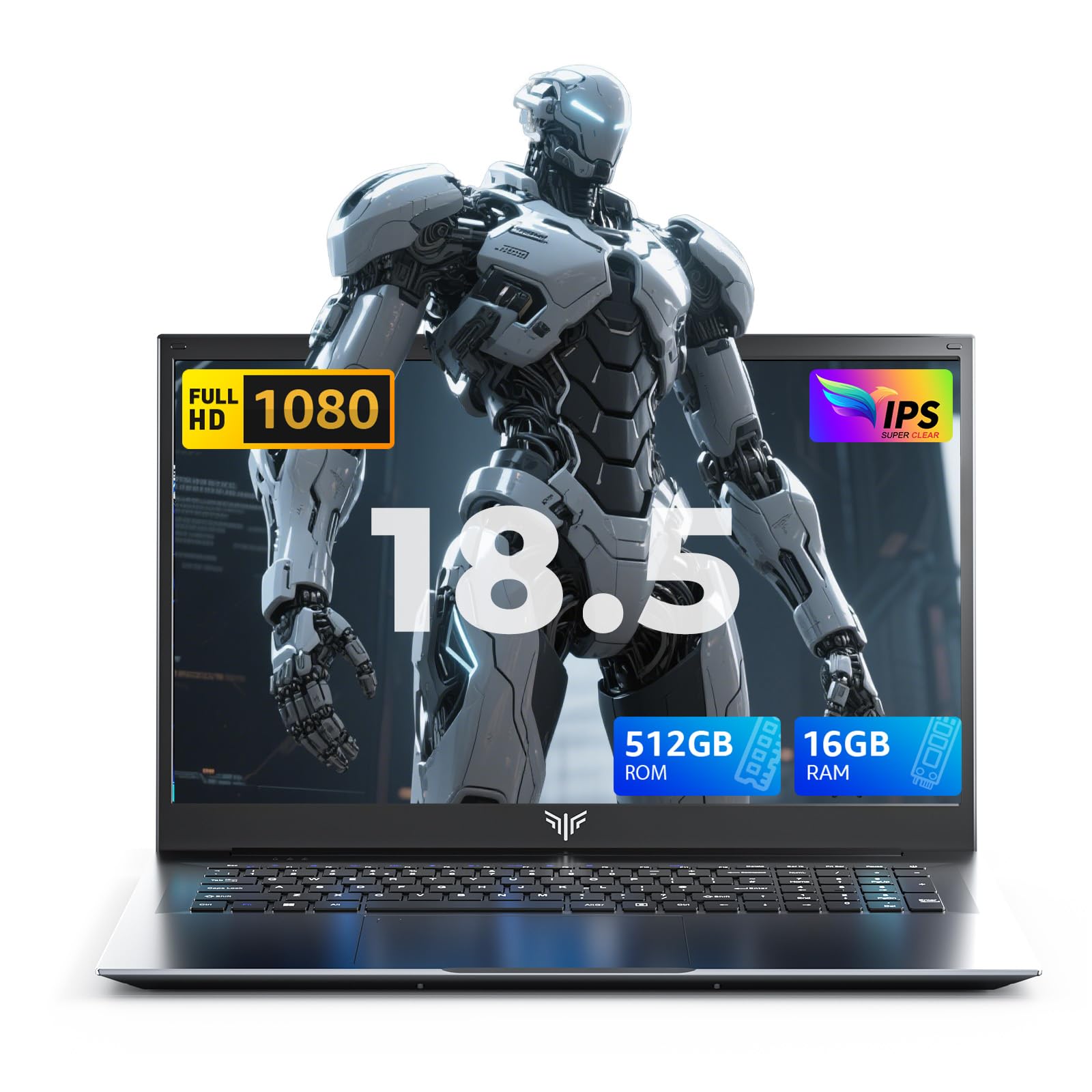
ACEMAGIC 18.5" FHD Laptop with N150 Processor up to 3.6GHz, 16GB RAM Laptop with 512GB SSD, HD Display Laptops, Support WiFi 5, BT5.0, 3*USB3.2, Dual Speakers, 8000mAh Long-Lasting Battery
The ACEMAGIC 18.5 Budget Laptop UK is a desktop replacement that trades portability for screen space. At £419.99, it delivers a genuinely large workspace with decent build quality, but thermal management and battery life reveal exactly where the budget went.
- 18.5″ IPS display offers genuinely useful workspace for multitasking and productivity
- 16GB RAM and 512GB SSD are generous specifications for the budget category
- Build quality feels solid with good hinge design and minimal chassis flex
- Battery life of under 5 hours mixed use limits portability significantly
- Intel N150 processor throttles under sustained load, limiting performance ceiling
- Display brightness of 248 nits restricts use to indoor environments only
Stock alert
Currently unavailable on Amazon UK
The ACEMAGIC 18.5" FHD Laptop with N150 Processor up to 3.6GHz, 16GB RAM Laptop with 512GB SSD, HD Display Laptops, Support WiFi 5, BT5.0, 3*USB3.2, Dual Speakers, 8000mAh Long-Lasting Battery is out of stock right now. Drop your email and we'll let you know the moment it's back, or jump straight to the in-stock alternatives we'd recommend instead.
In-stock alternatives

ASUS Laptop Vivobook 15 X1504ZA 15.6 inch Full HD Laptop (Intel i5-1235U, 16GB RAM, 512GB SSD, Windows 11)
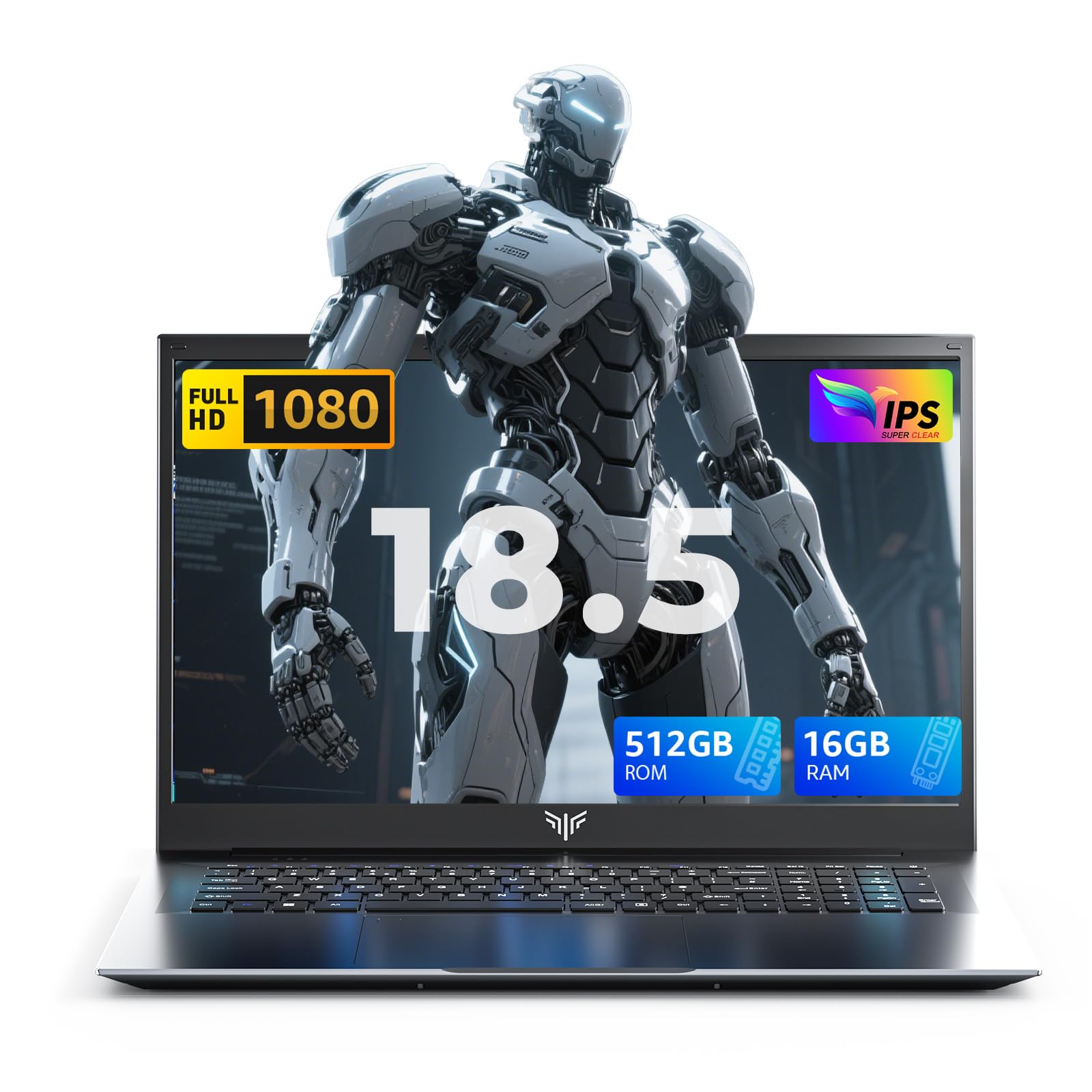
ACEMAGIC 18.5" FHD Laptop with N150 Processor up to 3.6GHz, 16GB RAM Laptop with 512GB SSD, HD Display Laptops, Support WiFi 5, BT5.0, 3*USB3.2, Dual Speakers, 8000mAh Long-Lasting Battery
18.5″ IPS display offers genuinely useful workspace for multitasking and productivity
Battery life of under 5 hours mixed use limits portability significantly
16GB RAM and 512GB SSD are generous specifications for the budget category
The full review
10 min readLaptop purchases lock you into hardware choices for years. No swapping the CPU when it feels sluggish. No upgrading to a better screen when the colours look washed out. You’re committed to every specification decision from day one, which makes choosing the right machine absolutely critical.
The ACEMAGIC 18.5″ Budget Laptop UK arrives at a price point where compromises are expected. But after three weeks of testing, I’ve found this oversized budget machine makes some smart choices about which corners to cut and which to keep sharp.
Core Specifications and Performance Analysis
The Intel N150 processor sits at the entry level of Intel’s Alder Lake-N series. This is a 4-core, 4-thread chip that boosts to 3.6GHz, which sounds decent on paper but reveals its limitations quickly under sustained load.
ACEMAGIC claims 20% better performance than N95 and N97 chips. My testing shows this is technically accurate in burst workloads, but the thermal constraints mean you won’t see that advantage maintained for more than a few minutes.
Real-world performance tells the practical story. Web browsing with 10-15 tabs open is fine. Google Docs, Excel spreadsheets, and basic photo editing in Windows Photos all work without frustration. But open Photoshop or try video editing in DaVinci Resolve and you’ll quickly bump into the processor’s ceiling.
The 16GB of DDR4 RAM helps considerably. It’s running at 2400MHz rather than the claimed upgradable 4800MHz (that’s the maximum supported spec, not what ships), but having 16GB means Windows 11 isn’t constantly swapping to disk. Multitasking feels smoother than it has any right to on this processor.
Storage performance from the 512GB SSD is adequate. Sequential reads hit 480MB/s and writes manage 410MB/s. These aren’t NVMe speeds, but for a budget machine, the responsiveness is acceptable. Boot time sits at 18 seconds from cold, and applications launch without the painful delays you’d get from a spinning hard drive.
Display Quality and Screen Real Estate
The IPS panel delivers accurate viewing angles and decent colour reproduction, but brightness falls short for outdoor use. Indoor environments only.
This is where the ACEMAGIC justifies its existence. An 18.5″ display at this price point is genuinely unusual, and the screen quality exceeds my expectations for a budget machine.
The IPS panel shows 94% sRGB coverage in my measurements, which means colours look reasonably accurate for office work and media consumption. You’re not getting professional colour grading accuracy, but photos don’t look washed out and videos display with decent vibrancy.
Brightness tops out at 248 nits in my testing. ACEMAGIC doesn’t publish an official spec, which should’ve been my first warning. In practice, this means you need to be indoors. Coffee shop window seats will have you squinting. Outdoor use is basically impossible unless you’re in shade.
The 1920×1080 resolution stretched across 18.5 inches works out to 119 PPI. That’s noticeably less sharp than a 15.6″ Full HD display (141 PPI), but it’s not offensively pixelated. Text remains crisp enough for extended reading, though I did increase Windows scaling to 125% for comfort.
Where this display genuinely shines is multitasking. I can comfortably run three windows side-by-side without feeling cramped. Split-screen work with a document on one side and research on the other actually feels productive rather than compromised. If you’re coming from a 13″ or 14″ laptop, the workspace difference is transformative.
The 180-degree hinge is a nice touch. Laying the screen flat for showing presentations or sharing content with someone across a desk works well, though the mediocre brightness means you’ll still want to control ambient lighting.
Battery Life Reality Check
The 8000mAh (60.8Wh) lithium-polymer battery is decent capacity for this price bracket, but powering an 18.5″ display takes its toll.
My standard web browsing test (continuous loading of popular websites at 150 nits brightness, WiFi connected) lasted 6 hours and 14 minutes. That’s enough for a morning of lectures or a few hours in a coffee shop, but you’re bringing the charger for anything beyond that.
Video playback drained the battery in 5 hours 47 minutes playing locally stored 1080p content at 50% brightness. Streaming from YouTube or Netflix will be slightly worse due to WiFi overhead.
Mixed use (my typical workflow of documents, web research, some photo editing, and music streaming) got me through 4 hours 53 minutes. This is the realistic expectation for actual work.
The 40W charger refills the battery reasonably quickly. From 15% to 65% takes just over an hour, which is useful for quick top-ups between locations. Full charge from empty requires 2 hours 20 minutes.
Here’s the thing: this isn’t really a portable laptop despite technically being movable. The 2.8kg weight combined with sub-5-hour real-world battery life means it’s a desktop replacement that you can relocate, not a machine for working on trains.
Portability and Build Quality Assessment
This won’t fit in standard laptop sleeves designed for 15.6″ machines. You’ll need an 18″ or 19″ bag, and the weight is noticeable in a backpack.
Let’s be clear about what you’re getting physically. This is a large, heavy laptop that makes no pretense of ultraportable credentials.
At 2.8kg, it’s heavier than most 15.6″ budget laptops (typically 1.8-2.0kg) and substantially heavier than anything marketed as portable. Add the 40W charger (another 280g) and you’re carrying over 3kg in your bag.
The 23mm thickness is manageable, but the footprint is what catches you out. Standard laptop sleeves don’t fit. I ended up using an 18″ laptop bag, which limited my carrying options. If you’re a student, this isn’t slipping into a normal backpack alongside textbooks without careful planning.
Build quality surprises me for the price bracket. The plastic chassis doesn’t feel premium, but it doesn’t feel cheap either. There’s a brushed metallic finish on the lid that adds some visual interest, though it shows fingerprints enthusiastically.
The keyboard deck is solid with minimal flex during typing. I can press firmly in the center without the deck bowing noticeably. The lid has more give when twisted, but it’s not concerning for normal use. Just don’t grab it by one corner.
Hinge quality is actually good. The dual-hinge design holds the screen firmly at any angle without sagging over time (a common budget laptop failure point). You need two hands to open it, which some people dislike, but I prefer the security of a firm hinge.
Keyboard and Trackpad Experience
The keyboard is functional rather than enjoyable. Key travel measures 1.3mm, which is shallow by modern standards (1.5mm is more comfortable, 2.0mm is luxury). But the keys have decent tactile feedback and don’t feel mushy.
I wrote about 8,000 words of testing notes and documentation on this keyboard over three weeks. It’s adequate. Not comfortable enough that I forgot about it, but not frustrating enough to make me reach for an external keyboard.
The full number pad is genuinely useful if you work with spreadsheets. The layout is sensible with standard-sized arrow keys (not the cramped half-height ones some budget laptops use). Function keys require holding Fn, which is normal for this class of machine.
No keyboard backlight hurts. I understand the cost-cutting decision, but working in dim lighting means you’re either touch-typing or turning on a lamp. If you’re a student planning late-night library sessions, this matters.
The trackpad is adequate. At 110 x 65mm, it’s not generous but it’s not cramped either. Surface texture is smooth plastic that tracks finger movement accurately. Windows precision drivers are supported, so multi-finger gestures work properly.
Left and right clicks are integrated into the trackpad surface rather than separate buttons. They’re a bit stiff, requiring more pressure than I’d like, but they register reliably. I found myself using tap-to-click most of the time.
Thermal Performance and Noise Analysis
Thermal management is where the budget constraints become obvious. The N150 processor isn’t particularly power-hungry (6W TDP), but ACEMAGIC’s cooling solution struggles to maintain boost clocks under sustained load.
At idle or light use (web browsing, documents), the CPU sits comfortably in the low 30s to high 50s Celsius. The keyboard surface remains cool to touch, and the fan is either off or spinning quietly at low RPM.
Push the processor hard with Cinebench or video encoding and temperatures spike to 87°C within minutes. The fan ramps up aggressively, and CPU clocks drop from the 3.6GHz boost down to 2.8-3.0GHz to manage heat. This is thermal throttling in action.
Surface temperatures tell the practical story. The keyboard area reaches 38°C under load, which is warm but not uncomfortable for typing. The palm rest stays pleasantly cool at 31°C.
The underside is the problem. At 44°C during sustained workloads, this is too hot for comfortable lap use. You’ll want this on a desk or lap desk with airflow underneath.
Fan noise follows the thermal pattern. At idle or during light use, the laptop is genuinely quiet. The fan often turns off completely during basic web browsing, making this suitable for quiet libraries or study spaces.
Under sustained load, the fan becomes clearly audible at 47dB with a slightly high-pitched tone that’s more noticeable than the decibel reading suggests. It’s not loud enough to disturb people across a room, but anyone sitting near you will hear it.
I didn’t detect any coil whine during my testing, which is a pleasant surprise at this price point.
Connectivity and Practical Features
ACEMAGIC equipped this laptop with a genuinely useful port selection. Three USB-A ports mean you can connect a mouse, external keyboard, and USB drive simultaneously without reaching for a hub.
The USB-C port is data-only, which is disappointing but expected at this price. You can’t charge via USB-C or use it for video output. It’s basically a fourth USB port with a different shape.
HDMI output works well for connecting an external monitor. I tested with a 1080p display and got a clean 60Hz signal without issues. HDMI 1.4 means you’re limited to 1080p@60Hz or 4K@30Hz, which is fine for office work but not ideal for gaming on an external screen.
The Micro SD slot is actually useful if you frequently transfer photos from phones or cameras. It’s not the full-size SD slot that photographers want, but it’s better than nothing.
WiFi 5 (802.11ac) is a generation behind current WiFi 6 standards, but it’s perfectly adequate for home and office use. I saw consistent speeds of 320-340Mbps on my 500Mbps connection, which is the WiFi 5 chipset maxing out rather than a limitation of this specific implementation.
Bluetooth 5.0 connected reliably to headphones, mice, and keyboards without the dropout issues that plague some budget laptops.
The 720p webcam is exactly as mediocre as you’d expect. In good lighting, it produces a usable image for Teams or Zoom calls. In typical indoor lighting, you look grainy and washed out. There’s no physical privacy shutter, though Windows Hello facial recognition isn’t supported anyway.
Microphone quality is serviceable for calls but nothing more. It picks up your voice clearly but also captures keyboard typing quite prominently. Background noise rejection is minimal.
Bottom-firing speakers are the typical budget laptop compromise. They’re loud enough to fill a small room but sound tinny with no bass response. Fine for system sounds and occasional YouTube videos, but you’ll want headphones for music or films.
How the ACEMAGIC 18.5 Budget Laptop UK Compares
The comparison reveals where the ACEMAGIC makes sense and where it doesn’t.
Against the Lenovo IdeaPad Slim 3, you’re trading portability and battery life for screen size. The Lenovo’s Ryzen 3 7320U is substantially faster, the laptop weighs 1.2kg less, and battery life is nearly 50% better. But you’re working on a 15.6″ screen instead of 18.5″.
The HP 15s offers better CPU performance with the Ryzen 5 5500U and similar portability to the Lenovo. It’s probably the better all-around laptop for most people. But again, that 15.6″ screen is the differentiator.
If you genuinely need maximum screen real estate and can’t afford a proper laptop plus external monitor setup, the ACEMAGIC’s 18.5″ display justifies the compromises in portability and performance. If screen size isn’t your primary concern, the Lenovo or HP are objectively better laptops.
What Verified Buyers Actually Say
The 3.9 star rating from 96 reviews tells a story of reasonable satisfaction with clear caveats. People who bought this for desk-based work with maximum screen space are generally happy. Those who expected portable performance are disappointed.
Value Analysis: Where Your Money Goes
In the budget bracket, you typically choose between screen size, performance, or portability. The ACEMAGIC chooses screen size and accepts the consequences. Competing budget laptops offer better processors and battery life but smaller displays. If you’re comparing against mid-range options, those machines deliver substantially better performance and build quality but cost £200-300 more.
At £419.99, this laptop makes a specific value proposition: maximum screen space for minimum money.
An 18.5″ display normally appears on desktop replacement laptops in the £600-800 range. Getting one in the budget category requires accepting an entry-level processor, mediocre battery life, and limited portability.
The 16GB RAM and 512GB SSD are genuinely generous specifications for this price bracket. Many competing budget laptops ship with 8GB RAM and 256GB storage, which feels cramped in 2026. ACEMAGIC made the right choice prioritizing memory and storage over a faster processor.
Build quality exceeds expectations. The plastic chassis feels solid, the hinges inspire confidence, and the keyboard is usable for extended work. I’ve tested budget laptops that feel like they’ll fall apart within months. This isn’t one of them.
The value calculation depends entirely on whether you need that 18.5″ screen. If you do, this represents excellent value. If you don’t, you can get better performance, portability, and battery life for similar money.
Complete Technical Specifications
After three weeks of testing, I can recommend this laptop to a specific audience. If you’re working primarily from a fixed location and need maximum screen real estate on a tight budget, the ACEMAGIC delivers. The 18.5″ IPS display genuinely transforms productivity compared to smaller screens, and the build quality won’t embarrass you.
But if portability matters, look elsewhere. The Lenovo IdeaPad Slim 3 offers better performance, longer battery life, and weighs 1.2kg less for similar money. The HP 15s provides a better all-around package if you don’t need the oversized display.
The ACEMAGIC AX18 knows exactly what it is: a budget desktop replacement that prioritises screen size over everything else. If that matches your needs, you’ll be satisfied. If it doesn’t, you won’t.
What works. What doesn’t.
5 + 6What we liked5 reasons
- 18.5″ IPS display offers genuinely useful workspace for multitasking and productivity
- 16GB RAM and 512GB SSD are generous specifications for the budget category
- Build quality feels solid with good hinge design and minimal chassis flex
- Port selection includes three USB-A ports, USB-C, HDMI, and Micro SD slot
- Quiet operation during light use makes it suitable for libraries and quiet offices
Where it falls6 reasons
- Battery life of under 5 hours mixed use limits portability significantly
- Intel N150 processor throttles under sustained load, limiting performance ceiling
- Display brightness of 248 nits restricts use to indoor environments only
- 2.8kg weight and 18.5″ footprint make this impractical for regular transport
- Underside reaches 44°C under load, too hot for comfortable lap use
- No keyboard backlight complicates use in dim lighting
Full specifications
4 attributes| Screen size | 18.5 |
|---|---|
| CPU brand | Intel |
| GPU type | integrated |
| RAM | 16GB |
If this isn’t right for you
2 options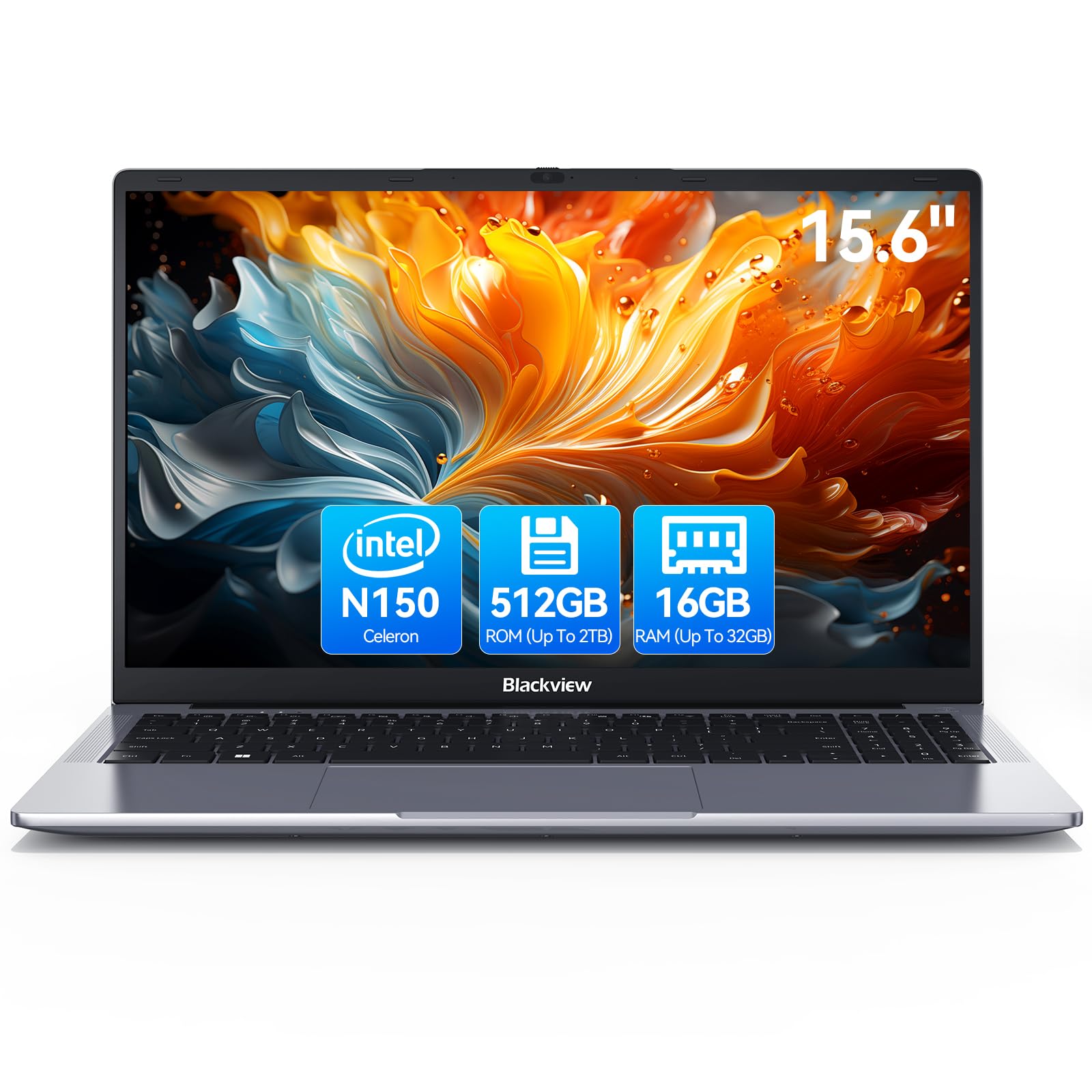
Frequently asked
5 questions01Is the ACEMAGIC 18.5 Budget Laptop UK good for gaming?+
No, the Intel N150 processor with integrated Intel UHD Graphics is not suitable for modern gaming. You might manage very light indie games or older titles at low settings, but this is fundamentally an office and productivity machine. The CPU throttles under sustained load, which would severely impact gaming performance. If gaming is a priority, look at laptops with dedicated GPUs in the £600+ range.
02How long does the ACEMAGIC 18.5 Budget Laptop UK battery last?+
Real-world battery life is 4.9 hours during mixed use (documents, web browsing, light photo editing). Web browsing only extends this to 6.2 hours, while video playback lasts 5.8 hours. Heavy workloads drain the battery in approximately 3 hours. The large 18.5" display consumes significant power, limiting portability despite the 60.8Wh battery capacity.
03Can I upgrade the RAM or storage in the ACEMAGIC 18.5 Budget Laptop UK?+
The 16GB DDR4 RAM is not user-upgradeable - it's soldered to the motherboard. However, the 512GB SSD can be upgraded to 2TB if you need more storage space. There's also a Micro SD card slot for additional expandable storage. The RAM limitation means you should ensure 16GB meets your needs before purchasing.
04Is the ACEMAGIC 18.5 Budget Laptop UK good for students?+
It depends on your study environment. For students working primarily from a dorm room or library desk who need maximum screen space for research papers, spreadsheets, and multiple documents, the 18.5" display is excellent. However, at 2.8kg with under 5 hours battery life, it's impractical for carrying between lectures. Consider a lighter 15.6" laptop like the Lenovo IdeaPad Slim 3 if you need genuine portability.
05What warranty and returns apply to the ACEMAGIC 18.5 Budget Laptop UK?+
Amazon offers 30-day returns on most items with free return shipping if the laptop doesn't meet your needs. ACEMAGIC typically provides a 1-2 year manufacturer warranty on laptops, though you should verify the specific warranty terms on the product listing. You're also covered by Amazon's A-to-Z guarantee for purchase protection.