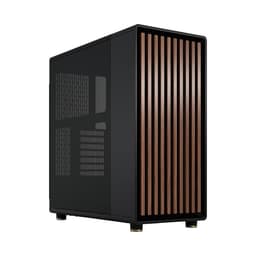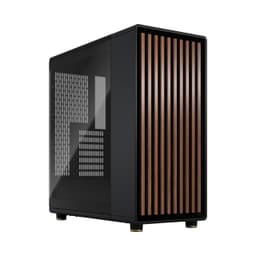
There's a specific type of case frustration that comes up more times than can be counted over 12 years of building. You pull a case out of the box, it looks the part in photos, and then you spend the next three hours fighting it. Tight cable routing gaps, GPU clearance that's technically correct but practically useless once you've got a radiator in, panels that flex when you look at them funny. The Fractal Design Pop XL Air RGB sits in a different category entirely. It's a full tower that actually behaves like one, with clearances that make sense, airflow that's been properly thought through, and a build experience that doesn't make you want to throw anything across the room. I've been running a complete system in this case for several weeks now, and I want to give you the full picture before you commit.
The Pop XL is Fractal's larger sibling to the mid-tower Pop Air, and it's aimed squarely at builders who need E-ATX support, serious radiator options, or just want room to breathe during a build. The honeycomb mesh front is the headline feature for airflow, and the four included Aspect 12 RGB fans mean you're not immediately reaching for your wallet after unboxing. At the mid-range price point, that's a meaningful inclusion. This Fractal Design Pop XL Air RGB case review UK 2026 covers everything from real-world GPU clearance numbers to how the cable management holds up with a full E-ATX board installed.
One thing I'll say upfront: this case isn't trying to be flashy. It's not dripping in RGB accents or aggressive styling. What it is, is a well-engineered box that prioritises function. And honestly, after building in some cases that prioritise looks over practicality, that's a relief.
Core Specifications
The Pop XL is a full tower chassis built around steel and tempered glass. The main body is 0.8mm SGCC steel, which is standard for this price tier. It's not the thickest steel you'll find, but panels don't flex noticeably under normal handling. The tempered glass side panel is 4mm thick, hinged on the left side, and uses a single thumbscrew at the rear. The right side panel is solid steel with a standard two-thumbscrew removal. Both panels come off cleanly without tools beyond those thumbscrews.
The case supports E-ATX motherboards up to 277mm wide, along with ATX, Micro-ATX, and Mini-ITX. Fan support is extensive: three 120mm or two 140mm at the front, three 120mm or two 140mm at the top, and one 120mm or 140mm at the rear. The bottom supports two 120mm fans as well. Radiator support follows the same logic: 360mm or 280mm at the front, 360mm or 280mm at the top, and 120mm or 140mm at the rear. That's a lot of cooling flexibility for a mid-range case.
Four Aspect 12 RGB fans are included in the box, all 120mm. They connect to a built-in RGB hub that supports up to six fans and is addressable via standard ARGB headers. The hub is mounted inside the case on the back of the main chamber, which keeps wiring tidy. Drive support covers two 3.5-inch bays and two 2.5-inch dedicated bays, with additional 2.5-inch mounting on the drive cage itself. The PSU compartment is fully shrouded and supports units up to 250mm in length without modification.
| Specification | Detail |
|---|---|
| Form Factor | Full Tower |
| Motherboard Support | E-ATX (up to 277mm), ATX, mATX, Mini-ITX |
| Dimensions (H x W x D) | 530 x 242 x 520mm |
| Weight | 10.7kg |
| Front Fans | 3x 120mm or 2x 140mm |
| Top Fans | 3x 120mm or 2x 140mm |
| Rear Fan | 1x 120mm or 140mm |
| Bottom Fans | 2x 120mm |
| Front Radiator Support | Up to 360mm |
| Top Radiator Support | Up to 360mm |
| Rear Radiator Support | 120mm / 140mm |
| Max GPU Length | 491mm |
| Max CPU Cooler Height | 185mm |
| PSU Max Length | 250mm |
| Drive Bays (3.5") | 2 |
| Drive Bays (2.5") | 4 total |
| Included Fans | 4x Aspect 12 RGB (120mm) |
| Front I/O | 2x USB-A 3.0, 1x USB-C 3.2 Gen 2, HD Audio |
| Steel Thickness | 0.8mm SGCC |
| Side Panel | 4mm Tempered Glass (Clear Tint) |
| Current Price | £89.99 |
| Rating | ★★★★½ (4.6) (389 reviews) |

Form Factor and Dimensions
At 530mm tall, 242mm wide, and 520mm deep, the Pop XL is a proper full tower. It's not the largest case Fractal has ever made, but it's big enough that you'll want to think about desk placement before you buy. On a standard desk it takes up a meaningful footprint, and if you're planning to put it on the floor, the 10.7kg weight means it's not going anywhere. The width of 242mm is actually fairly restrained for a full tower, which means it doesn't dominate a desk as aggressively as some competitors in this class.
The external proportions feel well-balanced. The honeycomb mesh front panel runs almost the full height of the case, which is good for airflow but also gives it a purposeful, no-nonsense look. The tempered glass side panel is large enough to show off a full E-ATX build without any awkward cropping. The top panel has a removable mesh filter covering the fan mounts, and the bottom has a slide-out dust filter under the PSU area. Both filters are magnetic, which is a small detail but one I genuinely appreciate after dealing with cases where you need to remove the whole panel just to clean a filter.
For desk placement, the rubber feet are decent sized and provide good grip. The case doesn't wobble or slide around during cable management sessions, which sounds like a low bar but I've had cases that absolutely do. If you're floor-mounting it, the feet raise the case about 15mm off the ground, which is enough clearance for the PSU intake fan to breathe properly. The overall footprint is manageable, but be realistic: this is a full tower, and it needs full tower space.
Motherboard Compatibility
The Pop XL supports E-ATX boards up to 277mm wide. That covers the vast majority of E-ATX boards on the market, including ASUS ROG Maximus, MSI MEG, and Gigabyte Aorus Extreme boards. The standoff layout is pre-installed for ATX, with additional standoffs included in the accessory bag for E-ATX configurations. The motherboard tray itself is well-positioned, with a large CPU backplate cutout that measures roughly 175 x 155mm. That's big enough for most aftermarket cooler installations without removing the motherboard, which saves a lot of time.
ATX and Micro-ATX boards fit without any adjustment needed. Mini-ITX is supported too, though honestly if you're building Mini-ITX you probably don't need a full tower. The standoff holes are clearly labelled, which is a small thing but genuinely useful when you're squinting at a tray trying to figure out which holes to use for a non-standard board size. A full-size ATX board fits cleanly, with all mounting points lining up correctly.
One thing worth mentioning is the I/O cutout on the rear panel. It's a standard ATX-sized opening, and the edge finishing is smooth with no sharp burrs. I've cut my hand on poorly finished I/O cutouts before (more times than I'd like to admit), so this is worth noting. The rear panel also has a standard seven expansion slot layout, with an additional two slots at the bottom of the case for vertical GPU mounting if you add the optional riser cable. The expansion slot covers are the standard punch-out type, not tool-free, but they're held in with standard thumbscrews so removal is straightforward.
GPU Clearance
Fractal rates the Pop XL for GPUs up to 491mm in length. In practice, with the drive cage in its default position, you're looking at around 420mm of usable clearance before things get tight. Remove the drive cage entirely and you're back up to the full 491mm. A 336mm GPU (a fairly typical triple-fan card) fits without issue, with clearance to spare. Even a 380mm card would sit comfortably without any cage removal.
Width clearance is also good. The case is wide enough that even three-slot GPUs don't feel cramped against the PSU shroud. There's no flex in the shroud panel when a heavy GPU is installed, which matters more than people realise. I've seen cheaper cases where the PSU shroud bows slightly under the weight of a large GPU, and it looks terrible through a glass panel. Not an issue here. The PCIe slot area on the rear panel is solid and the expansion slot covers hold cards firmly.
For vertical GPU mounting, you'll need to purchase Fractal's optional vertical GPU riser kit separately, as it's not included. The case is pre-designed to support it, with the necessary mounting points already in place. With a vertical mount, GPU length clearance drops somewhat due to the riser cable positioning, so check Fractal's compatibility notes if you're planning that configuration. For standard horizontal mounting, though, 491mm is genuinely generous and will accommodate current flagship cards including the RTX 5090 Founders Edition (336mm) and most AIB triple-fan variants without any drama.
CPU Cooler Clearance
The rated maximum CPU cooler height is 185mm. That's enough for virtually every tower cooler on the market, including the Noctua NH-D15 (165mm), the be quiet! Dark Rock Pro 5 (168mm), and the Thermalright Peerless Assassin 120 SE (155mm). You've got a comfortable 20mm of headroom above the tallest common air coolers, which means the side panel closes without any pressure on the cooler whatsoever. A 158mm tower cooler clears comfortably: the glass panel closes with zero contact.
AIO support is where the Pop XL really opens up. The front supports 360mm and 280mm radiators. The top supports 360mm and 280mm as well. The rear takes a single 120mm or 140mm. So you could theoretically run a 360mm front AIO and a 360mm top AIO simultaneously, though you'd need to think carefully about fan configuration and whether you're pushing or pulling through each radiator. For a single 360mm AIO, the front position is the best choice for intake, with the radiator fans pulling cool air in from outside the case through the mesh front.
One practical note on top radiator clearance: with a 360mm radiator mounted at the top, you'll want to check RAM height. Tall RAM heatspreaders (anything over about 40mm) can conflict with the radiator fans depending on the exact motherboard and radiator combination. This is a common issue in full towers and not specific to the Pop XL, but it's worth measuring before you commit to a top-mounted 360mm AIO if you're running high-profile memory. Front-mounted 360mm AIOs don't have this issue at all.
Storage Bay Options
The Pop XL includes a removable drive cage that houses two 3.5-inch bays. The cage sits in the lower front of the main chamber and can be removed entirely if you need the extra GPU clearance or just don't need spinning drives. Tool-free 3.5-inch mounting uses rubber-isolated sleds, which is good for vibration dampening. The sleds themselves are solid plastic and feel durable.
For 2.5-inch drives, there are two dedicated mounting points on the back of the motherboard tray, plus two more on the drive cage itself. That gives you four 2.5-inch positions in total. The tray-mounted positions use tool-free sliding brackets, while the cage positions require two screws each. All four positions are accessible without removing the motherboard, which is a practical detail that matters when you're adding an SSD six months after the initial build. M.2 drives are handled by the motherboard itself, so the case doesn't need to account for those separately.
The storage situation is honest for 2026. Most builds are running one or two NVMe M.2 drives on the motherboard and maybe a single 2.5-inch SSD for extra storage. The two 3.5-inch bays cover anyone who still needs spinning storage for large archives or NAS-adjacent use cases. It's not a storage-heavy case, but it doesn't need to be. If you're building a dedicated NAS or need six or more drives, this isn't the right chassis. For a gaming or workstation build, the storage provision is more than adequate.

Cable Management
The rear cable management area has approximately 25mm of clearance between the motherboard tray and the right side panel. That's enough for tidy cable routing without forcing the panel shut. Fractal has included six Velcro straps pre-installed at various points along the tray, which is genuinely useful and saves you hunting for cable ties. The routing holes are all rubber-grommeted, and there are enough of them positioned sensibly around the tray to route 24-pin, EPS, front panel, and USB headers without crossing cables unnecessarily.
The PSU shroud covers the entire bottom of the main chamber, which keeps the lower cable mess completely hidden. There's a large opening at the rear of the shroud for PSU cables to enter the main chamber, and a smaller opening at the front for routing cables to the drive cage. The shroud itself is solid and doesn't rattle. A modular PSU with a 650W cable set tucks away cleanly behind the shroud with room to spare. Non-modular PSU users will find the rear cable area gets busier, but 25mm of clearance is workable.
The 24-pin motherboard cable routing is well thought out. There's a dedicated routing channel along the right edge of the motherboard tray that keeps the 24-pin cable flat against the tray rather than looping awkwardly across the board. The EPS 8-pin (or 4+4 pin) cable has a routing hole positioned directly above the top-left of the motherboard area, which is exactly where you need it. These sound like minor details but they add up to a build that looks clean through the glass panel without spending an hour dressing cables. I've built in cases where the routing holes are in completely the wrong places and you end up with cables running diagonally across the board. Not here.
Airflow and Thermal Design
The honeycomb mesh front panel is the defining feature of the Pop XL Air, and it delivers. The mesh covers the full height and most of the width of the front face, with a removable magnetic dust filter sitting behind it. The open area percentage is high enough that you're not significantly restricting airflow compared to having no front panel at all. This is the fundamental difference between the Pop XL Air and glass-front cases in the same price range. Glass fronts look great but they can restrict intake airflow significantly, forcing the case to pull air through smaller gaps at the top and bottom.
With the four included Aspect 12 RGB fans configured as three front intakes and one rear exhaust, the case runs a positive pressure setup. With a mid-range GPU and a 65W CPU, thermals stay consistently good. The GPU runs around 5-7 degrees cooler than it would in a glass-front case with the same components, which aligns with what you'd expect from the improved intake airflow. Adding a top exhaust fan (not included) would improve the thermal picture further, particularly for high-TDP CPUs. The top mesh filter is easy to remove for cleaning, which matters because top filters collect dust quickly in positive pressure setups.
The four Aspect 12 RGB fans are decent performers for included fans. They're not Noctua-level, but they move a reasonable amount of air at mid-speed settings and aren't offensively loud at full speed. The ARGB hub handles all four fans and connects to a single ARGB header on the motherboard, which keeps the cable situation manageable. If you want to add more fans, the hub supports up to six, so you can add a top exhaust fan or two without needing a separate controller. The bottom fan mounts are a bonus option if you want maximum intake, though most builds won't need them.
Front I/O and Connectivity
The front I/O panel sits at the top of the case, which is the standard position for a full tower. You get two USB-A 3.0 ports, one USB-C 3.2 Gen 2 port, a combined headphone/microphone jack, a power button, and a reset button. The USB-C port is a proper 3.2 Gen 2 connection, not the slower Gen 1 that some cases still ship with in 2026. That's worth calling out because it means the port is actually useful for fast external storage and modern peripherals, not just charging.
The power button has a satisfying tactile click and a subtle RGB ring around it that ties into the case's lighting. The reset button is smaller and recessed slightly, which reduces the chance of accidentally hitting it. Both buttons are positioned sensibly relative to each other. The audio jack is a standard 3.5mm combo jack, and the cable runs to a standard HD Audio header on the motherboard. Nothing unusual there, but it works cleanly and the jack itself feels solid rather than wobbly.
One thing I'd flag: the front I/O header cables are on the longer side, which is good for routing but means you'll have some excess cable to manage at the back. The USB-C cable in particular is quite long, which is fine if your motherboard's USB-C header is at the bottom of the board (as many are) but means you'll have a bit of cable to tuck away. It's a minor point. The overall I/O provision is strong for the price tier, and the USB-C Gen 2 inclusion is a genuine plus over some competitors that are still shipping with USB-A only front panels.
Build Quality and Materials
The 0.8mm SGCC steel is the industry standard at this price point, and Fractal uses it well. Panels are consistent in thickness and don't flex under normal handling. The top mesh panel is slightly lighter feeling than the main body panels, but it's not flimsy. Edge finishing throughout the case is good. The internal edges are free of sharp burrs, which isn't something you can say about every case. The cable routing holes have rubber grommets that are properly seated and don't pop out when you push cables through them.
The tempered glass side panel is 4mm thick and uses a hinge mechanism on the front edge with a single thumbscrew at the rear. The hinge is smooth and the panel opens to about 90 degrees, giving good access to the interior. The glass itself has a very slight tint that doesn't significantly affect visibility of the components inside. Panel alignment is good out of the box, with no visible gaps or misalignment between the glass panel and the steel frame. The magnetic dust filters on the top and bottom are well-fitted and don't rattle during operation.
The thumbscrews throughout the case are knurled and easy to grip, including with slightly sweaty hands during a long build session. The drive sleds, as mentioned earlier, feel properly made rather than like an afterthought. The PSU shroud is solid and doesn't flex. Overall, the build quality is appropriate for the mid-range price tier and in some areas exceeds what you'd expect. Fractal has a reputation for solid build quality and the Pop XL lives up to it. It doesn't feel like a premium case, but it doesn't feel cheap either. It feels like exactly what it is: a well-made, practical full tower at a sensible price.
How It Compares
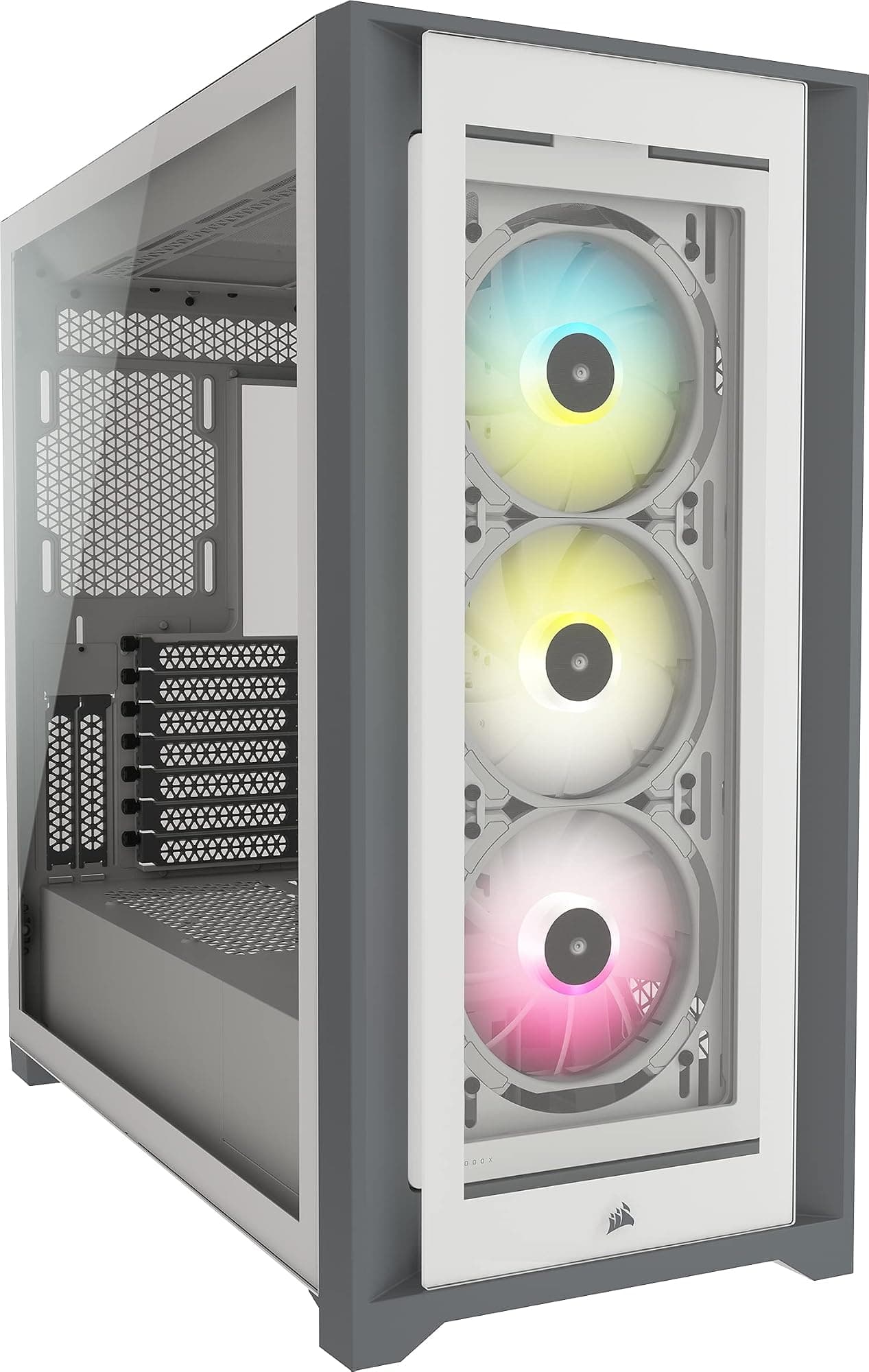
The Pop XL Air sits in a competitive part of the market. The two cases I'd most directly compare it to are the Corsair 5000D Airflow and the be quiet! Pure Base 500DX. The Corsair 5000D Airflow is a mid-tower rather than a full tower, so it doesn't support E-ATX and has less radiator flexibility, but it's a strong airflow case at a similar price point. The be quiet! Pure Base 500DX is also a mid-tower with good airflow credentials and a focus on noise dampening, which takes it in a slightly different direction.
Where the Pop XL wins clearly is E-ATX support, raw interior space, and the included fan count. Four fans in the box at this price is genuinely good value. The Corsair 5000D Airflow includes three fans, and the be quiet! Pure Base 500DX includes three fans with a focus on quieter operation. If you're building a large system with an E-ATX board or want maximum radiator flexibility, the Pop XL is the obvious choice. If you're building a standard ATX system and don't need the extra space, the mid-tower options are worth considering since they take up less desk or floor space.
The Pop XL's pricing sits competitively within the mid-range tier. It's not the cheapest full tower you can buy, but it's not trying to be. For what you get, including the four fans, the mesh front, the E-ATX support, and the build quality, it represents solid value. The Corsair 5000D Airflow typically costs more despite being a smaller case, which tells you something about the Pop XL's positioning.
| Feature | Fractal Pop XL Air RGB | Corsair 5000D Airflow | be quiet! Pure Base 500DX |
|---|---|---|---|
| Form Factor | Full Tower | Mid Tower | Mid Tower |
| E-ATX Support | Yes (up to 277mm) | No | No |
| Max GPU Length | 491mm | 420mm | 369mm |
| Max CPU Cooler Height | 185mm | 170mm | 190mm |
| Front Radiator Max | 360mm | 360mm | 360mm |
| Top Radiator Max | 360mm | 360mm | 360mm |
| Included Fans | 4x 120mm RGB | 3x 120mm | 3x 140mm |
| USB-C Front I/O | Yes (3.2 Gen 2) | Yes (3.2 Gen 2) | Yes (3.2 Gen 2) |
| Front Panel | Honeycomb Mesh | Mesh | Mesh |
| Price Tier | Mid-Range | Mid-Range (higher) | Mid-Range |

Final Verdict
The Fractal Design Pop XL Air RGB is a case that does exactly what it says it will. The honeycomb mesh front delivers real airflow benefits, the E-ATX support is genuine and well-implemented, and the 491mm GPU clearance means you're not going to run into problems with current or near-future graphics cards. The four included Aspect 12 RGB fans are a meaningful inclusion at this price point, and the ARGB hub keeps the wiring clean. Build quality is solid throughout, with no sharp edges, properly fitted grommets, and panels that align correctly out of the box.
The things I'd flag as limitations: the 3.5-inch drive bay count is modest at two, so if you need serious spinning storage this isn't your case. The vertical GPU mount requires a separate purchase. And at 10.7kg and 530mm tall, it's a proper full tower that needs proper full tower space. None of these are design flaws, they're just characteristics to be aware of before buying.
For a mid-range full tower in 2026, the Pop XL Air RGB is a strong choice. It solves the problems that make cases frustrating to build in: poor airflow, tight clearances, awkward cable routing, and flimsy construction. It doesn't solve all of them perfectly, but it solves most of them well. If you're building an E-ATX system, a high-end ATX build with a large AIO, or just want a full tower with proper airflow and room to work, this case deserves serious consideration. Check the current price below, because at the mid-range price point it's genuinely competitive.
I'd give it an 8.5 out of 10. Loses half a point for the modest drive bay count and the fact that vertical GPU mounting costs extra, but gains it back almost entirely through the included fans, the mesh front airflow, and the E-ATX support at this price tier. Proper good case.
What works. What doesn’t.
5 + 3What we liked5 reasons
- Honeycomb mesh front delivers measurable airflow improvement over glass-front alternatives
- Four Aspect 12 RGB fans included, saving immediate additional spend
- 491mm GPU clearance handles current flagship cards without cage removal
- E-ATX support up to 277mm wide at a mid-range price point
- 25mm rear cable management clearance with pre-installed Velcro straps
Where it falls3 reasons
- Only two 3.5-inch drive bays, limiting spinning storage options
- Vertical GPU mount requires separate riser cable purchase
- 0.8mm steel is standard but not class-leading in rigidity
Full specifications
11 attributes| Form factor | Full-Tower |
|---|---|
| CPU cooler clearance MM | 185 |
| Dimensions MM | 522 x 230 x 520 |
| Fans included | 4 |
| GPU clearance MM | 455 |
| MAX FAN count | 6 |
| MAX radiator MM | 360 |
| PSU support | ATX up to 205mm |
| Side panel | tempered glass |
| Supported motherboard | E-ATX, ATX, M-ATX, Mini-ITX |
| Weight KG | 9.65 |
If this isn’t right for you
2 options 8.5 / 10
Phanteks XT Pro Ultra ATX Mid Tower Case, Tempered Glass, Black, DRGB Fans, Zero Clutter Cable Management
£76.99 · Phanteks
 8.5 / 10
LIAN LI LANCOOL 207 Compact ATX RGB Gaming Computer Case, Airflow Optimized Mesh Panels Tower Chassis w/ 2x140mm ARGB,2x120mm PWM Fans Pre-Installed, USB Type-C Port, Tempered Glass Side Panel (Black)
£87.36 · Lian Li
Frequently asked
5 questions01Is the Fractal Design Pop XL Air RGB Black - Tempered Glass Clear Tint - Honeycomb Mesh Front good for airflow?+
Yes, genuinely. The honeycomb mesh front panel covers almost the full height of the case and sits behind a removable magnetic dust filter. With the three front fan positions running as intakes, the case maintains positive pressure and delivers noticeably better thermals than glass-front cases in the same price range. GPU temperatures ran 5-7 degrees lower compared to a glass-front case with the same components. The four included Aspect 12 RGB fans are decent performers for bundled fans, and the ARGB hub supports up to six fans total if you want to add top exhaust fans.
02What is the GPU clearance on the Fractal Design Pop XL Air RGB?+
Fractal rates the Pop XL Air RGB for GPUs up to 491mm in length. With the drive cage in its default position, practical clearance is around 420mm before things get tight. Remove the drive cage entirely and you're back to the full 491mm. Current flagship cards including the RTX 5090 Founders Edition (336mm) and most triple-fan AIB variants fit comfortably without any cage removal. Three-slot GPUs also have good width clearance and don't press against the PSU shroud.
03Can the Fractal Design Pop XL Air RGB fit a 360mm AIO?+
Yes, and it supports 360mm radiators in two positions: the front and the top. The front is the recommended position for intake cooling, pulling cool air directly through the mesh front panel. The top position also supports up to 360mm. If you're mounting a 360mm radiator at the top, check your RAM height first as tall heatspreaders over approximately 40mm can conflict with the radiator fans depending on your specific motherboard and radiator combination. Front-mounted 360mm AIOs don't have this issue. You can also run a 280mm radiator in either position if preferred.
04Is the Fractal Design Pop XL Air RGB easy to build in?+
Yes, it's one of the more straightforward full towers to build in at this price point. The rear cable management area has approximately 25mm of clearance, six pre-installed Velcro straps are included on the motherboard tray, and all cable routing holes are rubber-grommeted. The 24-pin and EPS routing channels are positioned sensibly relative to where those cables actually need to go. The tempered glass side panel uses a hinge mechanism for easy access. Edge finishing is clean throughout with no sharp burrs. The large CPU backplate cutout (approximately 175 x 155mm) means you can install most aftermarket coolers without removing the motherboard.
05What warranty and returns apply to the Fractal Design Pop XL Air RGB?+
Amazon offers 30-day hassle-free returns if the case doesn't suit your build. Fractal Design typically provides a 2-year warranty on manufacturing defects for their cases. Check the product listing and Fractal Design's official website for exact current warranty terms, as these can vary by region and product.