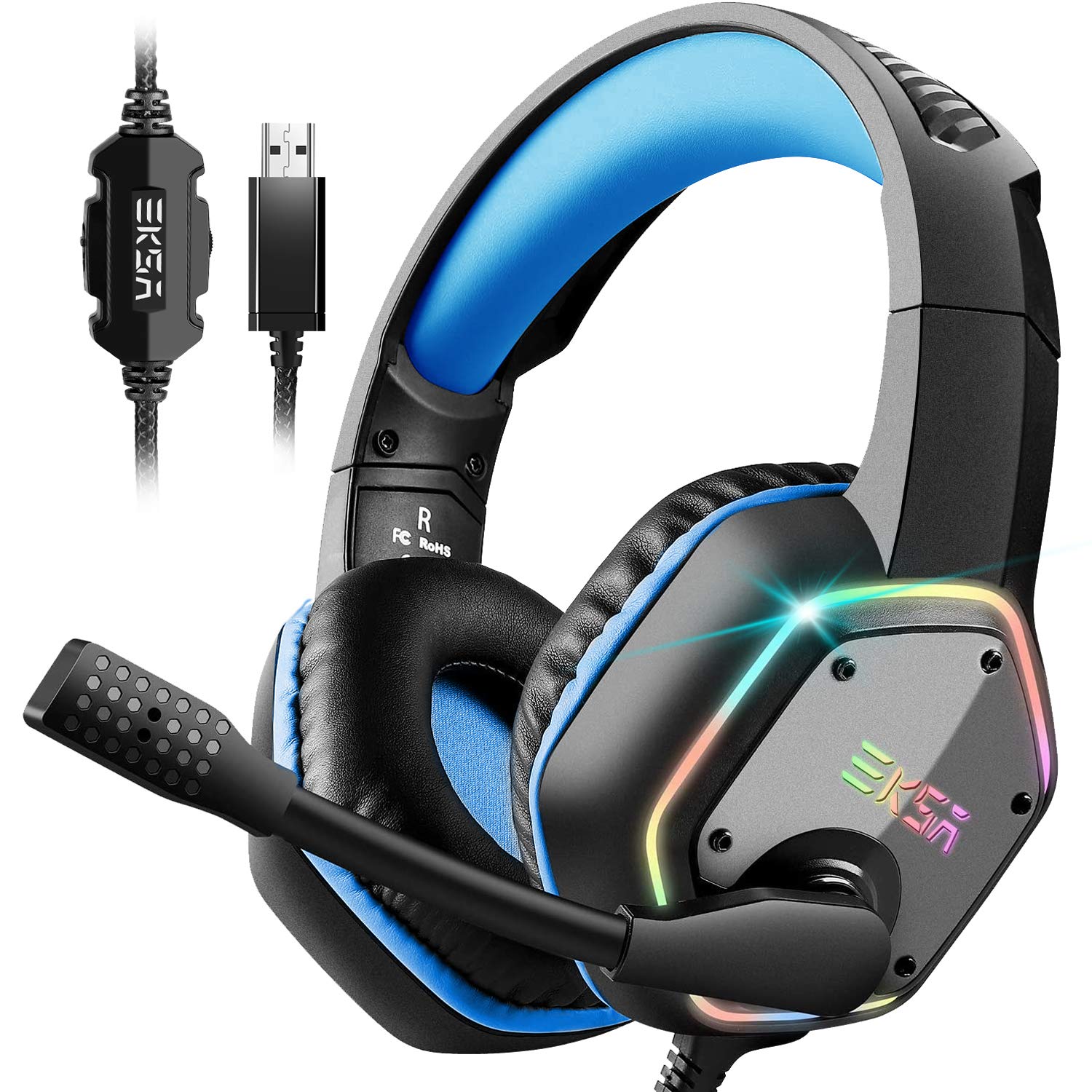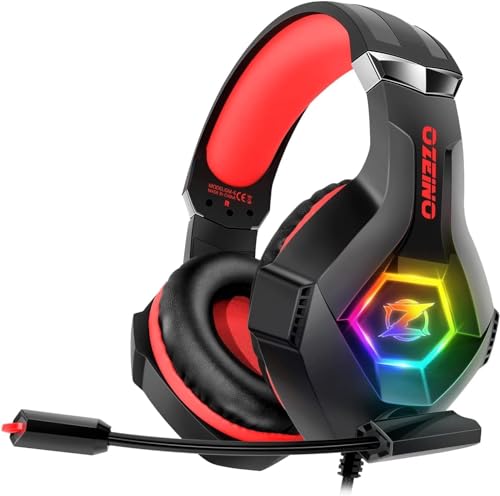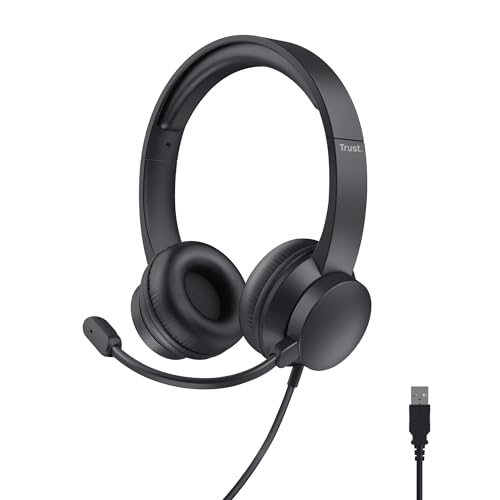

EKSA E1000 USB Gaming Headset for PC - Computer Headphones with Microphone/Mic Noise Cancelling, 7.1 Surround Sound Wired Headset & RGB Light - Gaming Headphones for PS4/PS5 Console Laptop (Blue)
- Detachable boom mic is rare at this price point
- Both USB and 3.5mm cables included in the box
- 50mm drivers deliver satisfying bass impact for casual gaming
- Leatherette earcups trap heat during long sessions
- Virtual 7.1 surround adds little real positional benefit
- Narrow soundstage limits precision in competitive play
Detachable boom mic is rare at this price point
Leatherette earcups trap heat during long sessions
Both USB and 3.5mm cables included in the box
The full review
14 min readIn competitive gaming, the margin between a successful flank and a respawn screen often comes down to spatial audio accuracy. Specifically: how quickly your headset can deliver directional sound cues with enough precision that your brain processes them before your opponent acts. That's not a marketing claim. It's measurable, and it's the first thing I test when a new headset lands on my desk.
The EKSA E1000 Gaming Headset arrived as part of a broader budget-tier sweep I ran across several weeks in May 2026. At its price point, it sits in one of the most contested segments of the UK gaming headset market. You've got Turtle Beach, HyperX, and a dozen lesser-known brands all fighting for the same wallet. So the question isn't whether the E1000 is the best headset money can buy. It clearly isn't. The question is whether it's the right headset for someone who needs functional gaming audio without spending serious money. And that's a genuinely useful question to answer.
I tested the EKSA E1000 across several weeks of daily use, primarily on PC via 3.5mm and USB connections, with additional sessions on PS5 and Nintendo Switch. Testing covered competitive FPS (Valorant, CS2), battle royale (Warzone), and longer story-driven sessions (Elden Ring, Cyberpunk 2077). I also ran voice calls and Discord sessions to properly evaluate the microphone. Here's what I found.
Core Specifications
The EKSA E1000 is a wired over-ear gaming headset built around 50mm dynamic drivers. It connects via a dual 3.5mm jack (one for audio, one for mic) or a single USB-A connector, depending on which cable you use. The headset ships with both, which is a practical touch at this price. The USB connection enables the onboard virtual 7.1 surround processing, while the 3.5mm route gives you a straightforward stereo signal.
Build materials are predominantly plastic, which is expected at this tier. The headband uses a padded leatherette strip, and the earcups are similarly leatherette-covered. The boom microphone is flexible and detachable via a 3.5mm socket on the left earcup. Weight sits at a claimed 260g, which I found accurate when I put it on a kitchen scale. That's not light, but it's not unusually heavy for a headset with this driver size either.
The frequency response is rated at 20Hz to 20kHz, which is standard spec-sheet territory and tells you very little on its own. Impedance is listed at 32 ohms, meaning it'll drive fine from any standard headphone output including a phone or console controller. Sensitivity is rated at 108dB/mW. Below is the full specification breakdown.
Audio Specifications
The E1000 uses a single 50mm dynamic driver per ear. Dynamic drivers are the standard choice at this price point, and there's nothing wrong with that. Planar magnetic drivers offer better transient response and lower distortion, but they cost significantly more to manufacture and you won't find them anywhere near this budget tier. What matters with dynamic drivers is tuning, and that's where things get interesting.
At 32 ohms impedance, the E1000 is easy to drive. You won't need a dedicated DAC/amp, and it'll reach comfortable listening volumes from a laptop headphone jack, a PS5 DualSense controller, or a phone. The 108dB/mW sensitivity rating means it's reasonably efficient, though in practice I found the USB connection delivered noticeably more headroom than the 3.5mm route. The difference isn't dramatic, but if you're on PC, USB is the better choice.
The rated frequency response of 20Hz to 20kHz is the manufacturer's floor-to-ceiling claim, not a flat response curve. In practice, the actual usable response narrows at the extremes, as it does with virtually every budget headset. Sub-bass below 40Hz rolls off noticeably, and the upper treble above 16kHz loses energy. Neither of these is a dealbreaker for gaming. The frequencies that matter most for positional audio cues (roughly 200Hz to 8kHz) are where this headset spends most of its energy, and that's the right priority for the target audience.
Sound Signature
The E1000 has a V-shaped sound signature. Bass and treble are both pushed forward relative to the midrange, which is a common tuning choice for gaming headsets because it makes explosions feel impactful and high-frequency effects like gunshots and footsteps feel crisp. It's not a neutral or reference-grade signature, and it's not trying to be. If you're coming from a pair of studio headphones, the colouration will be immediately obvious.
For competitive gaming, the V-shape is a reasonable trade-off. The elevated treble helps with directional cues. Footsteps in Valorant were audible and reasonably well-defined. The boosted bass adds some weight to in-game audio that makes the experience feel more cinematic than a flat response would. But the recessed midrange does affect voice clarity, both in-game character dialogue and teammate comms. It's not severe, but it's there.
For music listening, the V-shape suits genres like EDM, hip-hop, and anything with a heavy low end. It's less flattering for acoustic music, jazz, or anything where vocal presence and instrument separation matter. I wouldn't recommend this headset as a music-first purchase, but that's not what it's for. As a gaming headset that you might occasionally use for music, it's fine. Just don't expect audiophile-grade reproduction.
Sound Quality
Soundstage on the E1000 is narrow. This is the honest truth about most closed-back budget headsets, and the E1000 doesn't escape it. The stereo image feels intimate rather than wide, which affects how convincingly the headset can place sounds in three-dimensional space. In Warzone, I found that sounds directly to my left and right were well-defined, but distinguishing between sounds at 10 o'clock versus 11 o'clock required more concentration than it would on a wider-staging headset like the HyperX Cloud II.
Imaging is adequate for casual and semi-competitive play. Footsteps are audible. Directional gunfire is distinguishable. In CS2 deathmatch, I could reliably identify which side of a corridor an enemy was approaching from, which is the baseline requirement. What the E1000 doesn't do is give you the kind of precise layered imaging where you can pinpoint an enemy's exact position in a multi-storey building. That level of spatial resolution requires either a wider soundstage or genuinely good virtual surround processing, and the E1000's 7.1 mode doesn't quite get there.
Bass extension is decent for the price. The 50mm drivers produce a satisfying low-end thump in explosions and heavy in-game events. It's not tight or controlled bass, but it's present and it adds to the experience. Treble clarity is reasonable in the upper-mid frequencies but gets a bit harsh at high volumes. I noticed some sibilance on certain sound effects during extended Cyberpunk 2077 sessions. Keeping the volume at around 70-75% of maximum largely eliminated this. For movies, the headset performs similarly to its gaming profile: good enough for action content, less impressive for dialogue-heavy drama.
Microphone Quality
The boom microphone is a detachable cardioid design, connecting via a 3.5mm socket on the left earcup. The flexible gooseneck arm lets you position it reasonably close to your mouth, which is important for a cardioid mic because proximity matters for pickup quality. The arm holds its position well and doesn't droop during use, which is a small but genuinely useful thing that cheaper mics often get wrong.
Voice clarity is functional. In Discord calls during several weeks of testing, my teammates could hear me clearly in quiet environments. The cardioid pattern does a reasonable job of rejecting sound from behind the mic, so keyboard noise and background audio were reduced but not eliminated. In a noisy room (flatmate watching TV in the background, for instance), the mic picked up more ambient sound than I'd like. It's not a noise-cancelling microphone in any meaningful sense, so if your gaming environment is loud, that's worth knowing.
Compared to the microphones on headsets like the HyperX Cloud Stinger 2 or the Corsair HS35, the E1000's mic is broadly comparable. None of these budget mics are going to replace a dedicated USB microphone for streaming or content creation. But for in-game comms and Discord, the E1000's mic does what it needs to do. The detachable design is a genuine plus: when you're not gaming, you can pull the mic off and use the headset as a regular pair of headphones without a boom arm sticking out of the side of your head.
Comfort and Build
Comfort is where budget headsets often fall apart, and the E1000 is a mixed story here. The earcups are generously sized and the leatherette padding is soft enough for the first hour or so. The headband padding is adequate. Clamp force is moderate, which means the headset stays on your head during movement without feeling like it's gripping your skull. For shorter sessions, it's genuinely comfortable.
After two to three hours of continuous wear, the leatherette earcups start to trap heat. This is a known issue with leatherette at any price point, but premium headsets tend to use perforated or hybrid materials that breathe better. The E1000 doesn't. During a long Elden Ring session on a warm evening, I found myself taking the headset off for a few minutes every couple of hours to let my ears cool down. It's not a dealbreaker, but if you regularly do four-plus hour gaming sessions, it's worth factoring in.
Build quality is plastic throughout, which is expected. The headset doesn't feel flimsy exactly, but it doesn't feel particularly solid either. The headband adjustment mechanism has a satisfying click and holds its position, which is good. The earcup swivel has limited range compared to higher-end headsets, which can make finding the perfect fit slightly fiddly. For glasses wearers, the moderate clamp force means the headset doesn't press the arms of your glasses into your head too aggressively. I tested it with a pair of standard-width frames and found it tolerable for sessions up to about 90 minutes before the pressure became noticeable.
Connectivity
The E1000 is a wired headset. Full stop. There's no wireless option, no Bluetooth, no 2.4GHz dongle. You get a dual 3.5mm cable (splitting into separate headphone and microphone jacks) and a USB-A cable that combines both audio and mic into a single connector. Both cables are included in the box, which is a practical decision that makes the headset immediately usable across a wider range of devices.
The USB connection is the better option on PC. It enables the virtual 7.1 surround processing and gives the onboard audio a bit more power to work with. The 3.5mm connection is what you'll use on consoles, Switch, and mobile. On PS5, the dual 3.5mm cable plugs into the DualSense controller's headphone jack, which works fine. On Xbox Series X/S, the same approach applies. The Switch works with the 3.5mm connection in both handheld and docked mode (via the dock's USB port for the USB cable, or the headphone jack in handheld).
Cable length is approximately two metres, which is adequate for most desktop setups. There's an inline control unit on the cable with a volume wheel and a mic mute button. The volume wheel has a slightly cheap feel but works reliably. The mute button has a tactile click that confirms activation, which is more useful than you'd think during a heated match when you need to mute quickly without looking down. One thing I'd flag: the cable is not braided, so it picks up tangles more readily than a braided alternative. Not a serious issue, but worth knowing if cable management matters to you.
Battery Life
The EKSA E1000 is a wired headset, so there is no battery to consider. You plug it in and it works. This is actually a meaningful advantage in the budget category, where wireless headsets at comparable prices tend to have poor battery life, unreliable connections, or both. With the E1000, you never have to remember to charge it, you never get cut off mid-match because the battery died, and there's no latency introduced by a wireless protocol.
For the target audience of this headset, students and casual gamers on a tight budget, the wired-only design is unlikely to be a significant limitation. Most budget gaming setups involve a desktop or laptop within cable reach. The two-metre cable is long enough for most scenarios. If you're gaming from a sofa three metres from your TV, you might find the cable length restrictive, but that's a niche use case for a headset in this category.
The absence of a battery also means no charging port to wear out, no proprietary cable to lose, and no firmware updates required to maintain battery calibration. These are small things, but over a year or two of ownership they add up. Wired headsets at this price tier simply have fewer failure points than their wireless counterparts, and that's a genuine reliability argument in their favour.
Software and Customisation
EKSA provides a companion application for Windows that enables EQ adjustment and controls the virtual 7.1 surround processing. The software is functional but basic. You get a handful of preset EQ profiles (Gaming, Music, Movie, and a flat mode) and the ability to toggle the 7.1 surround on or off. There's no parametric EQ, no per-band adjustment, and no mic monitoring feature in the software itself, though Windows' own mic monitoring in Sound settings fills that gap adequately.
The virtual 7.1 surround is worth addressing directly, because it's a feature that gets marketed heavily on budget headsets and often delivers less than it promises. On the E1000, the surround processing does create a slightly wider perceived soundstage compared to stereo mode. In Warzone, I noticed that sounds felt marginally more spread out with it enabled. But the improvement is modest, and for competitive play in games like Valorant or CS2, I actually preferred stereo mode. The surround processing introduces a slight smearing of the stereo image that can make precise positional cues harder to read, not easier.
Firmware updates are not something I encountered during the testing period, and EKSA's software doesn't appear to include an auto-update mechanism. The software itself installed without issue on Windows 11 and didn't require a restart. It's not going to win any awards for UI design, but it does what it needs to do. If you're on Mac or Linux, the software won't run, but the headset itself functions as a standard USB audio device without it. You just lose the EQ presets and the 7.1 toggle.
Compatibility
The E1000 covers a broad range of platforms, which is one of its genuine strengths. The USB-A connection works on PC and PS4/PS5 (via the console's USB ports). The 3.5mm connection works on Xbox Series X/S (controller jack), Nintendo Switch (handheld mode headphone jack or docked via USB), and any mobile device with a 3.5mm port. For devices without a 3.5mm port, you'd need a USB-C to 3.5mm adapter, which isn't included.
On PS5, the USB connection worked immediately without any configuration. The headset was recognised as a USB audio device and audio routed through it without needing to adjust system settings beyond selecting it as the output device. On Xbox, the 3.5mm controller connection worked fine, though you lose the mic functionality unless you use the combined 3.5mm cable. The split cable (separate headphone and mic jacks) doesn't work with Xbox controllers, which only have a single combined 3.5mm port. Worth knowing before you buy.
Switch compatibility in handheld mode is straightforward via the 3.5mm jack. In docked mode, the USB-A cable works for audio but the Switch's USB audio support is limited, so results may vary depending on the game. For mobile use, the headset works well on Android devices with a 3.5mm port. The microphone also functions correctly on mobile, making it usable for phone calls and voice chat apps. Overall, the multi-platform coverage here is genuinely good for the price, and it's one of the reasons this headset makes sense as a first gaming headset for someone who plays across multiple devices.
How It Compares
The budget wired gaming headset market is crowded, and the E1000 has two obvious competitors that most UK buyers will be considering at the same time: the HyperX Cloud Stinger Core and the Turtle Beach Recon 70. Both sit in the same price bracket, both are widely available in the UK, and both target the same casual-to-semi-competitive audience. So how does the E1000 stack up?
The HyperX Cloud Stinger Core is probably the most direct comparison. It uses 40mm drivers versus the E1000's 50mm, which on paper gives the EKSA a slight edge in low-end extension. In practice, the Stinger Core has a more controlled sound signature that some users will prefer for competitive play. The Stinger Core's build quality feels marginally more solid, but its microphone is non-detachable, which is a limitation the E1000 doesn't share. The Turtle Beach Recon 70 has a slightly wider soundstage in my testing and a more comfortable headband, but its microphone is also non-detachable and the bass response is less impactful than the E1000.
Where the E1000 differentiates itself is the detachable mic, the dual-cable approach (both USB and 3.5mm included), and the 50mm driver size. For the same money, you're getting slightly more flexibility. The trade-off is that the audio tuning is less refined than the Stinger Core and the build feels a touch cheaper than the Recon 70. It's a genuine three-way tie in terms of value, with the right choice depending on which specific features matter most to you.
Final Verdict
The EKSA E1000 is the right headset for students, younger gamers, and anyone picking up their first dedicated gaming headset on a strict budget. It's also a solid choice if you play across multiple platforms and want a single headset that covers PC, console, and mobile without needing adapters or separate purchases. That's a specific audience, and for that audience, this headset genuinely delivers.
What it does well: the 50mm drivers produce a satisfying, bass-forward sound that makes gaming feel more immersive than the flat audio from a TV speaker or laptop. The detachable microphone is a feature you won't find on every competitor at this price, and it's genuinely useful. Both USB and 3.5mm cables are included in the box, which means you're covered for PC and console out of the gate. The multi-platform compatibility is broad. And at this price, the value proposition is hard to argue with for what it is.
What it doesn't do: it won't give you the precise spatial imaging that serious competitive players need. The virtual 7.1 surround is more marketing than meaningful. The leatherette earcups get warm during long sessions. And the overall build, while functional, doesn't inspire confidence that it'll survive being thrown in a bag regularly. These aren't flaws in the context of what this headset is trying to be. They're just the honest limits of the budget tier.
Skip it if you're a serious competitive player who needs accurate positional audio, if you do regular four-plus hour sessions and comfort is a priority, or if you want wireless freedom. For those use cases, spending more on a HyperX Cloud II, a SteelSeries Arctis 1 Wireless, or similar mid-range option is the right call. But if you're buying a first gaming headset, kitting out a secondary setup, or just need something functional that won't break the bank, the E1000 is a sensible, honest choice. It does what it says on the box. At this price, that's enough.
Our rating: 7/10. A capable budget pick for casual gamers and multi-platform users. Not for competitive mains or marathon sessions, but genuinely good value for what it is.
What works. What doesn’t.
5 + 4What we liked5 reasons
- Detachable boom mic is rare at this price point
- Both USB and 3.5mm cables included in the box
- 50mm drivers deliver satisfying bass impact for casual gaming
- Broad multi-platform compatibility out of the box
- Easy to drive from any device at 32 ohms impedance
Where it falls4 reasons
- Leatherette earcups trap heat during long sessions
- Virtual 7.1 surround adds little real positional benefit
- Narrow soundstage limits precision in competitive play
- Non-braided cable tangles easily
Full specifications
9 attributes| Connectivity | USB |
|---|---|
| Surround | 7.1 |
| Microphone | boom |
| Noise cancellation | passive |
| Driver size | 50mm |
| Frequency response | 20Hz-20kHz |
| Microphone type | noise-cancelling |
| Type | over-ear |
| Weight | 250g |
If this isn’t right for you
2 options 6.5 / 10
2.4Hz Wireless Gaming Headsets for Ps5 Ps4 PC, 40H+ Hrs & 7.1 Surround Sound with Noise Canceling Microphone Ps5 Headsets for Switch Phone, Bluetooth Gaming Headphone
£19.53 · Tatybo
 6.5 / 10
Wireless Gaming Headset for PC Ps5 Ps4, 2.4GHz USB & Type-C & Bluetooth Gaming Headphones with Mic, 40H Battery Comfortable Ps5 Headsets for Switch Laptop Mobile Mac
£24.68 · Tatybo
Frequently asked
5 questions01Is the EKSA E1000 Gaming Headset good for competitive gaming?+
It's adequate for casual and semi-competitive play. Footsteps and directional gunfire are distinguishable in games like Valorant and CS2, but the narrow soundstage limits the precision of positional audio compared to mid-range headsets. Serious ranked players would benefit from spending more.
02Does the EKSA E1000 Gaming Headset have a good microphone?+
The detachable cardioid boom mic is functional for Discord and in-game comms in quiet environments. It picks up more ambient noise in louder rooms and isn't a noise-cancelling design. For casual gaming communication it does the job, but it's not suitable for streaming or content creation.
03Is the EKSA E1000 Gaming Headset comfortable for long sessions?+
Comfortable for sessions up to around two hours. The leatherette earcups trap heat during extended wear, which becomes noticeable after two to three hours. Glasses wearers will find the moderate clamp force tolerable for shorter sessions. Not the best choice if you regularly game for four or more hours at a stretch.
04Does the EKSA E1000 Gaming Headset work with PS5 and Xbox?+
Yes. On PS5, the USB-A cable connects directly to the console's USB port and is recognised immediately. On Xbox Series X/S, use the 3.5mm combined cable via the controller's headphone jack. Note that the split dual-3.5mm cable (separate headphone and mic jacks) does not work with Xbox controllers, which use a single combined port.
05What warranty applies to the EKSA E1000 Gaming Headset?+
Amazon offers 30-day returns on most purchases. EKSA typically provides a 12-month manufacturer warranty on their headsets. Check the product listing and EKSA's support page for the most current warranty terms at the time of purchase.