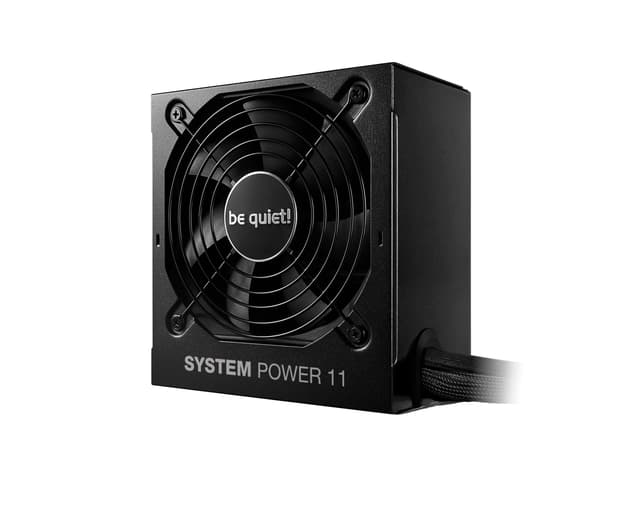
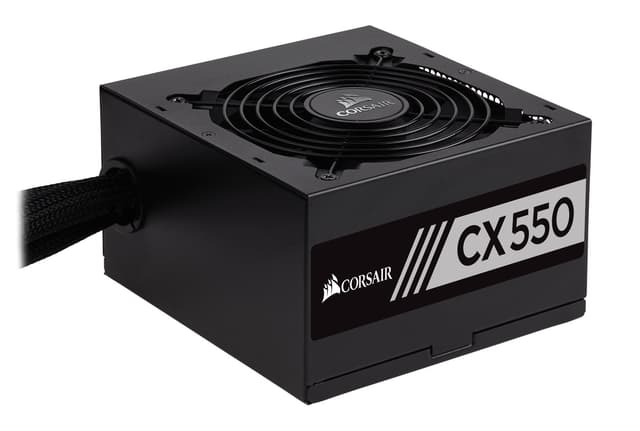
Whether you are building a budget gaming PC, upgrading an ageing workstation, or wiring up an industrial control panel, finding a reliable power supply under £75 is entirely achievable in 2024. The market has shifted noticeably over the past twelve months: ATX PSU prices have dropped as component costs stabilise post-pandemic, and DIN-rail switching supplies from brands such as Mean Well and WAGO have become more accessible to hobbyists and small-scale automation engineers alike. This roundup covers both worlds, selecting six units that represent genuine value across different use cases. PC builders will find 80 PLUS Bronze-certified ATX options from Corsair and MSI that deliver clean, stable power without breaking the bank, while electronics engineers and makers will find industrial-grade enclosed and DIN-rail supplies that punch well above their price points. Each pick has been assessed on real-world performance data, connector provision, efficiency ratings, and long-term reliability reputation.
Quick Verdict
Best Overall: Corsair CX650 (B0CJRXX5WT) offers the best balance of wattage, build quality, and price for mainstream PC builders, sitting comfortably under £75 with a solid 80 PLUS Bronze rating and a well-established reliability record. Best Value: MSI MAG A550BN (B09GW4S27Q) undercuts most of the competition while still delivering 550 W of clean, certified power, making it an excellent choice for mid-range builds on a tight budget.
Buying Guide
What Are the Types of Power Supply?
Power supplies fall into several broad categories depending on their application. For PC building, the dominant type is the ATX switching power supply, which converts mains AC to the multiple DC voltages (12 V, 5 V, 3.3 V) that computer components require. These come in non-modular (all cables fixed), semi-modular (main cables fixed, peripheral cables detachable), and fully modular (all cables detachable) variants. For industrial and automation use, the main categories are enclosed switching power supplies (like the Mean Well LRS series), DIN-rail-mount supplies (like the Mean Well HDR series), and open-frame supplies used inside larger equipment. There are also uninterruptible power supplies (UPS), linear power supplies (used where very low noise is critical), and redundant power supplies for server applications.
What Is a Class 3 Power Supply?
In the context of IEC 61558 and related standards, a Class III power supply is one that operates from Safety Extra-Low Voltage (SELV), typically below 50 V AC or 120 V DC. Class III supplies are considered inherently safer because the output voltage is too low to cause a dangerous electric shock under normal conditions. Many DIN-rail and enclosed industrial supplies, including 24 V units like the Mean Well HDR-100-24, operate within Class III output voltage ranges, though the input side still connects to mains voltage and must be handled with appropriate care.
What Is a Class 4 Power Supply?
Class 4 is a designation used in specific standards contexts, including the NEC (National Electrical Code) in the United States, to describe power-limited circuit supplies that limit both voltage and energy output to safe levels. In the UK and European context, the term is less commonly used in everyday product specifications, but the underlying principle, limiting output power to prevent fire or shock hazards, is reflected in the protection circuits (OCP, OVP, SCP) built into quality industrial supplies. If you encounter Class 4 terminology in a UK product datasheet, it is worth checking the specific standard being referenced.
What Are the Four Main Components of a Power Supply?
A switching power supply, whether ATX or industrial, typically contains four core functional blocks. First, the input rectifier and filter converts incoming AC mains to rough DC and suppresses conducted interference. Second, the switching stage (usually a MOSFET-based inverter) chops the DC at high frequency, typically 50-150 kHz, to allow the use of compact transformers. Third, the transformer steps the voltage up or down as required and provides galvanic isolation between mains and output. Fourth, the output rectifier and filter converts the switched transformer output back to smooth DC at the required voltage. Modern ATX supplies add a fifth element, the control IC and feedback loop, which monitors output voltages and adjusts switching duty cycle to maintain regulation under varying loads.
What Is the Most Common Type of Power Supply?
For consumer electronics and PC building, the ATX switching power supply is by far the most common type encountered in the UK. It has been the standard form factor for desktop PC power since the mid-1990s and is manufactured in enormous volumes globally, which keeps prices competitive. In industrial and commercial settings, the DIN-rail-mount switching supply is the most prevalent type for control panel and automation applications. Both types use switch-mode (SMPS) technology, which has largely displaced older linear power supply designs due to its superior efficiency, smaller size, and lower heat output.
Key Specifications to Consider
When choosing a power supply under £75, wattage is the obvious starting point, but it is not the only consideration. For PC builds, calculate your system's expected peak draw using an online PSU calculator, then add 20-30% headroom. Efficiency certification matters for running costs and heat output: 80 PLUS Bronze is the minimum worth considering for a new build. Rail architecture is important: single 12 V rail or DC-to-DC designs offer better regulation than multi-rail units for modern components. Warranty length is a strong proxy for manufacturer confidence in build quality. For industrial supplies, check output current rating carefully, verify certifications for your application, and confirm the input voltage range covers UK 230 V mains.
For the majority of UK PC builders, the Corsair CX650 (B0CJRXX5WT) is the overall winner in this roundup. It combines a well-proven platform, Japanese primary capacitors, a single 12 V rail, adequate connector provision for mainstream builds, and a five-year warranty at a price that keeps it comfortably under £75. The five-year warranty is the decisive factor: at this budget level, long-term peace of mind is worth a modest premium over rivals offering only three years of coverage. Builders on the tightest possible budget should look at the MSI MAG A550BN, which delivers genuine DC-to-DC topology and 80 PLUS Bronze efficiency at a lower outlay. For high-wattage builds, the Corsair CX750 adds 100 W and two extra PCIe connectors for a small price increase and is the right choice for anyone running a demanding GPU. Engineers and makers needing industrial DC supplies will find the Mean Well LRS-350-12 and HDR-100-24 to be the most reliable, well-certified options available at these price points, with Mean Well's global reputation for quality providing confidence that cheaper alternatives cannot match.