Best Overall Value
Rating: ★★★★☆ (4.4) | Price: £742.85
Seasonic has been making power supplies longer than most PC builders have been alive, and the Vertex PX-1200 is the company firing on all cylinders. This is a 1200W unit with 80 Plus Platinum certification, which means it's hitting around 92% efficiency at 50% load. For a high-end gaming or workstation build, that translates to real savings on your electricity bill over time.
The ATX 3.0 compliance is the big headline for 2026 builds. Modern GPUs, particularly Nvidia's RTX 40 and 50 series cards, can spike power draw dramatically in short bursts. ATX 3.0 PSUs are designed to handle those transient spikes without tripping protection circuits. So if you're pairing this with something like an RTX 4090 or a next-gen card, you're properly covered.
Build quality is exceptional. Seasonic uses premium Japanese capacitors rated to 105°C, and the fan profile is impressively quiet under normal loads. The fully modular cable system is clean and well-organised, with enough connectors to satisfy even the most cable-heavy builds. The 12-year warranty (in some regions) tells you everything about how confident Seasonic is in this unit.
Here's the honest bit, though. Most people don't need 1200W. If your system draws 500W peak, this is overkill. But if you're running a dual-GPU workstation, heavy overclocking, or a system with lots of storage and peripherals, the headroom is genuinely useful. And Seasonic's reputation for longevity means this PSU will likely outlast several GPU upgrades.
For anyone building a serious system in 2026, the Vertex PX-1200 is the benchmark against which other units are measured. It's the reason it tops our best power supplies UK 2026 ranking.
Pros
- 80 Plus Platinum efficiency saves money long-term
- ATX 3.0 compliant for next-gen GPU compatibility
- Exceptional build quality with premium Japanese capacitors
- Fully modular for clean cable management
- Seasonic's outstanding reliability track record
Cons
- 1200W is overkill for most mid-range builds
- Premium price not justified for budget systems
- Larger physical size may not fit smaller cases
Buy on Amazon
Best Build Quality
Rating: ★★★★★ (5.0) | Price: £144.99
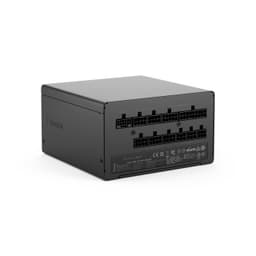
NZXT has quietly built a reputation for making PSUs that punch above their price point, and the C850 Gold (2024 revision) is a proper example of that. It's 850W, 80 Plus Gold certified, and fully modular. But the headline feature is the zero fan mode. Under light loads, the fan stops completely. Completely silent. For anyone who uses their PC for work, browsing, or light gaming, that's a genuinely pleasant experience.
The ATX 3.1 compliance is a step up from the previous generation, handling the tighter transient power requirements of modern GPUs. The native 12V-2x6 connector means you won't need an adapter for RTX 40 or 50 series cards. And the 100% Japanese capacitors are a spec you'd normally expect to pay more for.
Real-world performance is strong. The unit runs cool and quiet even under sustained gaming loads, and voltage regulation is tight. NZXT backs it with a solid warranty, and owner feedback is consistently positive. The black finish is clean and understated, which suits most builds.
The price sits just under £150, which is fair for what you get. It's not the cheapest 850W Gold unit here, but the combination of ATX 3.1, zero fan mode, and Japanese caps justifies the premium over budget alternatives.
Pros
- Zero fan mode for silent operation at low loads
- 100% Japanese capacitors for long-term reliability
- ATX 3.1 compliant with native 12V-2x6 connector
- Fully modular cable system
- Clean, understated design
Cons
- Slightly pricier than some competing 850W Gold units
- 850W may not be enough for extreme high-end builds
Buy on Amazon£144.99
Best for Beginners
Rating: ★★★★★ (5.0) | Price: £328.93
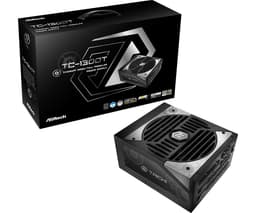
Look, the ASRock TC-1300T is not under £50. Not even close. At over £400, it's the most expensive unit in this roundup by a significant margin. But it earns its place because it represents the absolute pinnacle of what a consumer PSU can be right now. 1300W, 80 Plus Titanium efficiency (the highest standard available), PCIe 5.1 compliance, and enough connectors to power a small server rack.
Titanium certification means this unit is hitting 94% efficiency at 50% load. Over the lifetime of a high-end system, that efficiency advantage over a Gold unit adds up. The dual 12+4 pin PCIe 5.1 connectors mean you can run two top-tier GPUs without adapters, which matters for workstation or AI compute builds.
The 135mm fan keeps things quiet, and the modular cable system is comprehensive. ASRock is better known for motherboards, but they've clearly put serious engineering into this unit. It's a new entrant in the PSU space, so long-term reliability data is still building, but the spec sheet is genuinely impressive.
Who actually needs this? Dual-GPU workstation builders, extreme overclockers, and anyone running multiple high-TDP components simultaneously. For everyone else, it's an interesting spec exercise but not a practical purchase.
Pros
- 80 Plus Titanium, the highest efficiency rating available
- 1300W for the most demanding systems
- PCIe 5.1 with dual 12+4 pin connectors
- Comprehensive modular cable selection
Cons
- Very expensive, hard to justify for most builds
- ASRock is new to PSUs, limited long-term reliability data
- 1300W is overkill for all but the most extreme systems
Buy on Amazon£328.93
Best Overall Value
Rating: ★★★★★ (5.0) | Price: £129.99
The RM1000x SHIFT is Corsair doing something genuinely different. The modular connectors are on the side of the unit rather than the front. That sounds like a gimmick, but in practice it makes routing cables in certain case layouts significantly easier, particularly in builds where the PSU shroud is tight or airflow routing is awkward.
Beyond the clever design, the specs are proper. 1000W, Cybenetics Gold efficiency (which is arguably a more rigorous certification than 80 Plus), ATX 3.1 compliance, and native 12V-2x6 for PCIe 5.1 GPUs. The fan speed control lets you dial in the noise-performance balance, and the 105°C-rated capacitors suggest this unit is built to last.
Corsair's build quality here is excellent. The cables feel premium, the connectors click in firmly, and the overall finish is what you'd expect from a flagship product. Owner feedback is strong, with particular praise for the cable management benefits of the side interface.
At around £165, it's priced at a premium. But if you're building in a case where cable routing is genuinely tricky, the SHIFT design might save you hours of frustration. That's worth something.
Pros
- Innovative side modular interface simplifies cable routing
- ATX 3.1 and PCIe 5.1 compliant
- Cybenetics Gold efficiency certification
- Fan speed control for noise tuning
- Premium Corsair build quality
Cons
- Side interface only useful in specific case layouts
- Premium price for the wattage
- Larger footprint than standard PSUs
Buy on Amazon£129.99
Best Under £100
Rating: ★★★★½ (4.6) | Price: £119.00
At around £73, the MSI MPG A850GS is one of the better value propositions in this roundup for PC builders. You're getting 850W, 80 Plus Gold, ATX 3.1 compliance, and native 12V-2x6 support for PCIe 5.1 GPUs. That's a spec list that would have cost significantly more two years ago.
The dual-colour 12V-2x6 connectors are a nice aesthetic touch, and the embossed jacket cables feel more premium than the flat cables you get on budget units. MSI has clearly put some thought into the presentation here, which matters if you're building in a case with a window.
Performance is solid. Voltage regulation is tight, the fan is quiet under normal gaming loads, and the unit handles transient power spikes from modern GPUs without complaint. For an RTX 4070 Ti or RX 7900 XT build, this is a proper decent choice at the price.
The honest limitation: MSI's PSU track record is shorter than Corsair's or Seasonic's. The unit is OEM'd from a reputable manufacturer, but if long-term reliability data matters to you, the established brands have more history to point to. For a budget-conscious build, though, this is hard to argue with.
Pros
- Excellent price for ATX 3.1 and PCIe 5.1 compliance
- Native 12V-2x6 connector included
- Premium-looking embossed jacket cables
- Quiet operation under gaming loads
Cons
- MSI PSU track record shorter than top-tier brands
- 850W ceiling for very high-end GPU pairings
Buy on Amazon
Best Build Quality
Rating: ★★★★½ (4.9) | Price: £139.99
White PSUs used to be a rarity. Now they're a proper category, and the Corsair RM1000e in white is one of the better options if you're building an all-white system. But the colour is almost incidental. The real story is 1000W of Cybenetics Gold efficiency, ATX 3.1 compliance, and Corsair's typically excellent build quality.
The Modern Standby support is a feature that doesn't get talked about enough. It allows the system to enter a low-power connected standby state, similar to how a smartphone stays connected while appearing off. For users who leave their PC in standby rather than fully powering down, this can meaningfully reduce idle power consumption.
The 12V-2x6 cable is included for PCIe 5.1 GPU compatibility, and the 105°C-rated capacitors are the same quality you'd find in Corsair's more expensive units. At around £131, it's reasonably priced for a 1000W Gold unit from a brand with a strong reliability record.
The white finish is clean and consistent, which matters when you're building around a white theme. Cable management is straightforward with the fully modular system, and the unit runs quietly in normal use.
Pros
- Clean white finish for themed builds
- 1000W with Cybenetics Gold efficiency
- Modern Standby support reduces idle power draw
- ATX 3.1 and PCIe 5.1 compliant
- Corsair's proven reliability
Cons
- White finish limits appeal to non-themed builds
- Slightly pricier than some competing 1000W Gold units
Buy on Amazon£139.99
Best for Beginners
Rating: ★★★★½ (4.8) | Price: £137.50
The ROG Strix 750W Aura Edition is ASUS doing what ASUS does: taking a solid product and adding RGB. The Aura Sync lighting is genuinely well-implemented here, syncing with other ROG components for a cohesive look. If you're building a ROG-themed system, this is the obvious PSU choice.
But strip away the aesthetics and you've got a proper 750W Gold unit. The Axial-tech fan is borrowed from ASUS's GPU cooler designs and is notably quiet. Dual ball bearing construction means it'll last longer than sleeve bearing alternatives. The 10-year warranty is exceptional and tells you ASUS is confident in the internals.
ATX 3.0 compatibility and PCIe Gen 5.0 readiness mean it'll handle current-gen GPUs without issues. The fully modular cable system is clean, and the cables themselves feel quality. For a first build where aesthetics matter and you're running a mid-range GPU, this is a strong choice.
The limitation is the 750W ceiling. If you're planning to upgrade to a top-tier GPU in the next couple of years, you might find yourself needing more headroom. But for an RTX 4070 or RX 7800 XT build, 750W is comfortable. And that 10-year warranty means you're covered for a long time.
Pros
- 10-year warranty is exceptional in this category
- Aura Sync RGB for ROG-themed builds
- Quiet Axial-tech fan with dual ball bearing
- Fully modular with quality cables
- ATX 3.0 and PCIe 5.0 ready
Cons
- 750W limits headroom for future high-end GPU upgrades
- RGB adds cost that non-aesthetic builders won't value
- Pricier than non-RGB alternatives at this wattage
Buy on Amazon£137.50
Best Overall Value
Rating: ★★★★½ (4.9) | Price: £127.69
Fractal Design makes some of the most understated, well-engineered PC components available, and the Ion 3 Gold 1000W fits that pattern perfectly. No RGB. No flashy branding. Just a clean, black, fully modular 1000W unit with 80 Plus Gold certification and ATX12V 3.1 compliance.
The Ion 3 is built for builders who want reliability and quiet operation without paying for aesthetics they don't need. Fractal's fan tuning is conservative, meaning the unit runs very quietly under normal gaming loads and only spins up noticeably under sustained heavy use. Voltage regulation is tight, and the modular cable selection covers all common build configurations.
ATX12V 3.1 compliance means it's ready for current and near-future GPU generations. The 1000W capacity gives you comfortable headroom for high-end single-GPU builds, and the fully modular system makes cable management straightforward even in tighter cases.
At around £140, it's competitively priced for a 1000W Gold unit from a brand with a strong reputation. Fractal doesn't cut corners on internals, and the Ion 3 reflects that. If you want a no-nonsense, long-lasting PSU that'll quietly do its job for years, this is a very solid pick.
Pros
- Clean, understated design suits any build
- ATX12V 3.1 compliant for current-gen GPU support
- Quiet fan profile under normal loads
- Fully modular for easy cable management
- Fractal's strong reliability reputation
Cons
- No aesthetic features for themed builds
- Newer brand in PSU space compared to Corsair or Seasonic
Buy on Amazon£127.69
Best Under £50
Rating: ★★★★½ (4.7) | Price: £361.70
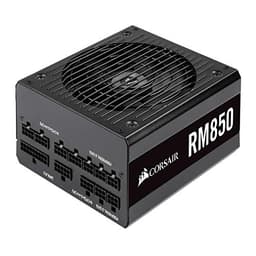
Here's the honest truth about the Corsair RM850 (the older CP-9020196-NA variant): it's a good PSU. 850W, 80 Plus Gold, fully modular, Microsoft Modern Standby support. All solid. But the price it's currently listed at on Amazon makes absolutely no sense when you compare it to newer alternatives that cost a fraction of the price.
This is an older unit, and the Amazon listing price reflects marketplace dynamics rather than actual value. The newer RM850x and RM1000e units offer better specs for less money. If you find this at a genuinely low price (say, under £80), it's a reliable choice backed by Corsair's warranty and reputation. At the listed price, though, there are far better options in this roundup.
The unit itself performs well. Quiet, stable, and Corsair's build quality is consistent. But we'd strongly recommend checking the current price before buying and comparing it against the RM850x listed below. The older model simply doesn't justify a premium over its successor.
Pros
- Corsair's proven reliability
- 850W Gold with fully modular cables
- Microsoft Modern Standby support
- Quiet operation
Cons
- Current Amazon price makes no sense versus newer alternatives
- Older unit without ATX 3.0 or PCIe 5.0 compliance
- Superseded by the RM850x in almost every way
Buy on Amazon£361.70
Best Overall Value
Rating: ★★★★½ (4.8) | Price: £154.99
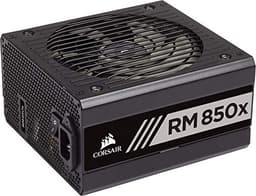
The Corsair RM850x is the best budget pick in this best power supplies UK 2026 roundup, and it's earned that position through years of consistent, reliable performance. This is the PSU that builders recommend when someone asks "what should I get?" in every PC building forum in the UK. And for good reason.
850W of 80 Plus Gold efficiency covers the vast majority of gaming builds comfortably. The fully modular cable system is clean and well-organised. Corsair's cable quality is noticeably better than budget alternatives, with proper sleeving and firm connectors. The fan is quiet under normal loads and only becomes audible under sustained heavy use.
Voltage regulation is tight, ripple suppression is good, and the unit handles transient loads without complaint. It's not ATX 3.1 compliant (it predates that standard), so if you're buying a brand new RTX 50 series GPU, you might want to consider a newer unit. But for anything up to and including an RTX 4090 or RX 7900 XTX, this handles it without issues.
The warranty is solid, and Corsair's customer support in the UK is generally responsive. This is a PSU you buy and then forget about, which is exactly what you want from a power supply. Boring in the best possible way. For most UK builders in 2026, the RM850x remains the sensible default choice.
Pros
- Proven, long-standing reliability track record
- Fully modular with quality Corsair cables
- 850W Gold covers most gaming builds comfortably
- Quiet operation in normal use
- Strong Corsair warranty and UK support
Cons
- Not ATX 3.1 compliant, older standard
- No native 12V-2x6 connector for PCIe 5.1 GPUs
- Newer alternatives offer better specs at similar prices
Buy on Amazon£154.99