Gaming with glasses is genuinely uncomfortable with the wrong headset. The arms of your frames press against the headset's ear cushion, creating a pressure point that turns a two-hour session into a headache. The good news is that headset design has improved considerably over the past year, with more manufacturers paying attention to cushion depth, clamp force and suspension-style headbands that distribute weight without squeezing the temples. This guide is aimed squarely at spectacle wearers: whether you wear slim wire frames, thick acetate glasses or large prescription lenses, the picks below have been chosen because they reduce or eliminate that painful side-pressure. We have considered cushion material, ear cup depth, adjustable clamp force and overall weight, because a lighter headset means less downward pressure on frames too. Budget options sit alongside premium wireless models so there is something here regardless of how much you want to spend.
Quick Verdict
Best Overall for glasses wearers: Logitech G733 LIGHTSPEED. Its suspension headband completely removes the top-of-head pressure point and the soft memory-foam ear cushions are deep enough to clear most frame arms cleanly.
Best Value for glasses wearers: SteelSeries Arctis Nova 5P. A ski-goggle-style suspension band and generously padded oval cups make this the most glasses-friendly headset under £100, with solid audio to match.
The Logitech G733 is the standout choice for glasses wearers and it comes down to one design decision: the suspension headband. Rather than a rigid plastic arc pressing down on your skull, the G733 uses a fabric strap that floats above the head, distributing weight across a wide area and, crucially, applying almost no lateral clamp force. That means the ear cups rest gently against your head rather than squeezing your temples into your frame arms. For anyone who has suffered the familiar ache of a standard headset digging into the hinge of their glasses, this is a revelation.
The ear cushions are soft memory foam wrapped in leatherette, and they are deep enough that most standard glasses arms sit inside the cup rather than being compressed between cushion and skull. Logitech has not published the exact cup depth, but in practice the cups accommodate frames up to around 5 mm thick without noticeable discomfort. The headset weighs 278 g, which is moderate for a wireless model, and the suspension band means that weight is spread rather than concentrated.
On the audio side, the G733 uses 40 mm drivers and supports LIGHTSPEED 2.4 GHz wireless for a stable, low-latency connection to PC and PlayStation. Bluetooth is also available for simultaneous connection to a phone or tablet. Battery life is quoted at up to 29 hours, which covers even the longest gaming weekends. The G HUB software unlocks 7.1 surround sound, an equaliser and RGB lighting customisation for the front-facing LED strip, which is a fun touch without being garish.
The microphone is a detachable cardioid boom that performs well for voice chat, picking up speech clearly while rejecting keyboard and background noise. Build quality is predominantly plastic but feels sturdy, and the headset comes in several colour options including a white and lilac that stand out in a market dominated by black.
The main caveat is price: the G733 sits at the higher end of the mid-range. There is also no 3.5 mm analogue fallback, so if your LIGHTSPEED dongle is lost or the battery dies mid-session, you cannot simply plug in a cable. For glasses wearers who prioritise all-day comfort above everything else, though, no other headset in this price bracket comes close.
Verdict: The best gaming headset for glasses wearers available today. The suspension headband eliminates the core problem and the rest of the package is genuinely excellent.
Pros
- Suspension headband removes lateral clamp force entirely, ideal for glasses wearers
- Deep memory-foam ear cushions accommodate most frame arm thicknesses
- LIGHTSPEED + Bluetooth dual connection and 29-hour battery life
Cons
- No 3.5 mm wired fallback if the battery runs out
- Premium price point may be hard to justify for casual gamers
2. Logitech G PRO X 2 LIGHTSPEED Wireless Gaming Headset
The Logitech G PRO X 2 LIGHTSPEED is the premium flagship of this round-up, designed with professional esports players in mind. It is the most expensive option here by a considerable margin, but it brings a level of audio engineering and build quality that justifies the outlay for serious gamers. For glasses wearers, the key features are the thick, swappable ear cushions and the relatively gentle clamp force for a headset of this weight class.
The G PRO X 2 ships with two sets of ear cushions: leatherette and fabric. The leatherette cups offer better passive noise isolation, while the fabric cups breathe better during long sessions and, importantly for glasses wearers, tend to grip frame arms less aggressively because the texture is softer. The cups are oval and generously padded, with enough depth to provide real clearance between the driver housing and the ear. Switching between cushion sets takes under a minute and the magnetic attachment system is satisfying to use.
The headline audio feature is the 50 mm GRAPHENE drivers, which Logitech claims deliver a wider frequency response and lower distortion than conventional mylar drivers. In practice the sound is detailed and spacious, with excellent stereo imaging that translates well to competitive gaming. The headset supports LIGHTSPEED 2.4 GHz wireless with a quoted latency of under 1 ms, plus Bluetooth for secondary devices. Battery life reaches up to 50 hours, which is exceptional for a flagship wireless headset.
The Blue VO!CE microphone technology, available through G HUB software, provides professional-grade voice processing including noise reduction, de-essing and compression. For streamers or content creators who also game, this is a meaningful differentiator. The physical boom mic is detachable and includes a pop filter.
The headset is heavier than the G733 or G435, and the rigid headband applies more clamp force than a suspension design. For glasses wearers with thicker or wider frames, the pressure may become noticeable after extended sessions. However, the thick ear cushions do a good job of absorbing that pressure, and many glasses wearers find the G PRO X 2 comfortable for sessions of two hours or more. This is a headset for those who want the best audio and are willing to manage the fit carefully.
Verdict: The premium choice for glasses wearers who prioritise audio quality and microphone performance, with swappable cushions that help manage frame pressure.
Pros
- 50 mm GRAPHENE drivers deliver exceptional detail and stereo imaging for competitive play
- Swappable leatherette and fabric cushions let you optimise for comfort or isolation
- Up to 50-hour battery life and sub-1 ms LIGHTSPEED wireless latency
Cons
- Heavier rigid headband applies more lateral clamp force than suspension designs
- Flagship price is hard to justify for casual or occasional gamers
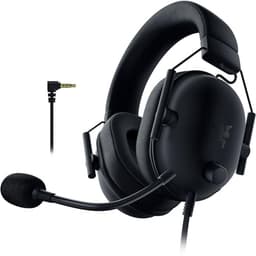
The Razer BlackShark V2 X is the most affordable pick in this round-up and, at under £40, it punches well above its weight for glasses wearers. The ear cups use Razer's TriForce 50 mm drivers and are wrapped in memory foam cushions with a leatherette covering. The cups are oval rather than circular, which is the right shape for glasses wearers, and the foam is soft enough to compress around frame arms without creating hard pressure points.
The headset is wired via 3.5 mm, which makes it compatible with Xbox controllers, PC, PS5, PS4 and mobile devices without any adapters or dongles. At approximately 240 g, it is one of the lighter wired headsets available, which helps reduce downward pressure on frames. The headband is padded with a leatherette strip that is comfortable for most head shapes, and the clamp force is moderate rather than aggressive, which is a pleasant surprise at this price point.
Audio quality is genuinely good for a budget headset. The TriForce drivers are tuned to separate bass, mid and treble frequencies across different sections of the driver, which Razer claims reduces distortion at high volumes. In practice the sound is clear and detailed, with a balanced signature that works well for both gaming and casual music listening. The cardioid microphone is a flexible boom design with a foam windshield, and it captures voice clearly for online play and Discord.
The BlackShark V2 X does not have any wireless capability, RGB lighting or software-driven EQ, which keeps the price low and the setup simple. There is no USB sound card included, so 7.1 surround sound is not available natively, though Razer's THX Spatial Audio software on PC can add this via a separate subscription.
For glasses wearers on a tight budget, or those who want a secondary headset for travel or a secondary gaming station, the BlackShark V2 X is a remarkably capable option. It will not replace the comfort of a suspension-band headset for all-day wear, but for sessions of one to two hours it is genuinely comfortable with most frame types.
Verdict: The best budget pick for glasses wearers. Oval memory-foam cups, moderate clamp force and a lightweight build make this far more comfortable than its price suggests.
Pros
- Oval memory-foam ear cups with moderate clamp force are comfortable with most frame types
- Lightweight at approximately 240 g, reducing downward pressure on glasses
- Universal 3.5 mm connection works with Xbox, PC, PS5 and mobile without adapters
Cons
- Wired only with no wireless option available in this version
- No onboard EQ or surround sound without a separate Razer software subscription
Buying Guide
Why standard headsets are uncomfortable with glasses
Most gaming headsets are designed around a head-without-glasses model. The ear cups press against the side of the head, and when glasses frames are present, the arms of the frames are caught between the cushion and the skull. This creates a pressure point that worsens over time, leading to headaches, sore temples and the constant urge to push your glasses back into position. Understanding this mechanism helps you identify which headset features actually solve the problem.
Ear cup shape: oval versus circular
Oval ear cups are significantly better for glasses wearers than circular ones. An oval cup has more vertical height, which means your ear sits lower within the cup and the cushion contacts the head at a point further from the temple. This creates more natural clearance for frame arms. Circular cups tend to sit more centrally around the ear, which places the cushion edge directly over the temple area where frame arms run. If a headset description does not specify cup shape, look at product images carefully before buying.
Cushion depth and material
Cushion depth refers to how far the foam protrudes from the driver housing. A deeper cushion means the driver sits further from your ear, which in turn means there is more foam between the frame arm and the rigid housing. Shallow cups press the frame arm against the housing immediately, creating a hard pressure point. Aim for cushions with at least 20 mm of depth. In terms of material, velour and fabric cushions compress more readily around frame arms than leatherette, reducing pressure. Leatherette offers better noise isolation but can be less forgiving. Some headsets, including the HyperX Cloud II, ship with both types so you can choose based on your frames.
Clamp force and suspension headbands
Clamp force is the inward pressure the headset applies to keep itself on your head. Higher clamp force means the ear cups press more firmly against your skull, which worsens the frame-arm pressure problem. Suspension headbands, as used by the Logitech G733 and SteelSeries Arctis Nova 5P, remove this issue almost entirely by floating the headset above the head rather than gripping it. If a suspension headband is not available in your budget, look for headsets described as having a relaxed or low clamp force, and be aware that new headsets often loosen slightly after a few weeks of use.
Weight considerations
A heavier headset presses down more firmly on the crown of the head, which can cause the ear cups to shift downward and increase lateral pressure on the sides of the head. For glasses wearers, keeping headset weight below 300 g is a reasonable target. The Logitech G435 at 165 g is exceptionally light for a wireless headset and is worth considering if weight is your primary concern.
Trying before you buy and break-in period
If possible, try a headset in a store with your glasses on before purchasing. If buying online, check the retailer's return policy. Many headsets also have a break-in period of two to four weeks during which the headband softens and the clamp force reduces naturally. Some users also gently stretch new headsets over a stack of books overnight to accelerate this process. This is particularly useful for headsets like the HyperX Cloud II that have a firmer initial clamp.
For glasses wearers, the Logitech G733 LIGHTSPEED is the clear overall winner. Its suspension headband is the single most effective design feature for eliminating frame-arm pressure, and the deep memory-foam cushions, dual wireless connectivity and 29-hour battery life make it an excellent headset in every other respect too. The verified weight of 278 g is manageable, and the lack of lateral clamp force means even extended sessions remain comfortable. If the G733 is over budget, the SteelSeries Arctis Nova 5P offers the same suspension-band approach with an outstanding 60-hour battery at a lower price, making it the best value pick for glasses wearers who want wireless comfort without spending flagship money.