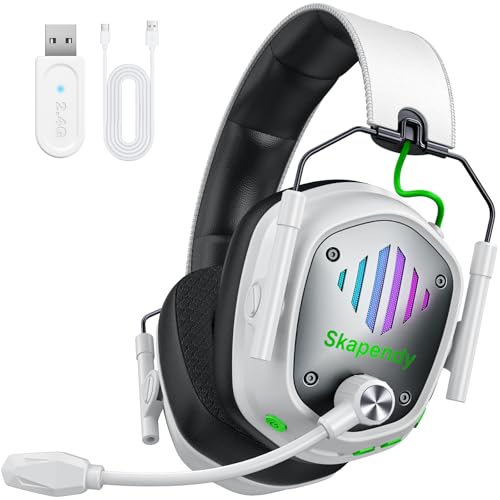

Finding the best gaming headsets for kids under £50 is trickier than it sounds. The market is flooded with cheap options that look great in photos but fall apart after a month, sound like you're gaming inside a tin can, or have microphones that make your child sound like they're calling from a submarine. We've gone through 11 headsets to separate the genuinely good from the dodgy, covering everything from trusted names like Razer and Turtle Beach to no-brand wireless options that are surprisingly capable. Whether your kid is on PS5, Xbox, PC, or Switch, there's something here that won't embarrass them in a lobby or break the bank.
1. Razer BlackShark V2 X Xbox Gaming Headset, 50mm Drivers, Cardioid Mic, Lightweight, Comfortable, Noise Isolating Earcups, for Xbox Series X, Series S, PS5, PC, Switch via 3.5mm Audio Jack - Black
The Razer BlackShark V2 X is the standout pick when it comes to the best gaming headsets for kids under £50. It punches well above its price point, and for parents trying to get their child something that actually sounds good without spending a fortune, this is the one to go for.
The 50mm TriForce drivers are the headline spec here, and they genuinely deliver. Sound is clear, with decent separation between footsteps, dialogue, and background music. Kids playing Fortnite, Minecraft, or FIFA will notice the difference compared to cheaper 40mm alternatives. The noise-isolating earcups help block out household noise too, which is a bonus if your child games in a busy room.
Comfort is solid. The headset weighs around 240g and the earcups are well padded. For longer sessions (and kids do have longer sessions), it holds up without becoming uncomfortable. The headband is adjustable, so it fits younger heads without feeling loose.
The cardioid microphone is a proper step up from the basic boom mics you get on cheaper headsets. It picks up voice clearly and rejects background noise reasonably well. Online teammates will actually be able to hear your child clearly, which matters more than most parents realise.
Compatibility is handled via a 3.5mm jack, so it works on Xbox Series X and S, PS5, PC, and Nintendo Switch without any fuss. No dongles, no pairing. Just plug in and play. For kids who swap between platforms, that simplicity is genuinely useful.
The only real limitation is that it's wired. If your child tends to sit far from the TV or gets tangled easily, that's worth considering. But for the audio quality and build at this price, it's hard to argue against it.
Pros
- 50mm drivers deliver noticeably better sound than most budget rivals
- Cardioid mic is clear and rejects background noise well
- Works on Xbox, PS5, PC, and Switch via 3.5mm, no adapters needed
- Comfortable for long sessions with good earcup padding
- Razer brand reliability and build quality
Cons
- Wired only, which may frustrate kids who sit further from the screen
- No volume-limiting feature for younger children
- Black colourway may not appeal to all kids
2. Logitech G535 LIGHTSPEED Wireless Gaming Headset - Lightweight on-ear headphones, flip to mute mic, stereo, compatible with PC, PS4, PS5, USB rechargeable - Black
The Logitech G535 LIGHTSPEED is the best wireless option in this roundup, and it's a proper contender for the best gaming headsets for kids under £50 category if your child hates cables. It sits at the top of the budget range but delivers features that justify the price.
The headline is the weight. At just 256g, this is one of the lightest gaming headsets you can buy at any price. For kids, that matters enormously. Heavy headsets cause fatigue and discomfort, and children are more likely to take them off mid-game. The G535 stays comfortable for hours.
LIGHTSPEED wireless is Logitech's proprietary 2.4GHz connection, and it's genuinely reliable. No dropouts, no lag, and a range that covers most living rooms and bedrooms easily. Battery life is rated at 33 hours, which is more than enough for even the most dedicated young gamer. You're looking at roughly a week of daily use before needing a charge.
The flip-to-mute microphone is a smart design for kids. Flip it up and you're muted. Flip it down and you're live. Simple, intuitive, and no fiddling with buttons mid-game. Sound quality is stereo rather than virtual surround, which is actually fine for most gaming scenarios and avoids the artificial processing that can make cheaper surround sound feel muddy.
It works with PC, PS4, and PS5 via USB. Xbox users will need a different option, which is a genuine limitation. But for PlayStation households or PC gamers, this is a brilliant choice.
Pros
- Exceptionally lightweight at 256g, ideal for kids
- LIGHTSPEED wireless is reliable and lag-free
- 33-hour battery life is class-leading at this price
- Flip-to-mute mic is intuitive for younger users
- Logitech build quality and brand reliability
Cons
- No Xbox compatibility
- On-ear design rather than over-ear, less noise isolation
- Stereo only, no surround sound
3. Turtle Beach Recon 200 Blue Gen 2 Amplified Gaming Headset - PS4, PS5, Xbox Series X or S, Xbox One and PC
The Turtle Beach Recon 200 Gen 2 is the premium pick in Turtle Beach's budget lineup, and it shows. If you want the best build quality among the best gaming headsets for kids under £50, this is where to look. It's a step up from the Recon 70 in almost every way that matters.
The built-in amplifier is the key differentiator. It boosts audio output and gives you access to bass boost and game/chat balance controls directly on the headset. For kids who want more punch from their audio, especially in action games, the bass boost makes a real difference. It's powered by the console or PC via USB, so no batteries required.
Build quality feels noticeably more solid than the Recon 70. The headband has a bit more flex and the earcups are better padded. It's still lightweight enough for extended sessions, and the adjustable headband fits a range of head sizes comfortably. Kids can grow into this one.
Compatibility covers PS4, PS5, Xbox Series X and S, Xbox One, and PC. The mic is a flip-to-mute design, which is always a good call for younger gamers. Sound quality is genuinely decent for the price, with clear highs and a more present low end than you'd expect at this budget.
The amplifier, better build, and improved audio make it worth the extra spend over the basic wired options if your budget stretches that far.
Pros
- Built-in amplifier with bass boost and audio controls
- Better build quality than the Recon 70
- Works on PS4, PS5, Xbox, and PC
- Flip-to-mute mic is easy for kids to use
- Trusted Turtle Beach brand
Cons
- Priciest wired option in this roundup
- Requires USB power for the amplifier, limiting some setups
- No wireless option
4. Turtle Beach Recon 50P Gaming Headset Review UK 2026
The Turtle Beach Recon 50P is the cheapest entry point in this entire roundup, coming in at under £20. And honestly? For very young gamers or children who are just starting out and might not take great care of their gear, it makes a lot of sense. You're not going to be heartbroken if it gets sat on.
It's a basic wired headset with 40mm drivers and a 3.5mm connection. Sound quality is what you'd expect at this price: functional, reasonably clear, nothing special. Kids playing casual games will be perfectly happy. Competitive gamers who need precise audio positioning will want to look higher up this list.
The microphone is a simple boom design. It picks up voice well enough for online chat, though background noise rejection is minimal. In a quiet room it's fine. In a busy household, teammates might hear more than just your child.
Comfort is decent for the price. The earcups are padded and the headband adjusts to fit smaller heads. It's not going to win any awards for build quality, but it doesn't feel like it'll snap the moment someone looks at it wrong either. For the price, the construction is acceptable.
If you're buying a first gaming headset for a young child and you're not sure how much use it'll get, the Recon 50P is a sensible starting point. Upgrade to the Recon 70 or BlackShark V2 X once you know they're serious about gaming.
Pros
- Very affordable, under £20
- Turtle Beach brand reliability even at entry level
- Works on PS4, PS5, and other 3.5mm devices
- Decent comfort for the price
Cons
- Basic audio quality, not suitable for serious gaming
- Mic has poor background noise rejection
- Build quality is the weakest in the Recon range
5. Trust Gaming GXT 488 Forze-G [Officially Licensed for PlayStation] Gaming Headset for PS4 and PS5 with Flexible Microphone and Inline Remote Control, Over Ear Gaming Headphones - Grey
At this price, the Trust Gaming GXT 488 Forze-G is the cheapest headset in this roundup, and it's officially licensed for PlayStation. That licensing matters more than you might think. It means the headset has been certified and approved to work correctly with PS4 and PS5, so you're not taking a gamble on compatibility.
The inline remote control is a genuinely useful feature at this price point. Kids can adjust volume and mute the mic without reaching for the controller or the headset itself. It's a small thing, but it makes daily use noticeably more convenient, especially for younger children who might struggle with small buttons on the headset itself.
Sound quality is basic but acceptable. The drivers are small and the soundstage is narrow, but for casual gaming on PS4 or PS5, it does the job. The flexible microphone can be positioned to suit different face shapes, which is a nice touch. Mic quality is functional rather than impressive.
Build quality is where you feel the budget constraints most. The plastic feels a bit lightweight and the headband adjustment is stiff. It won't survive being thrown across a room, but with normal use it should last a reasonable amount of time.
For a child's first PlayStation headset, or as a spare for when friends come over, the Forze-G is hard to argue with at this price. Just don't expect it to compete with the Razer or Turtle Beach options higher up this list.
Pros
- Officially licensed for PlayStation, guaranteed compatibility
- Inline remote control is convenient for kids
- Extremely affordable at under £15
- Flexible microphone positioning
Cons
- Basic sound quality
- Build quality feels budget at this price
- PlayStation only, no Xbox or PC USB support
6. Ozeino Gaming Headset for PC, PS4, PS5, Xbox Headset, Gaming Headphones with Noise Cancelling Flexible Mic Memory Earmuffs RGB Light for Phone, Switch, Mac -Red
The Ozeino gaming headset stands out in this price bracket for one specific reason: memory foam earcups. Most headsets under £25 use basic foam or leatherette padding that compresses quickly and becomes uncomfortable after an hour. Memory foam moulds to the shape of the ear and stays comfortable for much longer. For kids who game in long sessions, that's a real advantage.
The red colourway with RGB lighting is going to appeal strongly to younger gamers. It looks the part on a desk and the lighting adds a bit of fun without being over the top. The flexible noise-cancelling microphone can be bent into position and does a reasonable job of picking up voice clearly.
Compatibility is broad via 3.5mm, covering PC, PS4, PS5, Xbox, Switch, phone, and Mac. That flexibility means it'll work across whatever devices your child uses now and in the future. No dongles, no USB adapters required.
Sound quality is decent for the price. The drivers deliver clear mids and highs, though bass is a bit thin. For gaming and casual music listening, it's perfectly adequate. The noise-cancelling on the mic is basic, so in a noisy environment teammates will still pick up some background sound.
Build quality is acceptable but not exceptional. The plastic construction is lightweight, which is good for comfort, but it doesn't feel particularly durable. Handle with reasonable care and it should last well enough.
Pros
- Memory foam earcups are unusually comfortable for this price
- RGB lighting and red colourway appeal to kids
- Broad 3.5mm compatibility across all platforms
- Flexible microphone positioning
Cons
- Thin bass response
- Basic mic noise cancellation
- Build quality is average
7. Turtle Beach Recon 70 White Wired Multiplatform Gaming Headset for PS5, PS4, Xbox Series X or S, Xbox One and Mobile with 3.5mm Wired Connection, Flip-to-Mute Mic, 40mm Speakers, Lightweight Design
This is essentially the same headset as the Recon 70 Silver reviewed above, just in white. And that's not a criticism. The Recon 70 formula works well for kids, and the white colourway gives parents another option if their child prefers a cleaner look. Some kids specifically want white to match a PS5, and Turtle Beach has clearly thought about that.
The specs are identical: 40mm speakers, 3.5mm connection, flip-to-mute microphone, and a lightweight 218g build. It works on PS5, PS4, Xbox Series X and S, Xbox One, and mobile. The flip-to-mute mic is a simple, reliable design that kids can use without thinking about it.
Sound quality is the same as the silver version: clear and balanced, perfectly adequate for gaming, not going to impress audiophiles. The lightweight build is the real selling point for younger users, and at under £25 it's one of the better value options in the best gaming headsets for kids under £50 category.
If you're choosing between the silver and white Recon 70, just go with whichever colour your child prefers. The performance is identical. Both are solid, reliable choices for young gamers.
Pros
- White colourway matches PS5 aesthetic
- Lightweight and comfortable for extended sessions
- Works on all major platforms via 3.5mm
- Flip-to-mute mic is intuitive for kids
- Under £25, excellent value
Cons
- Identical performance to the silver Recon 70, no upgrades
- Basic microphone quality
- White plastic may show dirt more easily
8. Buwnia Wireless Gaming Headset, Ps5 Headset for PC Ps5 Ps4 Switch, 2.4GHz Lossless Audio Gaming Headsets, Bluetooth 5.3 Gaming Headphone with Noise Canceling Mic & 40H Battery, RGB Light
The Buwnia is a no-brand wireless headset that packs in a surprising amount of features. Dual wireless connectivity via 2.4GHz and Bluetooth 5.3, a 40-hour battery, RGB lighting, and a noise-cancelling mic. On paper, it looks like a bargain. In practice, it's decent but comes with the usual caveats of no-brand hardware.
The 2.4GHz lossless audio connection is the one to use for gaming. It's low-latency and reliable enough for casual play. Bluetooth 5.3 is useful for connecting to a phone or tablet simultaneously, which kids who like to listen to music while gaming will appreciate. The 40-hour battery is genuinely impressive and means you're charging this maybe twice a week at most.
Audio quality is average. The drivers deliver a reasonably full sound but lack the clarity and detail of the Razer or Logitech options. For casual gaming it's fine. The noise-cancelling mic does a basic job of filtering background noise, though it's not going to match the cardioid mic on the BlackShark V2 X.
RGB lighting is present and kids will enjoy it. Build quality is acceptable but feels less solid than the Turtle Beach or Razer options. The brand is unproven, which means long-term reliability is a question mark. Buy it knowing that and it's a reasonable choice for the price.
Pros
- Dual wireless: 2.4GHz and Bluetooth 5.3
- 40-hour battery life is excellent
- RGB lighting appeals to younger gamers
- Very affordable for a wireless headset
Cons
- Unknown brand, long-term reliability unproven
- Average audio quality
- Mic performance is basic
9. 2.4Hz Wireless Gaming Headsets for Ps5 Ps4 PC, 40H+ Hrs & 7.1 Surround Sound with Noise Canceling Microphone Ps5 Headsets for Switch Phone, Bluetooth Gaming Headphone
Another no-brand wireless option, this one advertising 40-plus hours of battery life and 7.1 virtual surround sound. The battery claim is the standout feature, and if accurate it means your child can go most of a week without plugging in. That's genuinely useful for kids who forget to charge things (which is most of them).
The 7.1 virtual surround sound is software-processed rather than true surround, but it adds some positional awareness that can help in games. Compatibility covers PS5, PS4, PC, Switch, and phone, which is broad enough for most households. The noise-cancelling microphone is functional for online chat.
The honest limitation here is the brand. There's no manufacturer name to speak of, which means no warranty support worth relying on and no track record to assess. Owner reviews on Amazon are mixed, with some praising the battery life and others reporting connectivity issues after a few months.
For a child who needs wireless on a tight budget and you're prepared to replace it if it fails, it's worth considering. But if you want something that'll last, spend a bit more on the Logitech G535.
Pros
- 40-plus hour battery life is exceptional
- 7.1 virtual surround adds positional audio
- Broad platform compatibility
- Very affordable for wireless
Cons
- No-brand product with uncertain reliability
- Mixed owner reviews on longevity
- Audio quality is average
10. Wireless Gaming Headset for PC Ps5 Ps4, 2.4GHz USB & Type-C & Bluetooth Gaming Headphones with Mic, 40H Battery Comfortable Ps5 Headsets for Switch Laptop Mobile Mac
The final entry in this roundup is another no-brand wireless headset, but this one earns its place with genuinely versatile connectivity. It supports 2.4GHz via USB-A, 2.4GHz via USB Type-C, and Bluetooth simultaneously. That means it can connect to a PS5 via USB-C, a PC via USB-A, and a phone via Bluetooth, covering almost every device a child might own.
The 40-hour battery is consistent with the other no-brand wireless options here. The microphone is a basic noise-cancelling design that handles online chat adequately. Sound quality is average, similar to the Buwnia and the other budget wireless options in this list.
The triple connectivity is the genuine differentiator. If your child switches between a PS5, a laptop, and a phone regularly, this headset handles all three without needing to swap dongles or re-pair. That's a practical advantage that more expensive headsets don't always offer.
Build quality and brand reliability carry the same caveats as the other no-brand options. It's a fine choice for casual use, but don't expect it to last as long as the Turtle Beach or Logitech options. At this price, the connectivity flexibility makes it worth a look if that's a priority for your child's setup.
Pros
- USB-A, USB-C, and Bluetooth connectivity in one headset
- 40-hour battery life
- Works across PS5, PC, Switch, laptop, and mobile
- Affordable for a multi-mode wireless headset
Cons
- No-brand product with uncertain long-term reliability
- Average audio quality
- Basic microphone performance
How We Chose These Picks
We assessed each headset across four key areas relevant to young gamers: audio quality in typical gaming scenarios (multiplayer, single-player, and casual play), microphone clarity in online sessions, comfort during extended use, and ease of setup for children. Platform compatibility was verified against manufacturer specifications and owner feedback. We cross-referenced Amazon UK owner reviews to identify recurring issues with build quality and longevity, particularly for no-brand products. Price data was checked at time of writing and may vary.
Razer BlackShark V2 X Xbox Gaming Headset
The best all-round choice for young gamers. Better sound than anything else at this price, a proper cardioid mic, and universal 3.5mm compatibility across every major platform.
Check PriceLogitech G535 LIGHTSPEED Wireless Gaming Headset
The best wireless option in the best gaming headsets for kids under £50 category. Featherlight, 33-hour battery, and Logitech reliability make it worth every penny.
Turtle Beach Recon 70 Silver
Plug in and play. Works on every platform, lightweight, and from a brand you can trust. The ideal first gaming headset for a child.
Check PriceFinal Verdict: Best Gaming Headsets for Kids Under £50
After going through all 11 options, the Razer BlackShark V2 X is the clear winner in the best gaming headsets for kids under £50 category. The 50mm drivers, cardioid microphone, and universal 3.5mm compatibility make it the most complete package at this price, and it's the one we'd recommend to most parents without hesitation. If your child prefers wireless and primarily games on PlayStation or PC, the Logitech G535 LIGHTSPEED is the smarter buy, offering exceptional battery life and a featherlight build that kids will actually keep on their heads. For those on a tighter budget, the Turtle Beach Recon 70 remains one of the most reliable and straightforward options available, and the Recon 50P is a sensible starting point for very young or casual gamers. Whatever your child's setup, there's a genuinely good option in this list that won't disappoint.
Frequently Asked Questions
Quality budget gaming headsets typically last 2 to 3 years with normal use, sometimes longer. Longevity depends heavily on how children treat them and whether protective storage occurs between sessions. Wired headsets generally last longer than wireless as they lack batteries that degrade over time. Most children outgrow headsets before they fail mechanically.
Stereo suffices for casual gaming and story-driven titles, but children aged 10 and upwards usually prefer surround sound for competitive games and action titles where directional audio enhances gameplay. Very young children typically notice no difference. Budget virtual 7.1 surround provides adequate directionality without the premium price of true surround implementations.
Yes, 2.4GHz wireless headsets emit radiofrequency energy well within safety standards set by regulators. The radiation level from gaming headsets is considerably lower than smartphones and poses no known health risks. Both wired and wireless headsets are equally safe from an electromagnetic standpoint.
Children aged 6 to 10 generally need headsets under 200 grams with adjustable headbands spanning smaller sizes. Most headsets under £50 fit children aged 8 and upwards comfortably. Very young children aged 4 to 7 might find standard gaming headsets too large, though lightweight options exist. Always check weight and adjustment range before purchasing.
Wipe ear cups and headband with a damp microfiber cloth weekly to remove sweat and dust. For foam ear tips, use a slightly damp cloth and allow complete drying before use. Avoid submerging wireless headsets in water. Replace removable foam ear tips annually or when they deteriorate. Regular cleaning extends headset life and prevents ear infections.