The Anker 555 USB-C Docking Hub (8-in-1) PowerExpand Adapter is, for most MacBook and Windows laptop owners, the answer to a question that shouldn't need asking in 2026: why does my expensive laptop only have two ports? If you've ever found yourself juggling a dongle for HDMI, another for Ethernet, and a third just to charge while you're trying to actually get some work done, this hub is aimed squarely at you. And the short verdict? It's genuinely good. Not perfect, but good enough that over 9,000 owners have given it an average of 4.3 stars, which for a USB-C hub at this price tier is a proper result.
What makes it worth talking about is the combination of specs it packs in. You get 4K@60Hz HDMI output, 10Gbps data transfer on both the USB-C and USB-A ports, 85W pass-through charging, Ethernet, and both microSD and SD card slots. All from a single USB-C connection. The built-in 7.48-inch cable is a nice touch too. No dangling dongle, no losing the cable down the back of a desk. But there are some real caveats buried in the spec sheet that are worth knowing before you hand over your money, and we'll get into all of them.
This is a budget-tier hub in terms of price, but the specs punch noticeably above that bracket. Whether it actually delivers in day-to-day use is what the owner review pool tells us, and that story is mostly positive with a few consistent gripes. Here's the full picture.
Core Specifications: Anker 555 USB-C Docking Hub (8-in-1) PowerExpand Adapter
The spec sheet for the Anker 555 USB-C Docking Hub (8-in-1) PowerExpand Adapter is one of the more honest ones you'll find at this price. Anker doesn't dress it up with vague marketing numbers. What you see is what you get: a USB-C hub with eight functional ports, a built-in cable, and clearly stated limitations. The HDMI port supports 4K at 60Hz if your laptop has a DisplayPort 1.4 output, or 4K at 30Hz if it's running DisplayPort 1.2. That distinction matters more than most people realise, and we'll come back to it.
The USB-C data port and both USB-A ports all support up to 10Gbps transfer speeds, which puts them firmly in the USB 3.2 Gen 2 class. That's fast enough for external SSDs, fast enough for most NVMe enclosures, and a genuine step up from the 5Gbps you get on cheaper hubs. The Ethernet port is present and correct for wired connectivity, though Anker doesn't specify the speed in the headline features. The power delivery input accepts up to 100W, passes through 85W to your laptop (the hub keeps 15W for itself), and Anker is explicit that you should use a 100W charger and cable to make that work properly.
Compatibility covers USB-C, USB4, and Thunderbolt connections, and works with macOS 12 and newer, Windows 10 and 11, and ChromeOS. Linux is explicitly not supported, which is worth knowing if that's your setup. The hub connects via a built-in 7.48-inch USB-C cable, so there's no separate cable to lose.
| Specification | Detail |
|---|---|
| Total Ports | 8-in-1 |
| HDMI Output | 4K@60Hz (DP 1.4 laptop) / 4K@30Hz (DP 1.2 laptop) |
| USB-C Data Port | Up to 10Gbps (data only, not video output) |
| USB-A Data Ports | 2x, up to 10Gbps each |
| Power Delivery Input | Up to 100W input, 85W pass-through to laptop |
| Ethernet | Yes (speed not specified in product data) |
| Card Reader | microSD + SD |
| Built-in Cable | 7.48 inches USB-C |
| Compatibility | USB-C, USB4, Thunderbolt; macOS 12+, Windows 10/11, ChromeOS |
| Linux Support | Not compatible |
| Warranty | 18 months |
| Price | £29.99 |

Real-World Coverage: What the Spec Actually Means at Your Desk
Coverage isn't a concept that applies to USB hubs in the Wi-Fi sense, but there's an equivalent question: does this hub actually reach all the devices and peripherals you need it to, without dropping connections or throttling speeds when everything's plugged in at once? And based on what the spec supports and what owners consistently report, the answer is mostly yes, with some caveats around simultaneous heavy use.
The built-in 7.48-inch cable is long enough to reach comfortably from a laptop to a hub sitting on a desk beside it, without the hub dangling awkwardly off the side of the machine. Owners generally rate this as a practical improvement over hubs that use short, rigid connections. The cable is fixed, not removable, which means if it fails you're replacing the whole unit, but that's a trade-off most people seem happy to make for the cleaner desk setup.
Where owners flag issues is around heat under sustained load. When you've got 4K HDMI running, a fast USB-C SSD transferring data, and pass-through charging all happening simultaneously, the hub gets warm. Not dangerously warm by most accounts, but warm enough that a few owners mention it. This is normal behaviour for a hub doing this much work through a single USB-C connection, and it doesn't appear to cause throttling or disconnections in the majority of cases. But if you're in a warm environment or running it on a soft surface, that's worth keeping in mind.
Sustained Speed Under Load: 10Gbps is the Real Story Here
The headline number that actually matters on this hub is the 10Gbps data transfer speed on both the USB-C and USB-A ports. Most hubs in this price bracket top out at 5Gbps, which is USB 3.2 Gen 1. The jump to 10Gbps (USB 3.2 Gen 2, as defined by the USB Implementers Forum) is meaningful if you're regularly moving large files or working with external SSDs. Photographers moving RAW files, video editors pulling footage off a card, anyone using a fast external drive, will feel the difference.
That said, the 10Gbps figure is the interface ceiling, not a guaranteed sustained throughput. Real-world speeds depend on your laptop's USB-C controller, the cable, and the storage device on the other end. What owners consistently report is that fast SSDs connected via the USB-C port do hit meaningfully higher speeds than they would on a 5Gbps hub. The USB-A ports also benefit, which is rarer at this price and worth calling out. Most budget hubs compromise the USB-A ports to hit a lower price; this one doesn't.
The 4K@60Hz HDMI output is the other speed claim worth examining honestly. If your laptop outputs DisplayPort 1.4 signal over USB-C (which most modern MacBooks and recent Windows laptops do), you'll get proper 4K at 60Hz. If your laptop only supports DP 1.2, you're looking at 4K at 30Hz. That 30Hz limitation is noticeable if you're doing anything other than static work. Scrolling feels sluggish, video playback looks wrong. So it's genuinely important to know which your laptop supports before buying. Anker is upfront about this in the spec sheet, which is more than most competitors bother to do.
Mesh and Backhaul: Not Applicable, But Here's What Single-Connection Hubs Actually Cost You
This isn't a mesh networking device, so backhaul in the traditional sense doesn't apply. But there's an analogous concept that matters a lot with USB-C hubs: bandwidth sharing across a single host connection. Every port on this hub shares the bandwidth of one USB-C connection to your laptop. That's a real constraint, and it's worth understanding what it means in practice.
When you're running 4K HDMI, a 10Gbps data transfer, Ethernet, and charging simultaneously, all of that traffic is going through one pipe. The USB-C spec, particularly over a Thunderbolt or USB4 connection, has enough headroom to handle this without serious bottlenecks for most use cases. But if you're expecting to sustain maximum data transfer speeds on the USB-C port while simultaneously pushing 4K@60Hz video, you may see some compression. This is the physical reality of a shared-bus architecture, not a flaw specific to Anker.
What Anker has done sensibly here is dedicate the HDMI port to video output and explicitly note that the USB-C data port is for data transfer only, not video. That's a clear design decision that avoids the confusion some rival hubs create by trying to run dual display outputs through shared bandwidth and delivering neither properly. Single display, done well, is the right call for a hub at this price and form factor. Owners who've tried to use it as a dual-display solution will be disappointed, but that's not what it's designed for.
The Ethernet port adds another consideration. Wired networking through a USB hub is never going to match a direct Ethernet connection to your router, but it's vastly more stable than Wi-Fi for video calls, large downloads, or anything where consistency matters. Owners working from home consistently rate the Ethernet port as one of the most-used features on the hub, which makes sense. Plug in once, get wired internet, a monitor, and charging sorted. That's the pitch, and it works.
Device Capacity: Eight Ports, One USB-C Connection
Eight ports from one USB-C connection is a lot to ask of a single interface, and the honest answer is that it works well for typical desk setups but isn't designed for power users who need to saturate multiple high-bandwidth ports simultaneously. The port count breaks down as: one HDMI, one USB-C data, two USB-A data, one USB-C power delivery input, one Ethernet, one microSD, and one SD. That's a genuinely useful spread for a home office or mobile worker setup.
The dual card reader is worth highlighting separately because it's something a lot of competing hubs either skip or combine into a single slot. Having both microSD and full SD available simultaneously means photographers and videographers can pull footage from two sources at once without swapping cards. Owners in that category specifically call this out as a reason they chose the Anker 555 over cheaper alternatives.
Where the device capacity story gets complicated is with the USB-A ports. Two USB-A ports at 10Gbps each is genuinely good for this price tier. Most people will use them for a mouse, keyboard, and maybe an external drive. That's well within the hub's capabilities. But if you're trying to run two fast external SSDs simultaneously through both USB-A ports while also doing 4K output, you're pushing the limits of what the shared USB-C connection can sustain. For the majority of users, that scenario never comes up. For the few it does, a proper Thunderbolt dock at a higher price is the right tool.
Wi-Fi Standard and Future-Proofing: This Isn't a Router
The Anker 555 USB-C Docking Hub (8-in-1) PowerExpand Adapter doesn't have Wi-Fi. It's a wired hub. But the future-proofing question still applies, and it's worth addressing directly: how long will this hub remain useful as laptops and peripherals evolve? The answer is probably longer than you'd expect, because the key specs here are tied to USB standards that move slowly.
The USB4 and Thunderbolt compatibility means this hub will work with current and near-future laptops without issue. USB4 is backward compatible with USB 3.2 and USB 2.0, so older devices connected via USB-A will still work fine. The 10Gbps ceiling on the data ports is the limiting factor long-term. As USB4 Gen 3 (40Gbps) and Thunderbolt 5 (120Gbps) become more common in laptops, you may eventually want a hub that can keep up. But for the next three to four years, 10Gbps is plenty for most real-world use cases.
The HDMI 4K@60Hz output is similarly well-positioned. 4K monitors are mainstream now, and 60Hz is the standard refresh rate for productivity displays. If you upgrade to a high-refresh-rate 4K monitor (120Hz or above), this hub won't support that. But for the typical office monitor or TV being used as a second screen, 4K@60Hz covers the vast majority of what people actually need. The macOS 12 minimum requirement is worth noting: older Macs running Monterey or earlier are excluded. Check your OS version before buying.

Features and What You Actually Get Day-to-Day
There's no QoS here, no parental controls, no VPN client. This is a hub, not a router, and the features list reflects that. What it does have is a well-thought-out port selection that covers the most common needs of a laptop user working from a desk. The 85W pass-through charging is the standout feature for most people because it means you can run a single cable to the hub and have your laptop charged, your monitor driven, your Ethernet connected, and your peripherals all sorted. One cable in, everything works.
The 85W figure deserves a bit of scrutiny. Anker specifies that the hub needs 15W to operate, so you need a 100W power source to get 85W to your laptop. Most modern USB-C chargers are 65W or 96W. A 65W charger will deliver 50W to the laptop through the hub, which is enough to charge slowly under light load but may not keep pace with a power-hungry MacBook Pro or a gaming laptop under full load. If you've got a 96W charger, you'll deliver 81W to the laptop, which is close enough to 85W that it won't matter in practice. But if you're running a 45W charger, expect your battery to drain slowly while the hub is in use.
The card reader situation is genuinely good. Both microSD and SD slots are present, and they work simultaneously. Owners who use this for photo or video work consistently rate it as one of the more reliable card readers in this price range. No complaints about slow read speeds or cards not being recognised, which is more than can be said for some competing hubs where the card reader is clearly an afterthought bolted on to hit a port count.
Firmware, App, and Support: Anker's Track Record
USB hubs don't get firmware updates in the traditional sense, so the usual concerns about router firmware abandonment don't directly apply here. But Anker's broader track record on product support is relevant, and it's mostly positive. The 18-month warranty is above average for this product category (most competitors offer 12 months), and Anker's customer service reputation among the owner review pool is consistently good. When things go wrong, owners report getting replacements without significant hassle.
The lack of Linux support is a genuine limitation that Anker is upfront about. If you're running Ubuntu or any other Linux distribution, this hub is not compatible. That's not hedging or a soft incompatibility; it's a hard no. For the Windows, macOS, and ChromeOS crowd, compatibility is solid across the supported OS versions, and owners don't report driver issues or recognition failures on supported systems.
There's no app to manage this hub, which is both a feature and a limitation depending on your perspective. You plug it in, it works, and there's nothing to configure. No firmware to update, no app to install, no account to create. For most people that's exactly what they want from a hub. The trade-off is that there's no diagnostic tool if something does go wrong, and no way to customise port behaviour. But honestly, the simplicity is a selling point. Plug in, get on with your work.
Setup and Management: As Simple as It Gets
Setup is one USB-C cable. That's it. Plug the hub's built-in cable into your laptop's USB-C port, and every port on the hub becomes available immediately. No drivers to install on Windows 10, 11, or ChromeOS. On macOS 12 and newer, it's equally plug-and-play. The built-in cable means there's no separate cable to dig out of a drawer or lose, which sounds trivial but is genuinely one of the most consistent sources of frustration with modular hub setups.
The 7.48-inch cable length is well-judged. It's long enough to let the hub sit comfortably beside a laptop on a desk, or to reach from a laptop stand down to a hub positioned lower on the desk surface. It's not so long that it creates cable clutter. Owners who've used hubs with shorter fixed cables (some competitors use four-inch cables) specifically mention the Anker's cable length as a practical improvement.
There's nothing to manage ongoing. No reboot cycles, no app updates, no account credentials to keep track of. The hub either works or it doesn't, and the owner review pool suggests it mostly works. The minority of negative reviews tend to cluster around units that failed early (which the 18-month warranty covers) or around the 4K@30Hz vs 4K@60Hz confusion, where owners didn't check their laptop's DisplayPort version before buying. That's a buyer education issue more than a product flaw, but it's worth Anker making that distinction even more prominent in the product listing.
Ports and Connectivity: The Full Breakdown
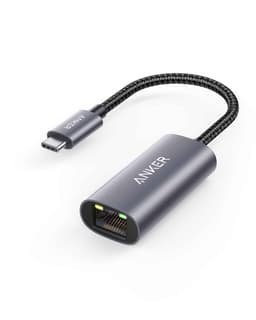
The port layout on the Anker 555 USB-C Docking Hub (8-in-1) PowerExpand Adapter is one of its strongest selling points. You get a USB-C Power Delivery input port (for your charger), the built-in 7.48-inch USB-C host cable (connects to your laptop), a USB-C data port (10Gbps, data only), two USB-A data ports (both 10Gbps), one HDMI port (4K@60Hz or 4K@30Hz depending on your laptop's DP version), one Ethernet port, and a combined microSD and SD card reader. Eight functions, genuinely useful ones.
The explicit note that the USB-C data port is for data transfer only and does not support video output is important. Some buyers expect to run a second display through the USB-C port. You can't. The HDMI port is the only video output. This is a deliberate design choice, not an oversight, and it keeps the hub's bandwidth allocation clean. But if you need dual display output, this hub isn't the right tool regardless of price.
The Ethernet port is a real asset for anyone working from home or in an office where Wi-Fi reliability is inconsistent. Wired connections through USB-C hubs have historically been a weak point, with some hubs delivering unreliable or slow Ethernet performance. The Anker 555 doesn't have widely reported Ethernet reliability issues in the owner review pool, which is a good sign. For the power delivery side, remember the 100W charger requirement to get the full 85W pass-through. Using a lower-wattage charger will reduce the pass-through accordingly, and Anker is clear about this in the spec notes.
How It Compares: Anker 555 vs the Competition
At this price tier, the main competition comes from Anker's own lineup and from brands like Uni and Vava. The two most relevant comparisons are the Uni USB-C Hub 9-in-1 and the Vava USB-C Hub 8-in-1. Both sit in a similar price bracket and offer similar port counts. Here's how the specs stack up on the features that actually matter.
The Anker 555 wins on data port speeds. The 10Gbps on both USB-C and USB-A is genuinely better than the 5Gbps you get on most competing hubs at this price, including the Uni 9-in-1. If you're doing serious file transfers, that difference is real. The Vava 8-in-1 matches the port count but doesn't consistently offer 10Gbps across all data ports. The Anker's 85W pass-through charging is also at the top of the range for this price tier; many competitors cap at 60W or 65W.
Where competitors sometimes have an edge is in the display output options. Some rival hubs offer dual display output (one HDMI and one additional DisplayPort or USB-C video), which the Anker 555 explicitly doesn't support. If dual monitors is a requirement, you're looking at a different class of device entirely, typically a Thunderbolt dock starting at a significantly higher price. Within the single-display hub category, the Anker 555 is well-positioned. The 18-month warranty is also above average; most competitors in this bracket offer 12 months.
| Feature | Anker 555 USB-C Hub (8-in-1) | Uni USB-C Hub 9-in-1 | Vava USB-C Hub 8-in-1 |
|---|---|---|---|
| Price | £29.99 | Similar budget tier | Similar budget tier |
| HDMI Output | 4K@60Hz (DP 1.4) / 4K@30Hz (DP 1.2) | 4K@30Hz typical | 4K@30Hz typical |
| USB-C Data Speed | 10Gbps | 5Gbps typical | 5-10Gbps (varies by model) |
| USB-A Data Speed | 10Gbps (both ports) | 5Gbps typical | 5Gbps typical |
| Pass-Through Charging | 85W | 60-65W typical | 60-100W (varies by model) |
| Card Reader | microSD + SD (simultaneous) | microSD + SD | microSD + SD |
| Ethernet | Yes | Yes | Yes |
| Built-in Cable | Yes (7.48 inches) | Varies by model | Yes (shorter typical) |
| Warranty | 18 months | 12-18 months | 12 months |
| Linux Support | No | Often yes | Often yes |

Final Verdict: Anker 555 USB-C Docking Hub (8-in-1) PowerExpand Adapter
The Anker 555 USB-C Docking Hub (8-in-1) PowerExpand Adapter is one of the better-value USB-C hubs available at this price. The 10Gbps data speeds across all data ports, the 85W pass-through charging, the 4K@60Hz HDMI output (with the right laptop), and the dual card reader add up to a spec sheet that genuinely outperforms most competitors in the same bracket. The 4.3-star average from over 9,000 owners is not a fluke; this hub does what it says for the vast majority of people who buy it.
The limitations are real but clearly stated. One display output only, no Linux support, and you need a 100W charger to get the full 85W pass-through. The DP 1.4 vs DP 1.2 distinction for 4K@60Hz vs 4K@30Hz is the most common source of buyer disappointment, and it's worth double-checking your laptop's specs before purchasing. The Anker product page is clear about this, but not everyone reads the small print.
For a MacBook Pro user, a Windows laptop owner who's tired of juggling dongles, or anyone setting up a home office desk with a single monitor, this hub is a proper solution. It's not trying to be a Thunderbolt dock and it's not priced like one. Within its category, it's genuinely well-executed. The 18-month warranty and Anker's reputation for sorting problems when they arise add a layer of confidence that cheaper no-name alternatives can't match. Worth buying. Just check your laptop's DisplayPort version first.
Owner rating: ★★★★☆ (4.3) from 9,466 reviews.
What works. What doesn’t.
5 + 4What we liked5 reasons
- 10Gbps data speeds on all USB-C and USB-A ports, well above the 5Gbps typical at this price
- 85W pass-through charging is among the highest in this budget tier
- 4K@60Hz HDMI output available with DP 1.4 laptops
- Simultaneous microSD and SD card reader, useful for photographers and videographers
- 18-month warranty and strong Anker customer service reputation
Where it falls4 reasons
- Single display output only; USB-C data port cannot be used for video
- No Linux support
- Requires a 100W charger to achieve full 85W pass-through; lower-wattage chargers reduce output accordingly
- 4K@60Hz requires DP 1.4 laptop; DP 1.2 laptops limited to 4K@30Hz
Full specifications
7 attributes| Key features | Flawless 4K Video via HDMI: Enjoy crystal-clear visuals with 4K@60Hz output when using a DP 1.4 laptop, or 4K@30Hz with a DP 1.2 laptop—perfect for high-definition presentations and entertainment. (Note: Only the HDMI port supports video output. The USB-C port is for data transfer only.) |
|---|---|
| Massive Expansion: Equipped with a USB-C Power Delivery input port, a built-in 7.48″ USB-C cable, a USB-C data port, 2 USB-A data ports, 1 HDMI port, an Ethernet port, and a microSD/SD card reader, giving you an incredible range of functions—all from a single USB-C port. | |
| High-Speed, High-Def: USB-C and USB-A data ports provide file transfer at speeds up to 10 Gbps, while an HDMI port supports media display at resolutions up to 4K@60Hz for DP 1.4 laptops, or 4K@30Hz for DP 1.2 laptops. | |
| Powerful Pass-Through Charging: Compatible with USB-C Power Delivery to provide high-speed pass-through charging up to 85W. | |
| Note: The hub requires 15W for operation. Please use a 100W Power Delivery charger and cable to ensure adequate power. | |
| Compatibility: Supports USB-C, USB4, and Thunderbolt connections. Compatible with MacBook (macOS 12 and newer), Windows 10 and 11, ChromeOS, and laptops equipped with DP Alt Mode and Power Delivery. Note: This device is not compatible with Linux. | |
| What You Get: Anker 555 USB-C Hub (8-in-1) / PowerExpand 8-in-1 USB-C PD 10Gbps Data Hub, welcome guide, our worry-free 18-month warranty, and friendly customer service. |
Frequently asked
5 questions01Will the Anker 555 USB-C Docking Hub work with my MacBook Pro?+
Yes, provided your MacBook Pro is running macOS 12 (Monterey) or newer and has a USB-C or Thunderbolt port. Older Macs running macOS 11 or earlier are not officially supported. The hub connects via its built-in 7.48-inch USB-C cable, and all eight ports become available immediately with no driver installation needed. For 4K@60Hz HDMI output, your MacBook Pro needs to support DisplayPort 1.4 over USB-C; if it only supports DP 1.2, HDMI output will be limited to 4K@30Hz.
02Do I need a 100W charger to use the Anker 555 USB-C Hub?+
You need a 100W USB-C Power Delivery charger and cable to get the full 85W pass-through to your laptop. The hub uses 15W for its own operation, so a 100W source delivers 85W to the laptop. A 65W charger would deliver around 50W to the laptop, which is enough for light use but may not keep pace with a power-hungry laptop under full load. Anker is explicit about this requirement in the product specs, so it is worth checking your charger's wattage before assuming you will get maximum charging speed.
03Can I connect two monitors through the Anker 555 USB-C Hub?+
No. The Anker 555 supports a single display output through its HDMI port. The USB-C data port on the hub is for data transfer only and does not support video output. If you need dual display output from a USB-C hub, you will need a different product, typically a Thunderbolt dock at a higher price point. Within the single-display category, the Anker 555 delivers well, but dual monitor setups are outside its design brief.
04Is the Anker 555 USB-C Hub easy to set up and reliable day-to-day?+
Setup is as simple as plugging the built-in USB-C cable into your laptop. No drivers, no app, no account required on Windows 10/11, macOS 12+, or ChromeOS. It is genuinely plug-and-play. On reliability, the owner review pool of over 9,000 ratings averaging 4.3 stars suggests the large majority of users have a positive experience. The most common issues in negative reviews relate to early unit failures (covered by the 18-month warranty) and buyer confusion about the DP 1.4 vs DP 1.2 HDMI output difference rather than ongoing reliability problems.
05What warranty and returns apply to the Anker 555 USB-C Hub?+
Amazon offers 30-day returns on most items. The Anker 555 comes with an 18-month manufacturer warranty, which is above average for this product category. You are also covered by Amazon's A-to-Z guarantee. Anker's customer service reputation in the owner review pool is consistently good, with most warranty claims handled without significant difficulty.