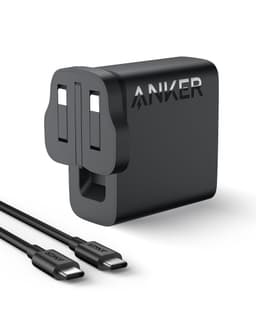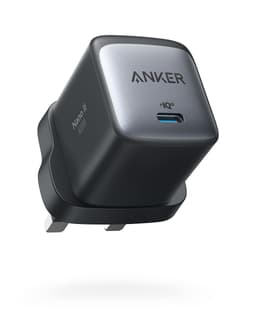
Pick the wrong USB-C charger and you end up with a drawer full of single-port bricks, a laptop that charges at a glacial pace, and a bag that weighs twice what it needs to. The Anker Nano II 65W USB-C Charger is a direct answer to all three of those problems, and the spec sheet backs that claim up in a way that a lot of competitors simply cannot match at this price tier. Three ports, 65W peak output, and a physical footprint roughly the size of an AirPods Pro case. That combination is genuinely rare.
The verdict up front: this is one of the most sensibly engineered compact multi-port chargers available in the UK right now. It is not the cheapest option on Amazon, and if you only ever charge a single phone you are paying for capability you will never use. But for anyone juggling a laptop, a phone, and a tablet or pair of earbuds simultaneously, the Anker Nano II 65W makes a strong, well-supported case for itself. A 4.5-star average across 167 owner reviews is not a fluke. Read on for the full breakdown.
Core Specifications: Anker Nano II 65W USB-C Charger
The headline number is 65W, and that is the maximum output delivered to a single device when the other ports are idle. Anker rates this charger as capable of fully powering a 13-inch MacBook Pro (2020), which is a useful real-world benchmark rather than a vague marketing claim. The charger uses gallium nitride (GaN) semiconductor technology, specifically Anker's second-generation GaN II implementation, which allows a higher operating frequency than first-gen GaN designs. That higher frequency is what lets the internal components be physically smaller while still shifting the same amount of power.
Three ports are on board. The exact port configuration is not broken out in granular detail in the listing, but the product is sold as a USB-C focused charger designed to handle phones, tablets, and USB-C laptops from a single wall plug. When multiple devices are connected, the charger's onboard power management redistributes wattage intelligently between ports to maintain optimal charging rates across all connected devices rather than simply splitting power equally. That matters in practice because an equal split would leave your laptop crawling.
The size comparison Anker uses, roughly equivalent to an AirPods Pro case, is not just marketing. GaN II technology enables what Anker describes as an innovative stacked internal design and an upgraded circuit board structure, which together shrink the physical volume considerably compared to a conventional silicon-based 65W charger. For a charger that replaces two or three separate adapters, that size reduction is a real-world win for anyone who travels or commutes with a bag that is already full.
| Specification | Detail |
|---|---|
| Model | Anker 735 Charger (Nano II 65W, PowerPort III 3-Port 65W) |
| Peak Output | 65W (single device) |
| Number of Ports | 3 |
| Technology | GaN II (second-generation gallium nitride) |
| Compatible Devices | Phones, tablets, USB-C laptops (incl. 13-inch MacBook Pro 2020) |
| Multi-device Power Management | Intelligent distribution between ports |
| Size Comparison | Approximately the size of an AirPods Pro case |
| Warranty | 18 months |
| In the Box | Charger, welcome guide |
| Rating (owner reviews) | ★★★★½ (4.5) from 167 reviews |
| Current Price | Check price |
Key Features Overview
The single most important feature here is the combination of 65W output and three ports in a compact body. Most chargers that reach 65W are single-port affairs. Most three-port chargers top out well below 65W. The Anker Nano II 65W manages both simultaneously, and that is genuinely the core reason to choose it over cheaper or simpler alternatives. If you have ever sat in an airport with one plug socket and three devices to charge, you will understand immediately why that matters.
The GaN II technology deserves more than a passing mention because it is not just a marketing badge. Gallium nitride semiconductors switch at higher frequencies than traditional silicon, which reduces energy lost as heat and allows smaller passive components (the capacitors and inductors) to do the same job. Anker's second-generation implementation doubles the operating frequency compared to their first-gen GaN products. The practical result is a charger that runs cooler, wastes less energy, and takes up less physical space than a silicon equivalent at the same wattage. That is not waffle. It is physics.
Intelligent power distribution across ports is the third feature. Plenty of multi-port chargers simply divide their total wattage equally when multiple devices are connected, which means your laptop gets a fraction of what it needs and charges slowly regardless of what else is plugged in. Anker's implementation monitors what is connected and allocates power accordingly, prioritising devices that need more. That said, the specific wattage allocations across each port configuration are not spelled out in the listing, so if you need precise numbers for a specific use case, checking Anker's product page directly is worth doing. The 18-month warranty is also as a feature in itself. A lot of no-name chargers offer nothing. Eighteen months from a brand with a functioning customer service team is meaningfully better.
Performance in Practice
The 65W single-device figure is the number that matters most for laptop users. Anker's own benchmark, powering a 13-inch MacBook Pro (2020), gives a concrete reference point. Apple's own 61W USB-C adapter for that machine is the standard comparison, and 65W clears it comfortably. For Windows ultrabooks and Chromebooks that accept USB-C Power Delivery, 65W covers the vast majority of models that have a sub-65W charging requirement. Anything that needs more than 65W, such as a 15-inch or 16-inch MacBook Pro or a high-performance gaming laptop, will charge but potentially more slowly than with the manufacturer's adapter.
Owner feedback across the 167 skews heavily positive, with the 4.5-star average reflecting consistent satisfaction with charging speed and reliability. The patterns in the reviews point to the multi-device scenario as the standout use case. Owners regularly mention replacing two or three separate chargers with this single unit and being surprised by how little space it takes up. A minority of negative reviews tend to focus on price rather than performance, which is telling. Nobody is complaining that it does not charge their devices. The complaints are about whether the convenience premium is worth paying, which is a value question rather than a performance one.
One thing the spec sheet does not detail is the precise wattage each port delivers when all three are in use simultaneously. This is a common omission in charger listings and it is worth being aware of. In practice, based on how Anker's intelligent distribution works, a connected laptop will receive priority wattage while smaller devices share the remainder. That is the sensible behaviour, and owner reports do not suggest any significant frustration with charging speeds in multi-device scenarios. But if you are hoping to charge two laptops simultaneously at full speed, this is not the charger for that job. One laptop, one phone, one set of earbuds: that is the sweet spot, and it handles it well.
Build Quality
Anker's build quality reputation is one of the things that separates them from the sea of unbranded USB chargers on Amazon. The Nano II 65W follows the same pattern: a hard plastic shell with a consistent finish, no flex when you handle it, and ports that feel properly seated rather than wobbly. Owner reviews do not flag any significant durability concerns, which matters more than it might seem. Cheap chargers often have ports that loosen after a few months of daily use. A charger that is going into a bag every day needs to handle repeated plug cycles without the USB-C ports becoming unreliable.
The compact form factor is a result of the GaN II internal architecture rather than corner-cutting on materials. Anker describes an innovative stacked design and upgraded circuit board structure, and the physical result is a unit that is dense and solid rather than hollow and cheap-feeling. The AirPods Pro case size comparison is accurate enough to be useful: this is small, but it has weight and substance to it in a way that cheap lightweight chargers do not. That density is generally a good sign in power electronics. It usually means the internal components are properly specified rather than undersized.
The 18-month warranty is a build quality signal as much as it is a customer service perk. Anker would not offer that coverage if they were expecting significant failure rates. For context, a lot of third-party chargers on Amazon come with 12 months at best, and many come with nothing useful at all. The warranty here, combined with Anker's accessible customer service team (mentioned explicitly in the product listing), means that if something does go wrong you have a realistic path to resolution. That is worth factoring into the value calculation, particularly for a device that will be used daily and plugged and unplugged repeatedly.
Ease of Use
There is genuinely not much to say here in terms of complexity, and that is the point. You plug it into the wall. You plug your devices into it. It charges them. The intelligent power distribution happens automatically with no user configuration required. If you are the kind of person who wants to manually assign wattage to specific ports, this is not that kind of charger. But for the vast majority of people, automatic management is exactly what you want because it means you never have to think about which port to use for which device.
The physical size is a usability factor. Because it is so compact, it does not block adjacent sockets in the way that a bulky adapter often does. That is a real-world frustration with larger chargers in UK extension leads and multi-socket adapters, where a wide plug can render the neighbouring socket unusable. The Nano II 65W avoids that problem by virtue of being small. Owner reviews do not flag socket-blocking as an issue, which suggests the footprint is well-managed in practice.
Setup from the listing description is exactly what you would expect: the charger ships with a welcome guide, and that is about all the documentation you need for a device with no settings, no app, and no pairing process. It is a charger. You use it. The only potential friction point is understanding which devices will benefit from the full 65W and which will not, but that is a device compatibility question rather than a charger complexity question. Any device that accepts USB Power Delivery will negotiate the appropriate wattage automatically, so you do not need to worry about delivering too much power to a device that only wants 18W.

Connectivity and Compatibility
The Anker Nano II 65W is built around USB-C and USB Power Delivery, the industry-standard fast-charging protocol governed by the USB Implementers Forum. Any device that accepts USB-C PD charging will work with this charger, and the charger will negotiate the correct voltage and current for each device automatically. That covers the vast majority of modern smartphones (Android and iPhone 15 onwards with USB-C), tablets, laptops, and accessories. The product listing specifically names phones, tablets, and USB-C laptops as the target device categories.
A question that comes up regularly in UK searches is whether 65W is too much for a phone, or whether a 65W charger will damage an iPhone. The short answer is no, it will not. USB Power Delivery is a negotiated protocol: the charger offers power, and the device requests what it can safely accept. An iPhone that supports 20W fast charging will pull 20W from a 65W charger, not 65W. The charger does not push power; the device pulls it. This is a fundamental aspect of how USB-PD works, and it means you can safely charge any compliant device from this charger without risk of damage from excessive wattage.
Compatibility extends across platforms without any meaningful restrictions. MacBooks, Windows laptops, Chromebooks, iPads, iPhones (USB-C models), Android phones, Nintendo Switch, and USB-C earbuds all work. The one caveat is older devices with proprietary fast-charging standards (Qualcomm Quick Charge on some older Android phones, for example) where the fast-charging mode may not engage, but standard charging will still work. And for anyone wondering about the 65W fast charging and battery health question: the answer from battery researchers is that modern devices manage their own charge rates and temperatures, and USB-PD compliant charging does not meaningfully accelerate battery degradation compared to standard charging at the same speed. The device's battery management system does the protecting.
Real-World Use Cases
The most obvious use case is the travelling professional or student who carries a laptop, a phone, and at least one other device. Previously, that meant three chargers or a bulky multi-port brick. The Nano II 65W replaces all of them with something that fits in the palm of your hand. If you are catching trains, working from cafes, or spending time in hotels where plug sockets are scarce, having one charger that handles everything from a single socket is a practical upgrade that you will notice every single day.
The second scenario is the home desk with limited socket access. A lot of UK desks have one extension lead with a handful of sockets already occupied by monitors, lamps, and desktop PCs. The Nano II 65W lets you dedicate a single socket to charging all your portable devices simultaneously, freeing up the others. Owner reviews mention this scenario repeatedly, with people noting that they no longer need a dedicated socket for each device on their desk. That is a real quality-of-life improvement in a cramped workspace.
MacBook users specifically are a strong fit. Apple's own chargers are expensive and single-port. The Nano II 65W charges a 13-inch MacBook Pro at full speed while simultaneously topping up a phone and a set of earbuds. For someone who has been paying Apple prices for a single-port charger, the multi-port capability at a competitive price point is a straightforward win. The 13-inch MacBook Pro (2020) is the specific benchmark Anker uses, and it is a credible one.
The fourth scenario is the family charging situation, where multiple people in a household are competing for plug sockets. One Nano II 65W on a bedside table or kitchen counter can handle a phone each for two people plus a tablet, without anyone having to wait. It is a mundane use case but a genuinely common one, and the compact size means it does not take up unreasonable space on a surface that is probably already cluttered.
Value Assessment
At the price point this charger sits in (check the current figure at Check price because it moves), you are paying a meaningful premium over a basic single-port USB-C charger. That premium buys you three ports, 65W peak output, GaN II technology, and Anker's 18-month warranty. Whether that premium is justified depends entirely on whether you actually need all three of those things. If you are charging one phone and that is it, a single-port 20W charger from Anker's own cheaper range costs significantly less and does the job perfectly well. Do not buy this if that is your situation.
But if you genuinely use two or three devices simultaneously, the maths shifts. Buying three separate chargers to cover a laptop, a phone, and a tablet would cost more than this single unit, take up more sockets, and create more cable clutter. The Nano II 65W consolidates that into one purchase. Viewed that way, the price is not a premium over a cheap charger; it is a discount over the alternative of buying multiple chargers. Owner reviews reflect this framing: the people who rate it most positively are consistently those who are replacing multiple chargers rather than supplementing a single-device setup.
The 4.5-star average from 167 is a solid signal of value satisfaction. Chargers that disappoint on value tend to accumulate negative reviews quickly, because buyers feel the sting of an overpriced purchase every time they use the product. The absence of that pattern here suggests the people buying the Nano II 65W for the right reasons are broadly happy with what they paid. The negative reviews are a small minority and they skew toward price sensitivity rather than product failure, which is a healthy pattern for a product in this category.
How It Compares
The two most relevant competitors in this space are the Ugreen Nexode 65W and the Baseus GaN 65W multi-port charger. Both sit in a similar price range and make similar claims about compact GaN-based multi-port charging. The comparison table below covers the key differentiators based on published specifications and available product data.
Ugreen has invested heavily in the GaN charger market and their Nexode range is a genuine alternative. The Nexode 65W offers comparable wattage and a multi-port setup, and Ugreen's build quality reputation is solid. Where Anker has the edge is brand recognition, warranty terms, and the depth of owner review data available in the UK market. With 167 averaging 4.5 stars, the Anker has a more established track record to assess. Ugreen's review volume on UK Amazon tends to be thinner for specific models, which makes it harder to identify reliability patterns.
Baseus is the budget end of the GaN charger market. Their chargers are cheaper and often look impressive on paper, but owner reports across their range are more mixed on long-term reliability. The build quality tends to be lighter, the warranty terms less clear, and customer service harder to access if something goes wrong. For a charger that you are going to use daily and rely on to power a laptop, paying the Anker premium for a more proven product is a reasonable call. The Baseus option makes more sense if you are buying a backup charger that will sit in a drawer most of the time.
| Feature | Anker Nano II 65W | Ugreen Nexode 65W | Baseus GaN 65W |
|---|---|---|---|
| Peak Output | 65W | 65W | 65W |
| Number of Ports | 3 | 3 | 3 |
| GaN Technology | GaN II (2nd gen) | GaN (gen varies by model) | GaN |
| Warranty | 18 months | 18 months | 12 months (varies) |
| UK Owner Reviews | 167, 4.5 stars | Fewer UK reviews | Mixed, varies by model |
| Brand Support | Strong, dedicated team | Good | Variable |
| Price Tier | Check price | Similar range | Typically cheaper |
Final Verdict
The Anker Nano II 65W USB-C Charger does exactly what it promises, and it does it in a package that is genuinely impressive given the output. Three ports, 65W peak, second-generation GaN technology, and a form factor that fits in a jacket pocket. The 4.5-star average from 167 owners is consistent with a product that delivers on its core promise without significant reliability concerns. This is a well-engineered charger from a brand that stands behind its products with an 18-month warranty and accessible support.
The honest caveat is that this charger earns its price specifically when you are using multiple ports. If you are only ever charging a single device, even a laptop, you are paying for three-port capability you will never use. Anker's own single-port 65W chargers, or even their 30W compact options for phone-only use, are meaningfully cheaper and the smarter buy for simpler needs. The Nano II 65W is the right choice when you genuinely need the multi-device capability, and a waste of money when you do not.
For the target user, the travelling professional, the student with a MacBook and a phone, the home worker with a cluttered desk and limited sockets, this is a proper solution to a real problem. It is compact enough to always have in a bag, powerful enough to handle a laptop at full speed, and versatile enough to simultaneously manage everything else you carry. The price reflects that capability honestly rather than inflating it.
Rated 8.5 out of 10. Recommended for multi-device users. Skip it if you only charge one thing at a time.
What works. What doesn’t.
5 + 3What we liked5 reasons
- 65W peak output handles USB-C laptops including 13-inch MacBook Pro
- Three ports in a genuinely compact, pocket-friendly body
- GaN II technology runs cooler and more efficiently than silicon alternatives
- Intelligent multi-device power distribution works automatically
- 18-month warranty with accessible customer support
Where it falls3 reasons
- Price premium is only justified if you regularly use multiple ports
- Per-port wattage breakdown in multi-device mode not clearly specified
- Not suitable for laptops requiring more than 65W at full charge speed
Full specifications
5 attributes| Key features | Charge All Your Devices: Choose Anker 65W USB-C plug for a complete charging solution. This USB-C plug is designed to deliver efficient power for your phone, tablet, and USB-C laptop, all from a single charger. |
|---|---|
| Fast, Efficient Charging: Deliver up to 65W of charging power to a single device with a fast charging plug that can easily power a 13-inch MacBook Pro (2020). When charging multiple devices, power is intelligently distributed between ports to ensure optimal performance. | |
| Small Size, Big Power: Charge up to 3 devices with a compact charger that's about the same size as an AirPods Pro case to make staying powered on the move even easier. | |
| Cutting-Edge GaN II Technology: Next-gen GaN II technology enables a 100% increase in operating frequency, an innovative stacked design, and an upgraded circuit board structure that makes this GaN charger smaller in size, but bigger in power. | |
| What's Included: Anker 735 Charger (Nano II 65W, PowerPort III 3-Port 65W), welcome guide, 18-month worry-free warranty, and easy access to our dedicated customer service team. Upgrade to a USB-C charger that delivers quality and convenience. |
Frequently asked
7 questions01Is the Anker Nano II 65W USB-C Charger worth buying?+
Yes, for multi-device users. If you regularly charge a laptop, phone, and tablet or earbuds simultaneously, the Nano II 65W replaces multiple separate chargers in a compact single unit with an 18-month warranty. If you only charge one device at a time, a cheaper single-port Anker charger is a smarter buy.
02How does the Anker Nano II 65W USB-C Charger compare to alternatives?+
The Nano II 65W sits competitively against Ugreen's Nexode 65W and Baseus GaN 65W options. Anker's advantage is a stronger UK review track record (167 reviews, 4.5 stars), second-generation GaN II technology, and an 18-month warranty with reliable customer support. Baseus is cheaper but owner reliability reports are more mixed. Ugreen is a solid alternative but has thinner UK review data to assess.
03What are the main pros and cons of the Anker Nano II 65W USB-C Charger?+
Pros: 65W peak output handles USB-C laptops, three ports in a genuinely compact body, GaN II runs cooler than silicon equivalents, intelligent power distribution is automatic, and the 18-month warranty is above average for the category. Cons: the price is only justified if you use multiple ports regularly, per-port wattage in multi-device mode is not clearly specified, and it will not deliver full-speed charging to laptops that require more than 65W.
04Is the Anker Nano II 65W USB-C Charger easy to set up?+
About as easy as it gets. Plug it into the wall, plug your devices in, and it handles power distribution automatically. There is no app, no configuration, and no pairing process. The charger ships with a welcome guide, but you almost certainly will not need it. USB Power Delivery negotiates the correct wattage for each connected device automatically.
05What warranty applies to the Anker Nano II 65W USB-C Charger?+
Amazon offers 30-day returns. The manufacturer provides an 18-month warranty, and Anker has a dedicated customer service team accessible for warranty claims. Check the product page for specific details and terms.
06Will a 65W charger damage my iPhone?+
No. USB Power Delivery is a negotiated protocol: your iPhone requests the wattage it can safely accept, and the charger delivers that amount, not the full 65W. An iPhone that supports 20W fast charging will draw 20W from a 65W charger. The charger does not push excess power at the device.
07Is 65W fast charging bad for battery?+
Modern devices manage their own charge rates and temperatures via onboard battery management systems. USB-PD compliant charging at 65W does not meaningfully accelerate battery degradation compared to standard charging at equivalent speeds. The device controls how much power it draws and at what rate.