Watercooling enthusiasts need cases designed with radiator mounting flexibility, internal space and airflow management at the forefront. Whether you are planning a custom loop with multiple radiators or a simpler all-in-one liquid cooler setup, your case choice determines how effectively your cooling system performs and how easily you can maintain it. This year's crop of watercooling-friendly cases offers improved front panel design, better cable routing and modular mounting options compared to 2024 models, making builds cleaner and more efficient.
Quick Verdict
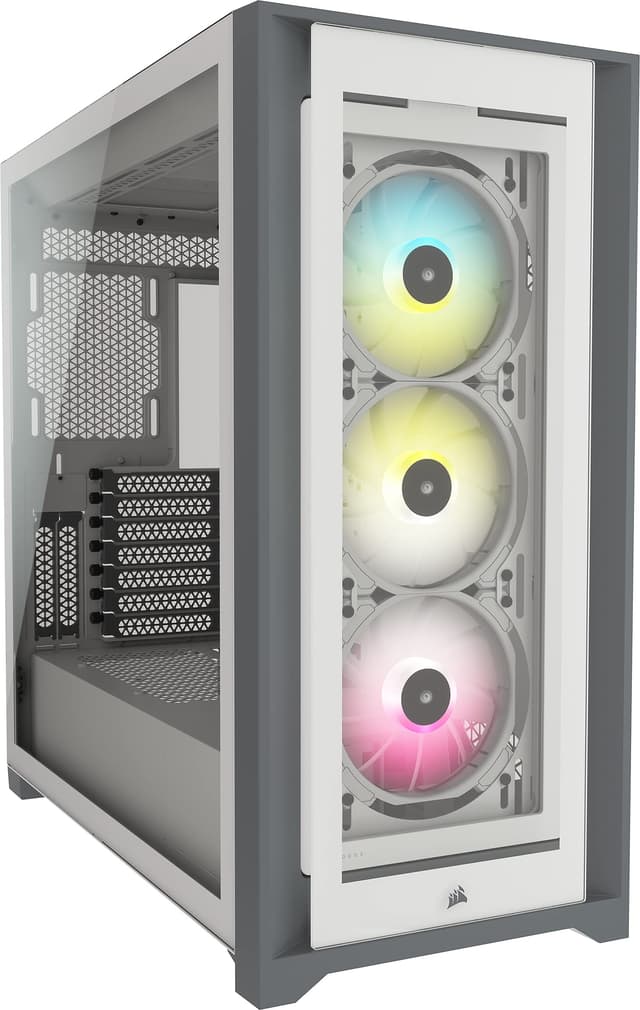
Best Overall: Corsair iCUE LINK 3500X RGB, premium build quality, extensive radiator support and iCUE ecosystem integration.
Best Value: FOIFKIN F300, solid watercooling foundation at under £60 with pre-installed fans and mounting flexibility.
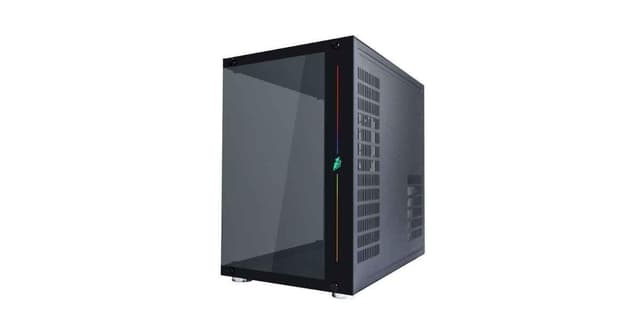
The Cooler Master MasterBox 600 distinguishes itself as an E-ATX focused watercooling platform, ideal for builders with multi-socket motherboards or those planning ambitious dual-radiator custom loops requiring maximum internal volume. This mid-tower case prioritises space over compact form factors, supporting E-ATX and ATX motherboards whilst accommodating up to a 420mm front radiator, the largest capacity of any case in this comparison.
The generous front mounting accommodates dual 240mm radiators side by side or single 420mm units, making it excellent for high-end processor cooler setups. The top panel supports a 280mm radiator whilst the rear accepts a standard 120mm unit, allowing triple-radiator configurations for extreme custom loops. The case includes a 200mm front fan pre-installed, though watercooling builders will typically replace this with radiators. Internal dimensions maximise clearance for pump reservoirs, fittings and cable work, whilst the steel construction and magnetic dust filters maintain durability across extended builds.
At this price, the MasterBox 600 suits builders investing in high-end waterblocks, large radiator surface areas and complex plumbing layouts. The E-ATX support matters if your motherboard requires this form factor, a constraint that standard mid-tower cases often cannot accommodate. The trade-off is a heavier chassis at 6.8 kg and larger footprint, requiring dedicated desk space and careful measurement before purchasing. The case delivers cooling capability matching or exceeding single-radiator configurations, making it worthy of consideration for enthusiasts prioritising cooling performance over aesthetic minimalism.
Pros
- Supports 420mm front radiator, the largest capacity for maximum cooling surface area
- E-ATX motherboard support enables high-end multi-socket or enthusiast platform builds
- Triple-radiator configuration potential suits extreme custom loop projects
- Generous internal volume simplifies pump, reservoir and fitting installation
Cons
- Larger footprint and 6.8 kg weight demand significant desk space and careful handling
- Lacks premium aesthetic features like tempered glass or iCUE integration
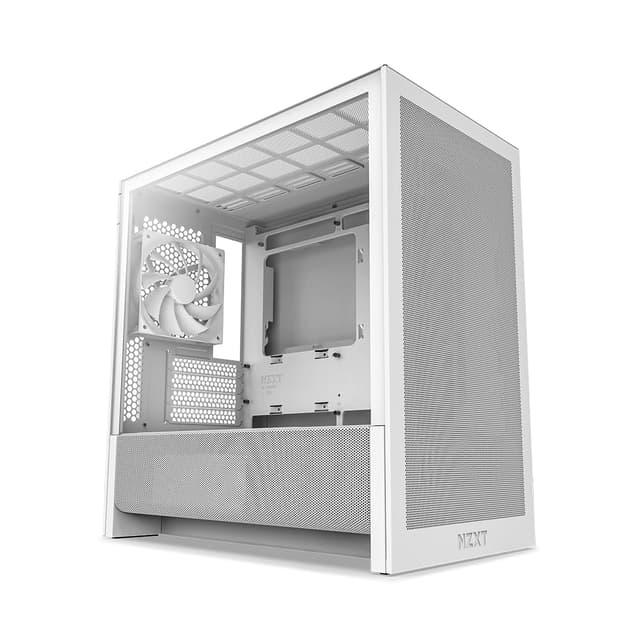
The FOIFKIN F300 delivers exceptional value for budget-conscious watercooling enthusiasts, offering solid mounting options and basic features at under £60. This mid-tower ATX case supports standard ATX and Micro-ATX motherboards, making it suitable for most custom cooling builds without requiring expensive form factor compatibility. The front panel accommodates a 360mm radiator, sufficient for single-loop watercooling projects or all-in-one liquid cooler installations, whilst the rear supports a standard 120mm unit for dual-radiator configurations.
The case arrives with four pre-installed fans, unusual at this price point and valuable for watercooling builders who often replace case fans with radiators. This means you gain the benefit of baseline cooling performance whilst reserving front and top space for radiator mounting. Weighing just 5.2 kg, the F300 ranks amongst the lightest in this comparison, facilitating transport and installation. The 360mm front radiator support aligns with most entry to mid-level custom loop designs, avoiding bottlenecks for processor cooling or modest GPU watercooling setups.
Limitations reflect the budget positioning. The case lacks premium aesthetic features like tempered glass or extensive RGB integration, appealing to builders prioritising function over visual presentation. Cable management routes exist but require careful planning rather than offering dedicated magnetic covers or hidden routing like premium alternatives. At this price, the F300 represents the entry point for budget-focused watercooling projects, whether building a first custom loop or testing watercooling concepts before investing in premium cases. For builders avoiding aesthetic compromises, stepping to the FOIFKIN F1 or Corsair alternatives offers better feature sets.
Pros
- Pre-installed four fans provide baseline cooling without additional purchases
- Supports 360mm front radiator suitable for entry to mid-level custom loops
- , delivering excellent value for budget-focused watercooling
- Lightweight at 5.2 kg, simplifying transport and installation processes
Cons
- Lacks tempered glass and premium aesthetic features found on higher-priced cases
- Cable management routes require careful planning rather than offering dedicated solutions
- Limited top radiator clearance compared to premium mid-tower alternatives
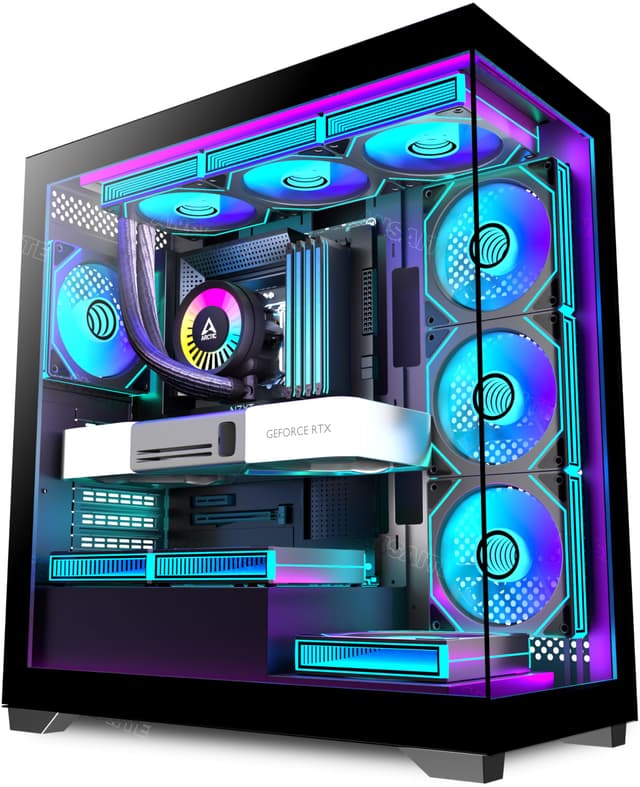
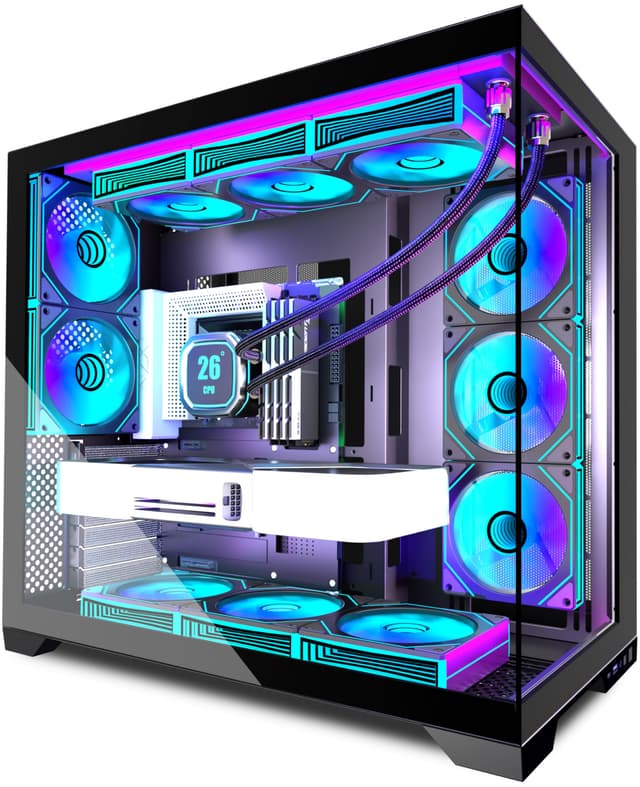
The AMANSON PC Case ATX offers straightforward watercooling capability for builders seeking functional simplicity without aesthetic flourishes or premium ecosystem integration. This mid-tower case supports standard ATX and Micro-ATX motherboards, accommodating most custom cooling configurations common amongst enthusiasts. The front panel mounts a 360mm radiator, sufficient for entry to mid-level custom loops, whilst the rear accepts a 120mm unit for dual-radiator projects or single-radiator configurations with rear exhaust setup.
Pre-installed nine PWM ARGB fans arrive with the case, an unusual abundance that delivers exceptional baseline cooling for radiator-free configurations or provides flexibility if you plan phased radiator installation over time. This fan count also enables experimentation with intake and exhaust balancing, useful for custom cooling projects where pressure dynamics matter. The case weighs 5.5 kg and measures standard mid-tower dimensions, providing balanced internal space without E-ATX support or oversize complications. At this price, the AMANSON positions itself as a value option between budget and mid-range alternatives, offering practical features without premium pricing.
Limitations reflect the budget positioning. The case prioritises function over aesthetic refinement, lacking tempered glass or distinctive design language. Cable management follows standard routing patterns rather than offering premium solutions like magnetic covers or reverse layouts. The nine pre-installed fans, whilst generous, may overwhelm smaller watercooling projects where fewer case fans complement radiator cooling. For builders avoiding complexity and preferring straightforward mid-tower functionality, the AMANSON delivers adequate watercooling support at reasonable cost, though premium alternatives offer better aesthetics and control ecosystem integration.
Pros
- Nine pre-installed PWM ARGB fans provide exceptional baseline cooling and flexibility
- Supports 360mm front radiator suitable for standard custom cooling projects
- , delivering functional watercooling support without premium markup
- Standard mid-tower dimensions balance internal space with manageable footprint
Cons
- Nine pre-installed fans may exceed requirements for radiator-focused cooling setups
- Lacks tempered glass and distinctive aesthetic features of premium alternatives
- Standard cable management routing requires careful planning for clean builds
Buying Guide
Selecting a watercooling case requires understanding radiator mounting constraints, internal volume requirements and your budget allocation across components. Radiator support matters most: front panel capacity determines maximum radiator size, typically ranging from 240mm to 420mm depending on case design. A 360mm front radiator suits most single-loop custom projects, whilst dual-radiator builds require top or bottom mounting space. Measure your radiator dimensions including fan thickness, as poorly cleared space creates installation challenges. Consider motherboard form factor compatibility against your planned platform. E-ATX support matters if using high-end multi-socket boards, but standard mid-tower ATX cases suffice for most builds.
Internal volume and depth influence pump reservoir placement and cable routing complexity. Cases exceeding 450mm depth accommodate most pump and reservoir combinations without constraint. Cable management routing, hidden pathways and magnetic covers contribute to clean aesthetics, particularly visible through tempered glass panels. Pre-installed fan counts vary dramatically from three to nine units: fewer fans mean less noise and cost if you plan radiator-only cooling, whilst more fans provide flexibility for mixed configurations. Ecosystem integration such as Corsair's iCUE Link matters if you already own compatible components, but standalone cases offer freedom for universal fan and RGB controller choices. Weigh aesthetic priorities against functional requirements. Premium cases like the Corsair iCUE LINK justify investment if you value RGB synchronisation and design, whilst budget alternatives like the FOIFKIN F300 deliver solid watercooling fundamentals at minimal cost.
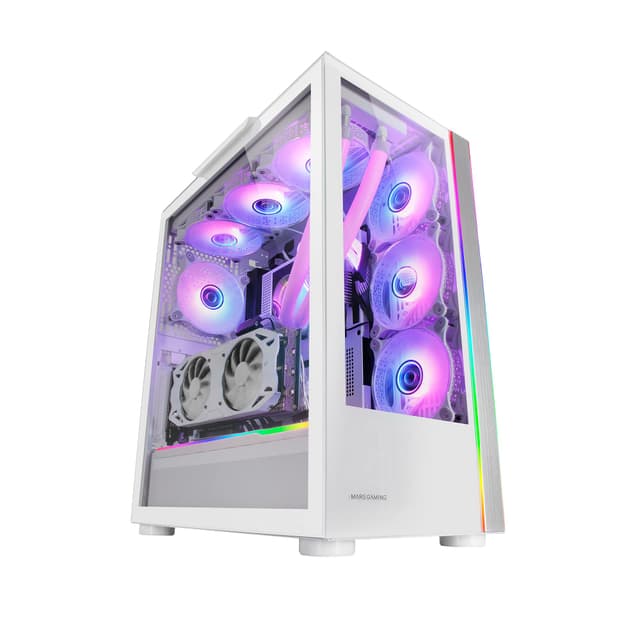
The Corsair iCUE LINK 3500X RGB emerges as the best overall watercooling case, combining premium build quality, extensive radiator support and ecosystem integration with aesthetic sophistication. Its 360mm front, 280mm top and 120mm rear capacity accommodates ambitious custom loops whilst iCUE Link synchronisation delivers unified RGB control across compatible fans and controllers. The panoramic tempered glass, reverse motherboard layout and magnetic cable covers elevate watercooling projects into visually striking builds. At this price, the investment suits serious enthusiasts committed to premium platform expansion.
For budget-conscious builders, the FOIFKIN F300 delivers outstanding value, offering 360mm front radiator support and four pre-installed fans suitable for entry custom loops. This case prioritises function over aesthetics, making it ideal for testing watercooling concepts before investing in premium platforms. Mid-tier builders should consider the Corsair 3500X ARGB or Frame 4000D ARGB, both offering Corsair engineering excellence and £88.96 respectively, with the latter's mesh front optimising radiator cooling compared to solid panel designs. The Cooler Master MasterBox 600 suits enthusiasts requiring E-ATX support and maximum radiator capacity, whilst the AMANSON delivers practical functionality for builders prioritising simplicity. Each case addresses specific watercooling requirements, ensuring you can match case selection to your cooling ambitions and budget constraints.