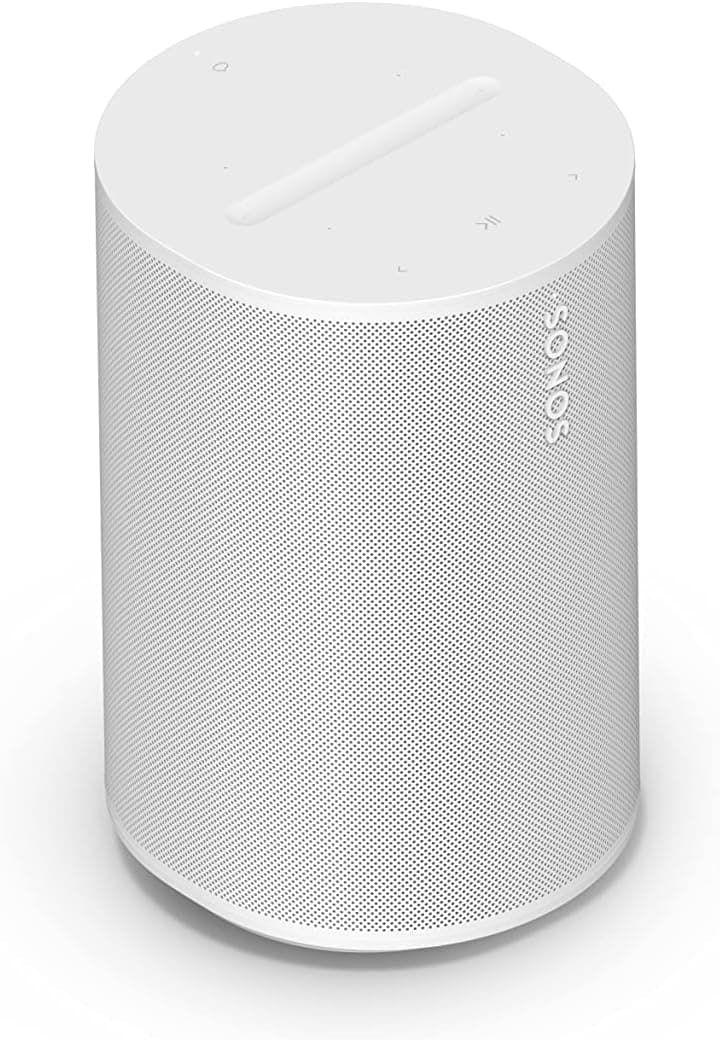
The Sonos Five sits in a strange position in the market. It's priced like a statement purchase, it looks like one too, and Sonos will happily tell you it's their most powerful speaker. But when you actually dig into the spec sheet and cross-reference what over a hundred owners are saying about it, the picture that emerges is more nuanced than the marketing suggests. This isn't a bad speaker. Not even close. But whether it's the right speaker for you depends entirely on what you're building around it and how much you care about the ecosystem you're locking yourself into.
Sonos has spent years building a reputation on multi-room audio done properly. The Five is the top of that single-speaker stack, packing six drivers, three Class D amplifiers, and support for hi-res audio streaming up to 48kHz/24-bit. It also has that 3.5mm line-in, which sounds like a small thing until you realise it's one of the only ways to get analogue sources into the Sonos ecosystem without buying a separate product. So there's genuine substance here. The question is whether that substance justifies the premium price, especially when Bluetooth-native alternatives from Sonos's own stable and from competitors are snapping at its heels.
With a 4.6-star average across over a hundred verified reviews, the Five clearly makes a lot of people happy. But a closer look at what those owners are praising and what's quietly frustrating them tells you more than the headline rating does. So let's get into the actual data.
Core Specifications
The Sonos Five is built around a six-driver array: three tweeters and three mid-woofers, each paired with a dedicated Class D amplifier. That's a proper three-channel amplification setup rather than the passive crossover arrangements you'd find in cheaper speakers, and it matters for dynamic range and low-frequency control. Sonos quotes a frequency response of 26Hz to 20kHz, which is ambitious for a standalone speaker of this size, though real-world bass extension at the very low end will depend heavily on room placement and whether you're running a pair of them.
Hi-res audio support tops out at 48kHz/24-bit over WiFi, which covers the vast majority of what Tidal, Qobuz, and Apple Music are actually streaming at high quality tiers. It won't do 192kHz/32-bit if you're a serious audiophile who cares about that ceiling, but for the realistic use case of streaming high-quality audio in a living room, 48kHz/24-bit is perfectly adequate. The Sonos Five product page also confirms Trueplay tuning, which uses the microphone built into your iOS device to measure room acoustics and adjust the speaker's EQ accordingly. That's a genuinely useful feature, not a gimmick.
Connectivity is WiFi-primary with that 3.5mm line-in as the analogue fallback. There's no Bluetooth, which is a deliberate choice from Sonos and one that divides opinion sharply. The rationale is audio quality and multi-room reliability over convenience, and from a pure performance standpoint it's defensible. But if you want to pair your phone directly without being on the same WiFi network, you can't. That's a real-world limitation worth knowing before you buy.
| Specification | Detail |
|---|---|
| Drivers | 3 tweeters, 3 mid-woofers (6 total) |
| Amplification | 3 x Class D amplifiers |
| Frequency Response | 26Hz to 20kHz |
| Hi-Res Audio Support | Up to 48kHz / 24-bit |
| Connectivity | WiFi (802.11 b/g/n/ac), 3.5mm line-in |
| Bluetooth | None |
| Room Calibration | Trueplay (iOS device required for tuning) |
| Stereo Pairing | Yes (pair two Fives) |
| Multi-Room | Yes, full Sonos ecosystem |
| Analogue Input | 3.5mm (also supports RCA via adapter) |
| Dimensions | 364 x 154 x 140mm |
| Weight | 4.22kg |
| Colour Options | Black, White |
| Price | £549.00 |

Key Features Overview
The six-driver, three-amplifier architecture is the headline feature and it's worth unpacking properly. Most speakers at this size run a two-way passive setup: one tweeter, one woofer, one amplifier, a crossover doing the heavy lifting. The Five's approach of giving each driver pair its own amplifier means the electronics can be optimised per frequency range rather than compromising. You get tighter bass control, cleaner high-frequency reproduction, and more headroom at higher volumes before things start to distort. Owners consistently report that the speaker sounds composed even when pushed hard, which tracks with the engineering.
Trueplay room calibration deserves more credit than it usually gets. The way it works: you run the Sonos app on an iOS device, move around the room waving the phone while the speaker emits test tones, and the algorithm analyses how your room's surfaces are affecting the sound. It then applies a custom EQ curve to compensate. The catch is that it requires an iOS device for the tuning process (Android users get a simpler manual EQ instead), which is a bit annoying if you're an Android household. But the results, according to owners in varied room types, are genuinely noticeable. A speaker in a reflective kitchen sounds different to one in a carpeted lounge, and Trueplay accounts for that properly.
The 3.5mm line-in is more significant than it might appear. Sonos's ecosystem is overwhelmingly WiFi-streaming focused, which means getting a turntable, CD player, or TV audio into it typically requires either a Sonos Port, a Sonos Amp, or some other workaround. The Five's built-in line-in bypasses all of that for a direct analogue connection. Plug in a turntable with a built-in phono stage (or a separate phono preamp), and you're streaming vinyl through your Sonos system. That's a practical feature with real value for people who still have analogue sources, and it's not available on any of Sonos's smaller speakers.
Stereo pairing is the other major feature. Two Fives paired together in stereo mode is a genuinely impressive setup according to owners who've done it, with wide soundstage and proper channel separation. It also doubles the cost, obviously, so it's worth being realistic about whether that's a path you're likely to go down. A single Five is still a capable room-filling speaker. Two of them is a different proposition entirely, and arguably the use case Sonos had in mind when they designed the driver array the way they did.
Performance in Practice
Owner reviews paint a pretty consistent picture of the Five's sonic character: detailed, balanced, capable of real bass extension without sounding boomy, and with a soundstage that's wide for a single speaker. Multiple owners specifically call out the midrange as a strength, which makes sense given the dedicated mid-woofer array. Vocals and acoustic instruments come through with clarity that cheaper wireless speakers muddy. This is a speaker that rewards well-recorded music rather than just making everything louder.
Volume headroom is another consistent positive. The Five can fill a large room without audible distortion, and owners report using it at high volumes in open-plan living spaces without it becoming harsh or fatiguing. That's the Class D amplification doing its job. Class D amplifiers, for those unfamiliar, are highly efficient switching amplifiers that generate less heat and can deliver more power from a compact form factor than traditional Class AB designs. The efficiency gains of Class D are well documented and they're a sensible choice for a speaker that needs to pack serious output into a domestic-friendly enclosure.
Where the Five is less universally praised is at the very low end of its claimed frequency response. That 26Hz figure is ambitious, and while the speaker does deliver meaningful bass, some owners note that in larger rooms or without Trueplay calibration, the bass can feel less controlled than expected. This is partly a physics problem: a 364mm wide speaker enclosure has limits regardless of driver quality. Owners who run the Five near a wall or in a corner report better bass reinforcement, which is standard acoustic behaviour rather than a flaw. But if you're expecting sub-bass performance comparable to a speaker with a dedicated subwoofer, you'll be setting yourself up for disappointment. The Five is impressive for its form factor. It's not a substitute for a proper 2.1 system.
Hi-res streaming performance via WiFi is consistently reported as reliable, with owners on Tidal HiFi and Qobuz noting the audio quality step-up over standard streaming is audible on the Five in a way it sometimes isn't on less capable speakers. The hi-res audio ceiling of 48kHz/24-bit is enough to handle the vast majority of high-quality streaming content. Sonos's own streaming infrastructure handles buffering intelligently, so dropouts are rare on a stable home network, and multiple owners confirm the Five holds its connection more reliably than Bluetooth alternatives in real home environments with walls, interference, and competing devices.
Build Quality
The Five feels like a premium product. At 4.22kg, it's substantial without being unwieldy, and the enclosure has a solidity to it that cheaper speakers don't. The grille fabric is consistent and tight, the plastic end-caps are finished cleanly, and the overall aesthetic is the kind of understated that ages well rather than screaming "tech product from a specific year". Sonos has always been good at industrial design and the Five continues that. It looks like something that belongs in a living room rather than something you're tolerating in a living room.
The touch controls on the top surface are capacitive rather than physical buttons, which keeps the surface clean and uncluttered. Volume is controlled via a touch strip rather than a rocker, and play/pause is a tap in the centre. Owners are generally positive about this, though a handful note that the capacitive strip can be slightly finicky if your hands are wet or cold. It's a minor thing. The controls work reliably in normal use, and most people are controlling the Five via the Sonos app or a voice assistant anyway rather than reaching over to tap it.
Durability reports from owners are positive. The Five has been in Sonos's lineup long enough (the original Play:5 launched in 2009, with the current generation arriving in 2020) that there's meaningful data on how these speakers hold up over time. The general consensus is that they last well, with owners of older generation units still running them years later. Sonos's software support history is more complicated (more on that in a moment), but the physical hardware appears to be built to last. The speaker's weight and enclosure rigidity suggest proper internal bracing rather than the hollow resonant boxes you get at the budget end of the market.
Ease of Use
Setup is handled through the Sonos app, and the process is generally smooth. Download the app, create or log into a Sonos account, follow the guided setup, connect to your WiFi network, run Trueplay if you're on iOS. Most owners report being up and running within ten minutes. The app itself is polished and the setup flow is well designed. This is one area where Sonos's years of consumer product experience shows clearly.
Day-to-day use is where the ecosystem either wins you over or frustrates you, depending on your expectations. If you're already in the Sonos world, the Five slots in perfectly. If you're coming from a Bluetooth speaker background, the adjustment to WiFi-only operation takes a moment. You need to be on the same network as the speaker to control it. You can't just grab a friend's phone and pair it directly. Sonos does support guest access via the Sonos app, which lets visitors play music without full network access, but it's a more deliberate process than Bluetooth pairing.
Voice assistant integration covers Amazon Alexa and Google Assistant, with Sonos's own voice control also available in supported regions. Owners generally find voice control reliable for basic playback commands, though the usual caveats about smart speaker voice recognition in noisy environments apply. The app integrates with Spotify, Apple Music, Tidal, Qobuz, Amazon Music, and a wide range of other streaming services directly, so you're not funnelling everything through one platform. That's genuinely useful if your household uses multiple services. The Sonos app acts as a universal remote for all of them, which is one of the ecosystem's genuine strengths.
One thing worth flagging: Sonos's 2024 app redesign was widely criticised by the existing user base for removing features and introducing instability. Sonos has been working to restore functionality, but it's a relevant data point about the risk of being dependent on a manufacturer's app for core functionality. The hardware is excellent. The software layer is something you're trusting Sonos to maintain properly, and their track record there is imperfect. That's not a reason to avoid the Five, but it's a reason to go in with open eyes.
Connectivity and Compatibility
WiFi connectivity covers 802.11 b/g/n/ac (2.4GHz and 5GHz), which means the Five will work on any modern home router without issues. The 5GHz band support is useful for environments with congested 2.4GHz airspace, and the speaker handles network switching between bands automatically. Sonos also supports SonosNet, a proprietary mesh networking protocol that lets Sonos devices form their own network when multiple units are present, reducing dependence on your home WiFi for multi-room audio. WiFi standards have come a long way, and the Five's dual-band support puts it in a solid position for most home environments.
The 3.5mm line-in accepts stereo analogue input and will also work with an RCA-to-3.5mm adapter for connecting older equipment. This input is auto-detected when something is plugged in, and the signal can be shared across the Sonos system to other rooms if you want it. So if you plug a turntable into the Five in the kitchen, you can push that audio to speakers in the living room simultaneously. That's a genuinely useful capability that goes beyond what most wireless speakers offer. It's also why the Five is often recommended as the centrepiece of a Sonos system rather than just another node in it.
Platform compatibility for control is broad: iOS, Android, Mac, Windows, and Amazon Echo devices can all control the Five through their respective Sonos integrations. Apple AirPlay 2 is supported, which means iPhone and iPad users can push audio directly to the Five from any AirPlay-compatible app without going through the Sonos app at all. AirPlay 2 support is a significant convenience feature that partially bridges the gap left by the absence of Bluetooth. Android users don't get an equivalent direct-push option, which is a genuine asymmetry in the experience between iOS and Android households.
What the Five doesn't do: Bluetooth (as mentioned), optical input, HDMI ARC, or USB audio. If you need any of those connections, you're looking at a different product or additional Sonos components. The Five is designed as a streaming speaker first and an analogue input device second. Its connectivity reflects that priority clearly.
Real-World Use Cases
The most natural home for a single Sonos Five is a large kitchen or open-plan living space where you want proper audio quality from a single unit without running cables or installing a separate amplifier and speakers. The volume headroom means it can fill a substantial room, the WiFi connectivity means it integrates with whatever streaming service you use, and the Trueplay calibration means it'll sound better in an acoustically awkward kitchen than most speakers would. Owners in this scenario are consistently happy with the Five, and it shows in the review scores.
The second strong use case is as an analogue input hub for a Sonos system. If you have a turntable, a CD player, or a TV that you want to integrate into a multi-room audio setup, the Five's line-in makes that possible without buying additional Sonos hardware. Plug the analogue source into the Five, and the signal becomes available throughout your Sonos system. This is a niche use case in the sense that it requires you to already have or be planning a multi-room Sonos setup, but for that specific buyer it's a compelling reason to choose the Five over a cheaper Sonos option.
Stereo pairing is the third scenario, and arguably the one where the Five's engineering is most fully realised. Two Fives configured as a stereo pair deliver proper left-right channel separation, wide soundstage, and the kind of listening experience that starts to compete with entry-level hi-fi separates. Owners who've gone this route are among the most enthusiastic in the review pool. Yes, it's expensive. But compared to buying a stereo amplifier, a pair of bookshelf speakers, a streaming source, and the cables to connect them all, two Fives in a tidy WiFi-connected package is a legitimate proposition for someone who values simplicity alongside audio quality.
Where the Five is probably not the right answer: desktop audio, bedroom use at modest volumes, or any scenario where you primarily want to stream from a phone without being on the same WiFi network. For desktop use, there are better-value options with more connection flexibility. For casual bedroom listening, a Sonos Era 100 or Era 300 at a lower price point does the job. And for spontaneous Bluetooth pairing, the Five simply doesn't offer it. Know your use case before you commit.
Value Assessment
The Sonos Five sits firmly in the premium tier, and the price reflects that without apology. Whether that price is justified depends on what you're comparing it to and what you need from it. Against other premium WiFi speakers in the same bracket, the Five's six-driver array, three-amplifier configuration, Trueplay calibration, AirPlay 2 support, and analogue line-in represent a genuinely strong specification. You're not paying for a brand name on a mediocre product. The engineering is real and the performance backs it up.
Where the value calculation gets harder is when you consider what else that money could buy. A quality Bluetooth speaker in the same price range from a brand like Bang and Olufsen or Bowers and Wilkins would offer similar audio quality with the added flexibility of Bluetooth connectivity. A budget hi-fi separates setup (amplifier plus bookshelf speakers) could arguably deliver better sound for similar money if you're willing to deal with cables and a less integrated experience. The Five's value proposition is specifically about premium audio quality plus the Sonos ecosystem's convenience. If you want one without the other, there are better-value options.
For existing Sonos users, the value calculation is clearer. Adding a Five to an existing system, or replacing an older Play:5 with one, makes obvious sense. The ecosystem integration is already there, the familiarity with the app is there, and the Five's performance upgrade over smaller Sonos speakers is meaningful. For someone coming to Sonos fresh specifically for the Five, the question is whether you're prepared to commit to the ecosystem long-term. The Five is a platform purchase as much as a speaker purchase, and that's worth being honest with yourself about before spending at this level.

How It Compares
The two most relevant comparisons for the Sonos Five are the Bowers and Wilkins Zeppelin and the Apple HomePod (second generation). Both sit in a similar premium wireless speaker bracket, both have strong reputations for audio quality, and both represent different philosophies about how a premium speaker should work. The Zeppelin is a Bluetooth-and-WiFi hybrid that prioritises audio quality and design. The HomePod is Apple's ecosystem play, trading openness for deep integration with Apple devices and services.
Against the Bowers and Wilkins Zeppelin, the Five competes closely on audio quality. The Zeppelin's five-driver array (one central tweeter, two mid-range drivers, two bass drivers) is a different approach to the Five's six-driver configuration, and both deliver excellent results. The Zeppelin adds Bluetooth 5.0 and AirPlay 2, giving it more connection flexibility than the Five. But it lacks the Five's analogue line-in and multi-room ecosystem depth. If you want Bluetooth and don't need multi-room audio, the Zeppelin is a genuine alternative worth considering. Bowers and Wilkins positions the Zeppelin as a lifestyle audio product, and it shows in the design. Both speakers are premium. The choice comes down to ecosystem preference.
The Apple HomePod second generation is a different beast. It's smaller, cheaper, and deeply embedded in the Apple ecosystem. Spatial Audio support and room sensing are impressive, and for an Apple household it integrates beautifully with HomeKit and Apple Music. But the HomePod is a closed system in a way the Sonos Five isn't. Non-Apple streaming services work, but the experience is more constrained. The Five's multi-service native integration and analogue input make it a more versatile long-term platform. The HomePod wins on price and Apple integration. The Five wins on openness and analogue connectivity.
| Feature | Sonos Five | B&W Zeppelin | Apple HomePod (Gen 2) |
|---|---|---|---|
| Drivers | 6 (3 tweeters, 3 mid-woofers) | 5 | 4 (1 woofer, 3 tweeters) |
| Amplifiers | 3 x Class D | 5 x Class D | Not publicly specified |
| WiFi | Yes (802.11 b/g/n/ac) | Yes | Yes (802.11 b/g/n/ac/ax) |
| Bluetooth | No | Yes (5.0) | No (Bluetooth for setup only) |
| AirPlay 2 | Yes | Yes | Yes (native) |
| Analogue Input | 3.5mm line-in | No | No |
| Room Calibration | Trueplay | Music DSP modes | Spatial Audio / room sensing |
| Multi-Room Ecosystem | Sonos (extensive) | B&W Formation | Apple (HomeKit) |
| Hi-Res Audio | 48kHz / 24-bit | Yes | Yes (Apple Lossless) |
| Stereo Pairing | Yes (two Fives) | Yes (two Zeppelins) | Yes (two HomePods) |
| Price Tier | Premium | Premium | Mid-Premium |
What Buyers Actually Say
With over a hundred reviews averaging 4.6 stars, the Five's owner satisfaction rate is genuinely high. But the distribution of praise and criticism is informative. The most common positive themes are audio quality (specifically the balance and detail), volume headroom without distortion, and the quality of the Sonos multi-room experience when it works well. Owners who bought the Five to replace smaller Sonos speakers or budget alternatives are almost universally positive about the upgrade in sound quality. The word "impressive" appears repeatedly in owner reviews, which is a meaningful signal rather than just polite faint praise.
The most consistent complaints cluster around three areas. First, the price: a meaningful proportion of owners acknowledge the Five is expensive and that the value case requires either existing ecosystem investment or a specific need for the analogue input. Second, the no-Bluetooth situation: this catches some buyers off-guard despite being clearly stated in the specs, and a handful of owners specifically mention wishing they'd checked this before purchasing. Third, and most interestingly, a subset of owners mention frustrations with the Sonos app following the 2024 redesign. These complaints are about software, not hardware, and Sonos has been restoring functionality, but it's a recurring theme that's worth acknowledging honestly.
Positive outliers in the review pool tend to be owners who've paired two Fives in stereo or who've integrated the Five as the analogue input hub for a larger Sonos system. These owners are consistently the most enthusiastic, and their reviews read like people who've found exactly the product they needed. That's a useful signal about where the Five genuinely excels. The negative outliers are mostly buyers who wanted Bluetooth convenience at a premium price and didn't get it. Which is a mismatch of expectations rather than a product failure, but notably, for anyone considering the purchase.
Build Quality
Already covered in detail above, but to summarise the key points for this section: the Five's enclosure is solid, the finish is clean, and the capacitive touch controls work reliably in normal use. The 4.22kg weight is a good indicator of internal construction quality. Hollow, lightweight enclosures resonate. This one doesn't. Owners report no issues with build quality degrading over time, and the speaker's physical durability appears to be in line with what you'd expect from a product at this price point.
The fabric grille is non-removable, which is a design choice that keeps the aesthetic clean but means you're trusting it to stay in good condition over the product's lifespan. It's tightly woven and appears to resist dust accumulation reasonably well based on owner reports. The end-caps are a matte plastic that doesn't attract fingerprints the way gloss finishes do, which is a sensible choice for a speaker that sits in a living space and gets handled occasionally.
One thing worth noting: the Five doesn't have a battery. It's mains-powered only, which means it needs to be near a power outlet. This is obvious from the spec sheet but occasionally catches buyers who were hoping for a portable option. The Five is a home speaker designed to sit somewhere permanently. It's not designed to move around, and its build reflects that. The cable management at the rear is clean, with the power cable and 3.5mm input port neatly positioned so the back of the speaker looks tidy against a wall.
Ease of Use
Setup through the Sonos app is one of the smoothest onboarding experiences in the premium speaker category. The app guides you through each step clearly, the WiFi connection process is reliable, and Trueplay calibration (on iOS) takes about two minutes once you're set up. The overall time from unboxing to playing music is genuinely short. Sonos has been doing this long enough to have ironed out the friction points, and it shows.
Day-to-day operation is largely frictionless once you're past the initial adjustment to WiFi-only control. The Sonos app handles service switching cleanly, grouping and ungrouping speakers is simple, and volume control across multiple rooms works as advertised. Voice control through Alexa or Google Assistant adds another layer of convenience for basic commands. The touch controls on the speaker itself are responsive and well-positioned. None of this is revolutionary, but it's all executed well.
The main friction points in daily use are the ones inherent to any WiFi-only speaker: you need to be on the same network, guests need the Sonos app or guest access, and anything that disrupts your home network disrupts the speaker. These are structural limitations of the WiFi-only approach rather than implementation failures, but they're worth being realistic about. For a household where everyone's on the same network and uses the same streaming services, the Five's daily operation is excellent. For a more varied or transient household, the lack of Bluetooth remains a genuine inconvenience.
Connectivity and Compatibility
Covered in detail in the earlier section, but the key summary: the Five connects via WiFi (dual-band, 802.11 b/g/n/ac), supports AirPlay 2 for direct iOS streaming, has a 3.5mm analogue line-in, and integrates with the full Sonos ecosystem for multi-room audio. It does not have Bluetooth. It does not have optical or HDMI input. Control is via the Sonos app, voice assistants, or AirPlay from Apple devices.
Streaming service support through the Sonos app is broad and covers the major platforms: Spotify, Apple Music, Tidal, Qobuz, Amazon Music, Deezer, and others. The Sonos app's service integration is one of the ecosystem's genuine strengths, letting you switch between services without leaving the app or reconfiguring anything. This is more convenient than it sounds when you're used to managing separate apps for each service.
SonosNet, the proprietary mesh protocol, is worth mentioning again for anyone planning a larger Sonos system. When you have multiple wired or WiFi Sonos devices, they can form their own mesh network that's separate from your home WiFi, improving reliability and reducing latency for multi-room synchronisation. The Five participates in SonosNet, making it a useful anchor point for a larger system. This is a niche feature for most buyers, but for anyone building a serious multi-room setup it's a meaningful technical advantage over competitors that rely entirely on your home network.
Real-World Use Cases
Already detailed above, but the core scenarios to remember: large-room single speaker, analogue input hub for a Sonos system, and stereo pair. Each of these use cases has a strong owner satisfaction track record. The Five is less well-suited to desktop use, small-room listening at low volumes (where a cheaper Sonos option would do the job), or any scenario requiring Bluetooth connectivity.
One use case that comes up repeatedly in owner reviews and is worth highlighting separately: the Five as a TV audio upgrade. Some owners connect their TV's audio output (via a 3.5mm or optical-to-3.5mm adapter) to the Five's line-in, using it as a high-quality soundbar alternative. This works, and owners report a significant improvement over built-in TV speakers. The limitation is that the Five won't handle Dolby Atmos or DTS:X spatial audio formats via the analogue input, so you're getting stereo TV audio rather than surround sound. For a bedroom or smaller living room where a full soundbar setup feels excessive, this is actually a pretty elegant solution.
The Five also works well as a home office audio upgrade for people who want proper music quality during the working day without the complexity of a traditional hi-fi setup. WiFi connectivity means no cables cluttering the desk, the Sonos app integrates with whatever streaming service you use, and the volume headroom means it can fill a home office space without struggling. Owners in this scenario tend to be very positive, particularly those upgrading from Bluetooth desktop speakers who appreciate the audio quality step-up.
Value Assessment
The Five's price is premium. There's no softening that. But premium pricing only becomes a problem when the product doesn't justify it, and the Five largely does. The six-driver, three-amplifier configuration is genuine engineering rather than spec-sheet padding. The Trueplay room calibration works. The analogue input is useful. The Sonos ecosystem is genuinely good at multi-room audio. You're paying for a product that does what it claims, built to last, from a brand with a long track record in this specific category.
The value case weakens if you don't need the ecosystem integration or the analogue input. A buyer who just wants a good-sounding WiFi speaker for a single room and doesn't own any other Sonos products is paying a premium for features they'll never use. In that scenario, alternatives at a lower price point deserve serious consideration. The Sonos Era 300 is cheaper and adds spatial audio support. The Apple HomePod second generation is cheaper and integrates better with Apple devices. Neither has the Five's analogue input or raw driver count, but for a single-room streaming use case, either could be a better-value choice.
Existing Sonos owners are in a different position. For them, the Five's value proposition is clearer because the ecosystem investment is already made. The Five adds the most capable speaker in the Sonos lineup to a system they're already using and enjoying. That's straightforward value. For new buyers, the honest advice is to think about whether you're buying a speaker or buying into a platform. If it's the latter, the Five is a strong platform to buy into. If it's the former, do the comparison shopping carefully.

Final Verdict
The Sonos Five is a genuinely excellent speaker that earns its premium positioning through real engineering rather than brand premium alone. Six drivers, three Class D amplifiers, Trueplay room calibration, AirPlay 2, hi-res audio streaming, and a 3.5mm analogue line-in that no competing product in this category matches. Owner satisfaction at 4.6 stars across over a hundred reviews is high and consistent with what the spec sheet promises. This is a product that does what it says.
But it's not for everyone, and being honest about that matters. The no-Bluetooth decision is a genuine limitation for buyers who want connection flexibility. The price is high enough that alternatives deserve serious consideration if you're not committed to the Sonos ecosystem. And the app situation, while improving, is a reminder that you're dependent on Sonos's software team to maintain the experience over time. These aren't dealbreakers. They're real factors that belong in the buying decision.
So who should buy it? Existing Sonos users who want the best the ecosystem offers in a single speaker. Buyers who have analogue sources (turntables, CD players) they want to integrate into a streaming setup. People building a stereo pair for a living room or listening space and willing to spend accordingly. And anyone who wants a single speaker that can genuinely fill a large room with quality audio without compromise.
Who should look elsewhere? Buyers who want Bluetooth. Buyers who primarily use Android and want the full room calibration experience (Trueplay requires iOS for the tuning process). Anyone building a desktop audio setup where connection flexibility matters more than ecosystem integration. And buyers on the fence about committing to the Sonos platform long-term.
The Sonos Five gets a strong recommendation with clear caveats. Know what you're buying, know what you're not getting, and if the use case fits, it's one of the best wireless speakers available at any price. The 4.6-star owner average isn't a fluke. It's what happens when a well-engineered product finds the right buyers.
Rating: 8.5 / 10. Excellent audio, strong ecosystem, genuinely useful analogue input. Loses points for no Bluetooth and a price that demands you're buying into the platform, not just buying a speaker.
Check current pricing via the product link above. Vivid Repairs may earn a commission on qualifying purchases at no extra cost to you.
What works. What doesn’t.
6 + 6What we liked6 reasons
- Six-driver, three-amplifier configuration delivers detailed, balanced sound with genuine volume headroom and low distortion even at high levels
- Trueplay room calibration produces a noticeable and meaningful improvement in acoustically awkward spaces such as kitchens or reflective living rooms
- 3.5mm analogue line-in is unique at this price point and allows turntables, CD players, and other analogue sources to be integrated into a Sonos multi-room system without additional hardware
- AirPlay 2 support gives iOS and iPadOS users a direct streaming path without needing the Sonos app, partially offsetting the absence of Bluetooth
- Full Sonos ecosystem integration supports extensive multi-room audio, SonosNet mesh networking, and native support for a wide range of streaming services in a single app
- Build quality is solid and durable, with a premium enclosure, clean finish, and reliable capacitive touch controls that age well in a living room environment
Where it falls6 reasons
- No Bluetooth connectivity whatsoever, which is a genuine limitation for buyers who want to stream directly from a device without being on the same WiFi network
- Trueplay room calibration requires an iOS device for the full tuning process; Android users are limited to a manual EQ, which is a meaningful asymmetry in the experience
- Premium pricing means the value case is strongest for existing Sonos ecosystem users or buyers with a specific need for the analogue input; single-room streaming buyers may find better value elsewhere
- The 2024 Sonos app redesign introduced instability and removed features, creating a dependency risk on the manufacturer's software that the hardware quality alone cannot mitigate
- Claimed 26Hz bass extension is ambitious and real-world low-end performance in larger rooms without Trueplay or wall placement can feel less controlled than the specification implies
- Mains-powered only with no battery, so the speaker must remain near a power outlet and is not suitable for portable or outdoor use
Full specifications
5 attributes| Channels | 2.0 |
|---|---|
| Connectivity | WiFi, 3.5mm line in, Ethernet, AirPlay 2 |
| Driver size IN | 2.76 |
| RGB | false |
| Subwoofer | false |
Frequently asked
7 questions01Does the Sonos Five support Bluetooth?+
No. The Sonos Five connects exclusively via WiFi and does not include Bluetooth. Sonos made this a deliberate design choice to prioritise audio quality and multi-room reliability. If you need Bluetooth connectivity, you will need to consider a different speaker. iOS and iPadOS users can stream directly to the Five via AirPlay 2, which partially addresses the convenience gap, but there is no equivalent option for Android users.
02Does the Sonos Five work with Android devices?+
Yes, the Sonos Five works with Android devices through the Sonos app for playback control, streaming service integration, and speaker grouping. However, Trueplay room calibration requires an iOS device for the full automated tuning process. Android users receive a manual EQ adjustment instead. All other features of the speaker function identically regardless of whether you use iOS or Android.
03Can I connect a turntable to the Sonos Five?+
Yes, provided your turntable has a built-in phono preamp or you use a separate phono stage. The Five includes a 3.5mm analogue line-in, and with an appropriate RCA-to-3.5mm adapter you can connect a turntable directly. Once connected, the analogue signal can also be shared to other speakers across your Sonos system, making the Five a useful analogue input hub for a multi-room setup.
04What streaming services does the Sonos Five support?+
The Sonos app integrates natively with a wide range of streaming services including Spotify, Apple Music, Tidal, Qobuz, Amazon Music, Deezer, and many others. You can switch between services within the Sonos app without reconfiguring the speaker. Apple AirPlay 2 support also allows audio from any AirPlay-compatible app on an iPhone or iPad to be pushed directly to the Five.
05Can two Sonos Five speakers be paired as a stereo pair?+
Yes. Two Sonos Five units can be configured as a stereo pair through the Sonos app, delivering proper left and right channel separation and a wider soundstage than a single speaker produces. Owners who have set up this configuration are consistently among the most satisfied in the review pool. The cost of purchasing two units is significant, but the resulting audio performance is described as competitive with entry-level hi-fi separates.
06Is the Sonos Five worth buying if I do not already own other Sonos products?+
It can be, but the value case is more nuanced for new buyers. The Five's strongest features, including multi-room audio, SonosNet mesh networking, and ecosystem-wide analogue input sharing, are most fully realised within an existing Sonos system. For a single-room streaming use case without other Sonos hardware, buyers should compare the Five carefully against alternatives at similar price points to ensure they are not paying for ecosystem features they will not use.
07How does the Sonos Five compare to the Apple HomePod second generation?+
The Sonos Five and the Apple HomePod second generation are both premium WiFi speakers with room calibration and AirPlay 2 support, but they take different approaches. The Five is more versatile, with a 3.5mm analogue line-in, broader multi-service integration, and an open ecosystem that works across iOS and Android. The HomePod integrates more deeply with Apple devices and HomeKit, and is available at a lower price. The Five is the stronger choice for analogue connectivity and multi-platform households. The HomePod suits those already deeply embedded in the Apple ecosystem.