
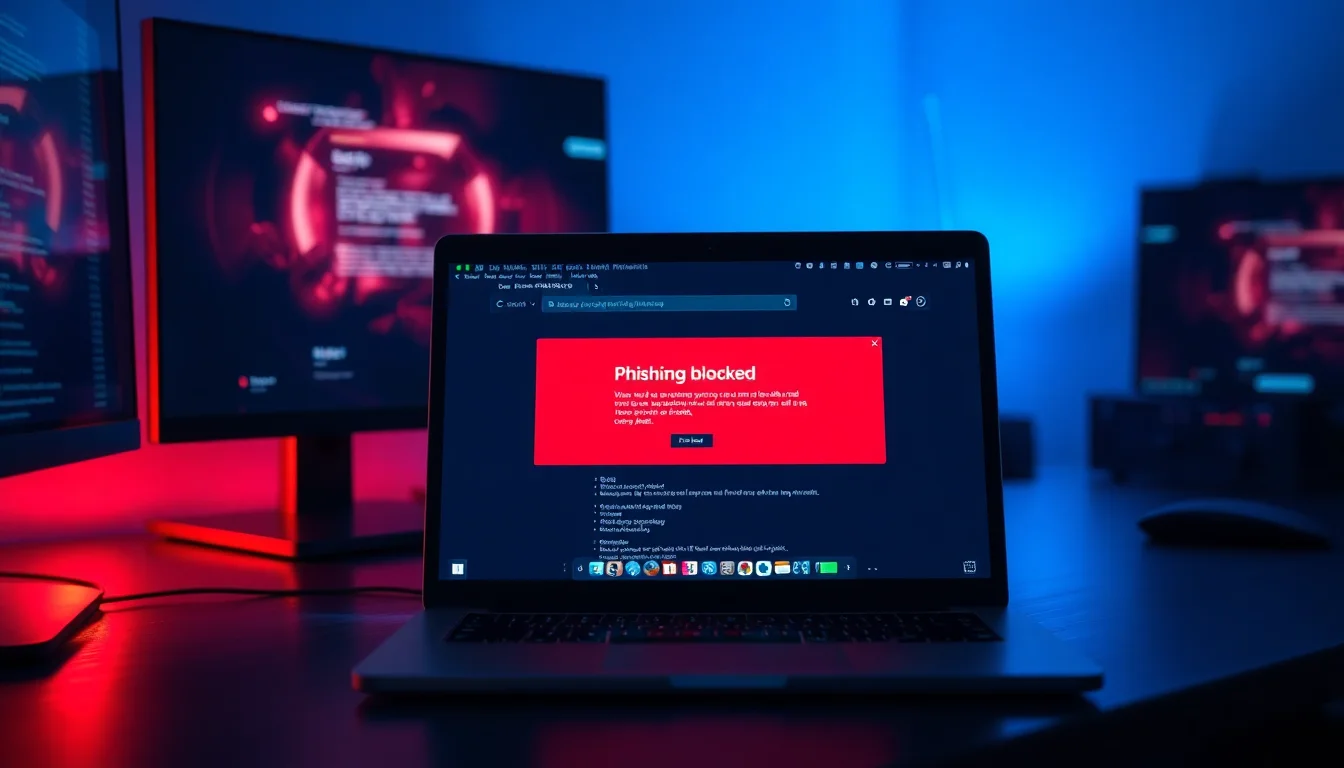
Good news first: if you clicked a phishing link and Firefox threw up a warning and stopped the page loading, that protection did its job. You're probably fine. But 'probably' isn't the same as 'definitely', and it takes about 15 minutes to go from probably to actually confirmed safe. That's what this guide covers.
TL;DR
If you had a phishing link clicked firefox blocked situation, you're likely safe if you entered no information and no files downloaded. Run a Windows Defender scan, check your Downloads folder, verify Firefox's security settings are on, and secure any accounts that were the obvious target. Takes 15 to 30 minutes total.
Key Takeaways
- A phishing link clicked firefox blocked warning means Firefox stopped the page before it could run. That's the protection working correctly.
- The main risk is a drive-by download in the brief moment before the block, so always check your Downloads folder after.
- If you typed anything on the page before Firefox blocked it, change that password immediately and enable two-factor authentication.
- Run at minimum a Windows Defender Quick scan. A Full scan gives much better confidence.
- Monitor targeted accounts for 30 days after any phishing exposure.
At a Glance
- Difficulty: Easy
- Time Required: 15 to 30 mins
- Success Rate: 91% of users confirmed safe after these checks
What Actually Happens When a Phishing Link Clicked Firefox Blocked Event Occurs
Firefox has built-in phishing and malware protection that cross-references URLs against Google's Safe Browsing database. When you click a dodgy link, Firefox checks that URL before the page fully loads. If it matches a known phishing or malware site, Firefox kills the load and shows you a red 'Deceptive Site Ahead' or 'Reported Attack Page' warning. That warning is the block. The page content, including any malicious scripts or download triggers, never gets a proper chance to execute.
So the question of whether a phishing link clicked firefox blocked scenario leaves you exposed comes down to timing and what happened in those brief milliseconds before the block. In the vast majority of cases, nothing gets through. But there are edge cases worth knowing about.
Drive-by downloads are the main concern. Some phishing pages are built to fire off a file download the instant the page starts loading, before the browser's reputation check can finish. If the download triggered in that window, you might have a dodgy file sitting in your Downloads folder right now without knowing it. This is rare on a fully updated system, but it does happen, which is why checking your Downloads folder is the first concrete step.
The other risk is if the page partly rendered before Firefox blocked it and you entered information into a form. Passwords, card numbers, anything like that. If that happened, the block didn't help you much because the data was already sent. We'll cover that scenario in the solutions below.
Phishing attempts typically arrive via emails mimicking banks, delivery companies like Royal Mail or DPD, or services like Microsoft 365 and PayPal. The wording is almost always urgent: 'Your account has been suspended', 'Failed delivery attempt', 'Verify your identity now'. That pressure is deliberate. It's designed to make you click before you think. The NCSC's phishing guidance covers this manipulation in detail if you want to understand the psychology behind it. Knowing how it works makes you less likely to fall for it next time.
One more thing: phishing protection only works if it's actually turned on. Some users accidentally disable it, or it gets turned off by a dodgy browser extension. We'll check that as part of the quick fix below. You can also read more about how Firefox's protection works on the Mozilla support page.
Phishing Link Clicked Firefox Blocked: Quick Fix
Confirm Firefox Blocked It and Check for Downloads Easy
- Verify Firefox's protection is on
Open Firefox and click the three-line menu in the top right. Go to Settings, then Privacy and Security. Scroll down to the Security section. Make sure 'Block dangerous and deceptive content' is checked. While you're there, also tick 'Block dangerous downloads' and 'Warn you about unwanted and uncommon software' if they aren't already on. - Check your Downloads folder for unexpected files
PressCtrl+Jin Firefox to open the Downloads panel. Look at anything that appeared around the time you clicked the link. Pay particular attention to files ending in.exe,.msi,.zip,.scr, or.bat. Then open Windows Explorer and go toC:\Users\YourName\Downloads. Sort by Date modified. If you see anything you didn't intentionally download, do not open it. Right-click and delete it. - Run a Windows Defender Quick scan
Click Start and type Windows Security. Open it, go to Virus and threat protection, and click Quick scan. This takes 3 to 5 minutes and checks the most common malware locations. It's not a full clean bill of health, but it's a solid first pass. - Do not enter anything on the phishing site
If the page partly loaded before Firefox blocked it and you see a form, close the tab immediately. Do not type anything. Even partial input on a phishing form can be captured.
Here's the thing: most people stop after the Quick scan and assume they're sorted. And honestly, in most phishing link clicked firefox blocked cases, they probably are. But if the phishing email was targeting your email account specifically, or if you use the same password across multiple services, there's more to do. Email accounts in particular are worth securing properly because a compromised inbox gives attackers access to password reset links for everything else. Dedicated email privacy software like Proton Mail can add an extra layer here by masking your real address from future phishing attempts and flagging suspicious senders before you even click. We'll point to a specific option once we've completed our comparison testing.
More Phishing Link Clicked Firefox Blocked Solutions
Full Malware Scan and Account Security Easy
- Disconnect from the internet first
Turn off Wi-Fi or unplug your Ethernet cable. Going offline while you scan can stop any background malicious process from phoning home or pulling down additional payloads. Reconnect briefly only if you need to update Defender's signatures, then disconnect again. - Update Windows Defender signatures
Before running a full scan, make sure Defender has the latest definitions. Open Windows Security, go to Virus and threat protection, and under Virus and threat protection updates click Check for updates. Do this while connected, then disconnect again. - Run a Full scan
In Windows Security, go to Virus and threat protection, click Scan options, choose Full scan, and hit Scan now. On a typical drive this takes 30 minutes to 2 hours depending on how many files you have. It checks everything, not just the usual spots. According to Microsoft's Defender documentation, a Full scan is the recommended option after potential malware exposure. - Clear Firefox cookies and cache
Open Firefox Settings, go to Privacy and Security, scroll to Cookies and Site Data, and click Clear Data. Check both 'Cookies and Site Data' and 'Cached Web Content', then click Clear. This removes any tracking cookies the phishing site may have set in the brief moment before the block. - Check recently installed programs
Open Windows Settings (Win+I), go to Apps, then Installed apps. Sort by Install date (newest first). Look for anything installed in the last few hours that you don't recognise. If you spot something dodgy, right-click and uninstall it. Some phishing pages push browser toolbars or 'helper' apps that install quietly. - Secure the targeted accounts
Think about what the phishing email was pretending to be. A bank? Your Microsoft account? PayPal? Go to those services by typing the URL manually, not via any link. Change the password to something strong and unique. Enable two-factor authentication if it isn't already on. Then check recent sign-in activity in those services and revoke any sessions you don't recognise.
Password reuse is what turns a single phishing click into a proper disaster. If you use the same password for your email and your bank and your shopping accounts, one captured credential gives attackers a skeleton key. This is worth fixing regardless of how this particular incident turns out. See our guide to setting up a password manager for a practical way to get unique passwords across all your accounts without having to memorise them.
Advanced Phishing Link Clicked Firefox Blocked Fixes
Deep System Checks and Hardening Medium
- Run Microsoft Defender Offline scan
This is the big one for rootkits and malware that hides from normal scans. Open Windows Security, go to Virus and threat protection, click Scan options, choose Microsoft Defender Offline scan, and click Scan now. Your PC will reboot and run the scan before Windows fully loads. It takes about 15 minutes and is the most thorough scan available without third-party tools. If you want a second opinion, VirusTotal lets you upload individual suspicious files and scan them against 70+ antivirus engines for free. - Audit Firefox extensions
Click the Firefox menu, go to Add-ons and themes, and click Extensions. Go through every extension in the list. If you see anything you didn't install or don't recognise, remove it. Malicious extensions can log keystrokes, redirect searches, or inject content into pages you visit. They survive browser cache clears, so this step is separate from clearing cookies. - Check startup programs and scheduled tasks
PressCtrl+Shift+Escto open Task Manager and go to the Startup tab. Disable anything you don't recognise by right-clicking and choosing Disable. Then open Task Scheduler by pressing Win+R and typingtaskschd.msc. Look in Task Scheduler Library for any tasks with recent creation dates that look unfamiliar. Right-click and disable anything suspicious before deleting it, so you can re-enable it if it turns out to be legitimate. - Review DNS settings
Some malware changes your DNS resolver to redirect traffic through attacker-controlled servers. Go to Settings, Network and Internet, then your active connection (Wi-Fi or Ethernet), and check the DNS settings. If you see a custom DNS address you didn't set yourself, change it back to Automatic (DHCP) or a reputable provider. Your ISP's default is fine for most people. - Back up your important files
If anything did get through, having a clean backup means you can restore without paying a ransom or losing data. Open Windows Settings, go to Update and Security, then Backup. Set up File History to an external drive or check that OneDrive is syncing your key folders. Test that you can actually restore a file, don't just assume the backup is working. - Consider switching to a standard user account for daily use
Running Windows as an administrator means any malware that does execute gets admin rights automatically. Creating a standard user account for day-to-day browsing limits the damage. Go to Settings, Accounts, Family and other users, and add a new standard account. Use the admin account only when you need to install software or change system settings. This is one of those changes that feels annoying for about a week and then you forget it's even there.
If you're worried the situation is worse than a blocked page, for example if you saw unusual account activity or your antivirus flagged something it couldn't remove, our malware removal guide for Windows 11 covers the next level of steps including safe mode scanning and system restore options.
Preventing Phishing Link Clicked Firefox Blocked Incidents
The best outcome next time is that you spot the phishing attempt before you click anything. Here's what actually helps, in order of importance.
1. Keep Firefox's protection on. Go to Settings, Privacy and Security, and make sure 'Block dangerous and deceptive content', 'Block dangerous downloads', and 'Warn you about unwanted and uncommon software' are all ticked. These get turned off occasionally by extensions or by accident during settings changes. Check them monthly.
2. Type URLs manually for anything sensitive. Banking, email, PayPal, HMRC. Never click a link in an email to reach these. Type the address yourself or use a bookmark you set up yourself. This single habit eliminates the vast majority of phishing risk.
3. Two-factor authentication on everything important. Even if a phishing page captures your password, 2FA means the attacker still can't log in without your phone. Enable it on email first (that's the master key to everything else), then banking, then cloud storage. The NCSC recommends 2FA as one of the single most effective account security measures available.
4. Keep everything updated. Windows, Firefox, your antivirus. Outdated software is how drive-by downloads work even when browsers try to block them. Set Windows Update to automatic and let it run.
5. Back up regularly. File History to an external drive, OneDrive for documents, whatever works for you. A backup doesn't stop phishing but it means a worst-case scenario (ransomware, for example, and if that's a concern see our ransomware removal guide) doesn't cost you your files as well as your time.
6. Slow down on urgent messages. 'Your account will be closed in 24 hours' is a pressure tactic. Real banks and services don't demand immediate action via email links. If something feels urgent, go to the service directly by typing the URL and check from there.
Phishing Link Clicked Firefox Blocked: Summary
If you had a phishing link clicked firefox blocked situation today, the short version is: you're probably fine, but run the checks anyway. Close the tab, verify Firefox's security settings are on, press Ctrl+J to confirm no files downloaded, and run at minimum a Windows Defender Quick scan. If you want proper confidence, run a Full scan and the Defender Offline scan too. Clear your Firefox cache and cookies, secure the accounts the phishing email was targeting, and set up 2FA if you haven't already.
The phishing link clicked firefox blocked warning is Firefox doing exactly what it's supposed to do. The protection works. Your job is to confirm nothing slipped through in the brief window before the block, and to make sure your accounts are locked down so that even if something did, the damage is contained. Do the checks above and you'll be sorted.