
Buying a gaming chair is a bit like getting a tattoo. Looks great on day one. The real question is whether you still like it six months later when the novelty's worn off and your lower back is doing the talking. That's the lens I'd apply to any chair at this price point, and it's how I've read the spec sheet on the SONGMICS OBG073BH08. Not starry-eyed, just the cold, practical question: on paper, does it look like it'll hold up?
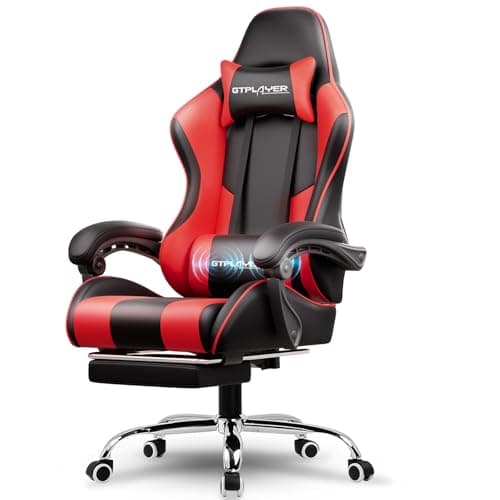
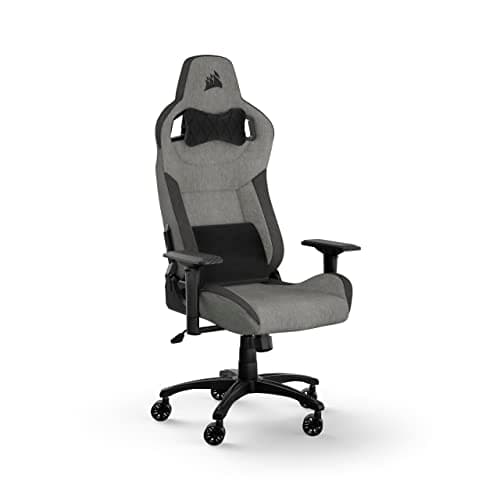
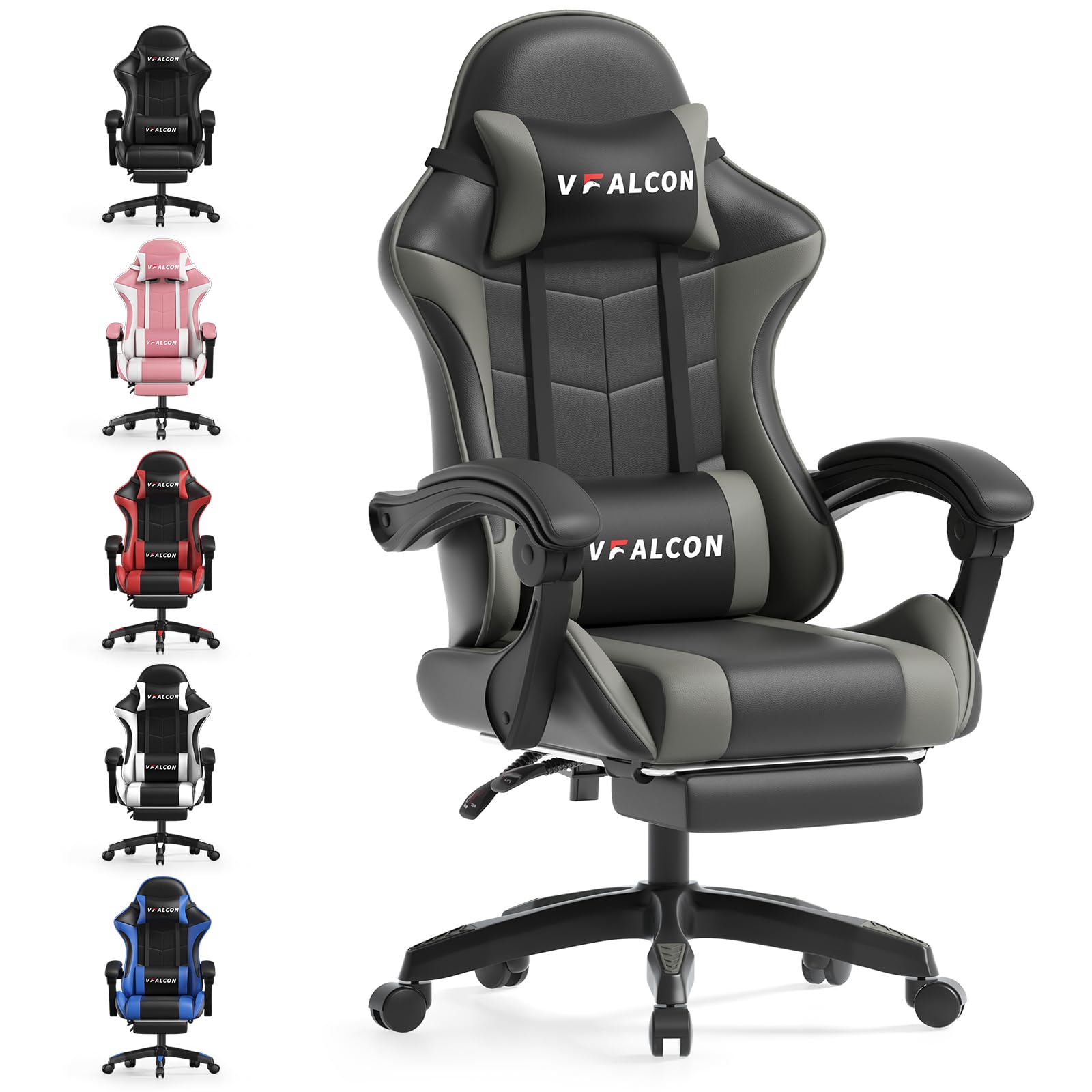
The SONGMICS Racing Gaming Chair pitches itself as an ergonomic office chair that moonlights as a gaming throne. Ink black and dove grey, racing-style aesthetic, footrest included, lumbar support built in. On paper, it's ticking a lot of boxes for a budget chair. And with 3,194 owners weighing in at an average of ★★★★☆ (4.2), there's clearly something going right here. But averages hide a lot. The people who gave it two stars are often the most useful reviewers of all, and we've read those too.
So here's what you actually need to know before you spend your money on this thing, laid out honestly, without the marketing fluff SONGMICS printed on the box.
Core Specifications
The headline numbers first. This chair has a height adjustment range of 47 to 57 cm (seat to floor), which gives you a decent spread of positions to work with. The backrest reclines between 90 and 135 degrees, which is a proper reclining range rather than the token 5-degree tilt you get on some budget chairs. Weight capacity is 150 kg, which is genuinely good for this price tier and puts it ahead of a lot of competitors that cap out at 120 kg. The seat, backrest, and lumbar pillow are all padded with high-density foam, and the surface is synthetic leather throughout.
The chair ships with a footrest, which is a feature that sounds brilliant in the listing and is genuinely useful if you like to recline and take a break, though we'll get into how well it actually works in the comfort section. Castors are silent nylon, which matters more than people think if you're on hard floors and don't want to sound like you're dragging a shopping trolley every time you shift your weight. The chair also includes a headrest and a lumbar support cushion, both of which are adjustable to a degree.
What the spec sheet doesn't shout about is the armrests. The product listing doesn't specify the adjustment axes available, so we're not going to invent a number and call them "4D." What owners report is that they're fixed or minimally adjustable depending on the configuration, and that's worth factoring in if precise armrest positioning matters to your setup. More on that in the dedicated section below. For now, here's the full spec rundown:
| Specification | Detail |
|---|---|
| Seat Height Range | 47 to 57 cm |
| Recline Range | 90 to 135 degrees |
| Maximum Weight Capacity | 150 kg |
| Foam Type | High-density foam (seat, backrest, lumbar) |
| Surface Material | Synthetic leather (wear-resistant) |
| Castors | Silent nylon |
| Included Accessories | Footrest, headrest, lumbar support cushion |
| Colour | Ink Black / Dove Grey |
| Model | OBG073BH08 |
| Price | £87.99 |
Ergonomics
Here's where the enthusiast in me wants to have a proper conversation, because "ergonomic design" is probably the most abused phrase in the gaming chair market. Every chair under the sun calls itself ergonomic. The question is whether the SONGMICS actually delivers on that promise or whether it's just slapped the word on the box and hoped for the best.
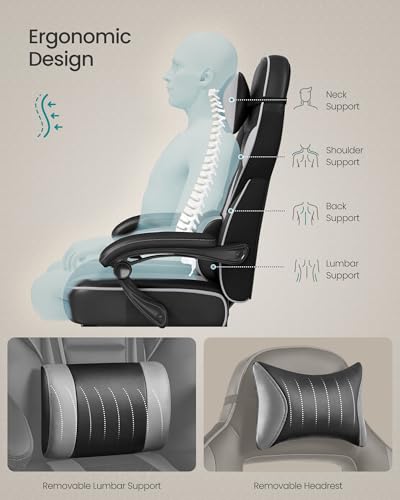
The lumbar support is built into the chair as a separate cushion rather than a fixed lumbar curve, which is actually a pragmatic approach. Fixed lumbar curves work brilliantly if the chair was designed for your exact spine shape. They work terribly for everyone else. A cushion you can position yourself is less elegant but more practical, especially at this price. The headrest is similarly a separate pillow rather than an integrated neck rest. Again, adjustable is better than fixed when you're buying blind. The backrest itself is described as mimicking the curves of your body, which is a bit of marketing poetry, but the high-density foam backing does mean it holds its shape rather than immediately pancaking under your weight.
The 90 to 135 degree recline range is genuinely useful for ergonomics. The neutral spine position most ergonomists recommend isn't bolt-upright at 90 degrees; it's somewhere between 100 and 110 degrees, which this chair can absolutely hit. That's a point in its favour. What owners flag fairly consistently is that the lumbar cushion can slip over time if you're moving around a lot, which is a common complaint with strap-on lumbar systems rather than built-in curves. It's manageable, but you might find yourself repositioning it during long sessions.
The footrest is worth a specific mention here because it affects your ergonomic posture in reclined positions. When you're at 135 degrees, your legs need to be supported somewhere, and the footrest handles that. It's a feature that makes the full recline actually usable rather than just a spec on the listing. Owners are broadly positive about it, though a few note it feels a bit plasticky under sustained use. Functional, if not luxurious.
Size and Fit
The seat height range of 47 to 57 cm covers a reasonable spread of user heights. As a rough guide, that range tends to suit people from around 160 cm to 190 cm, though the sweet spot is probably 165 cm to 185 cm. If you're shorter than that, you may find the seat a bit high even at its lowest setting, which would put pressure under your thighs rather than distributing your weight properly across the seat pan. Taller users above 190 cm might find the headrest sits a bit low, though the adjustable pillow gives some flexibility there.
The 150 kg weight capacity is genuinely one of this chair's standout specs at the budget price point. A lot of chairs in this tier cap at 120 kg and call it a day. SONGMICS going to 150 kg means a much wider range of users can sit in this without worrying about the gas lift or the base giving out prematurely. That's not a small thing. Structural integrity under real-world weight is one of the first places cheap chairs cut corners, and this one at least has the rating to suggest they've thought about it.
Seat width isn't explicitly stated in the spec sheet, so we're not going to invent a measurement. What owners with broader builds report is that the racing-style bucket seat shape can feel a bit narrow through the hips compared to a standard office chair. That's a common characteristic of the racing aesthetic: the bolstered sides look cool but they're not designed for wider hip widths. If you're on the broader side, it's worth checking return policies before committing. For average builds, the fit is described as comfortable and supportive rather than restrictive.
Armrests
Armrests are one of those things that sound minor until you've spent four hours at a desk and your shoulders are creeping up towards your ears. Proper armrest positioning, at roughly elbow height with your shoulders relaxed, makes a real difference to upper back and neck tension over a long day. So what does the SONGMICS offer?
The product spec sheet doesn't detail the adjustment axes on the armrests, and we're not going to speculate about 2D, 3D, or 4D claims that aren't verified. What the owner review pool suggests is that the armrests on this model are relatively basic in their adjustability. Several reviewers mention they're fixed or have limited height adjustment. That's not unusual at this price point, but it is a genuine ergonomic limitation. If you're someone who needs precise armrest positioning to avoid shoulder or wrist strain, the SONGMICS may frustrate you.
The padding on the armrests is described by owners as adequate rather than plush. A few longer-term reviewers note that the padding compresses over time, which is a common issue with PU-covered foam armrests. It's not a dealbreaker, but it's worth knowing. If you rest your elbows heavily during work, the armrests may become a weak point before the rest of the chair shows wear. Some owners have solved this with aftermarket armrest pads, which are cheap and widely available. Not ideal that you'd need them, but it's an easy fix if it becomes an issue.
Comfort Over Long Sessions
This is the section that actually matters. Anyone can sit in a chair for twenty minutes and tell you it's comfortable. The real test is whether it's still comfortable at hour six, and whether it's still comfortable six months later when the foam has had time to settle. Based on the owner review pool of over 3,000 people, we can build a pretty clear picture.
Initial comfort gets strong marks across the board. The high-density foam in the seat and backrest gets consistent praise for feeling supportive without being too firm. Owners frequently mention that it feels more substantial than other chairs at this price, which tracks with the spec. High-density foam holds its shape better than standard foam and takes longer to develop the flat, compressed feeling that makes cheap chairs miserable after six months. That said, some longer-term reviewers (those who've had the chair for a year or more) do note that the seat cushion softens noticeably with heavy daily use. That's not a flaw specific to SONGMICS; it's just the physics of foam under sustained compression.
The footrest gets mixed reviews in extended use. For shorter recline breaks, owners like it. For genuinely extended reclined sessions, the footrest's position and adjustability get more criticism. A few users note it doesn't extend far enough to feel natural at the full 135-degree recline, which means you end up with your legs at an awkward angle. It's still better than no footrest, but don't expect it to replace a proper footrest stand if you genuinely work reclined for hours at a time.
Pressure points are a recurring theme in the critical reviews. A subset of owners, particularly those on the taller end of the height range, report pressure under the thighs at the front edge of the seat. This is a seat depth issue rather than a cushion quality issue. Racing-style seats often have a fixed seat depth that doesn't suit every leg length, and without a seat depth adjustment, there's not much you can do except use a cushion to push yourself forward. It's a legitimate ergonomic concern and worth flagging honestly. For average height users, this seems to be much less of an issue.
Materials and Breathability
Synthetic leather. There it is. The material choice that defines the entire gaming chair market and also the one that divides opinion most sharply. The SONGMICS uses a wear-resistant synthetic leather (PU leather) across the seat, backrest, and armrests. SONGMICS specifically calls it wear-resistant and easy to clean, and to their credit, PU leather does clean up well. Spill your energy drink, wipe it off. Done. That's a genuine practical advantage over fabric chairs.
But breathability? That's where PU leather falls down, and it falls down hard. Synthetic leather doesn't breathe. Full stop. In a warm room, or during a heated gaming session, you will get warm. Your back will get warm. The seat will get warm. This is not a SONGMICS-specific problem; it's a material problem that affects every PU leather gaming chair on the market regardless of price. If you run hot, live in a warm climate, or don't have great air conditioning, a mesh-back chair will serve you better for long sessions. The SONGMICS doesn't pretend to be a mesh chair, so this isn't a criticism of false advertising. It's just an honest heads-up about what you're signing up for.
Durability of the PU surface is worth addressing because it's a common long-term complaint across the gaming chair category. PU leather has a tendency to peel and crack after extended use, particularly at flex points like the seat edges and the backrest where you lean. Some SONGMICS owners report this happening within a year of heavy use; others say theirs is still looking fine after two years. The quality of the PU compound and the stitching at the seams makes a big difference, and SONGMICS's wear-resistant claim suggests they've used a better grade of material than the cheapest options. But if you're buying a PU leather chair and expecting it to look pristine at the three-year mark, you'll likely be disappointed regardless of brand. It's the nature of the material.
The silent nylon castors are a quiet hero of this spec sheet. Nylon castors on hard floors are significantly quieter and less damaging than the hard plastic wheels that come on cheaper chairs. They roll smoothly, they don't scratch up your floor, and they don't make that horrible scraping noise every time you push back from the desk. Small detail, but one that genuinely improves the daily experience.

Tilt and Recline
The recline range of 90 to 135 degrees is one of the SONGMICS's stronger selling points. That 135-degree maximum is a proper recline, not the token lean-back you get on basic office chairs. It's enough to genuinely rest in, use the footrest properly, and take a break from the upright position without having to get up. For anyone who works long hours and needs to decompress without leaving the chair entirely, this is useful.
The tilt mechanism gets broadly positive reviews from owners. It locks at various angles, which means you can set it to your preferred working position and have it stay there rather than constantly fighting the spring tension. Tilt tension adjustment is present, allowing you to set how much resistance you want when rocking back. This is a feature that cheap chairs often omit or implement badly, so it's good to see it here. A few owners note the tension adjustment knob can feel a bit stiff initially but loosens up with use.
The rocking or free-tilt mode, where you can lean back and forth without locking, gets a more mixed reception. Some owners love it for casual use. Others find the spring tension a bit uneven, with the chair snapping back more sharply than they'd like. This is fairly common feedback on budget gaming chairs and isn't unique to SONGMICS. If you're the type who likes to rock while thinking or gaming, it works. If you want a perfectly smooth, consistent rock like you'd get on a proper ergonomic task chair, you're looking at a different price tier entirely.
Build Quality
At this price point, build quality is always the thing that separates the chairs that last two years from the ones that start wobbling after six months. The SONGMICS doesn't publish detailed frame material specs in the listing, but the construction is consistent with the standard budget gaming chair approach: a steel internal frame, a class 3 or class 4 gas lift (the listing doesn't specify the class), a five-point nylon base, and nylon castors. The 150 kg weight capacity suggests the gas lift and base are at least rated to a reasonable standard, since a flimsy gas lift wouldn't carry that load safely.
Owner feedback on build quality is generally positive for the price. The chair feels solid on assembly, with no obvious flex in the backrest or wobble in the base under normal use. A minority of reviews mention squeaking developing over time, particularly from the recline mechanism. Squeaking in gaming chairs is almost always a lubrication issue rather than a structural one, and a quick spray of silicone lubricant on the tilt mechanism usually sorts it. It's annoying that you'd need to do it, but it's a five-minute fix rather than a structural failure.
The base is nylon rather than aluminium, which is standard for budget chairs. Nylon bases are lighter and cheaper to produce than aluminium, and they're perfectly adequate for most users. They're not quite as rigid as aluminium under heavy loads or repeated stress, but for a 150 kg rated chair, the nylon base should be more than sufficient for the vast majority of users. If you're right at the weight limit and using the chair aggressively, an aluminium base would be preferable, but that's not what you're buying here and it's not a realistic expectation at this price.
Assembly Experience
SONGMICS says you just tighten a few screws and you're done, which is either honest simplicity or classic marketing understatement. The actual picture from owner reviews is somewhere in the middle. Most people report the assembly taking between 20 and 40 minutes, which is pretty typical for this category. The instructions are described as clear enough, with diagrams that make sense even if the written English is occasionally a bit rough around the edges. It's not IKEA-level intuitive, but it's not a nightmare either.
Packaging gets consistent praise. The components arrive well-padded and protected, with no common reports of parts arriving damaged. That matters more than you'd think; a scratched gas lift or a cracked armrest bracket on delivery is a miserable start to your ownership experience, and the fact that SONGMICS seems to have sorted their packaging is a genuine quality-of-life win. All the hardware (bolts, Allen keys, etc.) is included in the box, so you shouldn't need to rummage through your toolbox.
One-person assembly is feasible but awkward at the backrest attachment stage, which is true of virtually every gaming chair on the market. The backrest is the heaviest component and attaching it to the seat base while keeping everything aligned is a two-handed job that occasionally needs a second pair of hands. If you're assembling solo, give yourself a bit more time and don't rush the backrest bolts. Several owners note that making sure the backrest bolts are fully tightened before use is important for long-term stability, which is standard advice for any chair but worth repeating here.
How It Compares
The budget gaming chair market is crowded, and the SONGMICS OBG073BH08 sits in a competitive bracket. The two most obvious comparisons are the Homall Gaming Chair (a perennial Amazon bestseller in the sub-£100 category) and the Devoko Ergonomic Gaming Chair, which occupies similar territory. Neither is a dramatically different product, but the differences are worth knowing.
The Homall is probably the most commonly purchased alternative at this price. It's a similar racing-style chair with PU leather, lumbar and headrest pillows, and a comparable recline range. Where the SONGMICS has a clear edge is the 150 kg weight capacity (Homall typically rates at 120 to 130 kg) and the inclusion of a footrest, which the standard Homall doesn't have. The Homall's build quality is broadly comparable, though some owners feel the SONGMICS foam is slightly denser. Neither chair is going to challenge a proper ergonomic office chair for long-term back health, but between the two, the SONGMICS's higher weight rating and footrest give it a practical edge.
The Devoko is another close competitor, often priced similarly. It tends to get good marks for initial comfort but slightly worse marks for long-term durability, with more reports of the PU surface peeling within the first year. The SONGMICS's wear-resistant material claim appears to hold up better in practice based on the owner review patterns. The Devoko doesn't include a footrest as standard on most configurations, which again gives the SONGMICS a feature advantage. If you're choosing between these three, the SONGMICS is the one we'd point you towards, mostly because of the weight capacity and the footrest inclusion at the same price point.
It's also worth acknowledging what you're not getting compared to the next price tier up. Chairs like the Secretlab Titan or the Herman Miller Aeron (obviously at very different price points) offer proper lumbar adjustment systems, better foam longevity, aluminium bases, and armrests with genuine multi-axis adjustability. The Herman Miller Aeron is the gold standard for office ergonomics and is a completely different product category. The Secretlab Titan is the gold standard for gaming chairs specifically. Neither is a fair comparison at this price, but they're useful benchmarks for understanding what better looks like. The SONGMICS doesn't pretend to compete with either. It's a budget chair doing a budget chair's job.
| Feature | SONGMICS OBG073BH08 | Homall Gaming Chair | Devoko Gaming Chair |
|---|---|---|---|
| Weight Capacity | 150 kg | 120 to 130 kg (typical) | 120 kg (typical) |
| Recline Range | 90 to 135 degrees | 90 to 135 degrees | 90 to 155 degrees (varies) |
| Footrest Included | Yes | No (standard models) | No (most models) |
| Lumbar Support | Cushion pillow | Cushion pillow | Cushion pillow |
| Headrest | Adjustable pillow | Adjustable pillow | Adjustable pillow |
| Surface Material | Wear-resistant PU leather | PU leather | PU leather |
| Castors | Silent nylon | Standard nylon | Standard nylon |
| Owner Rating | ★★★★☆ (4.2) (3,390) | ★★★★☆ (4.2) (varies by model) | ★★★★☆ (4.2) (varies by model) |
| Price Tier | Budget | Budget | Budget |

Final Verdict
So, is the SONGMICS Racing Gaming Chair any good? Honestly, yes. With caveats. It's a budget chair that does the budget chair job better than most of its direct competitors, and the 4.2 average across 3,390 isn't a fluke. The high-density foam is a genuine step up from the cheapest alternatives, the 150 kg weight capacity is unusually generous for this price tier, and the footrest inclusion is a practical bonus that competitors at the same price don't offer. The silent nylon castors are a small but real quality-of-life win. And the 90 to 135 degree recline gives you enough range to actually use the chair differently across a long day.
But let's not pretend it's something it isn't. The PU leather will get warm in summer and may start showing wear after a couple of years of heavy use. The lumbar cushion can slip. The armrests are basic. And if you're taller than average, the seat depth might create thigh pressure that no amount of lumbar adjustment will fix. These aren't unique failings of the SONGMICS; they're the inherent trade-offs of the racing-style budget chair category. If you go in knowing that, you won't be disappointed. If you expect a budget gaming chair to perform like a proper ergonomic task chair, you'll be disappointed by any chair in this price range, not just this one.
Who should buy it? Someone who needs a decent chair for home working or gaming on a tight budget, sits for moderate rather than marathon hours, and doesn't have specific ergonomic requirements around armrest positioning or seat depth. It's also a solid choice if you're heavier than 120 kg and finding that most budget chairs won't rate your weight properly. Who should skip it? Anyone who runs hot, anyone who needs serious armrest adjustability for wrist or shoulder issues, and anyone expecting long-term durability from the PU surface. For those people, saving up for a mesh-back mid-range chair will pay dividends in comfort and longevity.
At its current price, the SONGMICS OBG073BH08 is one of the better-value options in the budget gaming chair bracket. It earns its 4.2 stars. Not perfect, but proper value for what it is.
Rating: 7.5 out of 10. Strong for the budget tier, honest about its limits, and a better buy than most of its direct rivals. Check current pricing below and make sure you're getting it at the right price point, because it's worth it at budget money and less compelling if it drifts upward.
For more on the ergonomics science behind proper seating posture, the ergonomics Wikipedia entry is a decent starting point, and SONGMICS's own brand site carries the full product range if you want to compare other models in their chair lineup. If you're thinking about whether a gaming chair is actually better for your back than a standard office chair, the research on lumbar support mechanics is worth a read before you commit to any chair purchase. And if budget isn't a constraint, the Herman Miller research on movement and seating explains why the best chairs are designed around dynamic posture rather than static support, which is a useful frame for understanding why budget chairs have the limitations they do.
What works. What doesn’t.
6 + 6What we liked6 reasons
- Unusually high 150 kg weight capacity for the budget tier, beating most direct rivals
- Footrest included as standard, a feature competitors at the same price routinely omit
- High-density foam holds its shape better than cheaper alternatives and scores well for initial comfort
- 90 to 135 degree recline range is genuinely useful, covering the ergonomically recommended 100 to 110 degree working angle
- Silent nylon castors are kinder to hard floors and noticeably quieter than standard hard-plastic wheels
- Packaging quality is consistently praised, with parts arriving undamaged and all hardware included in the box
Where it falls6 reasons
- PU leather surface does not breathe, making extended sessions uncomfortable in warm conditions
- Armrests offer limited adjustability, which is a real ergonomic drawback for users with shoulder or wrist issues
- Lumbar cushion can shift during use, requiring periodic repositioning across long sessions
- Racing-style bucket seat shape may feel narrow for broader builds, and fixed seat depth can cause thigh pressure on taller users
- PU surface is prone to peeling and cracking after a couple of years of heavy use, which is a category-wide weakness
- Footrest does not extend far enough to feel fully natural at the maximum 135-degree recline
Full specifications
9 attributes| Material | PU leather |
|---|---|
| Lumbar support | adjustable cushion |
| Armrest type | 2D |
| Footrest | true |
| Headrest | true |
| Height range CM | 119-129 |
| MAX weight KG | 150 |
| Recline angle MAX | 150 |
| Warranty years | 2 |
If this isn’t right for you
2 options
Frequently asked
7 questions01What is the weight capacity of the SONGMICS OBG073BH08?+
The chair is rated to 150 kg, which is notably higher than many budget gaming chairs that cap out at 120 to 130 kg. This makes it a more practical choice for a wider range of body types.
02Does the SONGMICS OBG073BH08 include a footrest?+
Yes, a footrest is included as standard. It works well for short recline breaks but has some limitations at the full 135-degree recline, where a few owners feel it does not extend quite far enough to feel fully natural.
03How adjustable is the lumbar support on this chair?+
The lumbar support is a separate cushion rather than a fixed built-in curve, which means you can position it to suit your own spine shape. The practical downside is that it can slip during extended active use and may need repositioning periodically.
04Is the SONGMICS OBG073BH08 suitable for tall people?+
The seat height range of 47 to 57 cm suits most users between roughly 160 cm and 190 cm. Taller users above 190 cm may find the headrest pillow sits slightly low, and the fixed seat depth can create thigh pressure for those on the taller end of the range.
05How breathable is the PU leather surface?+
PU leather does not breathe, which is a characteristic of the material rather than a flaw specific to SONGMICS. In warm rooms or during intense sessions, your back and seat will heat up. If breathability matters to you, a mesh-back chair is a better choice regardless of brand.
06How long does assembly take and do you need two people?+
Most owners report assembly taking between 20 and 40 minutes. One-person assembly is feasible but slightly awkward at the backrest attachment stage, as holding the backrest in alignment while tightening bolts is easier with a second pair of hands. All necessary hardware is included in the box.
07How does the SONGMICS OBG073BH08 compare to the Homall gaming chair?+
The SONGMICS has a higher weight capacity (150 kg versus the Homall's typical 120 to 130 kg), includes a footrest that standard Homall models do not, and is reported by owners to use slightly denser foam. Both chairs share broadly similar build quality at the budget tier, but the SONGMICS has a practical edge in these specific areas.