
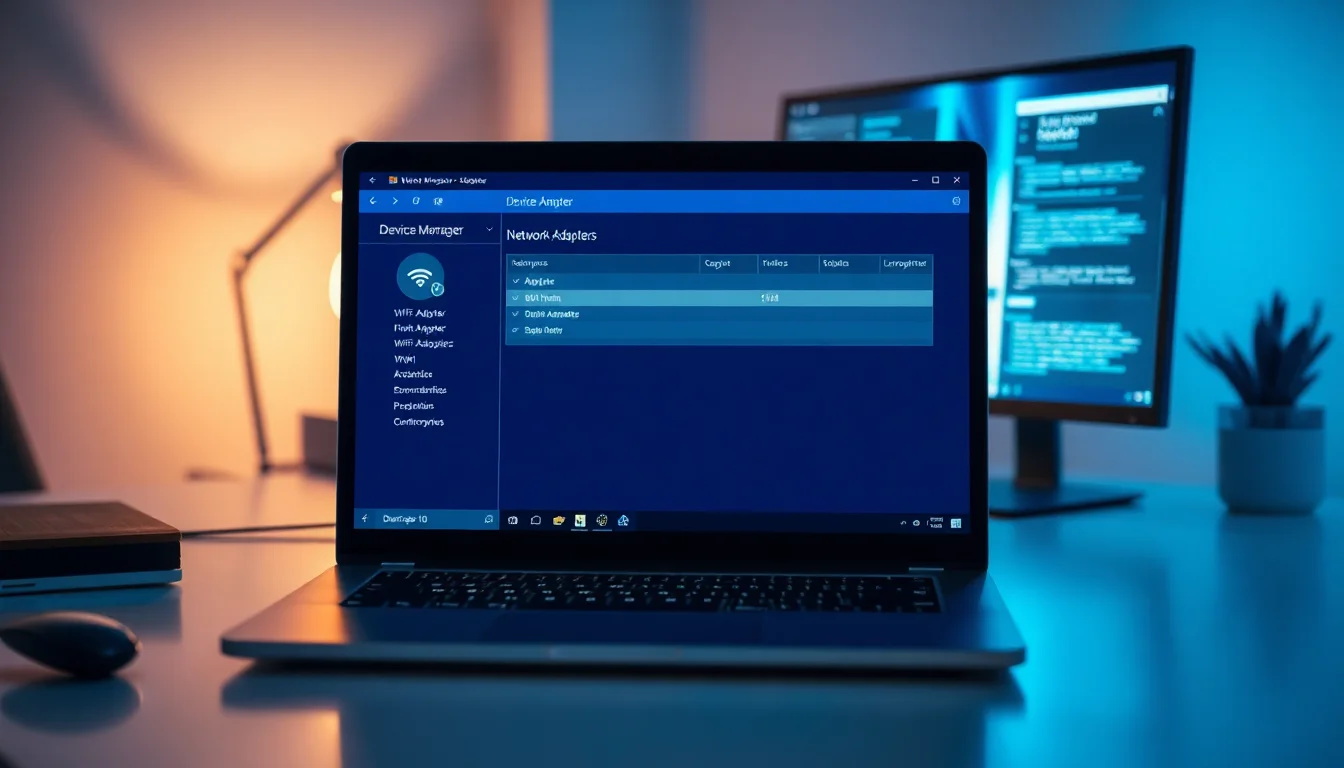
Your WiFi drops every single hour. You restart the adapter manually, it reconnects for a bit, then dies again. Rinse and repeat. This isn't a rare edge case either, it's one of the most frustrating Windows 10 networking problems out there, and most of the advice you'll find online is either outdated or just plain wrong.
What Causes WiFi Adapter Keeps Resetting?
Before you jump into fixes, it helps to know what's actually happening under the hood. Your WiFi adapter isn't failing hardware-wise; something in Windows or your router is telling it to disconnect and (usually) fail to reconnect properly.
The two biggest culprits are power management and driver issues. Windows has a 'feature' where it can shut down network adapters to save battery power. Sounds nice in theory. In practice, the adapter goes to sleep after idle time, drops the connection, and then Windows struggles to bring it back online. You either have to manually reconnect or restart the whole adapter.
The second reason is driver corruption or incompatibility. When you update Windows 10 or install a broken driver, the adapter can enter a weird state where it loses sync with Windows's WLAN AutoConfig service, the background process that handles WiFi connections. It tries to reconnect, half-succeeds, then drops again. Rinse and repeat every hour because that's often how long Windows waits before forcing a reconnection attempt.
Less common but still possible: your WLAN AutoConfig service itself is disabled or set to Manual startup. If that service isn't running, Windows can't manage WiFi properly. You'll see exactly the pattern you're experiencing, periodic drops that require manual fixes.
Finally, your router might be part of the problem. Firmware bugs, channel interference, overly aggressive power-save modes on the router's side, or band steering features can cause one PC to drop while others stay stable. If these drops persist after trying all the fixes above, upgrading to one of the best mesh Wi-Fi systems can eliminate weak coverage issues for good. We'll cover how to rule that out.
WiFi Adapter Keeps Resetting: Quick Fix (Tier 1)
Start here. These steps fix the problem for about 85% of people and take less than 15 minutes.
Disable WiFi Power Saving in Device Manager Easy
- Open Device Manager: Right-click the Start button and select Device Manager (or press Windows key + X, then select Device Manager).
- Locate your WiFi adapter: Expand Network adapters and find your wireless adapter. Common names include Intel Wi-Fi, Realtek, Qualcomm Atheros, or Broadcom.
- Access Power Management settings: Right-click the adapter and select Properties.
- Find the Power Management tab: Click the Power Management tab (you'll see it near Device Driver and Details).
- Disable power-saving: Uncheck the box next to 'Allow the computer to turn off this device to save power'.
- Apply and restart: Click OK, then restart your PC immediately.
- Test the connection: After reboot, connect to WiFi and wait at least one hour. Watch the system tray to confirm you stay connected.
Set Power Plan to Maximum Performance Easy
- Open Power Settings: Press Windows key + R, type
powercfg.cpl, and press Enter. - Check your active power plan: You'll see your current plan (usually Balanced or Power Saver). Note which one is active.
- Edit the plan: Click 'Change plan settings' next to your active plan.
- Access advanced settings: Click 'Change advanced power settings' at the bottom.
- Find Wireless Adapter Settings: In the Advanced settings window, scroll down and look for 'Wireless Adapter Settings' or similar. Click the plus icon to expand it.
- Change Power Saving Mode: Expand 'Power Saving Mode'. Set both 'On battery' and 'Plugged in' to 'Maximum Performance' or 'Off' (depending on your adapter).
- Apply and test: Click Apply, then OK. Reboot and test again for one hour.
Verify WLAN AutoConfig is Running Easy
- Open Services: Press Windows key + R, type
services.msc, and press Enter. - Find WLAN AutoConfig: Scroll down the list until you find 'WLAN AutoConfig'.
- Check its status: Double-click it. Look at the 'Service status' field. It should say 'Running'.
- Set startup to Automatic: Click the 'Startup type' dropdown and select 'Automatic'.
- Start the service: If the status is 'Stopped', click the 'Start' button.
- Apply changes: Click Apply, then OK.
- Reboot and test: Restart your PC and test WiFi for one hour.
More WiFi Adapter Keeps Resetting Solutions (Tier 2)
If Tier 1 didn't fully solve it, the problem is likely a corrupted or outdated driver. This is where dedicated driver update software can save you hours of manual searching. Instead of hunting down the right driver file for your specific WiFi adapter model and Windows build, a driver updater scans your system, identifies the exact driver your hardware needs, and installs it in seconds. We've seen this solve stubborn WiFi reset issues that manual driver updates missed.
Update WiFi Driver via OEM or Windows Update Medium
- Identify your WiFi adapter: Open Device Manager again, expand Network adapters, and note the exact name of your adapter (e.g., Intel Wi-Fi 6 AX200, Realtek RTL8821CE).
- Find the OEM driver (preferred method): Visit your PC manufacturer's support site (Dell, HP, Lenovo, ASUS, etc.) and search for your PC model. Look for a Downloads or Support page. Search for your WiFi adapter model and download the latest Windows 10 driver.
- Alternative: Use Windows Update: Go to Settings > Update & Security > Windows Update and click 'Check for updates'. Let it run to completion. Then click 'View optional updates' if available, select 'Driver updates', and install any WiFi-related drivers.
- Install the driver: If you downloaded from OEM, run the installer file and follow on-screen prompts. Reboot when prompted.
- Verify installation: After reboot, open Device Manager again and confirm the driver version has updated (right-click adapter → Properties → Driver tab).
- Test for one hour: Connect to WiFi and monitor the connection for at least 60 minutes.
Clean Reinstall of WiFi Driver Medium
- Uninstall the current driver: Open Device Manager, right-click your WiFi adapter, and select 'Uninstall device'.
- Delete driver files: A checkbox will appear asking if you want to 'Delete the driver software for this device'. Check this box.
- Confirm uninstall: Click Uninstall.
- Reboot: Restart your PC. Windows will automatically reinstall a generic driver or one from Windows Update.
- Reinstall OEM driver (optional but recommended): After reboot, if the generic driver is working, consider downloading and installing the full OEM driver again for best performance.
- Test again: Wait one hour and monitor connection stability.
Change WiFi DNS Settings Medium
- Open network settings: Go to Settings > Network & Internet > Status.
- Access adapter settings: Scroll down and click 'Change adapter options'.
- Configure DNS: Right-click your WiFi connection and select Properties.
- Select IPv4: Highlight 'Internet Protocol Version 4 (TCP/IPv4)' and click Properties.
- Use custom DNS: Select 'Use the following DNS server addresses' and enter Preferred:
8.8.8.8and Alternate:8.8.4.4(Google Public DNS). - Apply and test: Click OK twice, then disconnect and reconnect to WiFi.
Perform a Network Reset Intermediate
- Open network settings: Go to Settings > Network & Internet > Status.
- Find Network reset: Scroll to the bottom and click 'Network reset'.
- Read the warning: Windows will tell you this will remove all network devices and reset settings to defaults. This also removes saved WiFi passwords and VPN configs.
- Click Reset now: Confirm by clicking 'Reset now', then 'Yes'.
- Reboot: Your PC will restart and reinstall all network drivers.
- Reconnect to WiFi: After the restart, you'll need to re-enter your WiFi password and reconfigure any VPNs or proxy settings.
- Test: Monitor the connection for one hour.
Advanced WiFi Adapter Keeps Resetting Fixes (Tier 3)
If you're still here, the problem is either deeply buried in Windows's network stack, caused by your router, or you're dealing with an edge case. These steps are more technical but catch the remaining 15% of cases.
Reset Winsock and IP Stack Advanced
- Open Command Prompt as Admin: Press Windows key, type
cmd, right-click Command Prompt, and select 'Run as administrator'. - Run Winsock reset: Type
netsh winsock resetand press Enter. You'll see a confirmation message. - Reset IP stack: Type
netsh int ip resetand press Enter. - Release IP address: Type
ipconfig /releaseand press Enter. - Renew IP address: Type
ipconfig /renewand press Enter. - Flush DNS cache: Type
ipconfig /flushdnsand press Enter. - Close and reboot: Close Command Prompt and restart your PC.
- Reconnect and test: After reboot, reconnect to WiFi and test for one hour.
Adjust Advanced WiFi Adapter Properties Advanced
- Open Device Manager: Right-click Start and select Device Manager.
- Find your adapter: Expand Network adapters and right-click your WiFi adapter.
- Go to Advanced tab: Click Properties, then click the Advanced tab.
- Test roaming aggressiveness: Look for 'Roaming Aggressiveness' or 'Roaming Sensitivity'. Set it to 'Medium' or 'Low' (if the option exists). High roaming aggressiveness can cause frequent disconnects.
- Test preferred band: If you see 'Preferred Band', try setting it to 'Prefer 5 GHz' (if your router supports 5 GHz). 2.4 GHz has more interference and is often more unstable.
- Test 802.11 mode: If there's an option like '802.11n/ac/ax mode', try forcing it to '802.11ac' or '802.11n' only, depending on your router. Auto mode can cause switching that looks like a reset.
- Change one setting at a time: Test each change for 30-60 minutes before trying another. Don't change everything at once or you won't know which fix worked.
Create a New Windows User Profile to Test Advanced
- Open Settings: Go to Settings > Accounts > Family & other users.
- Add a local account: Click 'Add someone else to this PC'.
- Choose 'I don't have this person's sign-in information': At the bottom, click this option.
- Create a local account: Select 'Add a user without a Microsoft account' and give it a simple name (e.g., TestUser).
- Sign out and switch: Sign out of your current account and log in as the new user.
- Connect to WiFi: Reconnect to your WiFi network from the new profile.
- Test for one hour: If WiFi stays stable under the new profile, the problem is tied to your main user account's network settings or software. Check for conflicting network software (VPNs, proxy tools, Internet accelerators) in your main account.
Check Router Firmware and Tune Channels Advanced
- Access router settings: Open a web browser and go to your router's IP (usually
192.168.0.1or192.168.1.1). Look on your router's sticker for the exact address. - Log in: Enter your router admin username and password (also on the sticker, often admin/admin).
- Check firmware: Find the System, Administration, or Firmware section. If an update is available, apply it and let the router reboot.
- Tune 2.4 GHz channel: Go to Wireless settings. For the 2.4 GHz band, manually set the channel to 1, 6, or 11 (these don't overlap). Avoid Auto.
- Disable band steering: Look for 'Band Steering' or 'Smart Connect' and disable it. This feature moves devices between bands and can cause drops.
- Disable aggressive power-saving: Disable any TxBF, Airtime Fairness, or other power-save features on the router itself.
- Test: Save settings, let the router reboot, reconnect, and test for one hour.
Disable Third-Party Network Software Advanced
- Identify conflicting software: Uninstall any VPN clients, proxy tools, Internet accelerators, or third-party firewalls. These often interfere with Windows's WiFi management.
- Open Control Panel: Go to Control Panel > Programs > Programs and Features.
- Check for culprits: Look for VPN apps, Hotspot Shield, CCleaner network tools, Comodo Internet Security, or similar. Uninstall one at a time.
- Reboot after each uninstall: Restart the PC after removing each program.
- Test WiFi: After uninstalling, test the connection for one hour.
- Reinstall selectively: Once you identify which software caused the issue, you can choose not to reinstall it, or contact the vendor about a fix.
Preventing WiFi Adapter Keeps Resetting in the Future
Once you've fixed it, keep it fixed. Here's what matters most.
Update drivers proactively. Schedule a monthly check for driver updates from your PC manufacturer's support site or set Windows Update to install optional driver updates automatically. The vast majority of WiFi issues come from missing or broken driver updates after Windows feature updates.
Keep power settings locked in. After you've disabled power-saving and set the power plan to Maximum Performance, don't let Windows revert them. Check Device Manager and power settings once every three months to confirm they're still set correctly.
Update router firmware regularly. Log into your router's admin panel every few months and check for firmware updates. Router bugs are a real source of WiFi instability, and firmware fixes address them. This is especially important if you use a budget router.
Use 5 GHz if available. If your router supports both 2.4 GHz and 5 GHz, prefer 5 GHz. It has less interference from microwaves, baby monitors, and neighbors' networks. Less interference means fewer disconnects.
Avoid conflicting network software. VPN clients, proxy tools, and third-party firewalls can fight with Windows's built-in WLAN management. If you must use them, test each one to confirm it doesn't break WiFi. Many have known issues that vendors are slow to fix.
Create system restore points before major updates. Before Windows feature updates or driver rollouts, create a system restore point. If WiFi breaks afterward (which happens), you can roll back to a known-good state in minutes.
WiFi Adapter Keeps Resetting: Summary
The WiFi adapter keeps resetting on Windows 10 because Windows is either putting it to sleep for power saving, you have a corrupted or outdated driver, your WLAN AutoConfig service is broken, or your router firmware has a bug. Start with Tier 1, disable power-saving and ensure WLAN AutoConfig is running. That fixes 85% of cases in under 15 minutes. If you're still having issues, update your driver (ideally from your PC manufacturer's website) or do a clean driver reinstall. If the problem persists after those steps, move to Tier 3 and reset your Winsock, adjust router settings, or check for conflicting network software.
The key is to test after each change for a full hour, since the hourly reset pattern is your biggest diagnostic clue. Once you've nailed the fix, lock in those power settings and keep your drivers current. WiFi stability pays dividends in productivity, don't let this one slide.