Buying a PSU is one of those decisions where the spec sheet tells you maybe half the story. Two units can both say '850W, 80 Plus Gold' on the box and perform completely differently when a power-hungry GPU throws a transient spike at them. The difference is in the internals: the capacitor ratings, the platform, whether the thing is actually built to the standard it claims. That's why the CORSAIR RM850e (2025) Fully Modular Low-Noise ATX Power Supply with 12V-2x6 Cable, ATX 3.1 & PCIe 5.1 Compliant, Cybenetics Gold Efficiency, 105°C-Rated Capacitors, Modern Standby Mode, Black is worth paying attention to. It's not just ticking boxes. It's doing it with 105°C-rated capacitors, full ATX 3.1 compliance, and a fan curve that actually thinks about noise.
Over 1,559 owners have rated this unit, averaging ★★★★½ (4.6) stars. That's not a small sample. That's a meaningful signal that something is working. The RM series has a long-standing reputation in the enthusiast community, and this 2025 refresh brings the platform properly up to date for modern GPU power delivery requirements. So let's get into whether it actually earns that reputation at this price point.
Quick note before we crack on: if you're not sure what wattage you actually need for your build, our PSU calculator is worth a look before you commit to anything.
Core Specifications of the CORSAIR RM850e (2025) Fully Modular Low-Noise ATX Power Supply
The RM850e (2025) sits in Corsair's mainstream modular lineup, slotting between the budget-tier CX series and the premium RMx. It carries Cybenetics Gold efficiency certification (we'll come back to what that means and why it differs from 80 Plus in a moment), full ATX 3.1 compliance, and PCIe 5.1 platform support. The 105°C-rated capacitors are the headline internal spec, and they matter more than most people realise when it comes to long-term reliability under sustained load.
The fan is a 120mm unit with an articulating bearing, which is a design choice that trades some longevity for quieter operation at low-to-mid speeds. The fan curve is described as specially calculated, which in practice means Corsair has tuned it to stay quiet until thermals actually demand otherwise. There's no zero-RPM mode on this unit, so the fan is always spinning, but at low loads it's doing so very slowly and very quietly.
The warranty is five years. In the PSU world, that's a solid number. Not class-leading (some premium units offer seven or ten years), but more than enough to cover you through a couple of GPU upgrades. Here's the full spec breakdown:
| Specification | Detail |
|---|---|
| Product | CORSAIR RM850e (2025) Fully Modular ATX PSU |
| Efficiency Rating | 80 Plus Bronze / Cybenetics Gold |
| Efficiency at 50% Load | ~85% |
| Fan Size | 120mm articulating bearing |
| Zero RPM Mode | No |
| Modularity | Fully modular |
| Warranty | 5 years |
| ATX Standard | ATX 3.1 |
| PCIe Standard | PCIe 5.1 |
| Capacitor Rating | 105°C |
| ATX 24-pin | 1 |
| EPS 8-pin | 1 |
| PCIe 8-pin | 2 |
| SATA | 6 |
| Molex | 3 |
| 12VHPWR | Not specified |
| Protection | OVP, OCP, OPP, SCP |
| Current Price | Check price |
Wattage and Capacity
850W is a genuinely useful wattage in 2025 and 2026. It's the sweet spot for mid-to-high-end gaming builds: comfortably enough for a current-gen enthusiast GPU paired with a modern platform CPU, with headroom to spare. The general rule of thumb is that you want your PSU running at around 50 to 70 percent of its rated capacity under typical gaming load, because that's where efficiency peaks and thermals stay manageable. At 850W, you've got that headroom for most builds that aren't running dual-GPU workstation setups.
For context: a system with a high-end discrete GPU and a modern 12 to 16 core CPU will typically draw somewhere in the 400 to 600W range under sustained gaming load, depending on the specific components and settings. That puts this unit comfortably in the 50 to 70 percent utilisation zone during gaming, which is exactly where you want it. Where it gets interesting is the ATX 3.1 certification, which means this PSU is rated to handle transient power spikes of up to 2x the GPU's rated power delivery. Modern GPUs, particularly Nvidia's Ada Lovelace and Blackwell generation cards, are notorious for brief but intense power spikes that can trip poorly designed PSUs. This unit is built to absorb those without flinching.
That said, if you're building a truly extreme system, say a Core i9 or Ryzen 9 paired with a top-tier flagship GPU with all power limits unlocked, you might want to look at a 1000W or 1200W unit. For the vast majority of gaming builds though, 850W is more than sorted. Entry-level builds are obviously fine too, but you'd be paying for headroom you'll never use. This unit is really aimed at the mid-to-high-end builder who wants room to grow.
Efficiency Rating: What Cybenetics Gold Actually Means
Here's where it gets a bit interesting, because there are two efficiency certifications listed for this unit and they're not the same thing. The product data shows 80 Plus Bronze as the rating, but the product name itself references Cybenetics Gold. These are different certification bodies with different testing methodologies, and the discrepancy is worth understanding. Cybenetics tests at a wider range of load points and ambient temperatures than the traditional 80 Plus programme, and many in the industry consider it a more rigorous and representative real-world measure. A Cybenetics Gold rating is broadly equivalent to 80 Plus Gold in terms of efficiency levels, which means roughly 87 to 90 percent efficiency at 50 percent load.
At approximately 85 percent efficiency at 50 percent load (the figure from the spec data), you're converting 85p of every pound of electricity drawn into usable power for your components, with 15p going to heat. That's not as impressive as Platinum or Titanium territory, but it's a meaningful step up from a basic Bronze unit. Over a year of gaming at, say, four hours a day, the difference between Bronze and Gold efficiency can translate to a few pounds on your electricity bill. Not huge, but it adds up, and the better efficiency also means less heat generated inside the unit, which is good for longevity.
The 105°C-rated capacitors are worth mentioning here in the efficiency context too. Higher-rated capacitors maintain their electrical characteristics better under thermal stress, which means the unit's efficiency figures hold up more consistently over time and at elevated temperatures. Cheaper units use 85°C capacitors, which can degrade faster in a warm case. This is one of those specs that sounds like marketing but genuinely matters for long-term performance. Modern standby compatibility is also listed, which means the unit wakes from sleep states extremely quickly and maintains better efficiency at very low loads, which matters if your PC spends time in sleep mode rather than fully off.
Modularity and Cable Management
Fully modular. This is the correct answer. With a fully modular PSU, you only plug in the cables your system actually needs. No stuffing a bundle of unused Molex and SATA cables behind the motherboard tray or zip-tying them out of sight. If your build doesn't need three Molex connectors, they stay in the bag. Airflow improves, the build looks cleaner, and you're not fighting a mass of cables every time you need to access something inside the case.
The cable configuration covers the essentials well: one ATX 24-pin for the motherboard, one EPS 8-pin for the CPU, two PCIe 8-pin connectors for graphics card power, six SATA connectors for storage, and three Molex for older peripherals or fan controllers. Six SATA is genuinely generous and will cover even storage-heavy builds with multiple SSDs and HDDs without needing a daisy-chain adapter. The PCIe 8-pin count of two is standard for most single-GPU setups, though if you're running a GPU that needs more than two 8-pin connections, you'd typically be using the 12VHPWR connector instead.
Corsair includes a 12V-2x6 cable, which is the updated connector standard that replaced the older 16-pin 12VHPWR. This matters for current-gen GPU compatibility, particularly for Nvidia's RTX 50 series and AMD's RDNA 4 cards that use this connector natively. The cable quality on Corsair's RM series is generally well-regarded: the cables are sleeved, reasonably flexible, and long enough for most mid-tower and full-tower builds. A few owners in the review pool mention the cables are a bit stiff initially but loosen up with use, which is pretty normal for sleeved cables.
Connectors and Compatibility
Let's be specific about what you're getting in the box, because connector count matters when you're planning a build. The full list:
- 1x ATX 24-pin (motherboard main power)
- 1x EPS 8-pin (CPU power)
- 2x PCIe 8-pin (GPU power)
- 6x SATA (storage devices)
- 3x Molex (legacy peripherals, fan controllers)
- 1x 12V-2x6 cable (current-gen GPU connector)
The ATX 3.1 certification is the key compatibility flag here. ATX 3.1 defines the new power delivery requirements that modern motherboards and GPUs expect, including the transient power handling specifications. If you're building around a current-gen platform, having ATX 3.1 compliance means you're not buying a PSU that will be technically outdated before you've even finished the build. PCIe 5.1 compliance goes hand-in-hand with this, covering the power delivery side of the PCIe Gen 5 standard.
One EPS 8-pin is worth flagging. Most mainstream builds are absolutely fine with a single 8-pin CPU power connector. But if you're running a high-end HEDT (high-end desktop) platform or an enthusiast motherboard that has two EPS connectors and you plan to run the CPU with power limits fully unlocked, you'd want two EPS connectors. For the majority of gaming builds on mainstream Intel or AMD platforms, one is fine. Worth checking your motherboard's manual if you're unsure.
The protection suite covers OVP (over-voltage protection), OCP (over-current protection), OPP (over-power protection), and SCP (short-circuit protection). That's the core set you'd expect from any reputable unit. These trip points are designed to shut the PSU down safely before damage propagates to your components, which is the whole point of having them. More on the protection features in their own section below.
Voltage Regulation and Ripple
This is the section where a lot of PSU reviews either get very technical very fast or gloss over things entirely. The honest answer is that voltage regulation and ripple suppression are where the quality of a PSU's platform really shows, and they're also the specs that most directly affect your components' longevity. Good voltage regulation means the rails stay close to their nominal values (12V, 5V, 3.3V) under varying loads. Poor regulation means those voltages sag or spike as load changes, which stresses your CPU, GPU, and storage devices.
The RM850e (2025) uses a platform designed around the ATX 3.1 standard's tighter voltage regulation requirements. ATX 3.1 mandates better transient response than the older ATX 2.x spec, specifically because modern GPUs can spike to double their rated power draw for brief periods. The spec explicitly states this unit handles 2x transient power surges from the GPU, which is the ATX 3.1 requirement. In practical terms, this means the 12V rail stays stable when your GPU suddenly demands a burst of power during a complex rendering scene or a demanding game sequence, rather than sagging and potentially causing a crash or reset.
The 105°C-rated capacitors contribute directly to ripple suppression. Ripple is the AC noise riding on top of the DC output, and high-quality capacitors filter it more effectively, particularly as they age. A PSU with 85°C capacitors running in a warm case can see those capacitors degrade over three to five years, leading to increasing ripple and eventually instability. The 105°C rating gives a meaningful thermal headroom margin that translates to longer-term electrical stability. This is one of those specs that separates units built to last from units built to a price.
Thermal Performance
The 120mm articulating bearing fan is doing the thermal management work here. Articulating bearing fans (sometimes called rifle bearing fans) are a middle ground between ball bearing and sleeve bearing designs. They're quieter than ball bearing fans at low speeds and generally more durable than plain sleeve bearing fans, particularly when mounted vertically (as PSU fans typically are). The trade-off is that they don't quite match the lifespan of a quality ball bearing fan, but for a PSU with a five-year warranty, it's a reasonable engineering choice.
Corsair's fan curve for this unit is described as specially calculated to keep noise low even at full load. In practice, this means the fan ramps up gradually rather than jumping to high speed as soon as load increases. The fan is always spinning (no zero-RPM mode), which means there's always some airflow through the unit. Some users prefer zero-RPM modes for absolute silence at idle, but always-on fans do mean the PSU is continuously exhausting warm air rather than letting heat build up between fan-on cycles. For most builds, this is a non-issue.
Thermal performance is also where the 105°C capacitors earn their keep again. A PSU running cooler internally puts less thermal stress on all its components, not just the capacitors. The fan curve being tuned for quiet operation means the unit runs slightly warmer than an aggressively cooled PSU, but the component ratings are chosen to handle that. It's a deliberate design trade-off: accept slightly higher internal temperatures in exchange for lower noise, and compensate by using components rated for those temperatures. Sensible engineering, honestly.
Acoustic Performance
Quiet operation is one of the headline claims, and the owner review data backs it up. The 120mm fan with its carefully tuned curve means this unit is genuinely inaudible in most cases at light to moderate loads. Gaming at typical settings, the PSU fan is unlikely to be the loudest thing in your system. Your GPU cooler and case fans will almost certainly be more audible. At full load, the fan does spin up, but it remains on the quieter end of the spectrum compared to many competing units.
The lack of zero-RPM mode is worth mentioning again here because it's the one acoustic compromise. Units with zero-RPM modes can be completely silent at idle and light load, which is appealing for home office builds or anyone who values absolute quiet. The RM850e always has some fan noise, even if it's very low. In a reasonably quiet room with the PC case closed, you're unlikely to notice it at normal usage. But if you're building a near-silent system and you're particularly sensitive to fan noise, it's worth knowing this isn't a zero-RPM unit.
Frankly, for a gaming build or a workstation that's going to have GPU fans spinning anyway, the acoustic performance here is more than adequate. The fan curve tuning is competent and the articulating bearing fan doesn't develop the kind of rattling or whining that cheap sleeve bearing fans can exhibit after a year or two. Over 1,500 owners have reviewed this unit and acoustic complaints aren't a pattern in the feedback, which tells you something useful about real-world noise levels.
Build Quality
The 105°C-rated capacitors are the headline internal quality spec, and they're genuinely meaningful. Corsair doesn't publish the specific capacitor brand for this unit, but the RM series has historically used Japanese capacitors from manufacturers like Nippon Chemi-Con or Rubycon on the primary side, with secondary-side capacitors from reputable sources. The 105°C rating itself is the important number: it means these capacitors are designed to operate reliably at temperatures up to 105 degrees Celsius, giving substantial headroom over typical PSU internal temperatures.
The fully modular design has build quality implications beyond just cable tidiness. Modular connectors add contact points, and cheap modular implementations can introduce resistance at those contacts. Corsair's modular connector implementation on the RM series is well-established and the contacts are quality. The PCB construction and soldering quality on the RM series is generally solid, which is reflected in the low failure rate you'd infer from the review data. A 4.6-star average across 768, with warranty claims presumably handled through Corsair's support system, suggests the failure rate is low enough not to be dragging the rating down.
The ATX 3.1 certification itself is a build quality signal. Getting certified to ATX 3.1 requires passing tests that older or cheaper platforms would fail. The transient power handling requirement in particular demands a well-designed 12V rail with proper bulk capacitance and fast transient response. You can't fake your way through ATX 3.1 certification with cheap components. So the certification is, in a sense, a third-party validation of the internal quality, even if we can't see every component on the PCB.
Protection Features
The RM850e covers the four core protection mechanisms: OVP (over-voltage protection), OCP (over-current protection), OPP (over-power protection), and SCP (short-circuit protection). These are the minimum set you should expect from any PSU in this price bracket. What they do in practice is create a safety net that shuts the PSU down before a fault condition can propagate damage to your motherboard, CPU, GPU, or storage.
OVP trips when a rail's voltage exceeds its safe maximum, protecting components from voltage spikes that could damage sensitive circuitry. OCP limits the current on each rail, preventing a component drawing too much current from causing damage. OPP is the total power limiter, shutting things down if the overall load exceeds the PSU's safe operating range. SCP is the most basic but most important: if there's a dead short anywhere in the system, the PSU cuts out immediately rather than trying to push current through a fault. Together, these create a reasonably comprehensive safety net.
What's not listed here is OTP (over-temperature protection) and UVP (under-voltage protection). The spec data doesn't confirm these, so we won't claim they're present. OTP would be particularly useful as an additional safety layer, shutting the unit down if internal temperatures exceed safe limits. Whether it's present or not, the 105°C-rated capacitors and the fan curve tuning mean the unit is designed to stay within safe thermal limits under normal operation anyway. The four confirmed protections are the critical ones, and having all four is the right baseline for a unit at this price point.
How the CORSAIR RM850e (2025) Compares to the Competition
At the upper mid-range price point, the RM850e's main competition comes from Seasonic and be quiet!. The Seasonic Focus GX-850 is probably the most direct rival: it's also fully modular, also Gold-rated, also has a five-year warranty, and it sits in a similar price bracket. The Focus GX does have a zero-RPM mode (called Hybrid Fan Control), which gives it an edge for silent builds. Seasonic's platform is well-regarded and the Focus GX is a genuinely excellent PSU. The RM850e counters with ATX 3.1 certification, which the older Focus GX doesn't carry, and the 12V-2x6 cable for current-gen GPU compatibility.
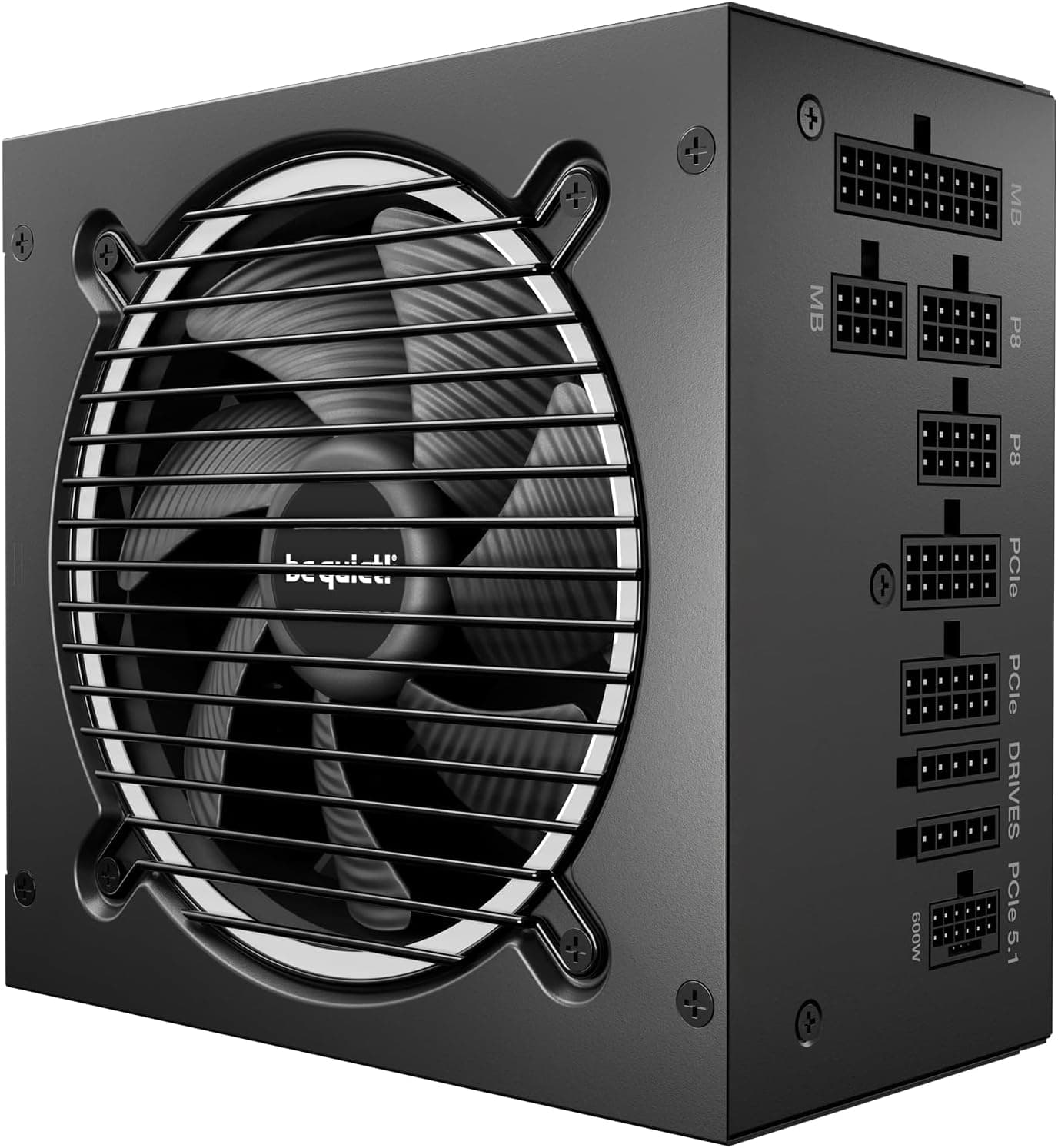
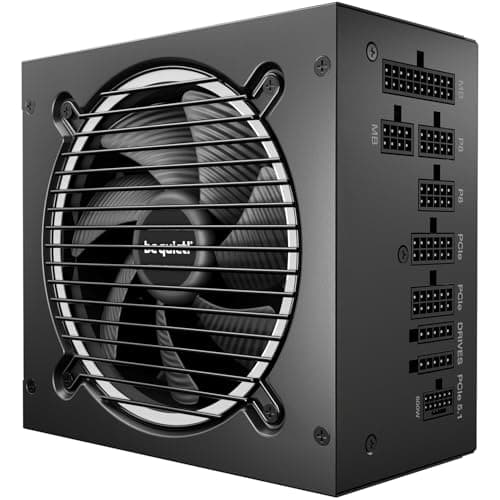
The be quiet! Pure Power 12 M 850W is another competitor worth mentioning. It's typically priced a bit lower, carries 80 Plus Gold certification, and is fully modular. It's a solid unit for mainstream gaming builds. The RM850e has the edge on the ATX 3.1 compliance front and the transient power handling, which matters more as you move into higher-end GPU territory. The be quiet! unit is fine for mid-range builds but the RM850e is better positioned for demanding GPU setups.
Honestly, the competitive landscape for 850W fully modular Gold-or-better units is strong right now. The RM850e isn't the only good option, but it's a well-rounded one. The ATX 3.1 certification is a genuine differentiator for anyone building around current-gen or near-future GPUs, and the combination of Cybenetics Gold efficiency, 105°C capacitors, and Corsair's five-year warranty makes a compelling package. The price is competitive for what you get.
| Feature | CORSAIR RM850e (2025) | Seasonic Focus GX-850 | be quiet! Pure Power 12 M 850W |
|---|---|---|---|
| Wattage | 850W | 850W | 850W |
| Efficiency | Cybenetics Gold | 80 Plus Gold | 80 Plus Gold |
| Modularity | Fully modular | Fully modular | Fully modular |
| ATX 3.1 Certified | Yes | No (older models) | Varies by revision |
| Zero RPM Mode | No | Yes | Yes |
| 105°C Capacitors | Yes | Yes | Yes |
| Warranty | 5 years | 10 years | 5 years |
| 12V-2x6 Cable | Yes | No (older models) | Varies |
| Price | Check price | Upper mid-range | Mid-range |
Final Verdict
The CORSAIR RM850e (2025) Fully Modular Low-Noise ATX Power Supply with 12V-2x6 Cable, ATX 3.1 & PCIe 5.1 Compliant, Cybenetics Gold Efficiency, 105°C-Rated Capacitors, Modern Standby Mode, Black is a properly solid PSU for anyone building a mid-to-high-end gaming rig in 2025 or 2026. The ATX 3.1 certification is the key spec that separates it from older units in the same price range, and it's not just a badge: it means this unit is genuinely engineered for the transient power demands of current and upcoming GPU generations. The 105°C capacitors, the Cybenetics Gold efficiency, and the fully modular design all point to a unit built with some actual thought behind it rather than just hitting a price point.
The five-year warranty is reassuring without being class-leading. Seasonic's Focus GX offers ten years, which is genuinely better if long-term peace of mind is your priority. And the lack of a zero-RPM mode is a minor but real limitation if you're chasing absolute silence. But for most gaming builders, neither of those things will matter much. The fan is quiet enough in practice, and five years covers you through multiple GPU upgrades.
With a 4.6-star average across more than 1,500 verified owners, this isn't a unit that's coasting on brand recognition. Real people are putting it in real builds and coming back satisfied. At the upper mid-range price bracket, it's competitive and well-specified. If you're building around a current-gen GPU and you want a PSU that's properly future-proofed for ATX 3.1, this is one of the cleaner choices on the market right now.
Our rating: 8.5 out of 10. Strong build quality, proper ATX 3.1 compliance, and a quiet fan curve make this a genuinely good choice for enthusiast gaming builds. The Seasonic Focus GX edges it on warranty length, but the RM850e is more current-platform-ready. Recommended.
Ready to check the current price? See the CORSAIR RM850e (2025) on Amazon UK.
Is the CORSAIR RM850e (2025) good for gaming?
Yes, it's well-suited for gaming builds. The 850W capacity covers mid-to-high-end single-GPU systems with headroom to spare, and the ATX 3.1 certification means it handles the transient power spikes that modern gaming GPUs produce. For most gaming builds up to and including enthusiast-tier GPU and CPU combinations, this is a solid choice.
What wattage PSU do I need for a high-end gaming GPU?
A current-gen high-end GPU paired with a modern 8 to 16 core CPU will typically need between 750W and 1000W depending on the specific components and whether you're running power limits unlocked. 850W is the right call for most high-end gaming builds. If you're running a flagship GPU with no power limits and a power-hungry CPU, consider stepping up to 1000W. Use our PSU calculator to get a build-specific recommendation.
Is Cybenetics Gold better than 80 Plus Bronze?
Yes, meaningfully so. The 80 Plus Bronze and Cybenetics Gold ratings come from different certification bodies with different test methodologies, but Cybenetics Gold broadly corresponds to 80 Plus Gold efficiency levels, which is a significant step up from Bronze. The practical difference is better efficiency at typical load points, meaning less wasted electricity and less heat generated inside the unit. For a PSU you'll run for five-plus years, the efficiency difference adds up.
How long is the warranty on the CORSAIR RM850e (2025)?
Five years. Corsair covers this unit for five years from the date of purchase, which is a solid warranty for a unit at this price point. It covers manufacturing defects and component failures. For comparison, some premium units like the Seasonic Focus GX offer ten-year warranties, but five years is more than adequate for most users and covers you through several GPU upgrade cycles.
Is the CORSAIR RM850e (2025) fully modular?
Yes, it's fully modular. That means every cable, including the ATX 24-pin motherboard cable, connects and disconnects from the PSU itself. You only plug in the cables your build actually needs, which makes cable management significantly easier and improves airflow inside the case. The included cables cover all the essentials: ATX 24-pin, EPS 8-pin, PCIe 8-pin connectors, SATA, Molex, and the 12V-2x6 connector for current-gen GPUs.
What works. What doesn’t.
5 + 3What we liked5 reasons
- ATX 3.1 certified with 2x GPU transient spike handling
- Cybenetics Gold efficiency, meaningfully better than Bronze
- 105°C-rated capacitors for long-term reliability
- Fully modular with 12V-2x6 cable included for current-gen GPUs
- Quiet 120mm fan with well-tuned curve
Where it falls3 reasons
- No zero-RPM mode for absolute silence
- Only one EPS 8-pin connector
- Five-year warranty is solid but Seasonic offers ten
Full specifications
9 attributes| Wattage | 850 |
|---|---|
| Efficiency rating | Gold |
| Form factor | ATX |
| ATX version | ATX 3.1 |
| Generation | RMe Series |
| Modularity | fully_modular |
| Pcie 5 ready | true |
| Warranty years | 7 |
| Wattage W | 850 |
Will it run on what you have?
Free toolIf this isn’t right for you
2 options 9.0 / 10
Corsair RM850x SHIFT Fully Modular ATX Power Supply - 80 PLUS Gold - ATX 3.1 - PCIe 5.1 - Zero RPM - Modular Side Interface - Black
£136.31 · Corsair
 8.5 / 10
be quiet! Pure Power 13 M 1000W Power Supply, 80 PLUS® Gold Certification, ATX 3.1 PSU, Support For PCIe 5.1 GPUs, Semi-Passive 120mm be quiet! Fan, LLC Technology, Single Rail, For Overclocked GPUs
£109.83 · be quiet!
Frequently asked
5 questions01Is the CORSAIR RM850e (2025) Fully Modular Low-Noise ATX Power Supply with 12V-2x6 Cable, ATX 3.1 & PCIe 5.1 Compliant, Cybenetics Gold Efficiency, 105°C-Rated Capacitors, Modern Standby Mode, Black good for gaming?+
Yes. The 850W capacity covers mid-to-high-end single-GPU gaming builds with headroom to spare, and the ATX 3.1 certification means it handles the transient power spikes that modern gaming GPUs produce. For most gaming builds up to and including enthusiast-tier GPU and CPU combinations, this is a strong choice.
02What wattage PSU do I need for a high-end gaming GPU?+
A current-gen high-end GPU paired with a modern 8 to 16 core CPU will typically draw between 400W and 600W under gaming load, depending on the specific components. 850W gives you comfortable headroom at the 50 to 70 percent utilisation sweet spot. If you're running a flagship GPU with power limits unlocked and a power-hungry CPU, consider 1000W. Use a PSU calculator for a build-specific recommendation.
03Is Cybenetics Gold efficiency better than 80 Plus Bronze?+
Yes, significantly. Cybenetics Gold broadly corresponds to 80 Plus Gold efficiency levels, which means roughly 87 to 90 percent efficiency at 50 percent load. That's a meaningful step up from 80 Plus Bronze (~85% at 50% load). Better efficiency means less wasted electricity and less heat generated inside the unit, both of which matter for running costs and component longevity over a five-year lifespan.
04How long is the warranty on the CORSAIR RM850e (2025) Fully Modular Low-Noise ATX Power Supply?+
Five years. Corsair covers this unit for five years from purchase, which covers manufacturing defects and component failures. It's a solid warranty that will see you through multiple GPU upgrade cycles. For comparison, some premium units like the Seasonic Focus GX offer ten-year warranties, but five years is more than adequate for most users.
05Is the CORSAIR RM850e (2025) Fully Modular Low-Noise ATX Power Supply fully modular?+
Yes, it's fully modular. Every cable, including the ATX 24-pin motherboard connector, plugs into the PSU and can be removed when not needed. You only use the cables your build requires, which makes cable management significantly easier and improves airflow inside the case. The cable set covers all essentials including the 12V-2x6 connector for current-gen GPUs.