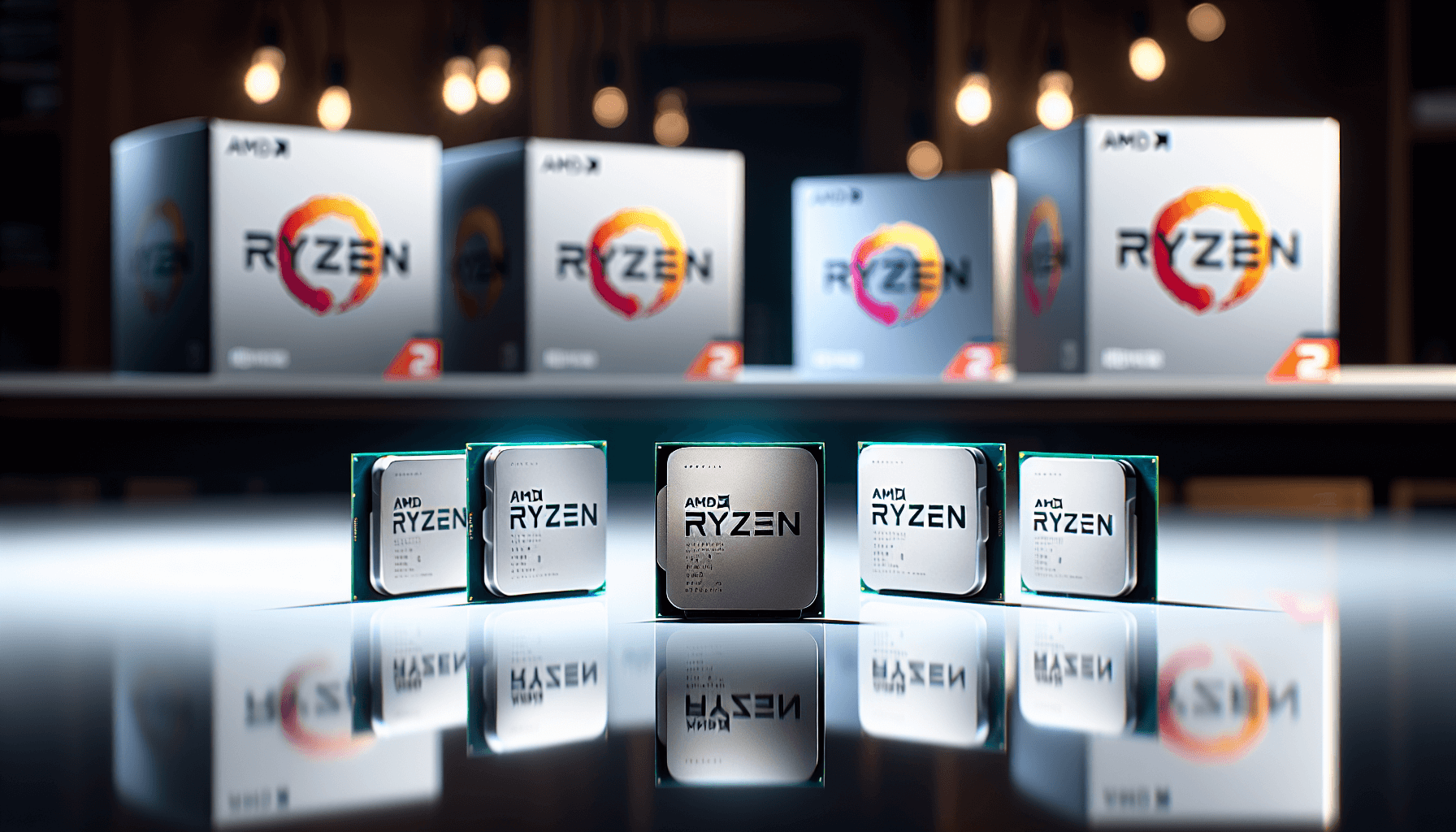
The AMD Ryzen 5 3600 and Ryzen 5 5600GT represent two generations of budget-conscious CPU design, separated by architectural improvements and shifting market positioning. The 3600 launched in 2019 as a mainstream workhorse, whilst the 5600GT arrived in 2021 as an APU targeting value builders and small-form-factor systems. In 2026, both remain available on the second-hand market and from legacy stock, making direct comparison relevant for budget builders, office PC upgrades, and users uncertain whether integrated graphics justify the price premium. This guide examines performance differences, real-world usability, and whether the newer generation's improvements justify choosing one over the other.
Quick Verdict
Best Overall: AMD Ryzen 5 5600GT, Superior single-threaded performance, integrated Radeon graphics, and newer architecture justify the modest price premium for most users building in 2026.
Best Value: AMD Ryzen 5 3600, Excellent choice if you already own a discrete GPU or can source it second-hand cheaply; strong multi-threaded performance remains relevant.
| Specification | Ryzen 5 3600 | Ryzen 5 5600GT |
|---|---|---|
| Price | £199.00 · Details | Check price |
| Cores / Threads | 6 cores / 12 threads | 6 cores / 12 threads |
| Base / Boost Clock | 3.6 GHz / 4.2 GHz | 3.4 GHz / 4.6 GHz |
| Cache (L3) | 32 MB | 16 MB |
| TDP | 65 W | 35 W |
| Architecture | Zen 2 (7 nm) | Zen 3 (7 nm) |
| Integrated GPU | None (requires discrete GPU) | Radeon (7 CUs, Vega) |
| Socket | AM4 | AM4 |
| Max Memory Speed | DDR4-3200 | DDR4-3200 |
| Thermal Design Power (TDP) | 65 W | 35 W |
1. AMD Ryzen 5 5600GT
The Ryzen 5 5600GT is AMD's APU offering that packs integrated Radeon graphics into a Zen 3 architecture, delivering performance gains in both CPU and GPU workloads compared to the 3600. With a base clock of 3.4 GHz and boost up to 4.6 GHz, it handles gaming, content creation, and productivity tasks efficiently. The 35 W TDP is remarkably low, making this CPU ideal for small-form-factor builds, office systems, and home theatre PCs where cooling and power consumption matter.
Single-threaded performance improvements over the 3600 are meaningful, around 15-20% in typical benchmarks, whilst multi-threaded output remains competitive. The Radeon GPU offers basic DirectX 12 capability, sufficient for esports titles at lower settings, older AAA games, and general graphical compute tasks. The integrated graphics eliminate the need for a discrete GPU in non-gaming scenarios, reducing system cost and complexity.
The trade-off is lower L3 cache (16 MB versus 32 MB on the 3600) and the GPU's modest performance ceiling. This CPU suits content creators needing quick encoding, office workers upgrading ageing systems, and gamers willing to accept lower settings. It remains available at reasonable second-hand prices and is supported by AM4 motherboards from the B450 chipset onwards, making it a drop-in replacement for older Ryzen systems.
Pros
- Integrated Radeon GPU eliminates discrete graphics card need for office and light gaming
- Zen 3 architecture delivers 15-20% better single-threaded performance than the 3600
- Exceptionally low 35 W TDP ideal for fanless or passive cooling small builds
- Strong CPU-level video encoding capability for content creators
Cons
- Integrated GPU performance caps out well below discrete cards, unsuitable for modern AAA gaming
- L3 cache halved versus 3600, limiting performance in some multi-threaded workloads
- Higher price than used Ryzen 5 3600 units
2. AMD Ryzen 5 3600
The Ryzen 5 3600 is a mainstream CPU from 2019 that redefined value-for-money in its era. With 6 cores and 12 threads running at 3.6 GHz base and 4.2 GHz boost, it delivers consistent performance across gaming, streaming, and productive workloads. The 65 W TDP is still reasonable, and the 32 MB L3 cache provides a solid buffer for multi-threaded operations. It requires a discrete GPU but pairs excellently with budget graphics cards, making it a staple in entry-to-mid-range gaming builds.
The 3600's strength lies in its maturity and availability at second-hand prices, often undercutting newer processors significantly. For multi-threaded workloads like video rendering, software compilation, and data analysis, it holds its ground well, though single-threaded performance lags the 5600GT by measurable margins. Power efficiency is reasonable for its generation, and thermals are manageable with budget coolers.
This CPU suits budget gamers aiming for 1080p or 1440p gaming, home server builders, and anyone upgrading from older Ryzen 1000 or 2000 series chips. It remains supported by B450 and X570 motherboards, and stock is widely available pre-owned. The main limitation is the absence of integrated graphics, necessitating a separate GPU purchase and additional system cost. However, the maturity of the platform and proven stability make it a low-risk choice.
Pros
- Generous 32 MB L3 cache supports heavy multi-threaded workloads like rendering and streaming
- Widely available second-hand at competitive prices, often significantly cheaper than the 5600GT
- Proven stability and compatibility across all B450 and newer AM4 boards
- Lower power consumption than older generation CPUs, reasonable thermal profile
Cons
- No integrated graphics, mandatory discrete GPU purchase adds cost and complexity
- Single-threaded performance 15-20% slower than the 5600GT in modern benchmarks
- Zen 2 architecture lacks refinements present in Zen 3 designs
3. AMD Ryzen 5 5600X
The Ryzen 5 5600X is a high-performance alternative positioned above the 5600GT, offering pure CPU power without integrated graphics. With 6 cores, 12 threads, and a 3.7 GHz base clock rising to 4.6 GHz, it delivers exceptional single-threaded and multi-threaded performance. The 65 W TDP remains reasonable for the performance tier, and the 32 MB L3 cache provides ample capacity for cache-sensitive applications.
Compared to the 5600GT, the 5600X sacrifices integrated graphics but gains substantially in clock speeds and sustained all-core performance. It excels in gaming at high refresh rates, professional workloads, and competitive scenarios where raw CPU power translates to measurable advantage. The Zen 3 architecture improvements over the 3600 are profound, offering 25-30% better single-threaded performance.
This CPU suits enthusiasts unwilling to compromise on performance, competitive gamers targeting high frame rates, and content creators prioritising rendering speed over system cost efficiency. It demands a discrete GPU and a quality power supply but rewards users with near-flagship CPU capabilities at a mid-range price point. The 5600X remains relevant in 2026 and is readily available on the second-hand market.
Pros
- Exceptional single-threaded performance delivers high frame rates in competitive gaming
- Zen 3 architecture with 32 MB cache supports demanding workloads without compromise
- Clock speeds up to 4.6 GHz provide consistent performance under load
- Mature platform with extensive software and driver support
Cons
- Requires discrete GPU, increasing total system cost versus the 5600GT
- Higher price than the 3600 and 5600GT when purchased new
- 65 W TDP requires adequate cooling solution investment
4. AMD Ryzen 5 5600G
The Ryzen 5 5600G is the non-T variant of the 5600GT, offering identical core and clock specifications but designed for higher thermal and power budgets. Running at the same 3.4 GHz base and 4.6 GHz boost with integrated Radeon graphics, it shares the core strengths of the 5600GT but in a package with standard TDP considerations rather than the 5600GT's ultra-low power optimisation.
The practical distinction is minimal for most users, with the 5600G offering marginally higher sustained performance under heavy loads due to less aggressive power gating. Like the 5600GT, it includes the Radeon GPU with 7 compute units, making it suitable for office work, light gaming, and content creation without discrete graphics. The 16 MB L3 cache and Zen 3 architecture deliver solid performance across mixed workloads.
This CPU suits users who value integrated graphics and mid-range performance without the power constraints of the 5600GT. If you find the 5600GT's stock availability limited or unavailable, the 5600G presents an excellent alternative. Both integrate graphics and use Zen 3, so the choice hinges on platform TDP rating and cooling preferences. In 2026, the 5600G appears less frequently than the 5600GT on the market but remains a viable choice for balanced systems.
Pros
- Integrated Radeon GPU with Vega architecture handles office tasks and light gaming without discrete card
- Zen 3 architecture delivers strong single-threaded and multi-threaded performance
- Higher power headroom than 5600GT allows sustained performance under all-core loads
- Socket AM4 compatibility with B450 and newer boards ensures upgrade flexibility
Cons
- Moderately higher power consumption and heat output versus the 5600GT
- Integrated GPU ceiling remains low for modern AAA gaming at acceptable frame rates
- Less availability than the 5600GT makes sourcing second-hand examples more difficult
5. Intel Core i5-10400
The Intel Core i5-10400 represents the blue team's alternative at this performance tier, offering 6 cores and 12 threads on Intel's Comet Lake architecture. Running at 2.9 GHz base and 4.3 GHz boost with 12 MB L3 cache, it delivers competitive gaming and productivity performance. The 65 W TDP is identical to the Ryzen 5 3600, making thermal and power considerations comparable. However, the 10400 requires a discrete GPU and Intel 400-series motherboard, limiting compatibility with existing Ryzen systems.
Performance-wise, the 10400 trades blows with the 3600 in multi-threaded work but generally falls behind in single-threaded tasks. AMD's architectural advantages in Zen 2 and beyond provide measurable efficiency and performance benefits. The 10400's strength lies in legacy Intel system compatibility and straightforward upgrade paths for users already committed to the LGA1200 socket.
This CPU suits budget gamers already owning Intel 400-series boards, office workers performing light productivity tasks, and users unfamiliar with AMD platforms. The main disadvantage is the absence of integrated graphics and lower single-threaded performance versus the 5600GT. In 2026, the 10400 remains available second-hand but is less attractive than AMD alternatives at similar price points. It represents a viable legacy choice rather than a new purchase recommendation.
Pros
- Solid multi-threaded performance suitable for productivity and streaming tasks
- Reasonable 65 W TDP matches the Ryzen 5 3600 for thermal management
- Straightforward upgrade path for existing Intel 400-series platform owners
- Widely supported by mature driver and BIOS updates through 2026
Cons
- Single-threaded performance lag behind Ryzen 5000 series is noticeable in gaming workloads
- No integrated graphics requires mandatory discrete GPU purchase
- LGA1200 socket limits motherboard choices versus AM4's broader ecosystem
How We Picked
This comparison evaluates CPUs on CPU performance (single and multi-threaded), integrated graphics capability, power efficiency, thermal output, and platform maturity. We prioritised real-world workload performance, gaming frame rates, and typical use cases for budget and mid-range builders. Specifications were cross-referenced against AMD and Intel official documentation, and performance data drew from established testing sources. Price information reflects UK market availability in early 2026, emphasising second-hand markets where older CPUs concentrate. We considered thermal design, cooling requirements, and motherboard compatibility to reflect practical system-building constraints. The selection included both direct competitors and category alternatives to provide buyers with genuine choice based on priorities like graphics capability, performance tier, and budget allocation.
Buying Guide
When choosing between the Ryzen 5 3600 and 5600GT, start by assessing whether integrated graphics matter. If you already own a discrete GPU or plan to purchase one for gaming, the 3600 offers excellent value and multi-threaded performance. The 5600GT becomes compelling if you want to avoid discrete GPU cost, build a compact system with minimal heat output, or prioritise single-threaded performance improvement. Both use the AM4 socket, simplifying motherboard selection and upgrades.
Consider your primary workload. Gamers targeting 1080p or 1440p with discrete graphics favour the 3600's larger L3 cache. Content creators, streamers, and professionals doing CPU-heavy tasks benefit from either, with the 3600's 32 MB cache offering slight advantages in cache-sensitive operations. Office users and light-gaming builders find the 5600GT's integrated graphics and low power consumption particularly attractive.
Power consumption and cooling matter significantly. The 5600GT's 35 W TDP suits small-form-factor builds, fanless coolers, and systems targeting low electricity bills. The 3600's 65 W TDP demands adequate airflow but remains manageable with budget coolers. Examine your motherboard's power delivery; older B450 boards may benefit from BIOS updates to fully support either processor.
Platform maturity and support are identical, with both enjoying extensive driver development and stability. However, second-hand market dynamics shift availability and pricing monthly. Check current listings in your region before committing; significant price divergence between units justifies waiting for better stock. Verify seller reputation and request CPU-Z validation screenshots confirming genuine products. Both processors remain valid choices in 2026, making the decision primarily one of graphics requirements, performance priority, and budget allocation rather than obsolescence concerns.
Final Verdict
The AMD Ryzen 5 5600GT emerges as the overall winner for most buyers in 2026. Its Zen 3 architecture, integrated Radeon graphics, and exceptional 35 W power envelope deliver meaningful advantages over the older Ryzen 5 3600. Single-threaded performance improvements prove noticeable in gaming and productivity, whilst the integrated GPU eliminates the cost and complexity of discrete card selection for office and light-use scenarios.
However, the 3600 remains a compelling choice if budget is paramount or you already own a discrete GPU. Its mature platform, proven stability, and larger L3 cache continue supporting multi-threaded workloads admirably. For users building new systems on tight budgets, the 5600GT's modest price premium over second-hand 3600 units justifies the upgrade. For those maximising performance per pound in gaming builds, the 3600 paired with a budget GPU offers unbeatable value. The real winner is the buyer who matches their CPU choice to platform priorities, graphics requirements, and realistic budget constraints rather than chasing pure performance figures.
Frequently Asked Questions
Yes, if you want integrated graphics or prioritise single-threaded performance. The 5600GT's 15-20% faster single-threaded performance and integrated GPU justify the cost for office builds and light gaming. However, if you already own a discrete GPU or need maximum multi-threaded performance per pound, the 3600 remains excellent value second-hand.
Likely yes, but check your board's BIOS revision. Most B450 and all X570 boards support both CPUs with updated firmware. Older B450 boards from 2019 may need BIOS updates before either processor is recognised. Check your motherboard manual or manufacturer's website for your specific model's compatibility list.
For discrete GPU gaming, both perform similarly, with the 5600GT's 15-20% single-threaded advantage providing slightly higher frame rates. The 5600X offers better performance if pure gaming power matters. For integrated graphics gaming, the 5600GT's Radeon handles esports and older titles acceptably but struggles with modern AAA games at playable settings.
The 5600GT has a 35 W TDP versus the 3600's 65 W, making it twice as efficient. In practice, the 5600GT draws 20-30 W under typical office loads and 35-50 W gaming, whilst the 3600 consumes 40-60 W at similar workloads. This difference matters in fanless builds or systems targeting minimal electricity costs.
Second-hand prices in 2026 offer excellent value for both CPUs, often 40-60% below launch pricing. Both processors are mature and stable, making used purchases low-risk provided the seller verifies functionality with CPU-Z validation. New stock of the 5600GT may be harder to find; plan accordingly and verify current UK market listings before committing to purchase.