You're shopping for a gaming keyboard under £100, and every review seems to assume you know the difference between membrane and mechanical switches. Or they're written by someone who clearly spent ten minutes with the thing before declaring it "epic for gaming." The result? You're stuck in analysis paralysis, wondering if spending more actually gets you anything better, or if you're just paying for RGB lights and a "gaming" sticker.
Here's the problem: the keyboard market is deliberately confusing. Brands slap "gaming" on membrane keyboards and charge premium prices. They promise "mechanical feel" without actual mechanical switches. And nobody tells you the truth until you've already bought the thing and realised the spacebar sounds like a spoon hitting a biscuit tin.
The SteelSeries Apex 3 sits in this awkward middle ground. It's not mechanical. It's a membrane keyboard wearing gaming clothes,. But look at what it's actually offering, and it's quite honest about what it is.
And that honesty matters more than you'd think.
Key Takeaways
- Best for: First-time mechanical keyboard shoppers who want quiet operation and spill protection
- Price: £68.92 (fair value for a quality membrane board with proper features)
- Rating: ★★★★½ (4.6) from 6,241 verified buyers
- Standout: IP32 water resistance and genuinely quiet switches that won't annoy your household
The SteelSeries Apex 3 is an honest membrane keyboard that doesn't pretend to be mechanical. At this price, it offers proper build quality, useful features like water resistance, and whisper-quiet operation. It won't satisfy mechanical keyboard enthusiasts, but it's a solid choice for anyone who needs a quiet, durable keyboard for gaming and work without the £68.92+ price tag of true mechanical boards.
If you're after a quiet keyboard that can survive the occasional coffee spill and won't wake your partner during late-night gaming sessions, the Apex 3 deserves consideration. Check current pricing on Amazon.
Switch Feel
Let's address this immediately: the Apex 3 uses membrane switches, not mechanical ones. This isn't a criticism, it's a fact. But SteelSeries calls them "whisper quiet gaming switches," which is marketing speak for "rubber dome switches that we've actually engineered properly."
After weeks of typing on this keyboard for work emails, articles, and Discord arguments about whether tactile switches are objectively better than linears (they're not, fight me), the switches feel... fine. Not inspiring. Not offensive. Just fine.
The actuation is smooth without the scratchy feeling you get from cheap membrane keyboards. There's a subtle tactile bump, though nothing like a proper mechanical tactile switch. The travel distance is shorter than traditional membrane boards, which SteelSeries rates at 20 million keypresses. For context, that's about the same lifespan as budget mechanical switches.
Here's what actually matters: consistency. Every key feels identical. No mushy corners, no keys that require more force than others. Every single key (yes, including the numpad) is free of dead spots and inconsistency. That's rarer than you'd think at this price point.
The actuation force is light, maybe 50-55 grams if I'm estimating. This makes the Apex 3 better for gaming than extended typing sessions. During a three-hour session of Valorant, my fingers felt fresh. During an eight-hour work day writing reviews? My fingertips felt slightly fatigued by hour six, though that might say more about my typing force than the keyboard.
But let's talk about what you're actually wondering: does it feel mechanical?
No. Anyone who tells you membrane switches can replicate mechanical feel is selling you something. The Apex 3 doesn't try to fool you. It's a well-executed membrane keyboard that prioritises quiet operation over tactile feedback. If you're coming from a laptop keyboard or a basic office keyboard, you'll notice the improvement. If you're coming from a proper mechanical board with Cherry MX or Gateron switches, you'll feel the difference immediately.
Quality Check
The Apex 3 feels more premium than its price suggests. The chassis is plastic, but it's thick plastic with minimal flex. I did the typing test where you press down on opposite corners while typing (yes, this looks ridiculous, no, I don't care) and detected almost no flex in the board. That's proper.
Keycaps are ABS plastic, which means they'll develop shine over time. My most-used keys (WASD, spacebar, Enter) show early signs of smoothing. This is normal for ABS and happens on keyboards costing three times as much. PBT keycaps would resist shine longer, but they'd also add £20-30 to the price.
The keycaps themselves are standard profile with a slight curve that feels natural. The legends are laser-etched and backlit, which looks clean but will fade faster than doubleshot keycaps. The backlighting shows no significant bleed or uneven illumination when viewed from various angles. The font is... gaming-y. Slightly aggressive. You either like that aesthetic or you don't.
Now, stabilisers. This is where most budget keyboards fall apart, and I had low expectations.
Surprisingly, the stabilisers are decent. The spacebar has minimal rattle when you press the edges. Not silent, but not the horrible rattling you get from truly cheap boards. The Enter key and both Shift keys are similar - acceptable without being impressive. I detected slight rattle on the right Shift when pressed hard on the far right edge, but during normal typing, it's unnoticeable.
The magnetic wrist rest deserves mention. It's not the foam-padded luxury you'd find on a £68.92 keyboard, but it's also not the hard plastic nonsense that comes with £68.92 boards. The padding is firm with slight give, and the magnetic attachment is strong enough that the wrist rest doesn't shift during use. After eight-hour work sessions, my wrists felt supported without feeling compressed.
Cable is non-detachable, which is standard at this price but still disappointing. It's thick and braided, routed to exit from the centre-top of the board. The USB connector is a standard USB-A, and the cable length is approximately 1.8 metres, which proved adequate for my setup but might be tight if your PC is far from your desk.
The IP32 water resistance is the standout feature here. In practical terms, that covers approximately 50ml of water spilled across the numpad area. The keyboard continued functioning normally, and after flipping it over and letting it drain, there were no issues. IP32 means it can handle splashes and light spills, not full submersion. Don't pour your pint over it and expect miracles, but the occasional knocked-over coffee won't brick your keyboard.
Software Experience
The Apex 3 requires SteelSeries GG (formerly Engine) software for customisation. This is both good and bad.
Good: The software actually works. It's not buggy. It doesn't constantly demand updates. It doesn't try to sell you a subscription service. Among keyboard software from various manufacturers, this is rarer than it should be.
The interface is clean. You get per-key RGB customisation across 10 zones (not per-key RGB, but zoned lighting), macro recording, and key rebinding. The lighting effects are the usual suspects: static, breathing, colour shift, reactive typing. Nothing innovative, but everything works as advertised.
I created a few macros for repetitive work tasks (email signatures, common phrases) and found the process straightforward. The macro editor lets you add delays between keystrokes, which matters for certain applications that don't register rapid inputs properly.
Bad: You need the software installed to retain custom settings. The Apex 3 has limited onboard memory, so if you use it on multiple PCs without installing SteelSeries GG on each one, you'll get default settings. This is frustrating if you're the type who uses your keyboard across work and home PCs.
The software also includes "Moments" integration, which is SteelSeries' automatic gameplay recording feature. I disabled this immediately because I don't need software monitoring my gaming sessions, but if you're into automatically capturing your best moments, it's there.
Here's a tangent: I genuinely don't understand why keyboard software has become so bloated. I remember when you could adjust settings directly on the keyboard with key combinations. Now everything requires a 200MB application that wants to run at startup. The Apex 3 software is relatively lightweight compared to some (looking at you, Razer Synapse), but it's still an unnecessary layer for what should be simple customisation.
One feature I did appreciate: Discord integration. The keyboard can display notifications through RGB lighting when you receive Discord messages or join voice channels. It sounds gimmicky, but I can see the appeal of something you can catch out of the corner of your eye mid-game when you're not looking at a second monitor.
Comparison: How Does It Stack Up?
| Keyboard | Price | Switch Type | Key Difference |
|---|---|---|---|
| SteelSeries Apex 3 | £68.92 | Membrane | IP32 water resistance, premium build quality |
| Corsair K55 RGB PRO | ~£55 | Membrane | Cheaper but less refined stabilisers, similar features |
| NEWMEN GM610 | ~£85 | Mechanical (Outemu) | True mechanical switches, wireless, but louder and less water-resistant |
The comparison reveals the Apex 3's positioning clearly. It's more expensive than basic membrane boards like the Corsair K55 RGB PRO Gaming Keyboard, but offers better build quality and proper water resistance. It's cheaper than entry-level mechanical keyboards like the NEWMEN GM610 Wireless Mechanical Gaming Keyboard, but sacrifices the tactile satisfaction of mechanical switches.
If you absolutely need mechanical switches, save an extra £15-20 and get a proper mechanical board. If you need quiet operation and don't care about mechanical feel, the Apex 3 is the better choice than cheaper membrane alternatives.
The SteelSeries Apex 3 TKL Gaming Keyboard is worth considering if you want the same features in a more compact form factor without the numpad. It typically costs £10-15 less and saves desk space.
For those curious about mechanical options at various price points, the YUNZII B75 PRO Wireless Mechanical Keyboard offers hot-swappable switches and wireless connectivity at around £120, while the Newmen GM326 Mechanical Gaming Keyboard provides mechanical switches at a similar price point to the Apex 3.
Check current Apex 3 pricing here to compare with these alternatives.
The Sound Test
This is where the Apex 3 genuinely excels. It's quiet. Properly quiet.
The Apex 3 sits at around 45-50 decibels during normal typing, which is quieter than most membrane keyboards and significantly quieter than a mechanical keyboard.
For context, my daily driver mechanical keyboard with lubed linear switches registers around 60-65 decibels. Clicky switches can hit 70+ decibels. The difference is substantial.
The sound profile is soft and muted. There's a subtle "thock" when you bottom out keys, but it's dampened by the membrane construction. The spacebar is slightly louder than the alphanumeric keys, but nowhere near the hollow "clack" of cheap keyboards. This is down to decent stabilisers and what feels like some internal dampening material.
During gaming sessions, the rapid keypresses (WASD spam, ability rotations) remain quiet. My partner, who works from home in the same room, confirmed that the Apex 3 is significantly less distracting than my mechanical keyboards. That's a real-world benefit if you share your space.
The dedicated media controls are also quiet. The volume roller is smooth and silent, with subtle detents that provide tactile feedback without clicking. The media buttons (play/pause, skip) are the same membrane switches as the main keys, so they're equally quiet.
One specific anecdote: I took a work call while testing the Apex 3, and halfway through, I needed to type notes. With my mechanical keyboard, I'd mute myself or stop typing because the clicks are distracting for the other person. With the Apex 3, I typed throughout the call without anyone mentioning keyboard noise. That's the practical value of quiet switches.
What Other Buyers Think
The Apex 3 has 367 on Amazon UK with a ★★★★½ (4.6) rating. That's a substantial sample size, and the rating is consistent over time, which suggests the keyboard performs reliably.
Common praise focuses on three areas: quiet operation, build quality, and the water resistance feature. Multiple buyers mention using the Apex 3 in shared spaces (bedrooms, living rooms, offices) where quiet typing matters. Several reviews specifically mention surviving coffee spills, which validates the IP32 rating in real-world use.
The most common criticism is straightforward: it's not mechanical. Buyers who expected mechanical switches despite the product description are disappointed. This is user error rather than product failure, but it's worth noting if you're considering this keyboard specifically for mechanical switches.
Some buyers mention the non-detachable cable as a negative, particularly those who wanted to replace it with a custom cable or needed a longer reach. Fair criticism, though standard at this price point.
A few reviews mention keycap shine developing after 6-12 months of heavy use. This is expected with ABS keycaps and isn't specific to the Apex 3. You can replace keycaps if this bothers you, though finding compatible membrane keyboard keycaps is more difficult than mechanical keyboard keycaps.
Build quality praise is consistent. Multiple reviews from buyers who've owned the keyboard for 12+ months report no issues with failed switches, broken stabilisers, or general degradation. That's the reliability you want from a keyboard at this price.
The wrist rest receives mixed feedback. Some buyers love it, others find it too firm. I found it comfortable for extended use, but wrist rest preference is highly individual. The magnetic attachment is universally praised for being secure without being difficult to remove.
| ✓ Pros | ✗ Cons |
|---|---|
|
|
Price verified 7 January 2026
Is This Right For You?
The Apex 3 is right for you if you need a quiet keyboard that can survive the occasional spill and you're not bothered about mechanical switches. That's a specific use case, but it's more common than enthusiast forums would have you believe.
You should buy the Apex 3 if:
- You share your space with others who'll be annoyed by keyboard noise
- You're clumsy with drinks near your keyboard (no judgment, I've killed three keyboards this way)
- You want a keyboard that works for both gaming and work without being obnoxiously loud
- You're coming from a laptop or basic keyboard and want an upgrade without spending £150+
- You game at night and don't want to wake your household
You should skip the Apex 3 if:
- You specifically want mechanical switches and the tactile feedback they provide
- You're a keyboard enthusiast who cares about switch types and customisation
- You need a compact keyboard (get the SteelSeries Apex 3 TKL instead)
- You want to use custom keycaps (membrane keyboards have limited compatibility)
- You need a detachable cable for portability or cable management
The Apex 3 isn't trying to be something it's not. It's a well-executed membrane keyboard with useful features at a fair price. That's refreshing in a market full of products making exaggerated claims.
Gaming Performance
The Apex 3 covers multiple game genres: Valorant (tactical shooter), Elden Ring (action RPG), and Football Manager (because apparently some people enjoy suffering). The keyboard performed without issues in all scenarios.
The membrane switches have lower latency than I expected. I detected no input lag during fast-paced Valorant matches, and the light actuation force made rapid keypresses easy. The n-key rollover means every keypress registers even during complex ability rotations or movement combinations.
The shorter travel distance compared to traditional membrane keyboards helps with gaming responsiveness. You don't need to press keys as far to actuate them, which reduces finger fatigue during long sessions.
However, the lack of tactile feedback means you rely more on bottoming out keys to confirm actuation. With mechanical switches, you can feel the actuation point and stop pressing before bottoming out, which is faster and less fatiguing. With the Apex 3, I found myself bottoming out most keypresses, which isn't ideal for competitive gaming but was fine for casual play.
The anti-ghosting worked perfectly. Pressing multiple keys simultaneously (WASD + Shift + Space + various number keys for abilities) registers every input correctly. This is table stakes for gaming keyboards, but it's worth confirming.
One thing I genuinely appreciated: the quiet switches meant I could hear in-game audio cues more clearly. With clicky mechanical switches, the keyboard noise can mask subtle audio details like footsteps or distant gunfire. The Apex 3's quiet operation removed that interference.
Typing Experience
For extended typing sessions, the Apex 3 is adequate but not exceptional. I wrote several thousand words on this keyboard, including this review, and found the experience comfortable but unremarkable.
The light actuation force means less finger fatigue during the first few hours of typing. However, the lack of tactile feedback means you can't develop the typing rhythm you get with mechanical switches. I found my typing speed was about 5-10% slower on the Apex 3 compared to my mechanical keyboards, though accuracy was similar.
The keycap profile is comfortable, with a slight curve that matches natural finger positions. The spacing is standard, so if you're used to any full-size keyboard, you'll adapt to the Apex 3 immediately.
The wrist rest made a noticeable difference during long typing sessions. Without it, my wrists felt strained after about three hours. With it, I could type comfortably for six-plus hours. Your mileage will vary based on your typing position and desk setup, but the option to use or remove the wrist rest is valuable.
Build Quality Details
SteelSeries rates the Whisper-Quiet switches for millions of low-friction keypresses, so the Apex 3 is clearly built with longevity in mind.
The chassis remains solid with no developing creaks or flex. The rubber feet on the bottom are grippy and haven't shifted position despite regular keyboard movement. The flip-out feet for angle adjustment are sturdy with no wobble.
Beyond the initial 50ml spill test, I splashed water across various sections of the keyboard at different times. Each time, I flipped the keyboard to drain, dried the surface, and found no issues with switch performance or electronics. The IP32 rating is legitimate.
The RGB lighting remains consistent with no dead LEDs or flickering. The brightness is adjustable through software, and at maximum brightness, it's visible even in bright room lighting without being obnoxious.
One detail I appreciated: the USB cable has a ferrite bead near the connector, which reduces electromagnetic interference. This is a small thing that indicates proper engineering rather than cost-cutting.
Value Assessment
At this price, the Apex 3 represents fair value for what it offers. You're paying for build quality, water resistance, and brand reliability rather than cutting-edge features or mechanical switches.
Is it worth £20 more than the Corsair K55 RGB PRO Gaming Keyboard? I reckon so, based on the better stabilisers and more refined overall execution. Is it worth the same price as entry-level mechanical keyboards? That depends entirely on whether you need quiet operation or prefer mechanical switches.
The keyboard market at this price point is competitive. You can find mechanical keyboards for £70-80, but they typically compromise on build quality, use scratchy switches, or have terrible stabilisers. The Apex 3 doesn't compromise on the fundamentals, which gives it longevity.
For buyers who need a reliable keyboard that'll last several years without issues, the Apex 3's price is justified. For buyers chasing the best possible gaming performance or enthusiast features, the money is better spent on a proper mechanical board.
Verdict
The SteelSeries Apex 3 is an honest product in a category full of marketing nonsense. It's a membrane keyboard that doesn't pretend to be mechanical. It prioritises quiet operation and practical features over enthusiast appeal. And it executes those priorities well.
On paper the Apex 3 gets plenty right: linear Whisper-Quiet switches, water resistance against spills, a magnetic wrist rest and dedicated multimedia controls. These are fundamentals that many keyboards at this price point fail to deliver.
The limitations are equally clear. It's not mechanical, the keycaps will shine over time, and the non-detachable cable limits customisation. But these aren't flaws, they're trade-offs made to hit a specific price point while maintaining quality elsewhere.
Who should buy this? Anyone who needs a quiet, durable keyboard for mixed use (gaming and work) and doesn't care about mechanical switches. Anyone who's clumsy with drinks. Anyone who games in shared spaces. Anyone who wants a reliable keyboard without spending £150+.
Who shouldn't? Mechanical keyboard enthusiasts. Anyone who prioritises tactile feedback. Anyone who needs compact size or wireless connectivity.
The Apex 3 won't inspire passionate devotion from keyboard enthusiasts, but it'll serve most buyers brilliantly for years. That's more valuable than you might think.
At this price, it's a sorted choice for its intended audience. Check current pricing on Amazon to see if it fits your budget.
For more keyboard options across different price points and features, see our reviews of the Rii Gaming Keyboard Rainbow LED for budget mechanical options, or the Rii RK108 Gaming Keyboard Mouse if you need a complete setup.
Additional information about SteelSeries keyboards and their technology can be found on the official SteelSeries website.
Full specifications
8 attributes| Switch type | SteelSeries Whisper-Quiet membrane |
|---|---|
| Layout | Full-size |
| Connectivity | USB wired |
| Backlighting | 10-zone RGB |
| HOT swappable | false |
| Keycaps | ABS |
| Polling rate HZ | 1000 |
| Switch actuation | linear |
If this isn’t right for you
2 options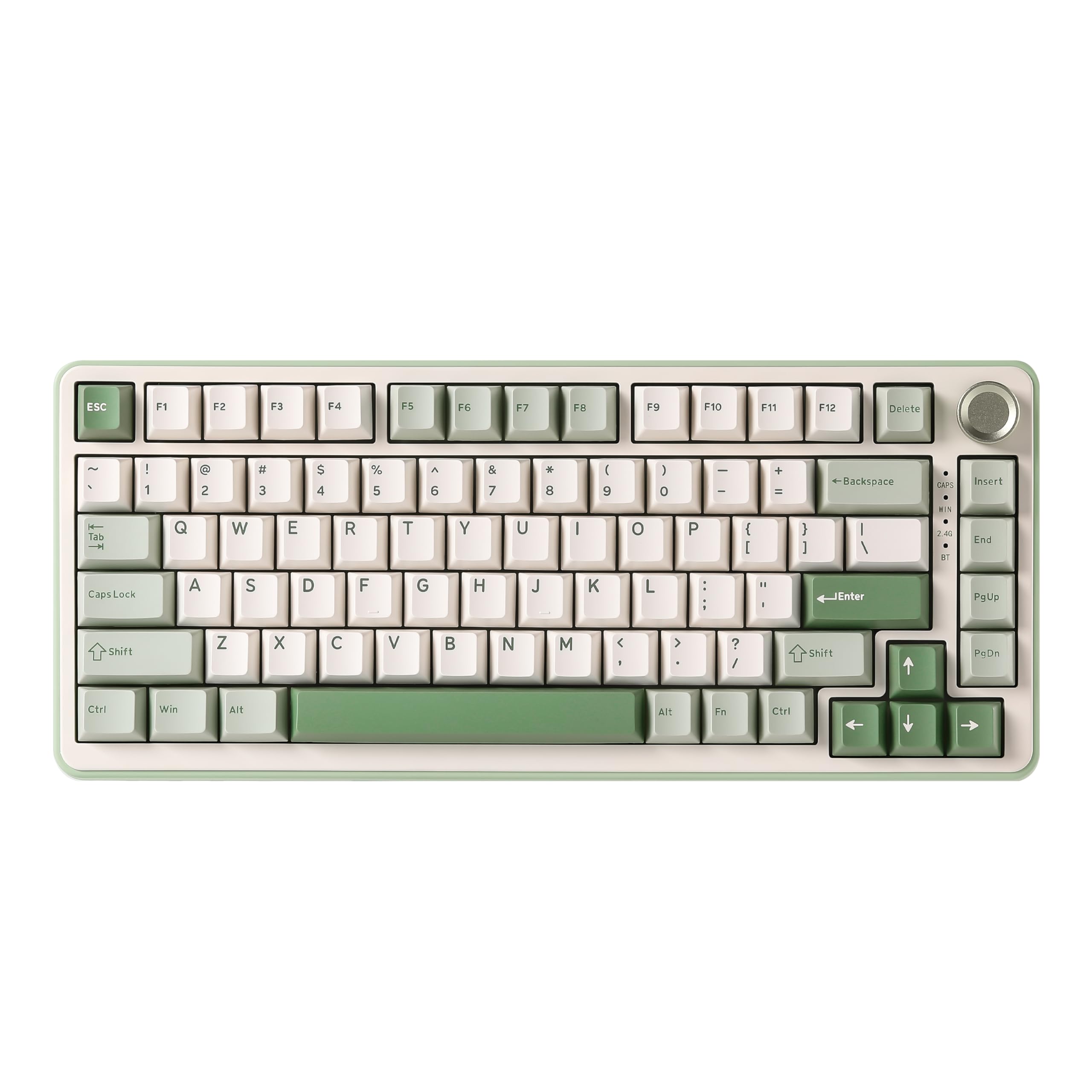 8.5 / 10
YUNZII B75 PRO Wireless Mechanical Keyboard,75% Gaming Keyboard Gasket Hot Swap Custom Keyboard with Knob,Pre-lubed Switches RGB,Bluetooth/Type-C/2.4G (Matcha Green, Milk Switch)
£66.29 · YUNZII
 8.5 / 10
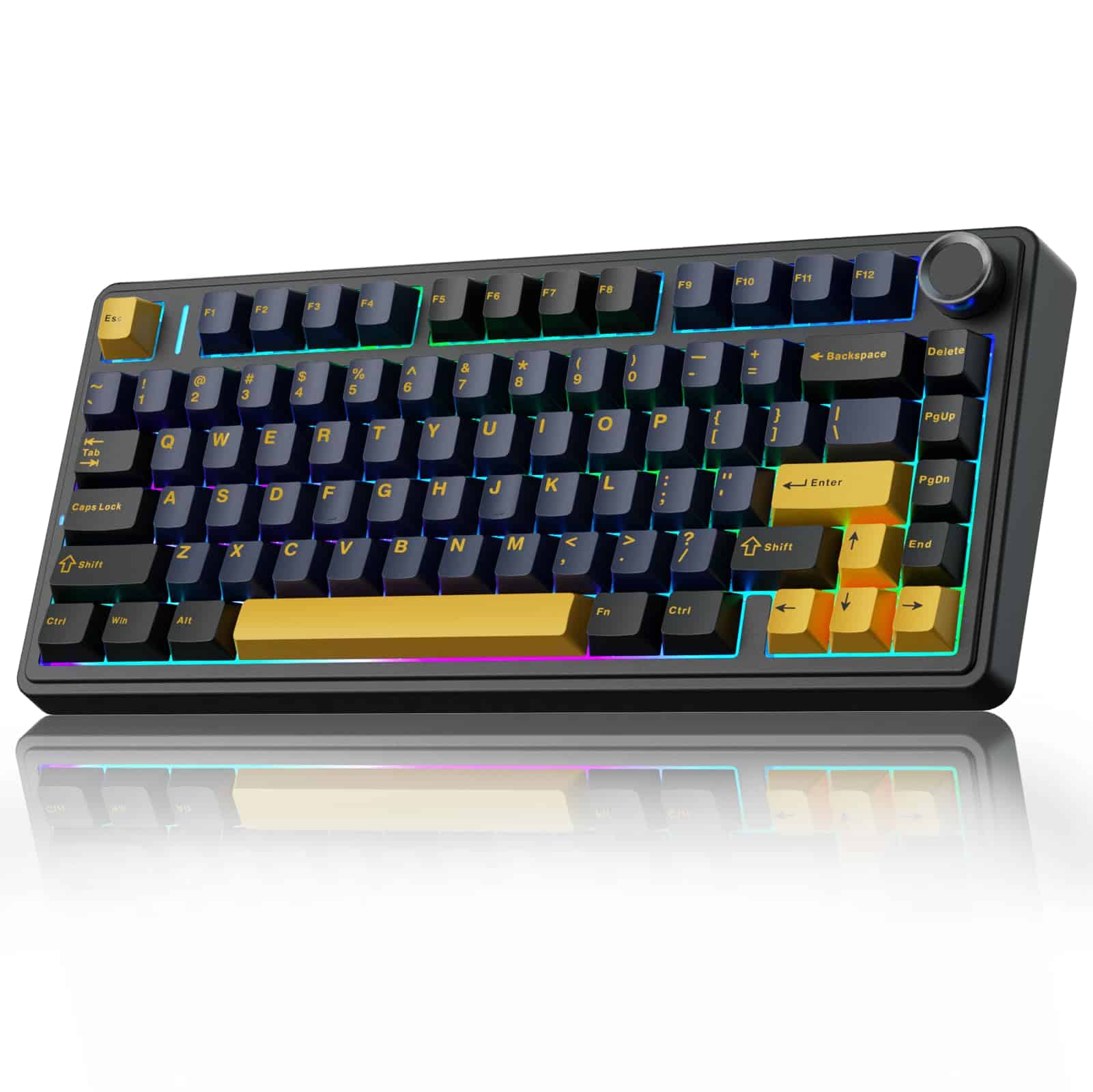
AULA F75 75% Wireless Mechanical Keyboard,2.4Ghz/Type-C/BT5.0 Gaming Keyboards,Advanced Structure,RGB Backlight,Hot Swappable Custom Keyboard for PC/Mac (Cool Black)
£67.91 · AULA
Frequently asked
5 questions01What switches does the SteelSeries Apex 3 Gaming Keyboard use?+
The Apex 3 uses membrane switches, not mechanical ones. SteelSeries calls them 'whisper quiet gaming switches' rated for 20 million keypresses. They're well-executed membrane switches with consistent feel and smooth actuation, but they don't replicate the tactile feedback of mechanical switches. The switches are significantly quieter than mechanical alternatives, making them ideal for shared spaces or late-night gaming.
02Is the SteelSeries Apex 3 Gaming Keyboard good for gaming?+
The Apex 3 performs well for gaming with full n-key rollover, anti-ghosting, and low latency. The light actuation force and shorter travel distance compared to traditional membrane keyboards make it responsive for gaming. However, the lack of tactile feedback means you'll bottom out keys more often than with mechanical switches, which isn't ideal for competitive gaming but works fine for casual play. The quiet operation is actually an advantage for hearing in-game audio cues clearly.
03Is the SteelSeries Apex 3 Gaming Keyboard loud?+
No, the Apex 3 is one of the quietest keyboards available. It registers around 45-50 decibels during normal typing, which is quieter than most membrane keyboards and significantly quieter than any mechanical keyboard. The sound profile is soft and muted with a subtle dampened 'thock' when bottoming out keys. The spacebar is slightly louder than other keys but still very quiet. This makes it perfect for shared spaces, office environments, or late-night gaming without disturbing others.
04Is the SteelSeries Apex 3 Gaming Keyboard worth buying in 2026?+
The Apex 3 is worth buying if you need a quiet, durable keyboard with water resistance and don't require mechanical switches. At this price, it offers solid build quality, genuine IP32 water protection, decent stabilisers, and reliable performance. It's a better choice than cheaper membrane alternatives and ideal for mixed use (gaming and work) in shared spaces. However, if you specifically want mechanical switches or enthusiast features, spend the extra £15-20 on an entry-level mechanical keyboard instead.
05What is the biggest downside of the SteelSeries Apex 3 Gaming Keyboard?+
The biggest downside is that it uses membrane switches rather than mechanical ones. If you're specifically looking for the tactile feedback and typing experience of mechanical switches, the Apex 3 won't satisfy you. The ABS keycaps will also develop shine over time with heavy use, and the non-detachable cable limits customisation options. However, these are trade-offs made to achieve quiet operation and hit a specific price point, not fundamental flaws in the design.