Choosing between TP-Link vs ZTE for your mobile broadband needs isn't straightforward. Both brands offer compelling portable connectivity solutions, but they differ on battery, device limits, screens and 5G. For a pocket 4G hotspot, the ZTE U10S Pro comes out ahead on the makers' own figures; for 5G home broadband, TP-Link's Deco X50-5G is the one to look at.
The mobile broadband market has exploded in recent years. Remote work, digital nomadism, and unreliable home broadband have driven demand for portable internet solutions. TP-Link and ZTE have emerged as leading contenders, but they take fundamentally different approaches to mobile connectivity.
Here's what this comparison covers: how these devices suit real UK situations, from commuting and travel to home offices and rural backup.
This comparison weighs each device against the criteria that matter to actual users. We haven't tested these devices ourselves, so the battery, speed and device figures below are the makers' own, taken from their Amazon UK listings.
What matters is connection stability over long sessions, battery life under continuous use, and signal strength in challenging locations, along with working on the main UK networks.
Heat matters over long sessions too, and build quality comes down to materials and how well the buttons and covers hold up.
Speeds also vary by time of day: peak hours, late nights, weekends. Download speeds, upload speeds, latency and connection consistency all count, whether you're on video calls, uploading files, gaming or sharing with several devices at once.
Understanding the TP-Link vs ZTE battle requires examining each brand's fundamental approach to mobile broadband. These companies have distinctly different philosophies that shape their product development.
TP-Link positions itself as a premium-yet-affordable networking specialist. Founded in 1996, it's one of the best-known names in consumer networking, and its mobile broadband devices lean on simple setup and app control.
ZTE takes a different path. As a telecommunications equipment giant, it brings network-operator hardware experience to its consumer products.
In practice the differences show up model by model: TP-Link's M7000 leans on its app, while ZTE's U10S Pro puts a status screen on the device and a bigger battery inside.
The TP-Link M7000 is TP-Link's compact, plug-and-play 4G MiFi: a simple way to share a mobile connection on the move.
TP-Link rates the M7000's 2000mAh battery at up to 8 hours at full capacity and up to 600 hours on standby. That covers a working day for many people, though not a long one with heavy use. It charges over USB, from a laptop or the included adaptor.
TP-Link says it shares a 4G connection with up to 10 Wi-Fi devices, which is plenty for a couple of laptops, phones and a tablet.
Setup is simple: remove the back cover, insert your SIM, power on, connect. TP-Link's tpMiFi app lets you set data limits and manage who's connected, but you don't need it for basic operation. That simplicity matters when you're rushing to catch a train.
Clear patterns emerge about who benefits most from each brand in the TP-Link vs ZTE comparison.
For a pocket hotspot, our pick is the ZTE U10S Pro. On the makers' own figures it gives you more battery, more device capacity and faster listed 4G downloads for similar money, plus a status screen. The TP-Link M7000 remains a good choice if you prefer using TP-Link's tpMiFi app to set data limits and manage connected devices.
ZTE suits buyers who want the most battery and capacity for their money; TP-Link suits those who prefer its app and a familiar brand.
🏁 Final Verdict: TP-Link vs ZTE
For a pocket hotspot, the ZTE U10S Pro is our pick. It leads the TP-Link M7000 on battery, device count and listed 4G speed, the published specs that matter most when you're out and about, and adds a status screen for about the same price. TP-Link's M7000 counters with its tpMiFi app for setting data limits and managing connected devices. And if what you really need is home broadband over 5G, the TP-Link Deco X50-5G is the one to look at, since it's the only 5G device here.
✈️ Simple TP-Link option
TP-Link M7000 4G MiFi
£32.99
🏠 Premium Choice
TP-Link Deco X50-5G
£199.99
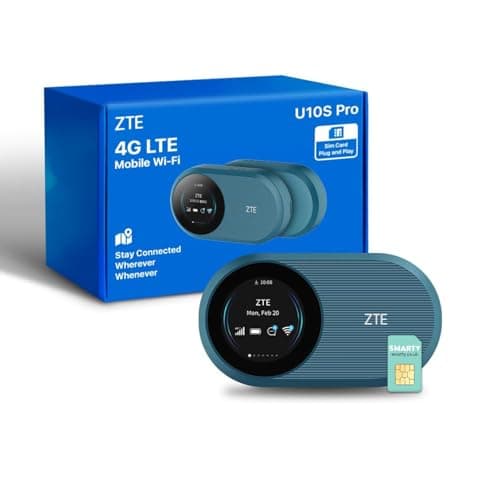
Editor's pick: ZTE U10S Pro Blue, 4G MiFi Router, portable travel Wi-Fi, lowcost, SIM slot unlocked, connects 32 Devices, 3000mAh 10hr Battery life, roams on all world networks, no configuration required
ZTE U10S Pro MiFi Router: Our Pick for Pocket 4G
The ZTE U10S Pro enters the TP-Link vs ZTE comparison at a similar price point to the M7000, and on paper it offers more for the money.
ZTE rates the U10S Pro's removable 3000mAh battery at up to 10 hours of working time. That's a bigger battery and a longer rating than the M7000's, though for a long day away from a socket a power bank is still worth packing.
ZTE says it can share with up to 32 Wi-Fi devices, against the M7000's 10. Any 4G hotspot shares one mobile connection, though, so the more devices you load on, the slower each one gets.
ZTE also lists 4G+ downloads of up to 300Mbps, where TP-Link lists up to 150Mbps for the M7000. Both are theoretical maximums, and your network and signal set the real speed.
The interface is different too. The U10S Pro has a small screen showing device status, upload and download speeds, battery life, connected users, signal strength and a QR code for joining the Wi-Fi, so you don't need an app for the basics.
ZTE lists high-gain internal 4G/3G antennas. How much that helps depends on where you use it, and neither maker publishes a like-for-like signal figure.
Read our full ZTE U10S Pro MiFi Router review for more on its features and specifications.
✅ Pros
- Competitive pricing for budget-conscious buyers
- Up to 32 connected devices (ZTE's figure)
- Compact form factor fits easily in bags
- Basic functionality works without complications
- Supports major UK carriers
- 3000mAh removable battery rated up to 10 hours
- Built-in status screen with a QR code for joining the Wi-Fi
❌ Cons
- 4G only, with no 5G support
- The listing's Wi-Fi band details conflict (2.4GHz and dual-band both appear), so check before buying if 5GHz matters to you
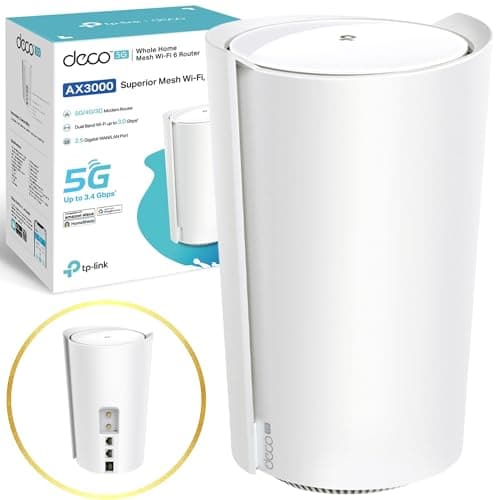
TP-Link Deco X50-5G: Premium Home Networking Revolution
The TP-Link Deco X50-5G shifts our TP-Link vs ZTE comparison into premium territory. This isn't a portable MiFi device - it's a complete home networking solution combining 5G connectivity with mesh WiFi technology.
On paper the performance is a big step up. TP-Link quotes 5G downloads of up to 3.4Gbps and AX3000 Wi-Fi 6, though like any headline figure that's a theoretical maximum, and real 5G speeds depend on your local coverage.
The mesh system is built to deal with dead zones: Deco units work together to spread one Wi-Fi 6 network around the house, and you can add units for bigger homes.
Setup is handled by the Deco app, which guides you through installation step-by-step, and adding more Deco units later works the same way.
Smart features enhance the experience. Parental controls work comprehensively, allowing time limits and content filtering per device. Quality of Service prioritises bandwidth for important devices - crucial when someone's gaming whilst you're on a work call.
The design deserves mention. These units look elegant, not like typical routers, so they sit happily on a shelf. TP-Link lists each unit at 21.1 x 13 x 12.3cm.
Switching between mesh nodes happens automatically as you move through the house, which is the point of mesh over a single router and extenders.
5G flexibility matters enormously. If your home broadband fails, the Deco X50-5G can run from a SIM as backup, and TP-Link lists 4G, 5G and fixed-line connections. For homes without fibre, good 5G coverage can be a real alternative.
Read our full TP-Link Deco X50-5G Router review for more on its mesh and 5G features.
✅ Pros
- 5G downloads quoted at up to 3.4Gbps (TP-Link's theoretical maximum)
- Mesh Wi-Fi 6 designed to cut dead zones around the home
- Elegant design that doesn't scream "router"
- Comprehensive parental controls and security features
- Automatic handoff between mesh nodes
- A real fibre broadband alternative where 5G coverage is good
- Easy setup through intuitive Deco app
- Supports 150+ simultaneous device connections
❌ Cons
- Premium pricing
- Requires 5G coverage for optimal performance
- Data costs can accumulate quickly with unlimited usage
- Larger footprint than traditional routers
- No battery backup for power outages
Head-to-Head: TP-Link vs ZTE Performance Analysis
Comparing TP-Link vs ZTE across key performance metrics shows where each one has the edge on paper, and where the published figures can't separate them. Let's break down the critical factors that determine real-world usability.
Battery Life and Power Efficiency
Battery is where the spec sheets differ most. ZTE rates the U10S Pro's 3000mAh battery at up to 10 hours of working time, while TP-Link rates the M7000's 2000mAh battery at up to 8 hours at full capacity. Real battery life depends on signal and how many devices are connected, for both.
Winner: ZTE - On the makers' own figures, the U10S Pro has the bigger battery and the longer rating.
Connection Stability and Reliability
Connection consistency matters more than peak speeds. Neither maker publishes a stability figure, so in practice this comes down to your signal, your network and how many devices you share with.
Winner: No clear winner - Without independent stability data, neither pocket device can claim the edge here.
Signal Reception and Network Compatibility
Signal strength determines usability in challenging locations. Both brands face the same UK conditions, from London Underground platforms to Welsh valleys.
Both pocket devices are sold unlocked for use with UK networks such as EE, Vodafone, Three and O2. Your network's coverage where you'll use the device matters more than the brand on the box.
The Deco X50-5G is in a different class: as a 5G home router it can use 5G where it's available, which the two 4G pocket devices can't.
Winner: No clear winner for the pocket devices - ZTE lists high-gain internal antennas, but neither maker publishes comparable signal figures. The Deco X50-5G is the only one of the three with 5G.
Build Quality and Durability
Build quality affects long-term ownership satisfaction, but neither maker publishes drop or durability ratings for these devices.
Both are small, light pocket devices at a similar price, and both have removable batteries; ZTE's listed capacity is larger.
Winner: No clear winner - Without durability data, we wouldn't choose either on build alone.
User Interface and Software Experience
Software quality dramatically impacts daily usability. The TP-Link vs ZTE comparison shows stark differences in interface design and functionality.
TP-Link's tpMiFi app lets you set data limits and manage who's connected, and it keeps the basics simple.
ZTE takes a different approach: the U10S Pro's built-in screen shows status, speeds, battery, connected users and a QR code for joining the network, so you can check the basics without opening an app.
Winner: Depends on you - Pick the ZTE if you want the basics on the device itself, or the TP-Link if you'd rather manage things from its app.
Price-to-Performance: Which Brand Offers Better Value?
The TP-Link vs ZTE value proposition isn't straightforward. Both brands price their portable MiFi devices similarly, making the decision about performance rather than cost.
The TP-Link M7000 and ZTE U10S Pro sit in the same price bracket, so the specs decide it. On the makers' figures, the ZTE gives you the bigger battery, room for more devices, faster listed 4G downloads and a status screen for about the same money, which makes it the better buy of the two. The M7000 remains a good choice if you prefer using TP-Link's tpMiFi app to set data limits and manage connected devices.
Winner: ZTE - More on paper for about the same price.
The Deco X50-5G occupies a different value category entirely. At this price, it's a premium investment. However, for homes without fibre access or requiring mesh coverage, it replaces both broadband and mesh WiFi systems. That consolidated functionality justifies the premium.
Consider total cost of ownership when comparing TP-Link vs ZTE. A device that lasts three years with consistent performance costs less than a cheaper device requiring replacement after 18 months.
Customer Support and Warranty Comparison
After-sales support significantly impacts ownership experience. We haven't compared either brand's customer service, so check the support options and warranty for the exact model and seller before buying.
Winner: No clear winner from the evidence available - We haven't compared the two brands' support ourselves, so we wouldn't choose on this alone.
Which Mobile Broadband Devices Should You Buy?
🏆 Our pick for pocket 4G
ZTE U10S Pro MiFi Router
Choose this if you want the longest rated battery of the two pocket devices (up to 10 hours, ZTE's figure), room for up to 32 devices and a status screen you can read without an app.
Check Price
✈️ Simple TP-Link option
TP-Link M7000 4G MiFi
Choose this if you want simple, plug-and-play 4G from TP-Link for up to 10 devices. Suits travellers and remote workers who'd rather manage things from an app.
Check Price
🏠 Best Home Solution
TP-Link Deco X50-5G
Choose this if you need whole-home coverage with 5G speeds. Perfect for rural homes without fibre access or anyone wanting modern mesh networking.
Check Price
Real-World Usage Scenarios: TP-Link vs ZTE
Thinking through how you'll actually use one of these helps clarify the TP-Link vs ZTE decision. Here are the common situations where mobile broadband proves essential.
Business Travel and Remote Work
For business travellers, reliability trumps everything. Missing a client video call due to connection issues isn't acceptable. Either pocket device will do the job on a decent 4G signal, and the ZTE's longer battery rating helps on long days away from a socket.
Family Holidays and Leisure Travel
Holiday scenarios demand different priorities. Multiple family members connecting simultaneously, streaming entertainment, uploading photos - these activities stress mobile broadband devices.
For a family, device count matters. The M7000 shares with up to 10 devices, which covers a typical family's phones, tablets and a laptop.
The ZTE U10S Pro's 32-device limit and longer battery rating give more headroom on long days out, though every device shares the same mobile connection, so speeds drop as more of them stream at once.
Rural and Remote Location Connectivity
Rural connectivity challenges both brands differently. Weak signals, limited coverage, and spotty reception test mobile broadband capabilities.
In rural areas, signal matters more than anything else. Neither maker publishes signal-strength figures, so check your network's coverage map, and remember a hotspot sitting by a window will usually do better than one in a pocket or bag.
The Deco X50-5G changes the picture where 5G coverage reaches. A 5G home router can deliver speeds that rival some fixed-line broadband, which makes it worth a look where fibre hasn't arrived.
Emergency Backup Internet
Home broadband failures happen. Having mobile broadband backup prevents productivity disasters, and both brands serve this purpose.
Both pocket devices can step in as backup when home broadband fails, covering email, browsing and video calls on a reasonable 4G signal. The Deco X50-5G can become your primary internet when needed.
Future-Proofing: 5G and Beyond
Technology evolves rapidly. The TP-Link vs ZTE comparison must consider future relevance and upgrade paths.
Neither portable MiFi device supports 5G - they're 4G-only solutions. This limitation matters increasingly as 5G coverage expands across the UK. For portable connectivity needs, 4G remains adequate currently. However, in 2-3 years, 5G-only devices may become standard.
The TP-Link Deco X50-5G supports 5G, while both pocket devices are 4G-only. As 5G coverage expands, that matters more.
Firmware support extends any device's useful life, so check how recently each model has had an update before you buy.
Consider your timeline when choosing between TP-Link vs ZTE. If you need a pocket device for 1-2 years, either 4G hotspot is good value, and the ZTE gives you more for the money. For 3+ year ownership, consider whether 5G capability matters for your usage.
Environmental Considerations and Sustainability
Sustainability increasingly influences purchasing decisions. The TP-Link vs ZTE comparison includes environmental factors worth considering.
Sustainability increasingly comes down to how long you keep a device, so firmware support and a replaceable battery (both pocket devices have one) both count.
Device longevity represents the most significant environmental factor. A device lasting three years has lower environmental impact than one requiring replacement after 18 months, so firmware support and a replaceable battery both count.
Which brand offers better battery life for portable WiFi?
On the makers' own figures, ZTE. The U10S Pro has a removable 3000mAh battery rated for up to 10 hours of working time. TP-Link rates the M7000's 2000mAh battery at up to 8 hours at full capacity and up to 600 hours on standby. Real battery life depends on signal and how many devices you connect.
Do TP-Link and ZTE devices work with all UK mobile networks?
Both are sold unlocked and work with the main UK carriers, including EE, Vodafone, Three, and O2. Signal strength where you'll use the device matters more than the brand, so check your network's coverage map first.
Which is more reliable for business video calls?
Either will handle video calls on a decent 4G signal, since the mobile network usually sets the limit rather than the hotspot. The ZTE's longer battery rating helps on long days away from a socket.
How many devices can connect simultaneously to TP-Link vs ZTE?
TP-Link says the M7000 shares with up to 10 Wi-Fi devices, and ZTE says the U10S Pro handles up to 32. Whichever you pick, every device shares the same 4G connection, so speeds drop as more of them are busy at once.
Is the TP-Link Deco X50-5G worth the premium price?
Yes, for specific use cases. If you need whole-home mesh coverage, live in an area with 5G access, or lack fibre broadband, the Deco X50-5G can replace both your broadband connection and a separate mesh system. TP-Link quotes 5G downloads of up to 3.4Gbps, a theoretical maximum, so real speeds depend on local coverage. For rural homes or those wanting modern networking, the £260.00 investment proves worthwhile.
Which brand offers better customer support in the UK?
We haven't compared either brand's customer service. Check the support options and warranty for the exact model and seller before buying.
Can I use TP-Link or ZTE devices for home broadband replacement?
The TP-Link Deco X50-5G specifically targets home broadband replacement with 5G connectivity and mesh coverage. It delivers speeds comparable to fibre broadband in areas with good 5G coverage. The portable MiFi devices (M7000 and U10S Pro) work better as backup or supplementary internet rather than primary home connections due to 4G speed limitations and data cap considerations.