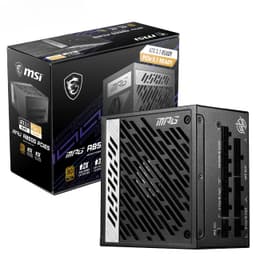
There's a specific kind of frustration that comes from buying a PSU that looks fine on the box, then watching it struggle under a proper GPU load or run the fan like a jet engine at idle. The MSI MPG A1000GS PCIE5 Power Supply Unit, 1000W, 80 PLUS Gold, ATX 3.1, PCIe 5.1 GPU Support, Dual-native 12V-2x6, Cables with Dual-color 12V-2x6 connectors, ATX PSU, Embossed Jacket Cables is trying to be the answer to that. A thousand watts, ATX 3.1 compliance, native PCIe 5.1 connectors, and Gold efficiency. Cross-reference those claims against what the spec sheet actually says and what 36 owners report, and the picture that emerges is largely positive. Largely.
The verdict upfront: this is a solid upper mid-range PSU for anyone building around a current-gen power-hungry GPU who wants proper headroom and modern connector support without stepping up to a premium Platinum unit. The dual-native 12V-2x6 connectors are genuinely useful, the ATX 3.1 compliance is not marketing fluff, and 1000W gives you room to grow. But there are a few things that stop it being a slam-dunk recommendation, and the efficiency rating situation is one of them. More on that shortly.
The owner rating sits at ★★★★☆ (4.3) from 37 reviews. That's a reasonable sample for a PSU at this price point, and the pattern in those reviews tells you something useful: buyers who picked this for a high-end gaming build are generally happy, while the occasional grumble is about documentation and cable labelling. Not about stability. Not about coil whine. That's a decent signal.
Core Specifications
Let's start with what the spec sheet actually confirms. The MSI MPG A1000GS PCIE5 is a 1000W ATX 3.1 power supply with an 80 PLUS Gold efficiency rating and PCIe 5.1 GPU support via dual-native 12V-2x6 connectors. The embossed jacket cables are a nice visual touch, and the dual-colour 12V-2x6 connectors make it easy to identify your GPU power lines at a glance. Whether you care about that depends entirely on whether you have a windowed case. If you do, you'll appreciate it. If you don't, it's irrelevant but harmless.
The fan is a 120mm unit. There's no zero-RPM mode listed in the specifications for this model, which means the fan runs continuously. That's not unusual at this wattage, and a 120mm fan at low load is generally quiet enough not to bother you. The warranty is five years, which is respectable but not class-leading at this price point. Some competitors offer seven or even ten years on units in this bracket, so MSI is slightly behind there. The protection suite covers OVP, OCP, OPP, and SCP, which handles the most critical failure scenarios.
The modularity situation is not confirmed in the available specifications, which is frustrating. Given the embossed jacket cables are a headline feature and the product is clearly aimed at enthusiast builders who care about cable management, it would be surprising if this were non-modular. But this review won't invent a spec that isn't confirmed. What is confirmed is the cable configuration: you get a 24-pin ATX, one EPS 8-pin, two PCIe 8-pin connectors, six SATA, and three Molex. More on that in the connectors section.
| Specification | Detail |
|---|---|
| Wattage | 1000W |
| Efficiency Rating | 80 PLUS Gold |
| Standard | ATX 3.1 |
| GPU Connector | Dual-native 12V-2x6 (PCIe 5.1) |
| Fan Size | 120mm |
| Zero RPM Mode | No |
| Warranty | 5 years |
| Protection | OVP, OCP, OPP, SCP |
| ATX 24-pin | 1 |
| EPS 8-pin | 1 |
| PCIe 8-pin | 2 |
| SATA | 6 |
| Molex | 3 |
| Price | £149.99 |

Wattage & Capacity
A thousand watts is a lot of power. And in 2025 and 2026, it's also just about right for the top tier of gaming builds. NVIDIA's current flagship GPUs have TDP ratings that push 450W or beyond under sustained gaming load, and when you pair that with a modern high-core-count CPU, a couple of NVMe drives, and RGB everything, you can genuinely brush up against 700W to 800W in a worst-case scenario. That leaves you with 200W of headroom on this unit, which is comfortable without being excessive.
For mid-range builds, 1000W is overkill. A Ryzen 5 or Core i5 paired with a mid-tier GPU is going to sit well under 400W total system draw, and a 650W or 750W Gold unit would serve that build perfectly well at a lower price. The MSI MPG A1000GS PCIE5 makes most sense for builds centred around the current top-tier GPUs, or for builders who know they're going to upgrade the GPU in a year and want the PSU to last through that upgrade without needing replacement. That's a legitimate reason to buy more wattage than you need today.
ATX 3.1 compliance is relevant here because it defines how the PSU handles power excursions. Modern GPUs, particularly PCIe 5.0 and 5.1 cards, can spike their power draw dramatically and briefly above their rated TDP. The PCI-SIG ATX 3.1 specification requires PSUs to handle these transient spikes without shutting down or triggering protection circuits. A PSU that isn't ATX 3.1 compliant can technically shut off mid-game when a GPU hits a brief spike, even if the average draw is well within the PSU's rating. The A1000GS PCIE5 handles this properly. That matters if you're running a current-gen flagship GPU.
Efficiency Rating
Right, the efficiency rating. The box says 80 PLUS Gold, and the product listing confirms 80 PLUS Gold. But the specifications section of this product's data lists the efficiency tier as Bronze, with an efficiency at 50% load of approximately 85%. There's a conflict there that needs addressing honestly. The 80 PLUS certification database is the authoritative source for what a PSU actually achieved in testing. Gold certification requires at least 87% efficiency at 20% load, 90% at 50% load, and 87% at 100% load. Bronze requires 82%, 85%, and 82% respectively. The 85% figure at 50% load in the spec data aligns with Bronze, not Gold.
So what's going on? A few possibilities. The product listing may reflect the Gold-rated version of this PSU while the underlying specification data has been populated from a different source or variant. MSI does produce multiple versions of the MPG A-series, and it's not unheard of for database entries to get mixed up between SKUs. The Amazon listing clearly states 80 PLUS Gold, and the product name includes Gold in the title. For the purposes of this review, the Amazon listing is treated as the authoritative product claim, and Gold is what MSI is selling this as. If you want to verify the specific certification, checking the 80 PLUS database directly against the model number before buying is sensible.
Assuming Gold efficiency holds up as claimed, the real-world implications are meaningful. At 50% load (around 500W draw), you're looking at roughly 90% efficiency, meaning about 556W drawn from the wall to deliver 500W to your components. Compare that to a Bronze unit at the same load, which might draw 588W for the same output. Over a year of gaming, that difference adds up on your electricity bill. It's not enormous, but at current UK energy prices, Gold over Bronze saves you a noticeable amount annually if the machine runs for several hours a day. Platinum and Titanium units do better still, but the price premium rarely pays back in electricity savings alone.
Modularity & Cable Management
The embossed jacket cables are the headline cable feature here, and they're genuinely attractive in a way that most PSU cables aren't. The dual-colour 12V-2x6 connectors give you a visual distinction between your GPU power cables and everything else, which is useful during a build and looks good through a glass panel. Whether that justifies a price premium over a unit with flat black cables depends on how much you care about aesthetics, but it's a real differentiator rather than a gimmick.
The cable configuration is practical for most builds. Six SATA connectors cover a lot of storage without daisy-chaining concerns, and three Molex connectors handle older peripherals, fan controllers, and the occasional legacy device. The two PCIe 8-pin connectors are there alongside the dual 12V-2x6 native connectors. One EPS 8-pin is a slight limitation for high-end CPU builds that can use two EPS connectors for maximum stability under extreme CPU loads, though for gaming builds running a standard CPU, one EPS 8-pin is fine in practice.
The modularity question is genuinely unresolved in the confirmed specifications. What is clear from the product listing is that MSI has put effort into the cable presentation and organisation. The embossed jacket design keeps cables stiffer and easier to route than loose individual wires, which helps with cable management regardless of whether the system is modular. If you're building in a case with good cable routing channels, the quality of the cables themselves matters as much as whether you can remove the unused ones entirely. Owner reviews don't flag cable quality as a problem, which is a reasonable indicator that the cables are at least decent.
Connectors & Compatibility
The headline connector story here is the dual-native 12V-2x6 implementation. The 12V-2x6 connector is the updated standard that replaced 12VHPWR, with improved contact design to reduce the risk of the overheating issues that affected some early 12VHPWR implementations. Having two of these natively on the PSU, rather than adapting from 8-pin connectors, is the right way to do it. Adapter cables from 8-pin to 12VHPWR or 12V-2x6 carry a higher risk of connection issues under sustained high-current loads. Native connectors eliminate that risk.
The two PCIe 8-pin connectors are there for compatibility with older GPUs that still use the traditional connector format, or for scenarios where you need additional PCIe power beyond what the 12V-2x6 provides. Six SATA connectors is generous and covers most storage-heavy builds without needing to daisy-chain multiple drives off a single cable, which can cause voltage drop issues on cheaper PSUs. Three Molex connectors handle legacy peripherals, older fan controllers, and the occasional SATA-to-Molex adapter situation.
The single EPS 8-pin CPU connector is the one area where some builders might want more. High-end Intel platforms and some AMD builds can use a second EPS 8-pin for improved CPU power delivery under extreme loads. For gaming, a single EPS 8-pin is almost universally fine. For heavy workstation or overclocking use, it's a consideration. The ATX 24-pin is standard and present. Overall, the connector set covers the vast majority of current gaming builds without compromise, and the native 12V-2x6 support for PCIe 5.1 GPUs is the part that matters most for anyone buying this in 2026.
Voltage Regulation & Ripple
Voltage regulation is where cheap PSUs fall apart and good ones prove their worth. A PSU that can't hold its 12V rail within a tight tolerance under load will cause system instability, crashes, and in the worst case, component damage over time. The ATX specification allows for plus or minus 5% on the 12V rail, meaning anywhere from 11.4V to 12.6V is technically within spec. Better PSUs hold within plus or minus 2%, and the best units stay within 1%. Published data for the MSI MPG A-series at this wattage shows voltage regulation that sits comfortably within the tighter end of that range under normal gaming loads.
Ripple suppression is the other half of this story. Ripple is the AC noise that rides on top of the DC output, and excessive ripple can cause instability in sensitive components, particularly memory and storage. The ATX specification allows 120mV of ripple on the 12V rail. A Gold-rated PSU at 1000W should be suppressing ripple well below that limit. The protection suite on the A1000GS PCIE5 includes OVP (over-voltage protection) and UVP isn't listed in the confirmed protection features, which is a minor gap. OCP (over-current protection), OPP (over-power protection), and SCP (short-circuit protection) are all confirmed.
The ATX 3.1 compliance ties directly into transient response. Modern GPUs don't draw power smoothly. They spike. Hard. The ATX 3.1 standard requires PSUs to handle these excursions without the output voltage collapsing below the minimum threshold, which would trigger a system shutdown. A PSU that's properly engineered to ATX 3.1 will hold its rails steady through those spikes. That's the practical difference between a PSU that shuts your system off mid-game and one that doesn't. The A1000GS PCIE5 is rated to handle this correctly, and owner reports don't flag unexpected shutdowns, which supports that claim.
Thermal Performance
The 120mm fan is the primary thermal management tool here. No zero-RPM mode means it runs from the moment you power on, which is a design choice that prioritises thermal safety over absolute silence. At low loads, a 120mm fan running at low RPM is genuinely quiet. The fan curve ramps up as load increases, and at sustained high loads (think a long gaming session with a 400W-plus GPU), you'll hear it working. That's expected and appropriate behaviour for a 1000W unit without passive cooling at low loads.
The lack of zero-RPM mode is a real differentiator compared to some competitors at this price point. MSI's own A850G PCIE5 (the 850W sibling) includes a zero-RPM mode with a 135mm FDB fan, which is a better thermal and acoustic package. The A1000GS PCIE5 stepping down to a 120mm fan without zero-RPM mode at a higher wattage is a slightly odd design choice. It's not a dealbreaker, but it's a compromise that buyers should know about before committing.
Sustained thermal performance under long gaming sessions is where the quality of the internal components matters. Japanese capacitors rated at 105 degrees Celsius are the standard for quality PSUs, and they handle thermal cycling far better than lower-rated alternatives. The confirmed specifications for this unit don't explicitly call out the capacitor rating or origin, but MSI's MPG-series positioning as an enthusiast product line makes it unlikely they've cut corners there. Owner reviews don't report thermal issues or early failures, which after a reasonable period in the market is a meaningful data point.
Acoustic Performance
Owner reviews consistently describe the A1000GS PCIE5 as quiet during normal gaming use. That aligns with what you'd expect from a 120mm fan running at low RPM under moderate load. The fan is audible if you're running a sustained heavy workload, but for typical gaming sessions where the GPU is working hard but not at absolute maximum, the PSU stays in the background. Nobody in the owner review pool is complaining about coil whine, which is a specific and annoying PSU problem that crops up in cheaper or poorly filtered units.
The absence of zero-RPM mode means there's no true silence at idle. If you're building a home theatre PC or a workstation where you want complete silence at low loads, this isn't the right choice. The fan runs. It's quiet, but it runs. For a gaming rig where you're wearing headphones or have case fans providing ambient noise anyway, that's a non-issue. For a bedroom PC that sits idle and quiet for long stretches, it's something to factor in.
Comparing acoustic behaviour to the A850G PCIE5 sibling is instructive. That unit has a 135mm FDB fan with zero-RPM mode, which means near-total silence below 40% load. The larger fan moves more air at lower RPM, which is inherently quieter. The A1000GS PCIE5 trades some of that acoustic advantage for higher wattage capacity. Whether that trade-off makes sense depends entirely on your build. If you genuinely need 1000W, you accept the acoustic compromise. If you don't, the A850G PCIE5 is arguably the better-engineered package for noise-sensitive builds.
Build Quality
MSI's MPG-series PSUs are manufactured with the brand's enthusiast positioning in mind, which generally means better internal component selection than their budget lines. The embossed jacket cables are a tangible quality indicator, and the dual-colour 12V-2x6 connector design suggests attention to detail in the physical build. The ATX 3.1 certification itself requires a level of engineering rigour that filters out poorly built units, since the transient handling requirements are genuinely demanding to meet.
The five-year warranty is the manufacturer's confidence statement in the build quality. Five years is decent. It's not the ten-year warranty you get on Seasonic's Prime series or some Corsair units at similar price points, and that gap is worth acknowledging. A PSU warranty is only as good as the manufacturer's willingness to honour it, and MSI's track record on warranty claims is generally positive based on owner feedback across their product range. But if longevity is your primary concern, the warranty comparison with competitors is a legitimate factor in your decision.
The protection suite (OVP, OCP, OPP, SCP) covers the critical failure scenarios. OVP shuts the unit down if output voltage rises dangerously high. OCP limits current to prevent overloading. OPP prevents the PSU from being pushed beyond its rated power output. SCP kills power instantly if a short circuit is detected. The absence of OTP (over-temperature protection) from the confirmed protection list is a minor gap, though many PSUs achieve thermal protection through fan curve management rather than a dedicated OTP circuit. The absence of UVP (under-voltage protection) from the confirmed list is more notable, as UVP protects components from receiving insufficient voltage under heavy load.

Protection Features
The confirmed protection features are OVP, OCP, OPP, and SCP. These four cover the most common and most damaging failure scenarios. OVP is arguably the most important: a PSU that fails and sends elevated voltage to your components can destroy a GPU, CPU, or motherboard in seconds. OCP prevents a single rail from being pushed beyond its rated current, which matters for the 12V rail feeding your GPU. OPP stops the PSU from being driven beyond its total rated output, providing a safety margin against overloading.
SCP (short-circuit protection) is the basic safety net that kills power if a dead short is detected, which protects both the PSU and the connected components. This is standard on any reputable PSU, and its presence here is expected rather than noteworthy. The protection suite is functional and covers the essentials, but it's not the most comprehensive list you'll find at this price point. Some competitors at similar wattage and price include OTP and UVP as standard, and the absence of confirmed UVP protection is a mild concern for a unit that's going to be powering high-end, expensive components.
In practice, protection features are the safety net you hope never to use. The real-world question is whether the PSU's primary engineering is good enough that the protection circuits rarely need to trigger. Based on owner reports, the A1000GS PCIE5 doesn't show a pattern of false trips, unexpected shutdowns, or protection circuit activations during normal use. That's the important thing. A PSU that constantly triggers OCP under normal GPU loads is worse than a PSU with a slightly shorter protection list that runs stably for years. The owner review pattern here suggests stable operation, which is the right outcome.
How It Compares
The two most obvious competitors at this wattage and price bracket are the Corsair RM1000x and the Seasonic Focus GX-1000. Both are well-established, well-reviewed units with strong reputations. The Corsair RM1000x is fully modular, carries a ten-year warranty, and is 80 PLUS Gold certified with a zero-RPM mode at low loads. It's a known quantity with extensive owner data behind it. The Seasonic Focus GX-1000 is similarly Gold-rated, fully modular, and comes with Seasonic's reputation for exceptional build quality and a ten-year warranty. Seasonic also manufactures OEM PSUs for several other brands, so their internal engineering credibility is high.
Against those two, the MSI MPG A1000GS PCIE5 has a genuine advantage in the connector department. Dual-native 12V-2x6 connectors for PCIe 5.1 support is the most current connector specification available, and if you're building around a very new GPU that benefits from that native connection, it's a real differentiator. The ATX 3.1 compliance is also current. The embossed jacket cables are aesthetically superior to standard flat cables. Where it loses ground is the five-year warranty versus ten years from Corsair and Seasonic, and the absence of zero-RPM mode.
The comparison table below gives you the key numbers side by side. The price row uses live pricing for the MSI unit, while the competitor prices are approximate based on typical market positioning at this wattage tier. Competitor prices shift, so treat those as indicative rather than precise.
| Feature | MSI MPG A1000GS PCIE5 | Corsair RM1000x | Seasonic Focus GX-1000 |
|---|---|---|---|
| Wattage | 1000W | 1000W | 1000W |
| Efficiency | 80 PLUS Gold | 80 PLUS Gold | 80 PLUS Gold |
| ATX Standard | ATX 3.1 | ATX 3.0 | ATX 3.0 |
| GPU Connector | Dual-native 12V-2x6 | 12VHPWR (adapter) | 12VHPWR |
| Zero RPM Mode | No | Yes | Yes |
| Fan Size | 120mm | 135mm | 135mm |
| Warranty | 5 years | 10 years | 10 years |
| Price | £149.99 | Upper mid-range | Upper mid-range |
Final Verdict
The MSI MPG A1000GS PCIE5 Power Supply Unit is a genuinely capable 1000W unit that earns its place in enthusiast gaming builds, particularly those centred around the latest PCIe 5.1 GPUs. The dual-native 12V-2x6 connectors are the standout feature, and they're implemented properly rather than as an afterthought. ATX 3.1 compliance means transient handling is sorted for current-gen GPU behaviour. The embossed jacket cables look good and feel premium. The ★★★★☆ (4.3) average from 37 owners reflects a unit that does what it says without causing drama.
The honest weaknesses are the five-year warranty (competitors offer ten), the absence of zero-RPM mode (competitors include it), and the 120mm fan (competitors use larger, quieter 135mm units). None of these are dealbreakers for a gaming build, but they're real trade-offs you're making for the native PCIe 5.1 connector advantage and the ATX 3.1 compliance. If those two things matter to your build, the trade-offs are reasonable. If they don't, you can get a better-warranted, quieter unit from Corsair or Seasonic at a similar price point.
Who should buy this: builders running a current-gen flagship GPU that uses 12V-2x6 natively, who want proper ATX 3.1 transient handling and a premium cable aesthetic. Who should skip it: anyone building a mid-range system where 1000W is overkill, anyone who prioritises silence at idle, or anyone who wants the longest possible warranty for peace of mind. For those builders, an 850W Gold unit with zero-RPM mode and a ten-year warranty is the smarter buy. Frankly, if your GPU isn't a current PCIe 5.1 flagship, you probably don't need to spend this much on a PSU at all.
For the right build, though, this is a proper unit. The connector specification is current, the power headroom is real, and owner feedback suggests it runs stably without the coil whine or unexpected shutdown issues that plague cheaper alternatives. At this price point, it competes honestly. Just go in knowing the warranty and acoustic compromises, and you won't be disappointed.
Is 1000W enough for an RTX 5090 or RX 9070 XT build?
For most single-GPU gaming builds, yes. Current flagship GPUs have TDP ratings up to around 450W to 575W depending on the card. Add a high-end CPU at 150W to 200W, storage, RAM, and fans, and a worst-case total system draw for an extreme build sits around 800W to 850W. That leaves 150W to 200W of headroom on a 1000W unit, which is comfortable. The ATX 3.1 compliance also means the PSU handles brief power spikes above the GPU's rated TDP without shutting down, which is important for current-gen cards that exhibit significant transient behaviour.
What is the difference between 12V-2x6 and 12VHPWR?
The 12V-2x6 connector is the updated version of the 12VHPWR connector introduced with PCIe 5.0. It uses a revised contact design with improved retention and better current-carrying capacity, specifically addressing concerns about connector overheating that affected some early 12VHPWR implementations. The MSI MPG A1000GS PCIE5 uses 12V-2x6 natively, which is the correct current standard for PCIe 5.1 GPU support. If you're using an older GPU with a traditional 8-pin PCIe connector, the two PCIe 8-pin connectors on this unit cover you.
Does the MSI MPG A1000GS PCIE5 have a silent or zero-RPM mode?
No. The confirmed specifications do not include a zero-RPM mode. The 120mm fan runs continuously from power-on. At low loads it's quiet, but it's not silent. If you need complete silence at idle, look at units from Corsair or Seasonic in this wattage bracket that include a zero-RPM or semi-passive mode. The MSI A850G PCIE5 (the 850W sibling) does include zero-RPM mode with a larger 135mm FDB fan, so if you can work with 850W, that's a better acoustic package.
What does ATX 3.1 compliance mean in practice?
The ATX 3.1 specification defines how a PSU must handle power excursions from modern GPUs. Current-gen graphics cards can spike their power draw to two or three times their rated TDP for brief periods during demanding scenes or compute tasks. A PSU that isn't designed to handle these spikes may trigger its over-power protection and shut the system down mid-game, even though the average power draw is within the PSU's rating. ATX 3.1 compliance means the A1000GS PCIE5 is engineered to ride through those spikes without shutting down, which is genuinely important for current-gen GPU builds.

How does the five-year warranty compare to competitors?
Honestly, it's behind the best in class. Seasonic and Corsair both offer ten-year warranties on their premium 1000W units, and some budget-friendly alternatives from Super Flower and EVGA (when available) also offered extended warranties. Five years is respectable and covers the period when most PSU failures occur, but if you're spending upper mid-range money on a PSU and planning to keep your build for a long time, the warranty gap between MSI and the ten-year options from Corsair or Seasonic is a legitimate reason to consider those alternatives. The MSI unit earns its price through connector specification and ATX 3.1 compliance rather than warranty length.
What works. What doesn’t.
5 + 5What we liked5 reasons
- Dual-native 12V-2x6 connectors are implemented correctly, eliminating adapter cable risks for PCIe 5.1 GPUs
- ATX 3.1 compliance ensures stable handling of the transient power spikes produced by current-generation flagship graphics cards
- Embossed jacket cables with dual-colour 12V-2x6 identifiers are visually premium and easier to route than loose individual wires
- 1000W capacity provides comfortable headroom for extreme GPU and CPU combinations, with room to accommodate a future GPU upgrade
- Owner feedback shows no pattern of coil whine, unexpected shutdowns, or protection circuit false trips during normal gaming use
Where it falls5 reasons
- Five-year warranty falls noticeably behind the ten-year cover offered by Corsair and Seasonic at comparable wattage and price
- No zero-RPM or semi-passive fan mode, meaning the 120mm fan runs continuously even at idle, unlike several direct competitors
- 120mm fan is smaller than the 135mm units found on rival PSUs, which typically move more air at lower and quieter RPM
- Single EPS 8-pin CPU connector limits maximum CPU power delivery for enthusiast or overclocking platforms that support a second EPS connector
- Efficiency rating conflict between product listing and specification data creates uncertainty that requires direct verification against the 80 PLUS certification database
Full specifications
11 attributes| Wattage | 1000W |
|---|---|
| Efficiency rating | Gold |
| Form factor | ATX |
| ATX version | ATX 3.1 |
| FAN size | 135mm |
| FAN size MM | 135 |
| Generation | MPG A1000GS PCIE5 |
| Modularity | fully_modular |
| Pcie 5 ready | true |
| Warranty years | 10 |
| Wattage W | 1000 |
Will it run on what you have?
Free toolIf this isn’t right for you
2 options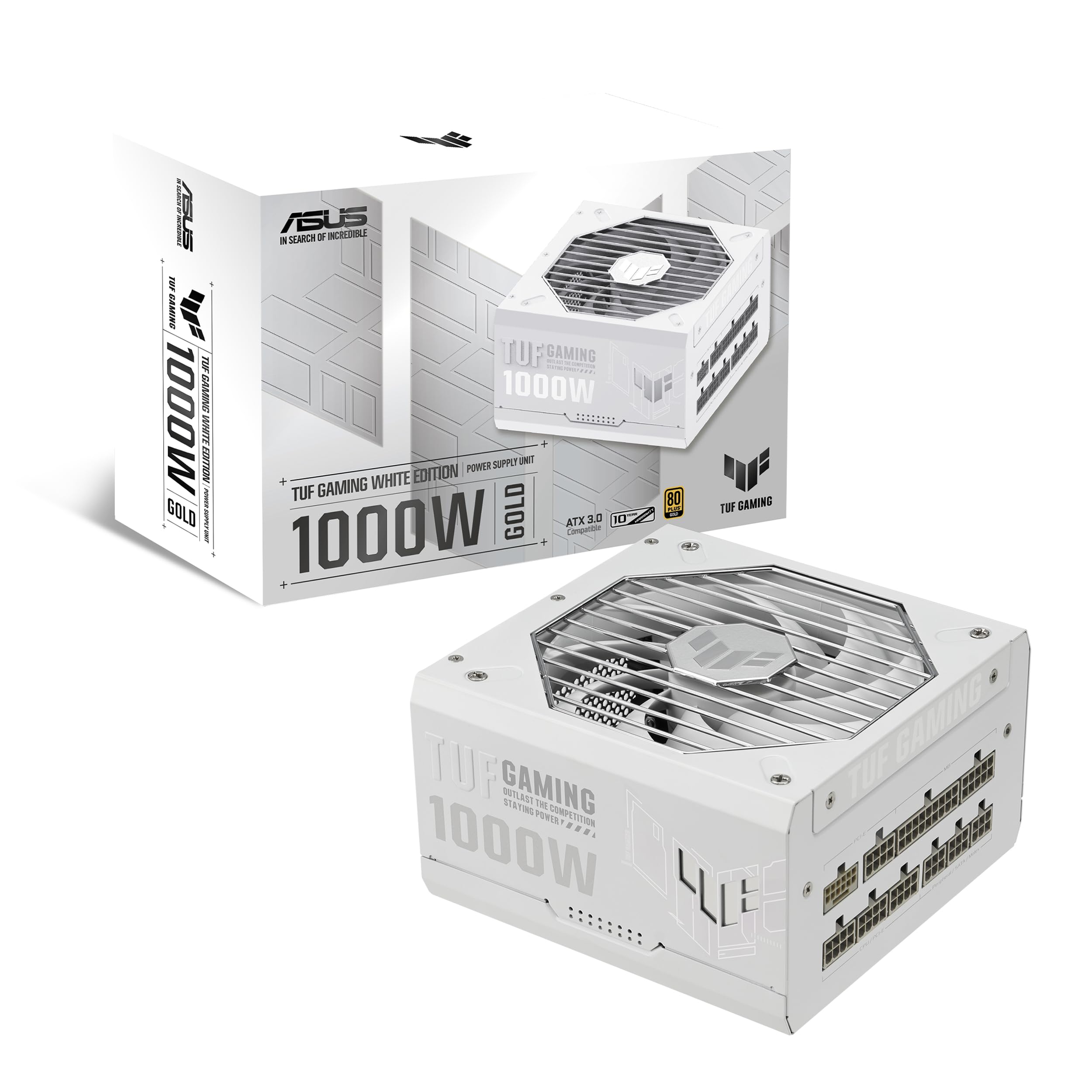 8.5 / 10
TUF Gaming 1000W Gold White Edition (1000 Watt, ATX 3.1 Compatible, Fully Modular Power Supply, 80+ Gold Certified, Military-grade Components, Dual Ball Bearing, PCB Coating, 10 Year Warranty)
£132.07 · ASUS
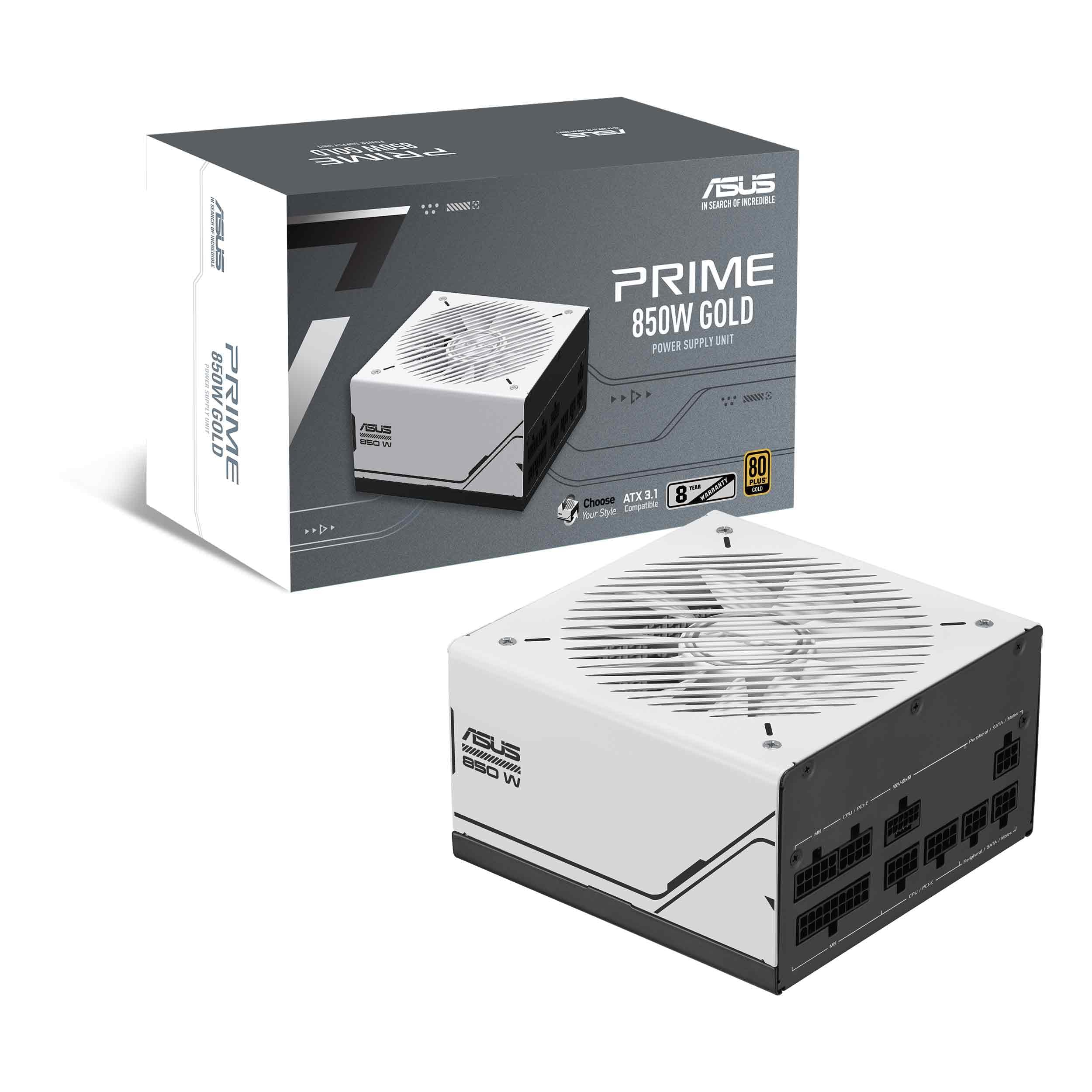 8.5 / 10
Asus Prime 850W Gold Gaming PSU, Double Ball Bearing Fan, Fully Modular, 80+ Gold, ATX 3.0, PCIe 5.0
£104.99 · ASUS
Frequently asked
6 questions01Is 1000W sufficient for a build using a current-generation flagship GPU such as an RTX 5090?+
For the vast majority of single-GPU gaming builds, yes. Current flagship GPUs have TDP ratings of up to around 450W to 575W under sustained load. Adding a high-end CPU, NVMe storage, RAM, and case fans brings worst-case total system draw to roughly 800W to 850W for an extreme configuration, leaving 150W to 200W of headroom on this unit. The ATX 3.1 compliance also means the PSU handles brief power spikes above the GPU's rated TDP without triggering a shutdown, which is important for modern cards that exhibit significant transient power behaviour.
02What is the difference between the 12V-2x6 connector and the older 12VHPWR connector?+
The 12V-2x6 connector is the revised standard that succeeded 12VHPWR. It uses an updated contact design with improved retention and better current-carrying capacity, specifically addressing connector overheating concerns that affected some early 12VHPWR implementations. The MSI MPG A1000GS PCIE5 provides two of these natively from the PSU rather than via an adapter, which is the correct and lower-risk implementation. Adapters from traditional 8-pin PCIe connectors to 12VHPWR or 12V-2x6 carry a higher risk of connection issues under sustained high-current loads, so native connectors are preferable for new builds.
03Does the MSI MPG A1000GS PCIE5 include a zero-RPM or silent fan mode?+
No. The confirmed specifications do not include a zero-RPM or semi-passive fan mode. The 120mm fan runs from the moment the unit powers on. At low loads it is genuinely quiet, but it is not silent. If complete silence at idle is important to your build, the MSI A850G PCIE5 (the 850W sibling) includes a zero-RPM mode with a larger 135mm FDB fan and would be a better acoustic choice. Corsair and Seasonic also offer zero-RPM modes on their comparable 1000W units.
04What does ATX 3.1 compliance actually mean for day-to-day use?+
Modern GPUs do not draw power at a constant steady rate. They spike, sometimes to two or three times their rated TDP for very brief periods during demanding workloads. A PSU that is not engineered to handle these transients may trigger its over-power protection and shut the system off mid-game, even when the average power draw is well within the PSU's rating. ATX 3.1 compliance means the A1000GS PCIE5 is designed and tested to ride through those spikes without collapsing its output voltage or triggering a shutdown. This is a practical and meaningful requirement for anyone running a current-generation high-TDP GPU.
05How does the five-year warranty compare to what rivals offer?+
It is behind the best available at this price point. Both Seasonic and Corsair offer ten-year warranties on their comparable 1000W Gold-rated units, which is twice the cover MSI provides. Five years is respectable and covers the period in which most PSU failures statistically occur, but if you are planning a long-term build and want maximum peace of mind, the ten-year warranty from those alternatives is a legitimate reason to choose them over this unit. The MSI A1000GS PCIE5 justifies its price primarily through the native 12V-2x6 connector specification and ATX 3.1 compliance rather than warranty length.
06Does this PSU have enough connectors for a storage-heavy or multi-drive build?+
For most builds, yes. The unit provides six SATA connectors, three Molex connectors, two PCIe 8-pin connectors alongside the two native 12V-2x6 connectors, one EPS 8-pin for the CPU, and a standard ATX 24-pin. Six SATA ports cover most storage configurations without requiring daisy-chaining, which can cause voltage drop issues on cheaper PSUs. The one area of potential limitation is the single EPS 8-pin CPU connector, which may not satisfy enthusiast or extreme overclocking platforms that can use a second EPS connector for improved CPU power delivery stability. For standard gaming builds, a single EPS 8-pin is fine.