Most motherboard failures in the wild aren't catastrophic. They're slow deaths: a VRM that throttles under sustained load, a BIOS update that bricks a board because nobody tested the recovery path, or a Wi-Fi chip that drops packets every twenty minutes. The spec sheet rarely tells you which category a board falls into. That's the actual problem with buying a budget motherboard in 2026, and it's why the MSI MAG A520M VECTOR WIFI Gaming Motherboard deserves a properly sceptical look rather than a copy-paste of the Amazon bullet points.
The verdict first, because that's more useful than burying it: this is a decent budget Micro ATX board for a mid-range Ryzen 3000 or 5000 build where you're not going to push the CPU hard and you want Wi-Fi without paying for a B550 or X570. The A520 chipset is the limiting factor, not the board itself. If you know what A520 means (no PCIe 4.0 from the chipset, no CPU overclocking, capped USB bandwidth versus B550), and you're fine with those trade-offs, this board delivers reasonable value in the budget bracket. If you're planning to run a Ryzen 9 5950X flat-out for hours, look elsewhere.
With 44 owner reviews averaging ★★★★☆ (4.2), the real-world reception is broadly positive, though the sample size is small enough that a few outliers could swing that number. What the reviews actually say, where the board genuinely delivers, and where MSI has cut corners to hit the budget price point, that's what the rest of this article is about.
Core Specifications
The MAG A520M VECTOR WIFI is a Micro ATX board on AMD's AM4 socket, built around the A520 chipset. It supports DDR4 memory in two slots, with a rated maximum of 128 GB and speeds up to 4400 MHz (with overclocking via EXPO/XMP profiles, which the platform supports on memory even though CPU overclocking is locked). There's one M.2 slot, one PCIe x16 slot for your GPU, and the rear I/O includes DisplayPort and HDMI for systems using Ryzen APUs with integrated graphics. Wi-Fi is built in, which at this price point is genuinely useful rather than a checkbox feature.
The form factor is Micro ATX, so it'll fit in most mid-tower and all Micro ATX cases. That's worth stating plainly because a surprising number of people buy an mATX board and then discover their full-tower case has a rattling fit. The board uses a standard AM4 mounting pattern, so any cooler with AM4 support will bolt straight on without an adapter bracket.
The pre-installed I/O shield is a small but genuinely appreciated detail. It sounds trivial until you've wrestled a sharp metal shield into a case while trying not to slice your fingers. MSI including it pre-attached on the board saves that particular frustration, and it's a sign the board was designed by people who've actually built a PC.
| Specification | Detail |
|---|---|
| Socket | AMD AM4 |
| Chipset | AMD A520 |
| Form Factor | Micro ATX |
| Memory Slots | 2 x DDR4 |
| Max Memory | 128 GB |
| Memory Speed | Up to 4400 MHz (OC) |
| M.2 Slots | 1 |
| USB (Rear) | USB 3.2 Gen 1 |
| Wi-Fi | Yes (built-in) |
| Video Output | DisplayPort, HDMI |
| PCIe Slot (GPU) | x16 |
| Audio | Audio Boost (studio grade) |
| RGB | Mystic Light (RGB + Rainbow strip support) |

Socket and CPU Compatibility
The AM4 socket is one of AMD's greatest gifts to budget builders. It launched in 2016 and AMD kept it alive through five generations of Ryzen, meaning a board like this can run everything from a Ryzen 3 1200 to a Ryzen 9 5950X on the same socket. In practice, the A520 chipset launched alongside Ryzen 3000 (Zen 2) and officially supports Ryzen 3000 and Ryzen 5000 (Zen 3) series processors. You can check AMD's full compatibility list on the AMD A520 chipset page.
The important caveat with Ryzen 5000 support is BIOS. If you're buying this board new and dropping in a Ryzen 5000 chip, check that the board ships with a BIOS version that already supports your CPU. MSI has generally been good about pre-flashing boards with updated firmware before they leave the warehouse, but it's not guaranteed on older stock. If you're buying secondhand or from a grey-market seller, you may need a Ryzen 3000 chip to boot the board first and flash the BIOS before your 5000-series CPU will post. That's a standard AM4 gotcha, not specific to this board.
One thing to be clear about: the A520 chipset does not support CPU overclocking. You cannot adjust the CPU multiplier on any Ryzen processor in an A520 board. Memory overclocking via XMP/EXPO profiles is still possible, and the board's rated 4400 MHz ceiling is respectable for DDR4. But if you bought a Ryzen 5 5600X specifically because it's an unlocked processor and you want to push it past stock clocks, you need a B550 or X570 board. Full stop.
Chipset Features
The AMD A520 chipset sits at the bottom of AMD's 500-series stack, below B550 and X570. That positioning matters because it directly determines what the platform can and can't do. A520 provides a single PCIe 3.0 x4 connection between the chipset and the CPU, which means chipset-connected devices (additional SATA ports, secondary USB controllers) share that bandwidth. In practice this is rarely a bottleneck for typical builds, but it's worth understanding.
The chipset provides SATA ports for traditional hard drives and SATA SSDs, and supports the M.2 slot. What it does not do is expose PCIe 4.0 lanes from the chipset side. The Amazon listing mentions Lightning Gen 4 on both PCIe and M.2, which refers to the CPU's own PCIe 4.0 lanes when a Ryzen 5000 processor is installed. A Ryzen 5000 CPU brings its own PCIe 4.0 capability to the table; the A520 chipset itself doesn't add PCIe 4.0 connectivity. That's a meaningful distinction if you're planning to run a PCIe 4.0 NVMe drive at full speed.
USB bandwidth from the chipset is capped at USB 3.2 Gen 1 (5 Gbps) rather than the Gen 2 (10 Gbps) you'd find on B550 boards. For most users plugging in external drives, keyboards, and mice, this is completely irrelevant. If you're regularly transferring large files to a fast external SSD, the speed cap will occasionally frustrate you. The built-in Wi-Fi and the audio stack are chipset-adjacent features that work independently of these bandwidth constraints, so they're not affected.
VRM and Power Delivery
This is where budget boards live or die, and it's the section most product listings conveniently gloss over. MSI doesn't publish a detailed phase count breakdown for the MAG A520M VECTOR WIFI in the same way they do for their premium boards, which is typical for budget-tier products. What the listing does confirm is an enhanced thermal solution with a 7 W/mK thermal pad on the choke, a 2 oz thickened copper PCB, and an extended heatsink over the VRM area. Those are real engineering choices, not pure marketing.
The 2 oz copper PCB matters for heat dissipation. Standard PCBs use 1 oz copper; doubling that improves thermal conductivity through the board and helps the VRM components shed heat more effectively. The extended heatsink over the power delivery area is another positive sign. Some boards at this price point have a tiny cosmetic heatsink that does almost nothing. MSI's thermal solution here is more substantial than you'd typically expect at the budget price point, which is one reason the board has a reasonable reputation among owners running mainstream Ryzen 5 and Ryzen 7 chips.
That said, the honest assessment is this: the A520M VECTOR WIFI is not designed to run a Ryzen 9 5900X or 5950X at sustained all-core loads. Those processors have TDPs that can spike well above 100W under load, and a budget VRM will throttle under that sustained demand. For a Ryzen 5 5600, Ryzen 5 3600, or even a Ryzen 7 5700X (which runs relatively cool for its class), the power delivery here is more than adequate. Match the board to an appropriate CPU and the thermal solution won't be a problem.
Memory Support
Two DDR4 slots, maximum 128 GB, rated up to 4400 MHz with overclocking. The two-slot configuration is the main thing to note here. Most Micro ATX boards at this price point offer two slots rather than four, and that's fine for most builds, but it means you're committing to your memory configuration upfront. If you start with 16 GB (2 x 8 GB) and later want to upgrade to 32 GB, you're replacing both sticks rather than adding two more.
The 4400 MHz ceiling is genuinely high for a budget AM4 board. Ryzen processors have always been sensitive to memory speed, particularly the Infinity Fabric clock that ties memory latency to overall system performance. Getting DDR4 to 3600 MHz is the sweet spot for Ryzen 5000 (it keeps the Fabric at 1800 MHz without a divider), and this board can comfortably hit that. Pushing beyond 3600 MHz requires the Fabric to run asynchronously, which adds latency, but the 4400 MHz ceiling means you have headroom to experiment with fast kits.
XMP and EXPO profile support means you can install a rated DDR4-3600 kit, enable the profile in BIOS, and be done with it. No manual timing adjustments required unless you want to optimise further. Owner reports don't flag significant memory compatibility issues, which is a good sign. Some budget boards are notoriously picky about which memory kits they'll run at rated speeds, and the MAG A520M VECTOR WIFI doesn't appear to have that reputation.
Storage Options
One M.2 slot. That's the honest summary. For a budget Micro ATX board this is standard, and for most single-drive builds it's completely sufficient. The M.2 slot supports NVMe drives and, depending on the specific configuration, SATA M.2 drives. The PCIe 4.0 capability via the CPU lanes (when a Ryzen 5000 chip is installed) means a modern PCIe 4.0 NVMe drive will run at its rated speeds in this slot. That's a legitimate benefit of the Lightning Gen 4 claim in the product listing.
SATA ports handle traditional storage. The A520 chipset provides SATA connectivity for spinning hard drives or SATA SSDs, which is still relevant for secondary storage or large-capacity drives where NVMe pricing doesn't make sense. If you're building a system with an NVMe boot drive and a large mechanical hard drive for media storage, the SATA ports have you covered without any compromises.
What you won't find on this board is a second M.2 slot. The Amazon listing specifically references dual M.2 in the context of the platform's capabilities with Ryzen 9, 7, and 5 processors, but that's describing the platform's potential rather than this specific board's implementation. If you need two NVMe drives, this isn't the board for you. A B550 board in the mid-range bracket typically offers two M.2 slots as standard. For a single-drive system, though, the one slot here is not a meaningful limitation.
Expansion Slots and PCIe
The primary PCIe x16 slot handles your GPU. On an A520 board with a Ryzen 5000 CPU, this slot runs at PCIe 4.0 x16 speeds, which is the full bandwidth a current-generation graphics card can use. With a Ryzen 3000 CPU, the slot runs at PCIe 3.0 x16. Either way, GPU bandwidth is not a bottleneck. No current GPU saturates PCIe 3.0 x16, let alone PCIe 4.0, so the practical difference between the two generations is negligible for gaming.
The steel reinforcement on the PCIe x16 slot is worth mentioning. Budget boards sometimes use unreinforced slots that can flex or crack under the weight of a heavy GPU, particularly if the system gets moved around. MSI's reinforced slot is a sensible inclusion that improves long-term durability. It's not unique to this board, but it's better than the alternative.
Beyond the primary x16 slot, the expansion options on a budget Micro ATX board are limited by both the form factor and the chipset. The A520 doesn't provide the same number of PCIe lanes as B550 or X570, so don't expect to run multiple high-bandwidth expansion cards simultaneously. For a standard gaming build (GPU plus maybe a Wi-Fi card, though Wi-Fi is already built in here), the slot configuration is entirely adequate.
Connectivity and Rear I/O
The rear I/O gives you USB 3.2 Gen 1 ports, which run at 5 Gbps. That's the honest USB story on this board: Gen 1, not Gen 2. For most peripherals, 5 Gbps is more than enough. USB 3.2 Gen 2 at 10 Gbps becomes relevant when you're connecting a fast external NVMe enclosure or a high-speed capture device. If those use cases apply to you, this board's USB ceiling will occasionally be a frustration.
The DisplayPort and HDMI outputs on the rear I/O are specifically for Ryzen APU builds, meaning processors with integrated Vega graphics (the Ryzen 3 and Ryzen 5 G-series chips). If you're running a standard Ryzen 5 or Ryzen 7 without integrated graphics and you're using a discrete GPU, the video outputs on the board's rear I/O are irrelevant to you. But for someone building a budget system around a Ryzen 5 5600G or similar APU, having both DP and HDMI output options on the board itself is genuinely useful.
The pre-installed I/O shield deserves a second mention here because it's a quality-of-life detail that affects the build experience. MSI includes it pre-mounted on the board, which means one less fiddly step during installation. The shield also provides EMI protection, reducing interference between the rear I/O connectors and other components. It's a small thing, but it signals attention to detail that you don't always get at the budget price point.
Wi-Fi and Networking
Built-in Wi-Fi is the headline connectivity feature of this board, and it's what justifies the VECTOR WIFI name. At the budget price point, having Wi-Fi integrated rather than requiring a separate PCIe adapter card is a genuine convenience, particularly for builds in rooms where running an Ethernet cable isn't practical. The Wi-Fi module also frees up the single PCIe x1 slot for other uses, though most budget builds don't need that slot anyway.
MSI doesn't specify the exact Wi-Fi standard in the Amazon listing, which is frustrating. The board launched in 2020 alongside the A520 chipset, so the Wi-Fi module is likely Wi-Fi 5 (802.11ac) or Wi-Fi 6 (802.11ax). The Wi-Fi Alliance certification database is the authoritative source for confirming which standard a specific module supports, but MSI's own product page is the more practical reference point for buyers. At this price tier, Wi-Fi 5 is the more common inclusion; Wi-Fi 6 would be a pleasant bonus.
Ethernet is the other half of the networking story. The board includes a standard Gigabit Ethernet port (1 Gbps), which is adequate for most home networks. The jump to 2.5 Gbps Ethernet, now common on B550 boards, doesn't appear here. For gaming, 1 Gbps wired Ethernet is more than sufficient. For large file transfers between network-attached storage and your PC, 2.5 Gbps would be faster. If you're on a standard home broadband connection and you're not running a NAS, 1 Gbps is fine.
BIOS and Overclocking
MSI's BIOS interface, called Click BIOS 5, is one of the better budget BIOS implementations. It's not perfect. No BIOS is. But compared to some competitors' interfaces that feel like they were designed in 2003 and never updated, MSI's UEFI is reasonably navigable. There's an Easy Mode for basic settings and an Advanced Mode for anyone who wants to dig into memory timings, fan curves, or voltage offsets. The fan curve controls are functional and cover all the main headers.
The overclocking situation is worth being blunt about: CPU overclocking is locked on A520. You cannot increase the CPU multiplier. You cannot adjust CPU voltage in meaningful ways. What you can do is enable XMP/EXPO memory profiles to run your RAM at its rated speed, and you can adjust fan curves and some voltage offsets for stability tuning. If you're buying this board specifically because you want to overclock a Ryzen 5 5600X, you're buying the wrong board. That's not a criticism of MSI; it's a chipset-level restriction that applies to every A520 board from every manufacturer.
Owner feedback on BIOS stability is broadly positive, with no widespread reports of spontaneous BIOS corruption or difficult update processes. MSI's BIOS update tool works via USB drive in the standard way, and the process is straightforward if you follow the steps. The one area where some users have noted friction is initial RAM XMP profile stability, which occasionally requires a manual speed reduction to the next profile down. That's a common issue across budget AM4 boards and isn't specific to MSI.
Build Quality and Aesthetics
The 2 oz copper PCB is the most meaningful build quality specification here. Standard motherboards use 1 oz copper traces; doubling the copper weight improves current carrying capacity and thermal dissipation. It's not a marketing invention. The thicker copper genuinely helps VRM components run cooler under load, which translates to longer component life. MSI uses this on their premium boards too, so seeing it on a budget board is a positive sign.
Mystic Light RGB is present, and it supports both standard RGB strips and addressable RAINBOW LED strips. The 16.8 million colour options and 29 effects are controlled through MSI's Mystic Light software. Whether you care about this at all depends entirely on your case and your preferences. The RGB implementation doesn't affect performance in any direction, but it does mean the board isn't completely dark in a windowed case, and you can match it to other RGB components if that matters to you. The software integration with MSI's ecosystem is one of the better implementations in this price bracket.
The heatsink coverage on the VRM area is more substantial than you'd expect at the budget price point, which ties back to the thermal solution discussion earlier. The board doesn't have a chipset heatsink as elaborate as you'd find on a B550 or X570 board, but the A520 chipset runs cooler than those higher-tier options, so it needs less cooling. Overall the build quality impression from owner reports is positive, with no widespread complaints about physical defects, bent pins, or poor component seating out of the box.
How It Compares
The natural comparison points for the MSI MAG A520M VECTOR WIFI are other budget AM4 boards: the ASUS PRIME A520M-K at the lower end of the budget bracket, and the MSI MAG B550M BAZOOKA or ASUS TUF Gaming B550M-PLUS at the mid-range level above. The A520M VECTOR WIFI sits between these two camps, offering more features than the bare-minimum A520 boards but stopping short of the B550 tier's overclocking support and expanded connectivity.
The ASUS PRIME A520M-K is cheaper and more basic. No Wi-Fi, fewer USB headers, no RGB. It's a fine board for a genuinely minimal build, but if you want Wi-Fi without a separate card, it can't compete. The B550M boards above this price point offer CPU overclocking support, PCIe 4.0 from the chipset (not just from the CPU), 2.5 Gbps Ethernet on some models, and typically two M.2 slots. Those are real advantages if your budget can stretch to them.
The honest value question is whether the features the A520M VECTOR WIFI adds over a basic A520 board (primarily Wi-Fi, the enhanced thermal solution, and the RGB ecosystem) are worth the price premium over the cheapest A520 options. For a build in a room without easy Ethernet access, the built-in Wi-Fi alone makes the answer yes. For a wired-only build where you'd never use the Wi-Fi, the calculation is less clear-cut.
| Feature | MSI MAG A520M VECTOR WIFI | ASUS PRIME A520M-K | MSI MAG B550M BAZOOKA |
|---|---|---|---|
| Chipset | A520 | A520 | B550 |
| CPU Overclocking | No | No | Yes |
| Wi-Fi | Yes | No | No (base model) |
| M.2 Slots | 1 | 1 | 2 |
| PCIe 4.0 (chipset) | No | No | Yes |
| Memory Max Speed | 4400 MHz | 4400 MHz | 4400 MHz |
| USB Rear (max) | USB 3.2 Gen 1 | USB 3.2 Gen 1 | USB 3.2 Gen 2 |
| RGB | Yes (Mystic Light) | No | Yes (Mystic Light) |
| Price Tier | Budget | Budget (lower) | Mid-range |
What Buyers Actually Say
Forty-four reviews averaging ★★★★☆ (4.2) is a decent signal, though it's a small enough sample that you shouldn't treat it as definitive. The positive patterns in owner feedback cluster around easy installation (the pre-installed I/O shield gets specific mentions), solid compatibility with Ryzen 5000 chips when the BIOS is up to date, and the Wi-Fi working reliably out of the box without driver headaches. Those are the things that actually matter in day-to-day use.
The complaints, where they exist, follow predictable budget-board patterns. A handful of users report initial RAM XMP stability issues requiring a drop to a lower profile. One or two mention BIOS update anxiety, which is a universal AM4 concern rather than an MSI-specific one. There are no widespread reports of DOA boards or early failures, which is the critical negative pattern to watch for in motherboard reviews. A DOA rate that shows up in reviews is a genuine quality control red flag; this board doesn't have one.
The audio quality gets positive mentions from owners who use the onboard audio rather than a dedicated sound card. MSI's Audio Boost implementation uses a dedicated audio section on the PCB with physical separation from other components to reduce interference. Whether it's genuinely studio grade as claimed is debatable, but it's measurably better than the audio output on the cheapest budget boards, and owners who care about audio without wanting to spend on a separate DAC report being satisfied with it.
Value Analysis
The question to ask at this price point isn't whether it's a perfect board. It isn't. The question is whether it delivers the features that matter for its target use case without the compromises that would make it a bad purchase. And broadly, it does.
The built-in Wi-Fi is the feature that most clearly justifies the price premium over a bare-minimum A520 board. A standalone PCIe Wi-Fi card costs money, takes up your only expansion slot beyond the GPU, and requires driver installation. Having it integrated removes all of that friction. The Mystic Light RGB ecosystem is useful if you're building a system with other MSI components and want unified lighting control. The enhanced thermal solution with the 2 oz copper PCB is a genuine engineering investment rather than a marketing claim.
What you're giving up versus a B550 board in the mid-range bracket is real: no CPU overclocking, one fewer M.2 slot on most comparisons, USB 3.2 Gen 1 rather than Gen 2 on the rear I/O, and no chipset-level PCIe 4.0. If any of those limitations matter to your specific build, the extra spend on a B550 board is justified. If they don't, the budget bracket delivers everything you actually need, and keeping money in your pocket for a better CPU or GPU is the smarter allocation.
Final Verdict
The MSI MAG A520M VECTOR WIFI Gaming Motherboard is a competent budget AM4 board that knows what it is and doesn't pretend otherwise. The A520 chipset is a genuine limitation for enthusiast use cases, specifically CPU overclocking and chipset-level PCIe 4.0. But for a mainstream Ryzen 5 or Ryzen 7 build where you want Wi-Fi without a separate card, solid audio, RGB integration, and a thermal solution that won't throttle a sensibly matched CPU, this board delivers.
The 4.3-star average from real owners reflects a board that installs without drama, runs stably, and does what it says on the box. The pre-installed I/O shield, the 2 oz copper PCB, the Mystic Light ecosystem, and the Audio Boost implementation are all genuine features rather than marketing fluff. The USB 3.2 Gen 1 ceiling and the single M.2 slot are real limitations that matter for some builds and not at all for others. Know your use case before you buy.
Score: 7 out of 10. Solid budget board for the right build. Don't pair it with a 16-core CPU and expect miracles from the VRM, and don't buy it if you want to overclock. For everything else in the mainstream Ryzen ecosystem, it's a sensible choice at the budget price point.

Not Right For You?
If the A520's limitations are a problem for your build, the next step up is a B550 board. The MSI MAG B550M BAZOOKA adds CPU overclocking support, two M.2 slots, and USB 3.2 Gen 2 on the rear I/O. It costs more, but the feature jump is meaningful for enthusiast builds. The ASUS TUF Gaming B550M-PLUS (Wi-Fi) is another strong option in the mid-range bracket if you want Wi-Fi and B550 features combined. For a purely minimal build where Wi-Fi and RGB aren't priorities, the ASUS PRIME A520M-K is cheaper and covers the basics without extras.
If you're considering a platform change entirely, AMD's AM5 socket and the PCIe 5.0-capable X670E and B650 chipsets represent the current-generation option. AM4 is a mature, end-of-life platform at this point, which means excellent value on CPUs and boards but no upgrade path beyond Ryzen 5000. If you're building a system you want to upgrade incrementally over the next four years, AM5 is the forward-looking choice. If you want maximum value right now and you're comfortable with the platform's ceiling, AM4 and the A520M VECTOR WIFI remain a legitimate option in 2026.
What works. What doesn’t.
5 + 3What we liked5 reasons
- Built-in Wi-Fi removes need for a separate adapter card
- 2 oz copper PCB improves thermal dissipation over standard boards
- Pre-installed I/O shield simplifies installation
- Mystic Light RGB with full ecosystem integration
- Supports up to 4400 MHz DDR4 for memory overclocking headroom
Where it falls3 reasons
- A520 chipset locks out CPU overclocking entirely
- Only one M.2 slot versus two on comparable B550 boards
- USB 3.2 Gen 1 only on rear I/O, no Gen 2 ports
Full specifications
12 attributes| Socket | AM4 |
|---|---|
| Chipset | A520 |
| Form factor | Micro-ATX |
| Bios flashback | false |
| M2 slots | 1 |
| MAX RAM | 64GB |
| MAX RAM GB | 64 |
| Network | Gigabit Ethernet + Wi-Fi 5 |
| Pcie 5 slots | 0 |
| Pcie slots | 1x PCIe 3.0 x16, 2x PCIe 3.0 x1 |
| RAM slots | 2 |
| RAM type | DDR4 |
If this isn’t right for you
2 options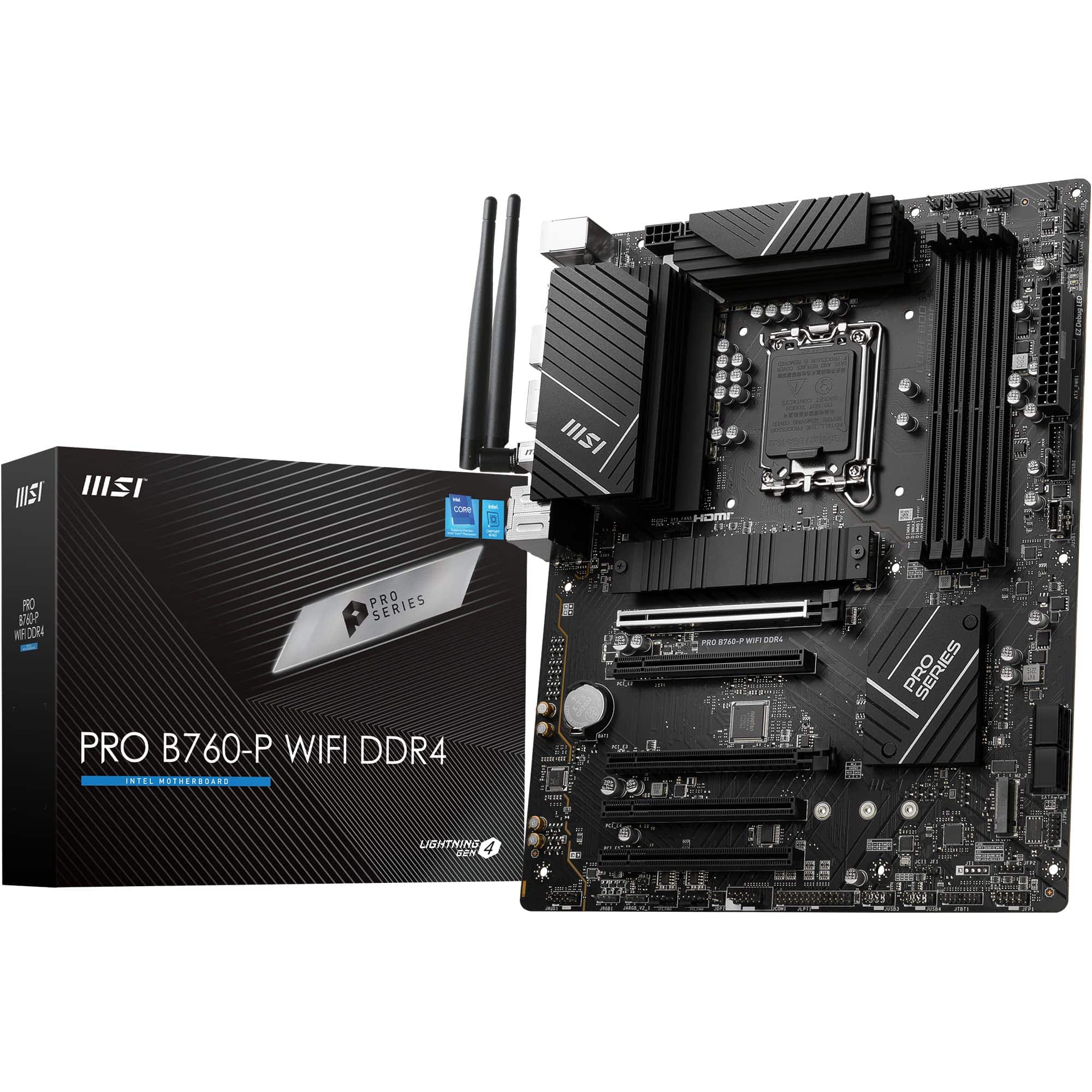 8.5 / 10
MSI PRO B760-P WIFI DDR4 Motherboard, ATX - Supports Intel 14th, 13th & 12th Gen Core Processors, LGA 1700 - DDR4 Memory Boost 5333+MHz/OC, PCIe 4.0 x16 Slots, M.2 Gen4 Slots, 2.5G LAN, Wi-Fi 6E
£129.95 · MSI
 8.5 / 10
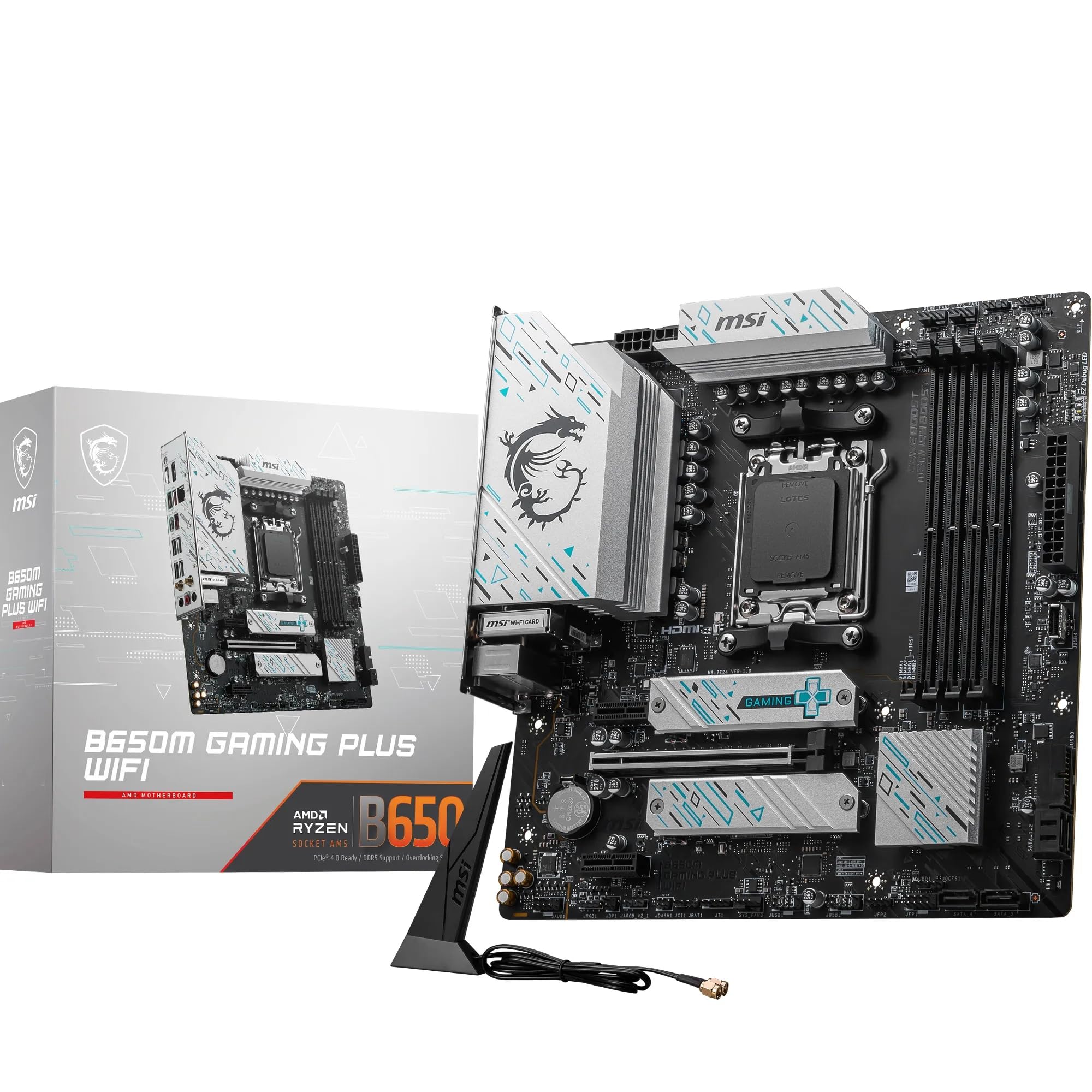
MSI B650M GAMING PLUS WIFI Motherboard, mATX - Supports AMD Ryzen 9000/8000 / 7000 Series Processors, AM5 - DDR5 Memory Boost 7800+ MHz/OC, PCIe 4.0 x16, M.2 Gen4, Wi-Fi 6E
£138.40 · MSI
Frequently asked
5 questions01Is the MSI MAG A520M VECTOR WIFI Gaming Motherboard (AMD Ryzen 3000 3rd gen ryzen AM4, DDR4, M.2, USB 3.2 Gen 1, Wi-Fi, DP/HDMI, Micro ATX) overkill for just gaming?+
Not at all. For a standard gaming build with a Ryzen 5 or Ryzen 7 CPU and a discrete GPU, this board provides everything you need. The built-in Wi-Fi is useful if you're not on wired Ethernet, and the Audio Boost implementation is better than the cheapest budget boards. The A520 chipset's lack of CPU overclocking support is irrelevant for gaming at stock clocks, where the performance difference versus an overclocked system is minimal.
02Will my existing CPU cooler work with the MSI MAG A520M VECTOR WIFI Gaming Motherboard (AMD Ryzen 3000 3rd gen ryzen AM4, DDR4, M.2, USB 3.2 Gen 1, Wi-Fi, DP/HDMI, Micro ATX)?+
If your cooler supports AMD AM4, it will fit this board. The AM4 socket uses a standard mounting pattern that has been consistent across all Ryzen generations from Ryzen 1000 through Ryzen 5000. Most cooler manufacturers have provided AM4 brackets with their products since 2016. Check your cooler's specification sheet for AM4 compatibility confirmation.
03What happens if the MSI MAG A520M VECTOR WIFI Gaming Motherboard (AMD Ryzen 3000 3rd gen ryzen AM4, DDR4, M.2, USB 3.2 Gen 1, Wi-Fi, DP/HDMI, Micro ATX) doesn't work with my components?+
Amazon offers 30-day returns on most items, and you're covered by Amazon's A-to-Z guarantee for purchases that don't work as described. For Ryzen 5000 compatibility specifically, ensure the board has an up-to-date BIOS before installing your CPU. MSI's website has a CPU compatibility list and BIOS download for this board. If you're buying new from a reputable seller, the board should arrive with firmware that supports current Ryzen 5000 processors.
04Is there a cheaper motherboard I should consider instead?+
The ASUS PRIME A520M-K is the main alternative at a lower price point. It uses the same A520 chipset and supports the same Ryzen CPUs, but drops the built-in Wi-Fi, RGB, and some of the enhanced thermal features. If you're planning to run a wired Ethernet connection and don't care about RGB, the ASUS PRIME A520M-K saves money without meaningfully affecting performance. If Wi-Fi is important to your build, the MSI MAG A520M VECTOR WIFI's integrated solution is worth the price difference over buying a board plus a separate Wi-Fi card.
05What warranty and returns apply to the MSI MAG A520M VECTOR WIFI Gaming Motherboard (AMD Ryzen 3000 3rd gen ryzen AM4, DDR4, M.2, USB 3.2 Gen 1, Wi-Fi, DP/HDMI, Micro ATX)?+
Amazon offers 30-day returns on most items, and the manufacturer typically provides a 3-year warranty. You're also covered by Amazon's A-to-Z guarantee.