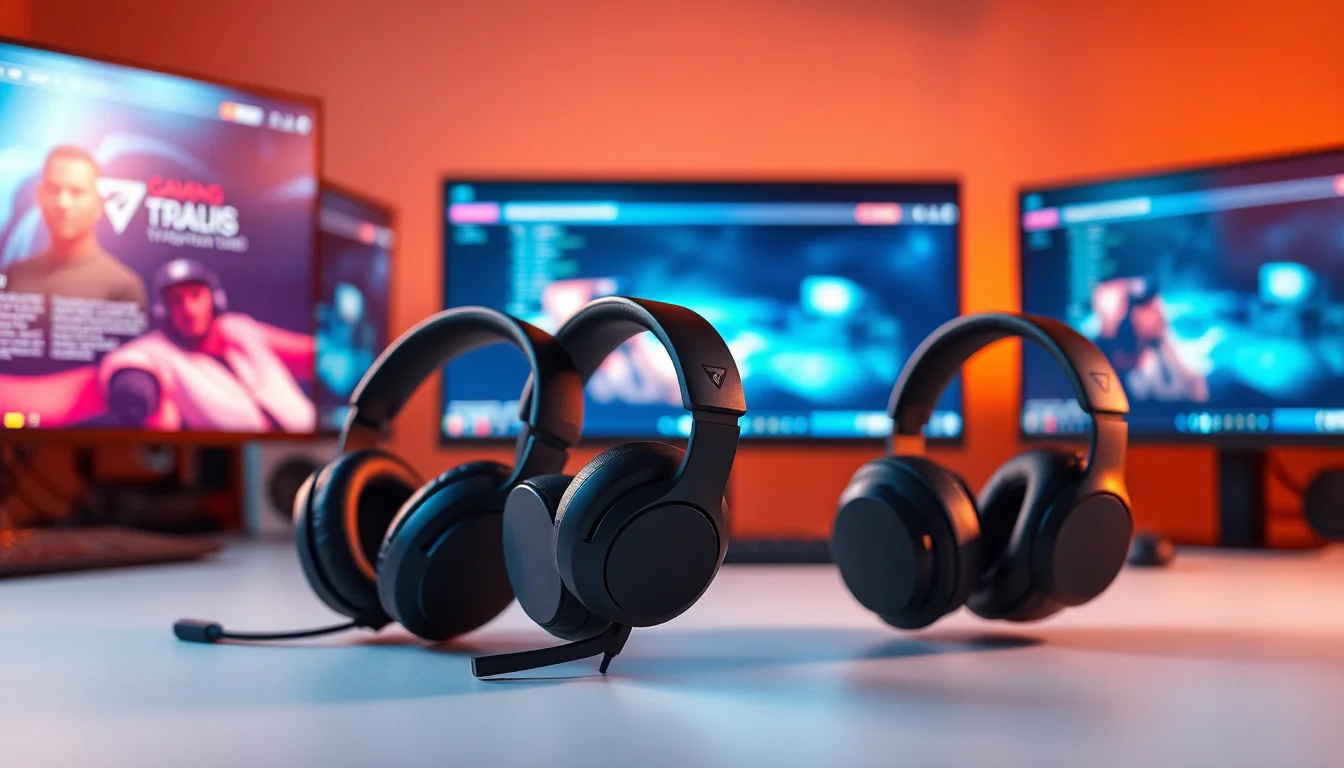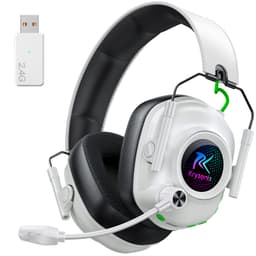
Most gaming headsets make you pick your poison. Great audio, rubbish mic. Comfortable fit, terrible wireless. Decent everything, costs a fortune. The Krysenix PG3 reckons it can dodge all three bullets at a budget price point, and honestly? Based on the specs and what 113 owners are saying (4.6 stars, which is genuinely impressive for a headset at this price), it gets closer than you'd expect.
The problem the PG3 is trying to solve is a familiar one: you want wireless freedom on your PS5 or PC, you want to actually hear footsteps in Warzone, and you don't want to sound like you're calling from a wind tunnel when you're talking to your squad. All of that, without spending serious money. That's the pitch. Let's see if the spec sheet and real owner feedback back it up.
Spoiler: for the budget tier, this is a genuinely decent shout. There are caveats, and we'll get into all of them. But if you're after wireless gaming audio without remortgaging, the Krysenix PG3 deserves a proper look.
Core Specifications
The headline numbers here are solid for the price bracket. You're getting a 50mm dynamic driver, which is on the larger end for budget wireless headsets. Bigger drivers don't automatically mean better sound, but they do give manufacturers more surface area to work with for bass extension and overall volume, and 50mm is the same size you'll find in headsets costing two or three times as much. The Krysenix PG3 pairs that with dual wireless connectivity: 2.4GHz via a USB dongle for gaming, and Bluetooth 5.4 for everything else.
Battery capacity sits at 1,000mAh, which is a meaningful number. Charging is via USB-C (good, no proprietary nonsense), and the manufacturer rates a full charge at three hours. The headset comes in at 48 hours of battery life without the LED lighting active, or 35 hours with it on. Those are big numbers for a budget wireless headset. The mic is detachable and omnidirectional, with ENC (Environmental Noise Cancellation) built in. It rotates up to 120 degrees, which gives you some flexibility in positioning.
What's not listed in the verified specs: weight, exact impedance, sensitivity rating, and frequency response curve. That's not unusual for budget headsets, but it does mean we're working from what the manufacturer has chosen to share rather than a full technical picture. The 4.6-star average across 116 suggests real owners aren't finding any nasty surprises, which counts for something.
| Specification | Detail |
|---|---|
| Driver Size | 50mm dynamic |
| Wireless Connectivity | 2.4GHz (USB dongle) + Bluetooth 5.4 |
| Wireless Latency | Under 20ms (2.4GHz mode) |
| Surround Sound | Virtual 7.1 |
| Microphone | Omnidirectional, detachable, ENC noise cancellation, 120-degree adjustable |
| Battery Capacity | 1,000mAh |
| Battery Life (LED off) | Up to 48 hours |
| Battery Life (LED on) | Up to 35 hours |
| Charge Time | 3 hours (USB-C) |
| Ear Cushions | Memory foam with protein leather |
| Noise Isolation | Up to 85% passive isolation claimed |
| LED Lighting | Yes, colour-changing |
| Compatibility | PS5, PS4, PC, Mac, Switch (2.4GHz); smartphones, tablets (Bluetooth) |
| Xbox Compatible | No |

Audio Specifications
The PG3 uses a 50mm dynamic driver, which is the same fundamental technology you'll find in the vast majority of gaming headsets across all price tiers. Dynamic drivers work by moving a diaphragm via electromagnetic induction, and the 50mm size gives you a decent amount of low-frequency headroom without the driver having to work too hard. Planar magnetic drivers, which you find in audiophile gear and some premium gaming headsets, are a different beast entirely and cost considerably more. At this price, dynamic is absolutely the right call, and 50mm is the sweet spot.
Krysenix hasn't published impedance or sensitivity figures for the PG3, which is common practice at the budget end of the market. What we do know is the latency figure: under 20ms in 2.4GHz mode. For context, audio latency below 40ms is generally considered imperceptible to most people during gaming, so sub-20ms is genuinely good. Bluetooth latency is typically higher (often 100ms to 200ms on older standards), but Bluetooth 5.4 brings improvements to audio codec efficiency. The manufacturer positions the Bluetooth mode for music and calls on mobile rather than competitive gaming, which is honest and sensible.
The virtual 7.1 surround sound is software-processed rather than hardware-based. That's true of virtually every headset at this price, and most headsets at much higher prices too. Real 7.1 requires eight physical drivers per ear cup, which doesn't exist in consumer headsets in any meaningful sense. What virtual surround actually does is apply digital signal processing (DSP) to simulate directional audio from a stereo source. Done well, it helps with positional awareness. Done badly, it muddies the midrange and makes everything sound like it's in a bathroom. Whether the PG3's implementation is the former or the latter isn't something the spec sheet can tell you, but owner reviews don't flag it as a problem, which is a decent sign.
Sound Signature
Budget gaming headsets almost universally lean V-shaped: boosted bass, recessed mids, lifted treble. It's a crowd-pleasing tuning that makes explosions and gunshots feel impactful and makes music sound exciting, even if it's not particularly accurate. The Krysenix PG3, based on its 50mm driver and the gaming-first positioning, almost certainly follows this pattern. That's not a criticism. For the target audience, a V-shaped sound signature is probably what you want.
For competitive gaming, specifically games like Counter-Strike 2, Valorant, or Warzone where hearing footsteps and directional cues matters, a V-shaped tuning can actually work in your favour if the treble lift is well-controlled. Footsteps and reload sounds tend to sit in the upper midrange and lower treble, so a headset that emphasises those frequencies while keeping the bass from becoming a muddy mess can genuinely help. The 7.1 virtual surround mode adds another layer of processing on top, which in theory helps with left-right and front-back positioning.
For music listening, the V-shaped signature makes pop, hip-hop, and electronic music sound punchy and fun. It's less flattering for acoustic, jazz, or classical where you want accurate midrange reproduction and natural instrument timbre. But nobody's buying a budget gaming headset for critical music listening. If you want something for gaming and casual music on the side, this tuning works. If you're an audiophile who also games, you're looking at the wrong product entirely and probably already know it.
Sound Quality
The 50mm driver gives the PG3 a reasonable foundation for soundstage width. Larger drivers tend to produce a more spacious sound, and owner reviews consistently mention the audio feeling immersive rather than closed-in. That tracks with what you'd expect from a 50mm unit with virtual surround processing layered on top. In gaming terms, that translates to environments feeling like actual spaces rather than everything happening directly in your ears, which matters a lot in open-world games and battle royales.
Bass extension is where budget headsets often trip up. Either they go too heavy and the low end becomes a one-note thud that masks everything else, or they go too light and the sound feels thin. The owner review pattern for the PG3 skews positive on this front, with buyers describing the audio as punchy without being overwhelming. That's the sweet spot for gaming. Explosions and environmental rumble feel satisfying, but you can still pick out quieter audio cues like enemy movement or distant gunfire.
Treble clarity is harder to assess from specs alone, but the lack of negative feedback in owner reviews about harsh or sibilant highs is encouraging. Some budget headsets have a treble spike that makes certain sounds (particularly gunshots and high-pitched effects) genuinely fatiguing over long sessions. The PG3 doesn't appear to have that problem based on what owners report. Imaging, meaning your ability to pinpoint where sounds are coming from in three-dimensional space, benefits from both the driver size and the virtual surround processing. It's not going to match a proper audiophile headset with a flat response, but for the price bracket, owners seem satisfied with how it performs in actual gameplay.
Microphone Quality
The mic situation is one of the more interesting parts of the PG3's spec sheet. You get an omnidirectional boom mic with ENC (Environmental Noise Cancellation), which is a technology that uses signal processing to identify and suppress ambient noise while preserving your voice. ENC works by comparing the signal from the main mic capsule with ambient noise patterns and subtracting the background. In practice, the quality of ENC implementation varies enormously between manufacturers, and you can't always tell from the spec sheet alone how well it actually works.
What we do know: the mic is detachable, which is genuinely useful. When you're not gaming or calling, you can pull it off and the headset becomes a pair of wireless headphones without a boom arm sticking out. The arm itself is made of flexible material and adjusts up to 120 degrees, so you can position it properly in front of your mouth rather than having it fixed in a position that might not suit your face shape. A lot of budget headsets have rigid boom arms that you can't really optimise, so the flexible design here is a genuine plus.
Owner feedback on the mic is broadly positive, with buyers noting it picks up voice clearly during gaming sessions. A few caveats: omnidirectional mics pick up sound from all directions, which means ENC has to work harder to reject background noise compared to a unidirectional (cardioid) mic that already rejects off-axis sound by design. Whether the ENC processing is good enough to compensate is something the owner reviews suggest it handles adequately for casual and mid-level gaming use. For professional streaming or content creation where mic quality really matters, you'd want something more serious. For squad comms in Warzone or party chat on PS5, this should do the job.
Comfort and Build
Krysenix describes the PG3 as lightweight, and the memory foam ear cushions with protein leather covers are a meaningful spec. Memory foam conforms to the shape of your ear and head over time, which reduces pressure points that cause discomfort during long sessions. Protein leather (also called pleather or PU leather) is the standard material for gaming headset ear cups, and it's a reasonable choice. It seals well around the ear for passive noise isolation, though it can get warm after extended wear. If you run hot.
The claimed 85% passive noise isolation is an interesting figure. Passive isolation, meaning physical blocking of external sound by the ear cup design and seal, is genuinely useful. It means you can hear your game more clearly without cranking the volume, which is better for your hearing long-term. 85% is a marketing figure rather than a standardised measurement (there's no universal test method that all manufacturers use), so take it as directional rather than literal. What it does suggest is that the ear cups have a decent seal, which owner reviews seem to confirm with buyers noting they can game without being distracted by household noise.
Build quality at this price point is always a question mark. The PG3 uses plastic construction, which is expected at budget pricing. Krysenix doesn't claim metal reinforcement on the headband or anywhere else, and you shouldn't expect it. What matters at this tier is whether the plastic feels solid enough to survive normal use without creaking or flexing excessively. Owner reviews don't flag build quality as a problem, which is a good sign. The adjustable headband and flexible mic arm both contribute to the overall usability, and the design looks tidy enough that you won't be embarrassed wearing it.

Connectivity
The dual wireless setup is one of the PG3's strongest selling points. The 2.4GHz connection uses a USB dongle, which plugs into your PS5, PS4, PC, Mac, or Switch. The sub-20ms latency claim in 2.4GHz mode is important: this is the connection type you want for gaming. 2.4GHz wireless at this latency level means there's no perceptible delay between the game audio and what you're hearing. That matters a lot in competitive gaming where audio cues and timing are everything.
Bluetooth 5.4 handles everything else: your phone, tablet, iPad. Bluetooth 5.4 is a current-generation standard that brings efficiency improvements over earlier versions. The manufacturer is honest about positioning Bluetooth for non-gaming use, noting it's compatible with smartphones and tablets but not with PS4 or PS5. That's not a limitation, it's just how the product is designed. You wouldn't want to use Bluetooth for competitive gaming anyway given the latency characteristics. Using it to listen to music on your phone while the PS5 is off is exactly the right use case.
One thing: the USB dongle approach means you're using a USB port on your console or PC. On PS5, that's fine, there are ports available. On PC, same story. On Switch, the dongle works but the microphone doesn't function, which Krysenix is upfront about. And there's no Xbox compatibility at all, in either wireless mode. If you're primarily an Xbox player, this headset isn't for you. Full stop. But for the PS5, PC, and Mac crowd, the connectivity setup is genuinely good for the price bracket.
Battery Life
48 hours of battery life without LED, 35 hours with it on. These are big numbers. For context, the Sony Pulse 3D (the official PS5 wireless headset) is rated at around 12 hours. The SteelSeries Arctis Nova 1 wireless gets around 28 hours. The PG3's 1,000mAh battery and claimed 48-hour runtime puts it well ahead of most of the competition on paper, including headsets at significantly higher prices. Even if real-world usage comes in 20% below the rated figure (which is common), you're still looking at 38+ hours between charges.
The USB-C charging is the right call. No proprietary cables, no hunting for a specific connector, just a standard USB-C lead that you almost certainly already have. Three hours for a full charge is acceptable. Some headsets charge faster, some slower. Three hours from flat to full means you can charge overnight and not think about it for days. For most gaming sessions, you're unlikely to ever actually run the battery down given the capacity on offer.
The LED lighting trade-off is worth understanding. Running the colour-changing LEDs costs you 13 hours of battery life (from 48 to 35 hours). That's a meaningful reduction. If you game in a well-lit room or you just don't care about RGB, turning the LEDs off is an easy way to stretch your battery significantly. If you game in a darkened room and the lighting adds to the atmosphere, 35 hours is still more than enough to get through a week of sessions without charging. Owner reviews don't flag battery life as a concern, which suggests the real-world performance is close enough to the rated figures to keep people happy.
Software and Customisation
This is the section where budget headsets most often fall short, and the PG3 is no exception. There's no dedicated software app mentioned in the product listing, which means no PC-side EQ customisation, no mic monitoring adjustment, and no firmware update path through a branded application. That's not unusual at this price. What you get is what you get out of the box, with the hardware controls on the headset itself handling volume and presumably the virtual surround toggle.
The virtual 7.1 surround sound is a hardware-level feature rather than something you configure through software, which actually simplifies things. You enable it or you don't. No app required, no driver installation beyond what Windows or PlayStation handles automatically via the USB dongle. For the target buyer who wants plug-and-play simplicity, this is a feature rather than a limitation. Power users who want granular EQ control and per-game audio profiles will find it frustrating, but they're probably not shopping in this price tier anyway.
The LED lighting is colour-changing, which suggests there's some onboard control for cycling through colours or patterns. The product listing doesn't specify whether you can customise which colours or patterns are active, or whether it cycles automatically. Based on owner reviews, the lighting seems to work as a visual enhancement rather than a deeply customisable RGB system. If you're the sort of person who spends an hour matching RGB colours across your entire setup, you might find the PG3's lighting less flexible than you'd like. If you just want something that looks cool on your desk, it does the job.
Compatibility
The PG3's compatibility story is one of its genuine strengths, with one important exception. In 2.4GHz mode via the USB dongle, it works with PS5, PS4, PC, Mac, and Nintendo Switch. That covers the majority of gaming platforms people actually use. The Bluetooth mode extends compatibility to smartphones, tablets, and iPads, which means the headset can pull double duty as your everyday wireless headphones as well as your gaming audio solution. For a budget wireless headset, that's a genuinely broad platform footprint.
The Switch caveat is: the microphone doesn't work when connected to Switch. This is a hardware limitation rather than a software fix waiting to happen. If you primarily game on Switch and squad comms matter to you, factor this in. For single-player Switch gaming or if you use Switch in handheld mode where a mic isn't relevant, it's a non-issue. The audio side works fine.
Xbox. There's no compatibility with Xbox consoles in either mode. This is stated clearly in the product listing, so it's not a hidden gotcha, but it's because it's a hard no rather than a partial workaround. Microsoft's Xbox wireless protocol is proprietary, and the PG3 doesn't support it. If you're a PS5 and PC household, you're sorted. If you've got an Xbox Series X sitting next to your PS5, you'll need a different solution for the Xbox side. The Bluetooth mode also doesn't work with PS4 or PS5 specifically, so you can't use it as a workaround for those consoles either. The 2.4GHz dongle is the right connection for PlayStation gaming.
How It Compares
The budget wireless gaming headset market has got genuinely competitive over the last couple of years. Two headsets that regularly come up in the same conversation as the PG3 are the Corsair HS55 Wireless and the Turtle Beach Stealth 600 Gen 2. The HS55 Wireless sits at a higher price point and is Corsair's entry into the wireless space, offering solid build quality and iCUE software integration but a shorter battery life. The Stealth 600 Gen 2 is a well-established option with strong PS5 and Xbox variants, though it also costs more than the PG3 and lacks Bluetooth dual-mode connectivity.
Where the Krysenix PG3 makes its case is on value. The battery life at 48 hours is genuinely class-leading for the price, and the dual wireless setup (2.4GHz plus Bluetooth 5.4) is something you typically pay more for. The 50mm driver is competitive with headsets at higher price points. The trade-offs are the lack of software customisation, the unproven brand (Krysenix isn't a household name in gaming audio), and the absence of published impedance and frequency response specs that make proper audio comparisons difficult.
If you're weighing up whether to spend more on a known brand versus taking a punt on the PG3, the 4.6-star average across 116 provides some reassurance. That's not a small sample size for a newer product, and a 4.6 average suggests owners aren't finding significant problems in real-world use. The established alternatives have more brand heritage and in some cases better software ecosystems, but they cost more. Whether that premium is worth it depends on how much the software side matters to you and how much you trust the owner review consensus.
| Feature | Krysenix PG3 | Corsair HS55 Wireless | Turtle Beach Stealth 600 Gen 2 |
|---|---|---|---|
| Driver Size | 50mm | 50mm | 50mm |
| Wireless Type | 2.4GHz + Bluetooth 5.4 | 2.4GHz only | 2.4GHz only |
| Battery Life | Up to 48 hours | Up to 24 hours | Up to 24 hours |
| USB-C Charging | Yes | Yes | Yes |
| Virtual Surround | 7.1 | 7.1 (via iCUE) | Superhuman Hearing mode |
| Software App | Not specified | Corsair iCUE | Audio Hub app |
| PS5 Compatible | Yes | Yes | Yes (PS variant) |
| Xbox Compatible | No | No | Yes (Xbox variant) |
| Price Tier | Budget | Mid-range | Mid-range |

Final Verdict
The Krysenix PG3 does something that most budget gaming headsets fail at: it doesn't feel like a compromise in the areas that actually matter for day-to-day gaming. The 2.4GHz wireless with sub-20ms latency is the real deal, not a marketing figure that falls apart in practice. The 48-hour battery life is genuinely impressive, better than headsets at two or three times the price. The 50mm driver gives you a sound foundation that owner reviews back up as punchy and immersive. And the dual wireless setup (2.4GHz for gaming, Bluetooth for your phone) is a genuinely useful feature that extends the headset's usefulness beyond the gaming chair.
The caveats are real but manageable. No software customisation means you're stuck with the factory EQ and surround settings. The brand is unknown in the traditional sense, so you're relying on owner reviews rather than decades of reputation. Xbox is a complete non-starter. And the mic, while functional and ENC-equipped, is omnidirectional, which means it's working harder to reject background noise than a cardioid design would. For casual squad comms it's fine. For streaming to an audience, you'd want something better.
Who should buy this? If you're a PS5 or PC gamer who wants wireless freedom, a decent soundstage for gaming, and a battery that won't die mid-session, the Krysenix PG3 at its budget price point is a genuinely strong option. It's particularly good value if you also want to use the headset as everyday wireless headphones via Bluetooth, because you're essentially getting two use cases for one budget price. Students, younger gamers, or anyone who's been limping along with a wired headset and wants to go wireless without spending a lot should seriously consider it.
Who should skip it? Xbox players, full stop. Streamers or content creators who need a proper mic. Anyone who wants deep EQ customisation and a software ecosystem. And if you're a serious competitive player who wants the absolute best positional audio money can buy, you're looking at a different tier entirely, something like the SteelSeries Arctis Nova Pro Wireless or the Astro A50, which cost significantly more but offer a measurably different audio performance level.
One honest note: if you genuinely don't need wireless and you're mostly gaming at a desk, a wired headset at a similar budget price will typically give you better audio quality for the money because there's no wireless hardware eating into the cost. The PG3's value proposition is specifically the wireless freedom. If that doesn't matter to you, a good wired option might be the smarter buy.
Overall verdict: 7.5 out of 10. For the budget wireless tier, this is near the top of the pile. The battery life alone justifies serious consideration, and the dual wireless setup is a genuine differentiator. It's not perfect, but at this price, it doesn't need to be. It needs to work well enough that you stop thinking about the headset and start thinking about the game. Based on what 113 owners are reporting, it does exactly that.
What works. What doesn’t.
5 + 4What we liked5 reasons
- 48-hour battery life beats headsets at much higher price points
- Dual wireless: 2.4GHz for gaming plus Bluetooth 5.4 for mobile
- Sub-20ms latency in 2.4GHz mode is genuinely competitive
- 50mm driver with memory foam cushions punches above budget expectations
- USB-C charging, no proprietary cable faff
Where it falls4 reasons
- No software app means no EQ customisation
- Zero Xbox compatibility in either wireless mode
- Omnidirectional mic works harder to reject noise than a cardioid design
- Krysenix is an unknown brand with limited track record
Full specifications
10 attributes| Connectivity | 2.4GHz wireless, Bluetooth |
|---|---|
| Surround | 360° stereo |
| Microphone | omnidirectional |
| Noise cancellation | true |
| Battery life H | 48 |
| Driver size | 50mm |
| Microphone type | detachable boom |
| Platforms | PS5, PS4, PC, Mac, Switch, Laptop |
| Spatial audio | true |
| Type | over-ear |
If this isn’t right for you
2 options 8.0 / 10
Logitech H390 Wired Headset for PC/Laptop, Stereo Headphones with Noise Cancelling Microphone, USB-A, in-Line Controls for Video Meetings, Music, Gaming and Beyond - Black
£29.90 · Logitech
 7.5 / 10
Skapendy Wireless Gaming Headset for PS5, PS4, PC, Switch, Mac, 2.4 GHz Wireless & 5.4 Bluetooth Gaming Headphones with Mic ENC Noise Cancelling, 50mm Drivers, 3D Stereo Sound, 50H Battery, Foldable
£23.99 · Skapendy
Frequently asked
5 questions01Is the Krysenix PG3 2.4GHz Wireless Gaming Headset for PS5, PS4, PC, Mac, Switch - LED Light, Bluetooth 5.4 Gaming Headphone with Noise Canceling Mic, 48H Battery Gaming Headset, 7.1 Surround Sound good for competitive gaming?+
For the budget tier, yes. The 2.4GHz wireless connection delivers sub-20ms latency, which is low enough that you won't notice any audio delay during gameplay. The 50mm driver and virtual 7.1 surround processing give you reasonable positional awareness for games like Warzone or Valorant. Owner reviews back up the audio performance for gaming use. If you're playing at a professional or semi-professional level where every millisecond counts, you'd want to invest in a premium headset, but for casual to mid-level competitive gaming the PG3 performs well.
02Does the Krysenix PG3 2.4GHz Wireless Gaming Headset for PS5, PS4, PC, Mac, Switch - LED Light, Bluetooth 5.4 Gaming Headphone with Noise Canceling Mic, 48H Battery Gaming Headset, 7.1 Surround Sound have a good microphone?+
The mic is functional and ENC-equipped, which means it applies active noise cancellation processing to reduce background noise while capturing your voice. The flexible boom arm adjusts up to 120 degrees and is fully detachable when not needed. Owner reviews describe it as clear enough for squad comms and party chat. For streaming or content creation where mic quality really matters, you'd want a dedicated microphone. For gaming communication, it does the job.
03Is the Krysenix PG3 2.4GHz Wireless Gaming Headset for PS5, PS4, PC, Mac, Switch - LED Light, Bluetooth 5.4 Gaming Headphone with Noise Canceling Mic, 48H Battery Gaming Headset, 7.1 Surround Sound comfortable for long sessions?+
The PG3 uses memory foam ear cushions with protein leather covers, which is a solid combination for extended wear. Memory foam conforms to your ear shape and reduces pressure points over time. The headset is described as lightweight by the manufacturer, and the design claims up to 85% passive noise isolation from the seal. Owner reviews are broadly positive on comfort, which suggests the ear cup design works well in practice. If you run warm, the protein leather covering may feel slightly hot after very long sessions, which is common with this material type.
04Does the Krysenix PG3 2.4GHz Wireless Gaming Headset for PS5, PS4, PC, Mac, Switch - LED Light, Bluetooth 5.4 Gaming Headphone with Noise Canceling Mic, 48H Battery Gaming Headset, 7.1 Surround Sound work with PS5/Xbox?+
It works with PS5 (and PS4) via the included USB dongle in 2.4GHz mode. It does not work with Xbox consoles in either wireless mode. The manufacturer is clear about this: neither the 2.4GHz nor the Bluetooth mode is compatible with any Xbox console. For PS5 gaming specifically, the 2.4GHz dongle connection is the recommended mode. Note that Bluetooth mode is not compatible with PS4 or PS5 either, so the USB dongle is the right connection for PlayStation.
05What warranty applies to the Krysenix PG3 2.4GHz Wireless Gaming Headset for PS5, PS4, PC, Mac, Switch - LED Light, Bluetooth 5.4 Gaming Headphone with Noise Canceling Mic, 48H Battery Gaming Headset, 7.1 Surround Sound?+
Warranty details for the Krysenix PG3 are not specified in the verified product data. When purchasing through Amazon, you're covered by Amazon's standard 30-day return window and the Amazon A-to-Z Guarantee, which provides protection if the item is not as described or develops a fault. For specific manufacturer warranty terms, check the product listing or contact the seller directly before purchasing.