Buying a cheap motherboard to save money for other parts is one of those decisions that looks clever on a spreadsheet and feels stupid six months later when your system is throttling under load or refusing to POST after a BIOS update. The Gigabyte B550M DS3H sits in the mid-range bracket and promises to avoid that particular headache. At £138.70 (Price checked 03:10, 3 Oct 2026, UK time), it's not the cheapest B550 you can find, but it's not trying to be. The question is whether it earns its place in that price tier or whether you're paying for a Gigabyte badge on a budget board.
The short answer, based on the spec sheet and 110 owner reviews averaging ★★★★☆ (4.3), is that this board does what it says. It's a Micro-ATX B550 with a proper 5+3 phase digital VRM, dual M.2 slots, built-in Wi-Fi, and full Ryzen 5000 support. For a compact AM4 build that needs to last, it's a sensible pick. But there are caveats, and we'll get to them properly. This is the full breakdown.
Core Specifications
The B550M DS3H uses AMD's B550 chipset on a Micro-ATX form factor, which means it'll fit in a wide range of cases including smaller mid-towers and dedicated mATX enclosures. The AM4 socket gives you access to Ryzen 3000, 4000 G-Series, 5000 G-Series, and the full Ryzen 5000 lineup, which is the main reason anyone's still buying AM4 boards in 2026. The platform is mature, parts are plentiful, and you can build a genuinely capable machine without spending a fortune on the CPU.
Memory configuration is four DIMM slots supporting dual-channel DDR4, with ECC and non-ECC unbuffered options both supported. That ECC compatibility is a nice touch for anyone running a home server or workstation use case alongside gaming. The board will run DDR4 up to 4733MHz with overclocking, though you'll need decent sticks and some BIOS patience to get there. Standard speeds are obviously more straightforward. Storage comes via two M.2 connectors, and there's a PCIe 4.0 ready x16 slot for your GPU, plus Gigabit Ethernet and onboard 802.11ac Wi-Fi as standard.
The rear I/O includes DisplayPort, HDMI, and DVI outputs for multi-display setups when using Ryzen G-Series APUs with integrated graphics. Audio uses high-quality capacitors with a noise guard separation on the PCB, which is more than you typically get at this price. The Smart Fan 5 system handles fan control across multiple headers with hybrid fan headers that support FAN STOP, so your system can run silently under light loads if your fans support it.
| Specification | Detail |
|---|---|
| Socket | AM4 |
| Chipset | AMD B550 |
| Form Factor | Micro-ATX |
| CPU Support | Ryzen 3000 / 4000 G / 5000 G / 5000 Series |
| Memory Slots | 4x DDR4 DIMM (Dual Channel) |
| Memory Type | ECC / Non-ECC Unbuffered DDR4 |
| Max Memory Speed (OC) | 4733MHz |
| VRM Phases | 5+3 Pure Digital |
| PCIe x16 Slot | PCIe 4.0 Ready (x16) |
| M.2 Slots | 2x (PCIe 4.0/3.0 NVMe) |
| Networking | Realtek GbE LAN + 802.11ac Wi-Fi + Bluetooth |
| Video Outputs | DisplayPort, HDMI, DVI |
| USB | USB 3.2 Gen 1 |
| Audio | High-quality capacitors with noise guard |
| Fan Control | Smart Fan 5, Hybrid Headers, FAN STOP |
| Price | £138.70 (Price checked 03:10, 3 Oct 2026, UK time) |
Socket and CPU Compatibility
The AM4 socket has had a longer run than almost anyone predicted when AMD launched it back in 2017. The B550M DS3H supports four generations of Ryzen processors: the Ryzen 3000 Series, Ryzen 4000 G-Series, Ryzen 5000 G-Series, and Ryzen 5000 Series. That covers everything from budget Ryzen 5 3600 builds right up to the Ryzen 9 5950X if you're feeling ambitious, though you'd want to think carefully about whether a budget mATX board is the right home for a 16-core chip. Practically speaking, this board is most sensibly paired with Ryzen 5 or Ryzen 7 5000 Series processors.
One thing before you buy: if you're planning to pair this with a Ryzen 5000 Series CPU and the board ships with an older BIOS, you might need a compatible CPU to do the initial update. Some Ryzen 3000 chips will handle that just fine as a temporary measure, but if you're starting from scratch with only a 5000 Series chip in hand, check whether the board comes with a BIOS version that already supports it. Owner reviews don't flag this as a widespread problem, but it's the kind of thing that catches people off guard. Gigabyte's AM4 BIOS update history is documented on their official support page.
The AM4 socket uses a standard mounting pattern that's been consistent across the platform, so any AM4-compatible cooler will bolt straight on. That includes most coolers released since 2017, which is genuinely useful if you're reusing hardware from an older Ryzen build. Budget coolers like the Wraith Stealth that come bundled with some Ryzen chips will work fine for mid-range processors. If you're pushing a Ryzen 7 5800X or above, you'll want something with a bit more thermal headroom, but that's a CPU decision rather than a board limitation.
Chipset Features
The AMD B550 chipset sits in the middle of AMD's AM4 lineup, below the X570 but well above the A520. The practical difference from X570 is that B550 doesn't give you PCIe 4.0 across every lane from the chipset itself, but the primary x16 slot and the first M.2 slot do run at PCIe 4.0 speeds when paired with a Ryzen 5000 or 3000 Series CPU. That's enough for a fast NVMe drive and a modern GPU without bottlenecking either. The X570's extra lanes matter if you need multiple PCIe 4.0 devices simultaneously; for most builds, B550 is the smarter buy.
B550 supports memory overclocking, which the DS3H takes up to 4733MHz with the right sticks. It also supports AMD's EXPO and XMP profiles, so if your DDR4 kit has a rated speed above the JEDEC default of 2133MHz, you can enable the profile in BIOS and be done with it rather than manually tweaking timings. The chipset provides enough USB and SATA bandwidth for a typical home or gaming build, and Gigabyte's implementation here doesn't do anything unusual to restrict that further.
One chipset-level thing that catches people out: B550 doesn't support CPU overclocking on all Ryzen processors. You need an unlocked chip (anything ending in X, or the non-G Ryzen 9 chips) to actually push the CPU clock above stock. The board itself supports overclocking fine; it's the CPU that needs to be the right model. If you're buying a Ryzen 5 5600 or 5 5600X, you're sorted. Ryzen 5 5600G is also overclockable. Just don't buy a locked chip and then wonder why the OC settings are greyed out in BIOS.
VRM and Power Delivery
This is the section that actually matters for long-term reliability. The DS3H runs a 5+3 phase pure digital VRM solution with low RDS(on) MOSFETs. That phase count is not class-leading, but it's honest for a board at this price point and it's meaningfully better than the 4+2 or even 3+2 configurations you'll find on genuinely budget boards. The "pure digital" designation means the PWM controller is handling phase management digitally rather than through analogue doubling tricks, which generally means cleaner power delivery and better thermal efficiency under sustained load.
The low RDS(on) MOSFETs are because they directly affect how much heat the VRM generates under load. Lower resistance means less energy wasted as heat, which means the VRM runs cooler without needing a massive heatsink. This matters most when you're running a power-hungry CPU like the Ryzen 7 5800X (105W TDP) for extended periods. Owner reviews don't report thermal throttling issues under normal gaming or productivity workloads, which is reassuring. For a Ryzen 5 5600 or 5600X (65W TDP), this VRM is more than adequate and you'll likely never stress it.
Where you might run into limits is if you're planning to run a Ryzen 9 5900X or 5950X at full bore for extended periods, particularly in a warm case. Those chips can pull well over 100W sustained and the DS3H's VRM, while decent for its class, wasn't really designed with a 16-core processor in mind. For those chips, a board with a more substantial VRM heatsink and higher phase count would be the smarter choice. But for Ryzen 5 and Ryzen 7 builds, this is solid. It does the job without drama.
Memory Support
Four DIMM slots in dual-channel configuration is the right setup for a board at this level. You can start with two sticks and add two more later, which is a sensible upgrade path. The board supports both ECC and non-ECC unbuffered DDR4, which is genuinely useful if you're building something that doubles as a home server or NAS. Most people will use standard non-ECC DDR4, but having the ECC option without paying extra for it is a nice differentiator over purely gaming-focused boards.
The rated maximum with overclocking is 4733MHz, which is high enough that your DDR4 kit will almost certainly be the limiting factor before the board is. Practically, most DDR4 kits top out at 3600MHz or 4000MHz, and 3600MHz is the sweet spot for Ryzen 5000 anyway due to how the Infinity Fabric clock divider works. Running your memory at 3600MHz with tight timings will give you better real-world performance than pushing to 4733MHz with loose timings. The board supports this without issue according to owner reports.
XMP profile support means you can just enable the profile in BIOS and your kit will run at its rated speed automatically. JEDEC's DDR4 standard defaults everything to 2133MHz, so without XMP or manual configuration your 3600MHz kit will run slower than you paid for. The DS3H handles this correctly. A few owners mention that very fast kits occasionally need manual tweaking to be stable, which is normal behaviour for high-frequency DDR4 and not a board-specific issue.
Storage Options
Two M.2 slots is the right number for most builds in 2026. The listing describes them as dual ultra-fast NVMe PCIe 4.0/3.0 M.2 connectors, which means you're getting PCIe 4.0 support on at least one slot when paired with a Ryzen 5000 CPU. PCIe 4.0 NVMe drives can hit sequential read speeds around 7000MB/s, which is a meaningful step up from the 3500MB/s ceiling of PCIe 3.0. Whether you can actually feel that difference in day-to-day use is a separate debate, but having the option is better than not having it.
For most people, two M.2 slots covers an OS drive and a games or storage drive, which is all you need. If you're building a content creation workstation that needs three or four NVMe drives, this isn't the board for you, but that's an edge case. SATA ports are also present for traditional 2.5-inch SSDs or hard drives if you need bulk storage. The combination of two M.2 slots plus SATA gives you genuine flexibility without overcomplicating things.
One thing to be aware of with B550 boards generally: M.2 slot bandwidth can share lanes with SATA ports depending on what's plugged in. Check Gigabyte's manual for the specific lane-sharing rules on this board before committing to a storage configuration. It's rarely a problem in practice because most people aren't saturating every storage interface simultaneously, but it's about before you plan a complex storage setup. Gigabyte publishes the full storage configuration details in the board's official product page.
Expansion Slots and PCIe
The primary PCIe slot is a full-length x16 slot rated as PCIe 4.0 ready, which means your GPU gets the full bandwidth it needs. In practice, even PCIe 3.0 x16 is not a meaningful bottleneck for current GPUs in gaming workloads, so the PCIe 4.0 capability here is more about future-proofing than immediate performance gains. The slot is described as Ultra Durable, which in Gigabyte's language means it has reinforced retention for heavier graphics cards. That's a small but real quality-of-life thing when you're mounting a large triple-fan GPU.
On a Micro-ATX board, you're not going to get the same number of expansion slots as a full ATX design. The DS3H gives you what you actually need: one proper x16 slot for a GPU and the M.2 slots for fast storage. If you need multiple GPUs or a stack of PCIe expansion cards, you're looking at the wrong form factor entirely. But for a single-GPU gaming or productivity build, this is exactly the right layout. Nothing wasted, nothing missing.
The PCIe standard has been through several generations, and B550's support for PCIe 4.0 on the primary slot was actually a selling point when the chipset launched, since it was one step ahead of what Intel was offering at comparable price points at the time. That advantage has narrowed as the market has moved on, but the DS3H still delivers PCIe 4.0 where it counts. Lane sharing between the x16 slot and M.2 slots is something to check in the manual if you're running an unusual configuration, but for a standard GPU-plus-NVMe setup there's nothing to worry about.

Connectivity and Rear I/O
The rear I/O includes video outputs in three formats: DisplayPort, HDMI, and DVI. All three are only relevant if you're using a Ryzen G-Series APU with integrated graphics. If you're pairing this board with a discrete GPU, those outputs don't do anything. But for an APU build, having all three display outputs means you can drive multiple monitors without needing a separate graphics card, which is the whole point of the G-Series chips. The combination of DisplayPort, HDMI, and DVI covers pretty much every monitor connector in common use.
USB connectivity includes USB 3.2 Gen 1 on the rear I/O. That covers the standard USB-A ports you'll use for keyboards, mice, external drives, and everything else. The spec sheet lists USB 3.2 Gen 1 as the headline USB standard. Audio on the rear I/O benefits from the high-quality capacitors and noise guard that Gigabyte includes on this board, which is a step above the bare-minimum audio implementation you get on truly budget boards.
The internal headers are where most of your case connectivity happens, and the DS3H covers the standard set for a mATX board. The Smart Fan 5 system with hybrid fan headers and FAN STOP support means you can connect your case fans and configure their behaviour properly rather than just running them at full speed all the time. FAN STOP is specifically useful for quiet builds: when temperatures are low, fans stop entirely. When things heat up, they spin back up. It's a feature that used to be reserved for premium boards, and it's genuinely useful for anyone who cares about noise levels.
WiFi and Networking
Built-in Wi-Fi is one of the DS3H's clearer advantages over some competitors at this price. The onboard wireless is dual-band 802.11ac (Wi-Fi 5) with Bluetooth support, and a Wi-Fi antenna is included in the box. The Wi-Fi 5 standard supports speeds up to 3.5Gbps in theory, with real-world performance on a typical home router sitting comfortably above what most internet connections can saturate. For gaming and general use, 802.11ac is absolutely fine. If you specifically need Wi-Fi 6 or 6E for a high-density network environment, you'd need to look at pricier boards.
The wired Ethernet is handled by a Realtek GbE controller with bandwidth management. Gigabit Ethernet is the standard for home networks and it's more than enough for any internet connection you're likely to have. The bandwidth management feature is useful for prioritising network traffic, which matters more in a household with multiple devices competing for bandwidth than it does on a dedicated gaming PC. Realtek's GbE controllers are well-supported across operating systems and have a long track record of reliability.
Having both wired and wireless networking built in is the right call for a board at this price point. You're not forced to choose, and you're not paying extra for an add-in card. The Bluetooth support that comes alongside the Wi-Fi module is useful for wireless peripherals, headsets, or controllers. It's not a headline feature but it's one of those things you appreciate when you need it and don't have to think about otherwise.
BIOS and Overclocking
Gigabyte's BIOS interface has had a complicated history. The older versions were genuinely not great: cluttered, inconsistent, and occasionally confusing in ways that made simple tasks harder than they needed to be. The more recent iterations, which is what you'll find on a board sold in 2026, are considerably better. Owner reviews on the DS3H don't flag the BIOS as a major pain point, which is a meaningful improvement from where Gigabyte was a few years ago. It's still not as polished as ASUS's UEFI, but it's functional and it gets the job done without requiring a manual to navigate basic settings.
Overclocking support covers both CPU and memory. For memory, you can enable XMP profiles or manually set timings and voltages. The 4733MHz maximum rated speed gives you plenty of headroom for fast DDR4 kits. CPU overclocking works on unlocked Ryzen chips, and the 5+3 phase VRM provides a stable enough power delivery foundation for moderate overclocks on Ryzen 5 and Ryzen 7 processors. Don't expect to push a Ryzen 7 5800X to its absolute limits on this board, but sensible overclocking is supported without issue.
The Smart Fan 5 system is accessible through the BIOS and provides per-header fan curve configuration with multiple temperature sensor inputs. You can set fans to respond to CPU temperature, motherboard temperature, or a combination. The FAN STOP function is configured here too. For most users, setting up a simple temperature-to-speed curve takes about five minutes and then you never think about it again. That's the right level of complexity for a board in this category. It's not a hardcore enthusiast board with 50 overclocking parameters, but it's not a locked-down basic board either.
Build Quality and Aesthetics
The DS3H takes a straightforward approach to aesthetics: there's no RGB lighting. If you want a light show in your case, you'll need to add it through fans or strips connected to the headers. For people who'd rather just have a clean, functional board, the absence of RGB is a plus rather than a minus. The PCB finish is dark and tidy, and the layout is sensible for a Micro-ATX design. The 24-pin ATX connector and 8-pin CPU power connector are positioned where you'd expect them, which sounds obvious but not every board gets this right.
The Ultra Durable PCIe slot reinforcement on the x16 slot is a practical quality-of-life feature. Heavy GPUs can stress the PCIe slot over time, particularly if the case gets moved around. Reinforced slots handle this better than standard ones. The audio section benefits from the noise guard separation on the PCB, which physically isolates the audio circuitry from the digital noise generated by other components. This isn't audiophile territory, but it's noticeably better than the audio on budget boards that skip this entirely.
Owner reviews at 4.3 stars across 108 suggest that build quality is meeting expectations. The most common positive comments relate to stability, straightforward installation, and the board working correctly out of the box. Negative reviews tend to cluster around the occasional DOA unit (which happens with any hardware) and some BIOS version issues that were addressed in updates. Nothing in the owner feedback pattern suggests a systematic build quality problem. For a mid-range mATX board, that's a clean record.
How It Compares
The two most relevant comparisons for the DS3H are the MSI B550M PRO-VDH WiFi and the ASUS Prime B550M-A. Both are Micro-ATX B550 boards targeting a similar audience, and both have been popular choices in the UK market. The MSI B550M PRO-VDH WiFi is typically slightly cheaper and offers a similar feature set including Wi-Fi, but its VRM implementation is generally considered a step below the DS3H's 5+3 pure digital configuration. The ASUS Prime B550M-A sits at a comparable price point and benefits from ASUS's generally well-regarded BIOS interface, which some users prefer over Gigabyte's. ASUS's VRM on that board is competitive, though the specific phase configuration varies by revision.
The DS3H's inclusion of Wi-Fi as standard is a differentiator against some B550 boards that charge extra for it or leave it out entirely. The ECC memory support is another feature that competitors at this price don't always offer. Against the MSI option, the Gigabyte's VRM quality and digital power delivery is the clearer advantage. Against the ASUS option, it's more of a toss-up depending on whether you prioritise BIOS polish or the specific feature mix.
If your budget stretches to a full ATX B550 board, you get more expansion slots and often a more substantial VRM heatsink, but you also need a larger case and you're paying more for features a compact build doesn't need. The DS3H makes sense specifically when you want a capable mATX board with Wi-Fi, solid VRM quality, and dual M.2 without stepping up to X570 pricing. That's a real and useful niche.
| Feature | Gigabyte B550M DS3H | MSI B550M PRO-VDH WiFi | ASUS Prime B550M-A |
|---|---|---|---|
| Chipset | AMD B550 | AMD B550 | AMD B550 |
| Form Factor | Micro-ATX | Micro-ATX | Micro-ATX |
| VRM Phases | 5+3 Pure Digital | 4+2 | 4+2 |
| M.2 Slots | 2 | 2 | 2 |
| Wi-Fi | 802.11ac (included) | 802.11ac (included) | Not standard |
| ECC Support | Yes | No | No |
| PCIe x16 | PCIe 4.0 | PCIe 4.0 | PCIe 4.0 |
| Video Outputs | DP + HDMI + DVI | DP + HDMI | DP + HDMI + DVI |
| Fan Control | Smart Fan 5, FAN STOP | Basic | Fan Xpert (basic) |
Final Verdict
The Gigabyte B550M DS3H is a well-specified Micro-ATX B550 board that earns its mid-range price through genuine features rather than marketing fluff. The 5+3 pure digital VRM is the headline strength: it's better than what you get on cheaper B550 boards and it means your Ryzen 5 or Ryzen 7 processor will have clean, stable power delivery without thermal drama. The dual M.2 slots with PCIe 4.0 support, built-in 802.11ac Wi-Fi with antenna included, ECC memory compatibility, and Smart Fan 5 with FAN STOP all add up to a feature set that would have cost more on a premium board two years ago.
The honest caveats: the BIOS is functional but not the most polished in the category. The VRM, while good for this price tier, has limits if you're planning to run a Ryzen 9 5900X or 5950X at sustained full load. And the Wi-Fi is 802.11ac rather than Wi-Fi 6, which is fine for most people but if you're on a Wi-Fi 6 router and want to use the faster standard. None of these are dealbreakers for the target audience, but they're real.
Owner feedback at 4.3 stars across 108 reflects a board that works correctly for the people it's designed for. Stability, straightforward setup, and reliable Ryzen 5000 support are the consistent positives. The occasional negative review involves DOA units or early BIOS versions, both of which are resolved through normal warranty and update processes. That's a normal pattern for a board that's been on the market long enough to accumulate real feedback.
Who should buy this: anyone building a compact Ryzen 5000 system who wants Wi-Fi included, solid VRM quality, and dual M.2 without overpaying for X570. It's particularly good value for Ryzen 5 5600 or Ryzen 7 5700X builds where the VRM is well within its comfort zone and every other feature on the board gets used. The ECC support makes it a reasonable choice for a home server or workstation build on an AM4 APU too.
Who should skip it: if you're pairing a Ryzen 9 5900X or 5950X with a board for heavy sustained workloads, spend more on a board with a beefier VRM and better heatsink coverage. If you specifically need Wi-Fi 6, look at pricier options. And if you genuinely don't need Wi-Fi or ECC support and budget is tight, the MSI B550M PRO-VDH WiFi or even a basic B550M board without Wi-Fi will save you money for other parts without costing you much in real-world performance.
At £138.70 (Price checked 03:10, 3 Oct 2026, UK time), this sits in the mid-range bracket and delivers accordingly. It's not trying to be an enthusiast board and it doesn't pretend to be. For the Ryzen 5 and Ryzen 7 builds it's actually designed for, it's a proper, reliable foundation. Score: 7.5 out of 10.
What works. What doesn’t.
5 + 3What we liked5 reasons
- 5+3 pure digital VRM is better than most competitors at this price
- Built-in 802.11ac Wi-Fi with antenna included in the box
- ECC memory support is unusual at this price point
- Dual M.2 with PCIe 4.0 support on primary slot
- Smart Fan 5 with FAN STOP for genuinely quiet operation
Where it falls3 reasons
- BIOS interface is functional but not class-leading
- Wi-Fi is 802.11ac rather than Wi-Fi 6
- VRM has limits with Ryzen 9 5900X or 5950X under sustained load
Full specifications
12 attributes| Socket | AM4 |
|---|---|
| Chipset | B550 |
| Form factor | Micro-ATX |
| Bios flashback | true |
| M2 slots | 2 |
| MAX RAM | 128GB |
| MAX RAM GB | 128 |
| Network | 1GbE |
| Pcie 5 slots | 0 |
| Pcie slots | 1x PCIe 4.0 x16 |
| RAM slots | 4 |
| RAM type | DDR4 |
If this isn’t right for you
2 options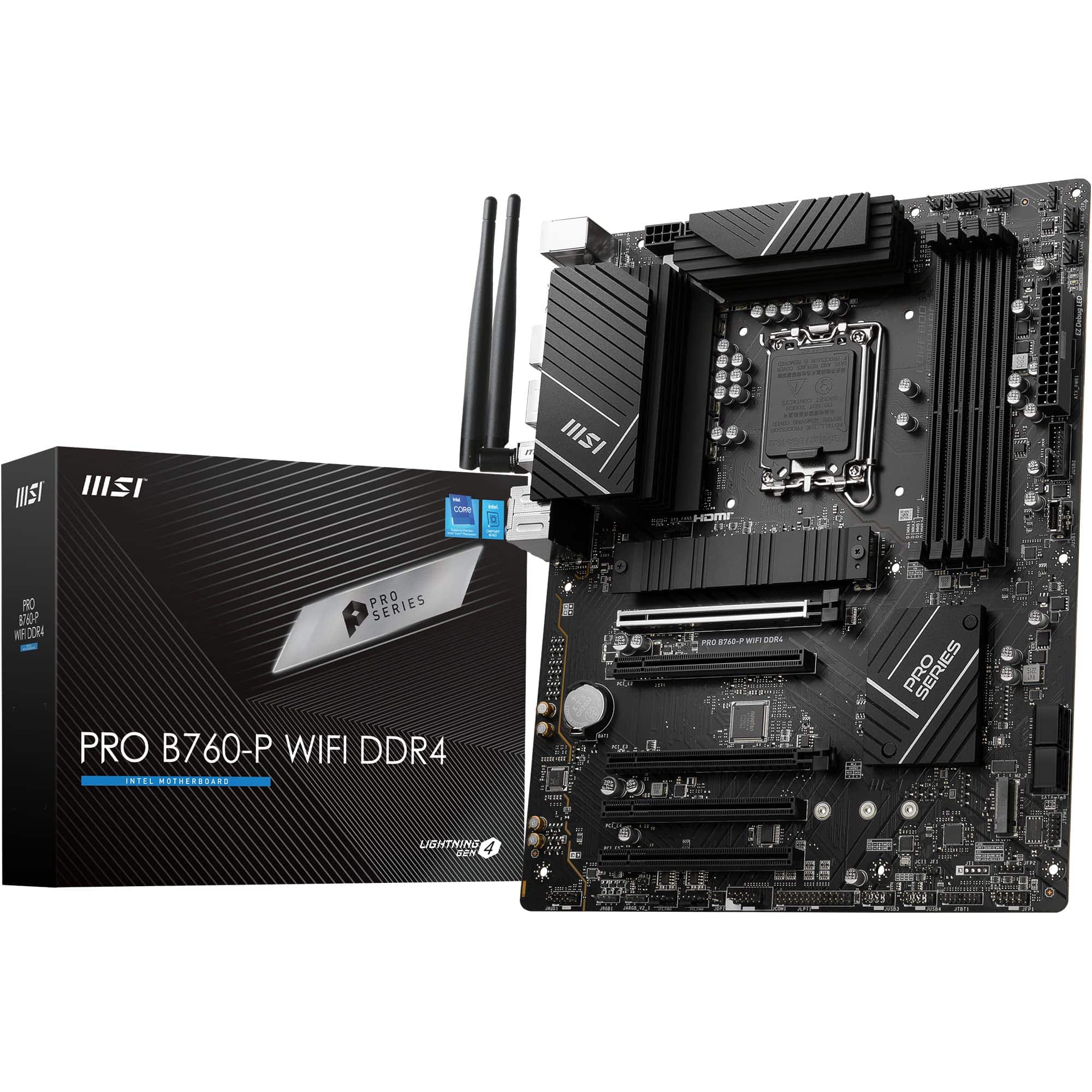 8.5 / 10
MSI PRO B760-P WIFI DDR4 Motherboard, ATX - Supports Intel 14th, 13th & 12th Gen Core Processors, LGA 1700 - DDR4 Memory Boost 5333+MHz/OC, PCIe 4.0 x16 Slots, M.2 Gen4 Slots, 2.5G LAN, Wi-Fi 6E
£129.95 · MSI
 8.5 / 10
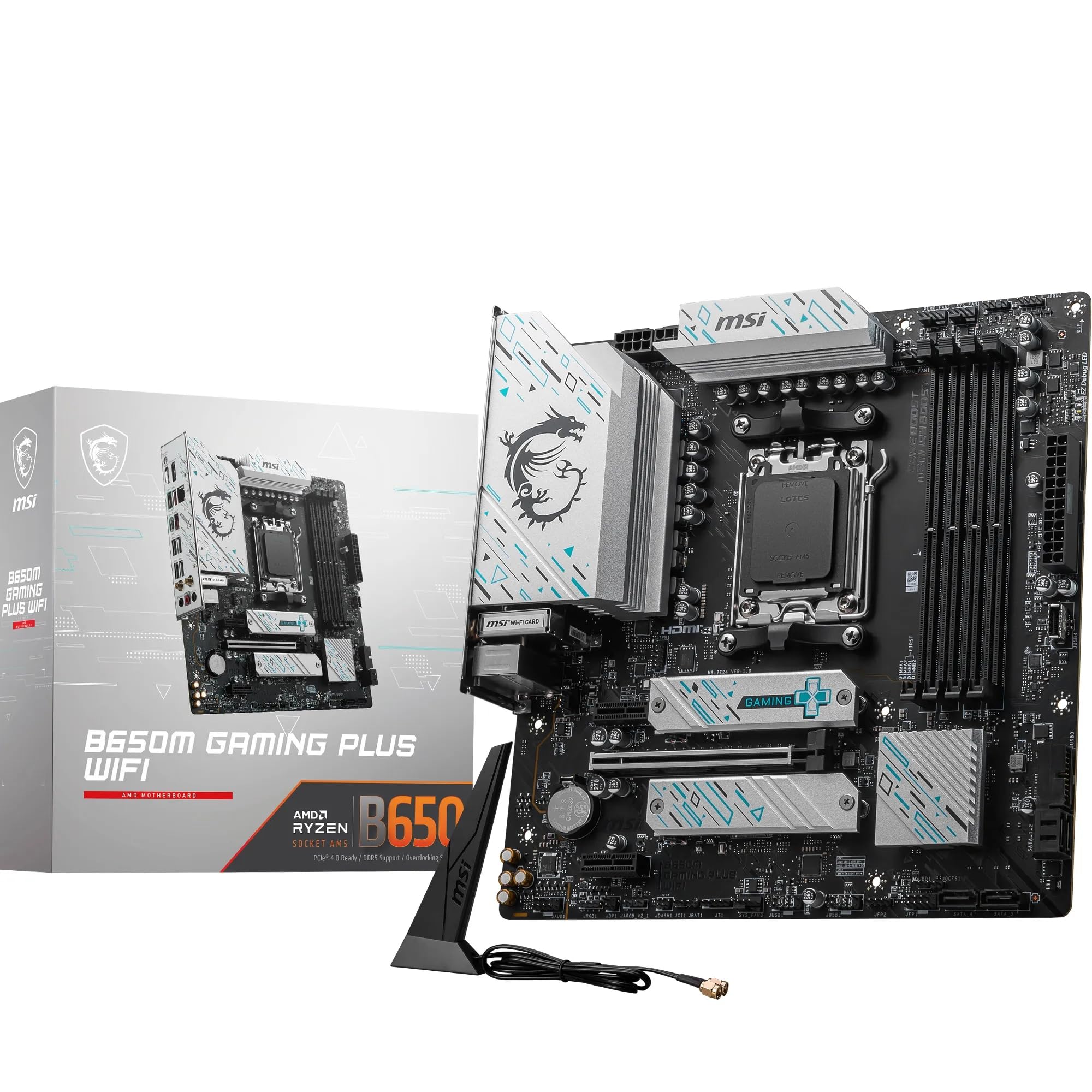
MSI B650M GAMING PLUS WIFI Motherboard, mATX - Supports AMD Ryzen 9000/8000 / 7000 Series Processors, AM5 - DDR5 Memory Boost 7800+ MHz/OC, PCIe 4.0 x16, M.2 Gen4, Wi-Fi 6E
£143.50 · MSI
Frequently asked
5 questions01Is the Gigabyte B550M DS3H Motherboard overkill for just gaming?+
Not really. The features that make it stand out over cheaper boards, specifically the 5+3 pure digital VRM and dual M.2 with PCIe 4.0 support, are directly useful for gaming. A better VRM means more stable power delivery under gaming loads, and fast NVMe storage reduces load times. The built-in Wi-Fi is a bonus if you're not near a router. The ECC memory support is the one feature that's genuinely irrelevant for gaming, but it doesn't cost you anything to have it there.
02Will my existing CPU cooler work with the Gigabyte B550M DS3H Motherboard?+
If your cooler is AM4 compatible, yes. The AM4 socket has used a consistent mounting standard across Ryzen 3000, 4000, and 5000 Series processors, so any cooler designed for AM4 will bolt straight onto this board. That includes the AMD Wraith coolers bundled with some Ryzen chips. If you're coming from an Intel build, your cooler won't be compatible and you'll need an AM4 bracket or a new cooler.
03What happens if the Gigabyte B550M DS3H Motherboard doesn't work with my components?+
Amazon's standard 30-day returns policy applies, and purchases through Amazon are covered by the A-to-Z Guarantee, which protects you if the item is not as described or doesn't arrive. For compatibility issues, Gigabyte's support documentation lists the full CPU and memory compatibility details. The board's QVL (qualified vendor list) for memory is before buying a new DDR4 kit, as very fast kits occasionally need manual BIOS configuration to run stably.
04Is there a cheaper motherboard I should consider instead?+
If you don't need Wi-Fi built in and ECC support is irrelevant to your use case, the MSI B550M PRO-VDH (non-WiFi version) is worth looking at as a cheaper alternative. You lose the wireless connectivity and the VRM is a step down, but for a Ryzen 5 build with a discrete GPU and wired internet, it covers the basics at a lower price. If Wi-Fi matters but budget is tight, the MSI B550M PRO-VDH WiFi is another option, though its VRM is less capable than the DS3H's 5+3 configuration.
05What warranty and returns apply to the Gigabyte B550M DS3H Motherboard?+
Manufacturer warranty terms are not specified in the verified product data for this listing. For purchases made through Amazon, you're covered by Amazon's standard 30-day return window and the A-to-Z Guarantee. For warranty claims beyond the return window, contact Gigabyte directly through their official support channels, as motherboard manufacturers typically offer multi-year warranties on their products.