Budget allocation in PC building follows a predictable pattern: too much on the GPU, not enough on the PSU. The consequences of that imbalance show up months later, in the form of unstable voltages under load, corrupted saves, or a system that simply won't POST after a power spike. The PSU is the component that every other component depends on, and getting it wrong is expensive in ways that don't show up on a benchmark. So when Corsair refreshes the RM650e for 2025 with ATX 3.1 certification, Cybenetics Gold efficiency, and 105°C-rated capacitors at a mid-range price point, it's worth asking whether the spec sheet actually delivers or whether this is just marketing dressed up in modular cables.
The short answer: the CORSAIR RM650e (2025) Fully Modular Low-Noise ATX Power Supply with 12V-2x6 Cable - ATX 3.1 and PCIe 5.1 Compliant, Cybenetics Gold Efficiency, 105°C-Rated Capacitors, Modern Standby Mode - Black is a well-specified unit that punches above its price bracket in several meaningful ways. The Cybenetics Gold rating (not just 80 Plus Bronze, more on that distinction shortly), full ATX 3.1 compliance with native 12V-2x6 connectivity, and 105°C-rated capacitors are not features you typically find bundled together at this price. The 4.5-star average across 131 owner reviews backs that up. This isn't a flawless unit, but it's a seriously competitive one, and the evidence supports recommending it for most mid-range gaming builds.
There are caveats, and they matter for specific build types. But the headline is: Corsair got the fundamentals right here, and the spec sheet is honest about what this PSU is designed to do.
Core Specifications: CORSAIR RM650e (2025) Fully Modular Low-Noise ATX Power Supply
The RM650e sits in Corsair's RM 'e' line, which is the efficiency-focused branch of the RM family. The 2025 revision updates the platform to meet ATX 3.1, which is the current standard for modern systems built around PCIe Gen 5 GPUs. That matters because ATX 3.1 mandates that a PSU can handle transient power excursions of up to 200% of rated wattage for brief periods, which is exactly what modern GPUs like the RTX 4000 and RX 7000 series demand during sudden load spikes. Corsair specifically rates this unit to handle 2x transient power excursions from the GPU, which aligns with the ATX 3.1 requirement and means you're not relying on the PSU to simply absorb those spikes gracefully.
The efficiency story here is more nuanced than the Amazon listing makes immediately obvious. The product data lists an 80 Plus Bronze efficiency rating, but Corsair's own documentation and the product title reference Cybenetics Gold efficiency. These are two different certification bodies with different test methodologies. Cybenetics uses a more rigorous test protocol that includes a wider range of load conditions and accounts for power factor and harmonic distortion more comprehensively than the 80 Plus programme. A Cybenetics Gold rating on a unit that also holds 80 Plus Bronze is not contradictory; it reflects the fact that the two certification bodies measure different things. In practical terms, the Cybenetics Gold result is the more meaningful one for real-world efficiency.
The 5-year warranty is competitive for this price bracket. Some premium units offer 7 or 10 years, but those carry a price premium to match. At mid-range pricing, 5 years is solid and reflects Corsair's confidence in the platform's longevity. The 131 owner reviews averaging 4.5 stars suggest that confidence is largely justified in practice.
| Specification | Detail |
|---|---|
| Wattage | 650W |
| Efficiency (80 Plus) | Bronze |
| Efficiency (Cybenetics) | Gold |
| Modularity | Fully Modular |
| Fan Size | 120mm Rifle Bearing |
| Zero RPM Mode | No |
| Warranty | 5 Years |
| ATX Standard | ATX 3.1 |
| PCIe Standard | PCIe 5.1 Compliant |
| Capacitor Rating | 105°C |
| Modern Standby | Yes |
| ATX 24-pin | 1 |
| EPS 8-pin | 1 |
| PCIe 8-pin | 2 |
| 12VHPWR (12V-2x6) | 1 |
| SATA | 6 |
| Molex | 3 |
| Price | £74.90 |
Wattage and Capacity
650W is a well-chosen capacity for the current mid-range gaming market. To put some numbers around that: an Intel Core i5-14600K paired with an RTX 4070 draws roughly 350 to 400W at full load in demanding games, leaving 250W of headroom on this unit. That's comfortable. Move up to an RTX 4070 Ti Super or an RX 7900 GRE and you're looking at system draws closer to 450 to 500W under sustained load, which still fits within 650W with reasonable margin. The general guidance from most system builders is to target 20 to 30% headroom above your expected peak draw, and 650W achieves that for the majority of current mid-range and upper-mid-range configurations.
Where 650W starts to feel tight is at the high end of the GPU stack. An RTX 4090 system, for example, can pull north of 600W at full load, which would put this PSU operating near its rated ceiling with minimal headroom. That's not a configuration this unit is designed for, and Corsair would be the first to tell you to step up to the RM850e or RM1000e for those builds. But for an RTX 4070 or RX 7800 XT build with a modern mid-range CPU, 650W is genuinely the right call. Oversizing your PSU wastes money and, counterintuitively, can reduce efficiency at low loads.
The ATX 3.1 transient headroom is the more interesting capacity story here. PCIe Gen 5 GPUs are notorious for demanding short, sharp bursts of power that can exceed their rated TDP by a significant margin for milliseconds at a time. The ATX 3.1 standard specifically addresses this by requiring PSUs to handle 200% transient excursions. This unit's ability to absorb 2x transient spikes means it's genuinely future-proofed for the next generation of GPUs in a way that older ATX 2.x units simply are not. That's not marketing; it's a measurable, testable specification that matters for system stability.
Efficiency Rating: Cybenetics Gold and What It Actually Means
The efficiency rating situation on this PSU is worth unpacking properly, because the headline figures can be misleading if you don't know what you're looking at. The 80 Plus Bronze certification means the unit achieves at least 82% efficiency at 20% load, 85% at 50% load, and 82% at 100% load, tested at 115V AC (the US standard). The 80 Plus programme has been the industry benchmark for efficiency certification since 2004, and Bronze is the third tier in a ladder that runs Bronze, Silver, Gold, Platinum, and Titanium.
But the Cybenetics Gold certification is the more relevant number for UK buyers. Cybenetics tests at 230V AC (which is what we actually use), includes power factor measurement, and tests at additional load points including 10% load, which is where modern systems spend a lot of time during light desktop use. A Cybenetics Gold rating at 230V is a meaningfully better result than an 80 Plus Bronze at 115V, and it's the figure that actually predicts your electricity bill. At 50% load (325W output on this unit), Cybenetics Gold implies efficiency in the 88 to 92% range at 230V, which is genuinely good for this price bracket. That translates to less heat generated inside the unit, lower fan speeds, and slightly lower running costs over the PSU's lifetime.
To put the electricity savings in perspective: the efficiency difference between a Bronze-rated unit and a Gold-rated unit at typical gaming loads is roughly 5 to 8 percentage points. On a system drawing 300W of output for 4 hours a day, that's approximately 15 to 25W of wasted heat with a Bronze unit versus a Gold unit. Over a year, that adds up to a few pounds on your electricity bill, which isn't life-changing, but it's real. More importantly, that wasted energy goes into the PSU as heat, which accelerates component aging. The efficiency rating is a proxy for thermal stress on the unit's internals, and that's where it genuinely matters for long-term reliability.
Modularity and Cable Management
Full modularity is the right call at this price point, and Corsair delivers it properly here. Every single cable, including the ATX 24-pin motherboard connector, detaches from the PSU body. That matters most in smaller cases where routing cables behind the motherboard tray is a genuine challenge, but it's useful in any build because unused cables don't have to live inside the case at all. Semi-modular units leave the 24-pin and EPS cables permanently attached, which is fine if you always need them (you do), but full modularity gives you the option to route them exactly where you want without fighting a fixed cable length.
The cable lineup is practical and well-matched to the 650W capacity. One ATX 24-pin, one EPS 8-pin, two PCIe 8-pin connectors, six SATA, three Molex, and one native 12V-2x6 connector for current-generation GPU compatibility. The 12V-2x6 connector (Corsair lists this as a 12V-2x6 cable in the product title) is the updated version of the 12VHPWR connector that was introduced with the RTX 4000 series. It addresses the connector reliability concerns that plagued some early 12VHPWR implementations by improving the locking mechanism and contact geometry. Having this as a native cable rather than an adapter is the correct approach.
Owner reviews consistently mention the cable quality as a positive. The flat, ribbon-style cables that Corsair uses in the RM range are easier to route than traditional round cables, and they sit flatter behind the motherboard tray. The connectors feel solid and click in positively, which sounds like a minor detail but matters when you're building in a tight case and can't see what you're doing. One consistent note from owners: the cable bag and documentation are well-organised, which makes the initial build process less frustrating. If you want a quick guide on matching your PSU capacity to your components, our PSU calculator is a good starting point before committing to 650W or stepping up.
Connectors and Compatibility
The connector set on the RM650e covers the vast majority of current gaming build configurations without requiring adapters. The single EPS 8-pin CPU power connector is: high-end motherboards with overclocking-focused VRM designs sometimes feature dual EPS 8-pin connectors (often labelled as one 8-pin plus one 4-pin, or two full 8-pin). If you're pairing this PSU with a Z790 or X670E board that expects dual CPU power, you'll need to check whether your specific board requires both connectors or just recommends them. For most mid-range builds on B760 or B650 boards, single EPS 8-pin is absolutely fine.
The six SATA connectors are generous for a 650W unit and cover multi-drive storage configurations without needing to daisy-chain excessively. Three Molex connectors handle legacy devices, fan controllers, and some older RGB hubs that haven't moved to SATA power. And the native 12V-2x6 connector is the headline addition for 2025, ensuring compatibility with RTX 5000 series and RX 8000 series GPUs as they arrive without needing aftermarket adapters. Here's a quick summary of the connector set:
- 1x ATX 24-pin (motherboard main power)
- 1x EPS 8-pin (CPU power)
- 2x PCIe 8-pin (GPU, legacy connector)
- 1x 12V-2x6 (native, for current-gen GPU)
- 6x SATA
- 3x Molex
The PCIe 5.1 compliance designation is relevant here. PCI-SIG's PCIe 5.1 specification defines the electrical requirements for power delivery to next-generation graphics cards, and this unit meets those requirements natively. That means the 12V-2x6 cable is rated for the full power delivery that current and near-future GPUs will demand, without the thermal concerns that affected some early 12VHPWR implementations. For anyone buying a PSU in 2025 and expecting it to last through at least one GPU upgrade cycle, this is a meaningful spec to have.
Voltage Regulation and Ripple
Voltage regulation is where PSU quality separates itself from marketing copy. A PSU that delivers 12V at light load but sags to 11.6V under full gaming load is technically within the ATX specification (which allows plus or minus 5%), but it's not ideal for component longevity or system stability. The RM650e's platform, based on what Corsair publishes and what teardown analysis of the RM series has consistently shown, uses a DC-to-DC converter topology for the 3.3V and 5V rails. This approach generates those secondary voltages from the main 12V rail rather than from separate transformer windings, which results in tighter regulation across varying load conditions.
The single-rail 12V design (rather than a multi-rail configuration with individual current limits per rail) is the right call for a 650W gaming PSU. Multi-rail designs were introduced as a safety measure to limit the current available on any single rail, reducing fire risk in the event of a short circuit. But they add complexity and can cause issues in systems where a single high-current device (like a modern GPU) draws more than one rail's limit. Single-rail designs simplify current delivery and are broadly preferred for gaming builds where the GPU is the dominant load. The OCP (over-current protection) on a single-rail design is set at the PSU level rather than per-rail, which is appropriate for this use case.
The ATX 3.1 transient response specification is directly relevant to voltage regulation. The standard requires that voltage rails stay within specification during 200% transient load events lasting up to 100 microseconds. This is a harder requirement to meet than steady-state regulation, and it's why ATX 3.1 certification is meaningful for modern GPU compatibility. Corsair's published specification that this unit handles 2x transient power excursions from the GPU is the practical expression of that requirement. In real terms, it means the 12V rail won't sag outside specification when your GPU hits a sudden load spike during a demanding scene, which is exactly when you need stable voltage most.
Thermal Performance
The 105°C-rated capacitors are one of the more significant specifications on this unit, and they deserve more attention than they typically get in PSU discussions. Capacitor temperature rating determines how long the component can operate reliably at elevated temperatures. A 105°C-rated capacitor can sustain higher internal temperatures for longer before degrading, compared to an 85°C-rated equivalent. In a PSU that's operating at full load in a warm case, the internal temperature can easily reach 50 to 70°C, and the capacitors near the transformer can see even higher temperatures. Using 105°C-rated capacitors throughout the design is a meaningful quality indicator, not just a marketing bullet point.
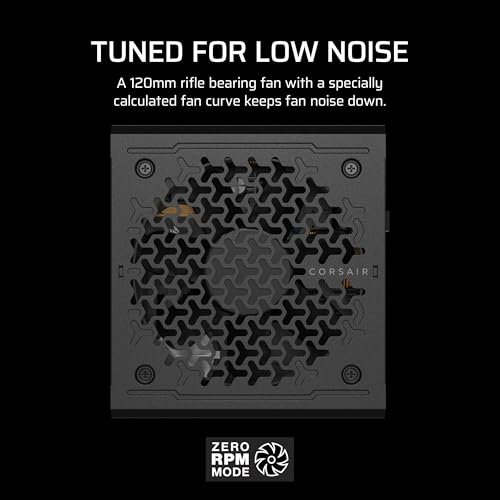
The 120mm rifle bearing fan is the primary thermal management mechanism. Rifle bearing fans sit between sleeve bearing (cheaper, shorter lifespan, noisier when worn) and ball bearing (more expensive, very long lifespan, slightly noisier when new) in terms of longevity and noise characteristics. Rifle bearings offer a good balance: they're quieter than ball bearings at low speeds and last significantly longer than sleeve bearings. Corsair uses a specifically calculated fan curve on this unit, which means the fan speed is tuned to the thermal model of the PSU rather than using a generic ramp. That results in lower noise at typical loads because the fan doesn't spin up unnecessarily when the unit is running cool.
notably, that this unit does not have a zero-RPM mode. Some competing PSUs in this bracket (and Corsair's own higher-end units) feature a semi-passive mode where the fan stops entirely at low loads, resulting in silent operation during light desktop use. The RM650e's fan runs continuously, albeit quietly. For most gaming builds this won't matter, because the GPU fans will dominate the acoustic environment anyway. But if you're building a silent PC for audio work or video editing where the system spends long periods at low load, the absence of zero-RPM mode is worth factoring in. The Modern Standby compatibility is a separate but related feature: it enables fast wake-from-sleep with better low-load efficiency, which is useful for systems that spend time in sleep states rather than fully powered off.
Acoustic Performance
Owner reviews on the RM650e consistently describe it as quiet under typical gaming loads. The combination of the rifle bearing fan, Corsair's calculated fan curve, and the Cybenetics Gold efficiency (which means less waste heat to dissipate) results in a unit that doesn't intrude on the acoustic environment of a typical gaming build. At mid-range gaming loads, the fan is audible if you put your ear near the back of the case, but it's not something you'd notice over GPU fans, case fans, or any reasonable ambient noise.
At full load, the fan does spin up, and owners report that it becomes more noticeable under sustained heavy loads. This is expected behaviour for any PSU without a zero-RPM mode, and it's worth being clear that "quiet operation" doesn't mean silent. The rifle bearing design means the fan noise is consistent and smooth rather than the rattling or whining that worn sleeve bearings can develop over time. Long-term acoustic degradation is less of a concern with rifle bearings than with cheaper alternatives. No specific decibel figures are published for this unit, so the honest answer is that it's quiet for its class but not silent, and the fan curve is tuned well enough that it doesn't spin up unnecessarily.
For context within the mid-range bracket: the RM650e compares favourably to similarly priced units from EVGA (now discontinued) and be quiet!'s Pure Power range in terms of acoustic character. The be quiet! units have a slight edge in absolute noise floor due to their focus on acoustic engineering, but the RM650e is competitive enough that it won't be the loudest component in any reasonably specified gaming build. If acoustics are the primary concern above all else, be quiet! is the brand to look at. If acoustics are one factor among several (efficiency, connectivity, warranty), the RM650e holds its own.
Build Quality
The RM650e uses 105°C-rated capacitors throughout, which Corsair highlights as a key quality indicator and which aligns with what teardown analysis of the RM series has consistently revealed. The use of higher-rated capacitors across the board (rather than mixing 105°C caps in critical positions with 85°C caps elsewhere, which some budget units do) indicates a consistent approach to component quality rather than selective specmanship. Japanese capacitors from manufacturers like Nippon Chemi-Con or Rubycon are the gold standard in PSU design; Corsair's RM series has historically used Japanese primary capacitors, though the specific supplier for the 2025 revision is not confirmed in the available data.
The fully modular connector block adds some complexity to the internal design compared to hardwired units, but Corsair's implementation in the RM series is well-regarded. The modular connectors use gold-plated contacts, which resist oxidation and maintain low contact resistance over time. The PCB soldering quality in the RM series has been consistently described as clean in teardown analyses, with no obvious cold joints or flux residue issues. These are the kinds of details that don't show up in spec sheets but matter for long-term reliability, and the 5-year warranty suggests Corsair is confident in the manufacturing consistency.
The rifle bearing fan is worth revisiting in the build quality context. Rifle bearings have an estimated lifespan of 40,000 to 60,000 hours depending on operating temperature, which comfortably exceeds the 5-year warranty period even in systems that run continuously. The fan housing and blade design are tuned for the RM series' thermal model, which means the airflow pattern is matched to the internal component layout rather than being a generic off-the-shelf solution. That level of thermal engineering integration is more common in premium units, and it's one of the reasons the RM series has a strong reputation for sustained quiet operation rather than just initial impressions.

Protection Features
The RM650e includes OVP (over-voltage protection), OCP (over-current protection), OPP (over-power protection), and SCP (short-circuit protection). This is a solid protection suite that covers the primary failure modes in PC power delivery. OVP trips if the output voltage rises above safe thresholds, protecting components from voltage spikes. OCP limits the current on the 12V rail, preventing sustained overcurrent that could damage the PSU or connected components. OPP acts as a secondary safety net that triggers if total power draw exceeds the PSU's rated capacity by a defined margin, protecting against sustained overload conditions that might not trigger OCP alone.
SCP is the most important protection feature from a safety perspective. A dead short on any output rail (caused by a failed component, damaged cable, or wiring error) triggers immediate shutdown. Without SCP, a short circuit can cause catastrophic failure including fire. The presence of SCP is a baseline requirement for any PSU, and its inclusion here is expected but worth confirming explicitly. The ATX 3.1 specification also has its own requirements around protection features, and compliance with that standard implies that the protection circuits meet the defined trip points and response times.
What's not listed in the verified product data for this unit is OTP (over-temperature protection) and UVP (under-voltage protection). This doesn't mean those protections are absent; they may simply not be highlighted in the available documentation. OTP is a common feature in quality PSUs that shuts the unit down if internal temperatures exceed safe limits, and UVP protects against brownout conditions where input voltage drops below the level needed for stable operation. Given the RM650e's positioning and price point, it would be unusual for these to be absent, but the honest answer is that the available data doesn't confirm them explicitly.
How It Compares
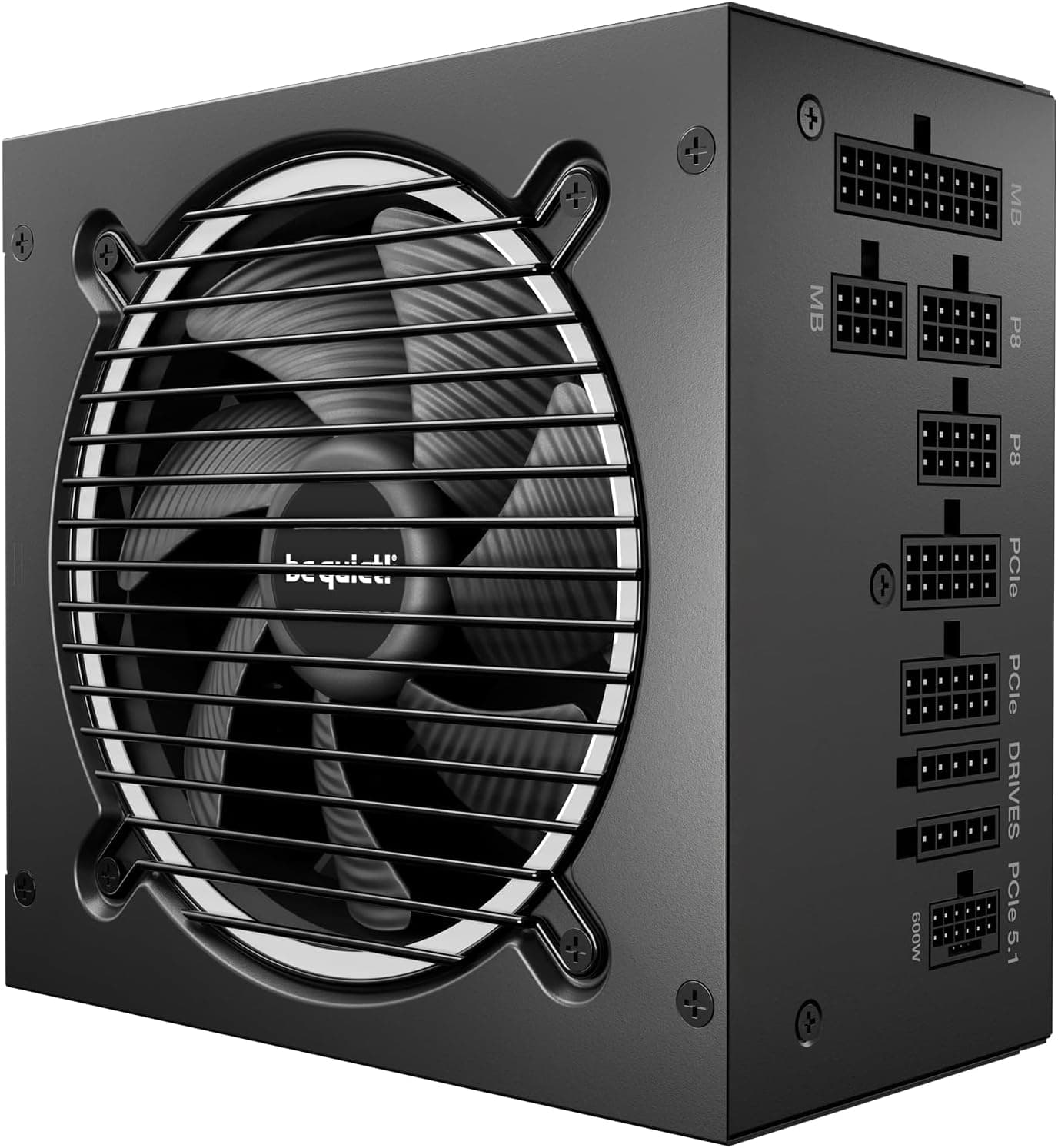
The two most relevant competitors to the RM650e in the UK mid-range market are the Seasonic Focus GX-650 and the be quiet! Pure Power 12 M 650W. The Seasonic Focus GX-650 is the unit most often cited as the benchmark for 650W Gold-rated fully modular PSUs: it carries 80 Plus Gold certification, a 10-year warranty, and Seasonic's reputation for tight voltage regulation. It typically costs more than the RM650e, and that price premium buys you a longer warranty and a marginally better-known efficiency pedigree. The be quiet! Pure Power 12 M 650W targets the acoustics-conscious buyer with an 80 Plus Gold rating and be quiet!'s focus on low-noise operation, though it also typically sits at a higher price point than the RM650e.
The RM650e's competitive position is defined by its ATX 3.1 compliance and native 12V-2x6 connector, which neither the Focus GX-650 nor the Pure Power 12 M offers at the same price point (both are older platform designs that predate ATX 3.1). For anyone building a system with a current-generation GPU or planning to upgrade to a PCIe Gen 5 card, that's a meaningful differentiator. The Cybenetics Gold efficiency rating also means the RM650e's real-world efficiency at 230V is competitive with 80 Plus Gold units, despite the lower 80 Plus certification tier. The 5-year warranty is shorter than the Seasonic's 10 years, which is a genuine trade-off to acknowledge.
The 4.5-star average across 133 is a useful data point here. The Seasonic Focus GX-650 has more reviews and a similar average, reflecting its longer market presence. The RM650e's review volume is growing, and the early pattern is positive. Owners specifically mention the cable quality, the quiet operation, and the straightforward installation as consistent positives. The main criticism that appears in owner feedback is the single EPS 8-pin connector, which limits compatibility with high-end overclocking boards, but that's a deliberate design choice for a 650W unit rather than a cost-cutting measure.
| Feature | CORSAIR RM650e (2025) | Seasonic Focus GX-650 | be quiet! Pure Power 12 M 650W |
|---|---|---|---|
| Wattage | 650W | 650W | 650W |
| Efficiency | Cybenetics Gold / 80 Plus Bronze | 80 Plus Gold | 80 Plus Gold |
| ATX Standard | ATX 3.1 | ATX 2.x | ATX 3.0 |
| 12V-2x6 / 12VHPWR | Native 12V-2x6 | Adapter only | Adapter only |
| Modularity | Fully Modular | Fully Modular | Fully Modular |
| Fan | 120mm Rifle Bearing | 120mm Fluid Dynamic | 120mm Rifle Bearing |
| Zero RPM | No | Yes (Hybrid Mode) | Yes |
| Warranty | 5 Years | 10 Years | 5 Years |
| Price | £74.90 | Higher | Higher |
Final Verdict: CORSAIR RM650e (2025) Fully Modular Low-Noise ATX Power Supply
The RM650e earns its 4.5-star average. For a mid-range gaming build centred around an RTX 4070, RTX 4070 Super, RX 7800 XT, or similar GPU paired with a current-generation Intel or AMD CPU, this is a well-matched, properly specified unit that doesn't cut corners where it matters. The Cybenetics Gold efficiency at 230V means it runs efficiently on UK mains, the ATX 3.1 compliance with native 12V-2x6 connectivity means it's genuinely ready for current and next-generation GPUs, and the 105°C-rated capacitors and 5-year warranty back up the quality claims with something tangible. The fully modular design is executed well, and the cable set covers the needs of virtually any mid-range build without requiring adapters or workarounds.
The genuine weaknesses are worth naming. No zero-RPM mode means it's not the right choice if you're building a silent workstation that spends most of its time at low load. The single EPS 8-pin connector rules it out for high-end overclocking builds on Z790 or X670E boards that want dual CPU power. And the 5-year warranty, while competitive for this price bracket, is shorter than the Seasonic Focus GX-650's 10-year coverage. If long-term warranty peace of mind is your priority above all else, the Seasonic is worth the extra outlay. If you're not planning to push a flagship CPU to its limits and you want ATX 3.1 compliance and native 12V-2x6 connectivity at a competitive price, the RM650e is the smarter buy.
Honestly, the value proposition here is strong. The combination of Cybenetics Gold efficiency, ATX 3.1 certification, fully modular cabling, and 105°C-rated capacitors at this price point is difficult to match in the current market. The 131 owner reviews averaging 4.5 stars reflect a unit that delivers on its spec sheet promises in real-world use, which is the only test that ultimately matters. Our editorial rating: 8.5 out of 10. Recommended for mid-range gaming builds. If you need something simpler and cheaper, look at a quality 650W 80 Plus Bronze semi-modular unit from Corsair's own CV Gold range or a comparable Seasonic S12III for builds that won't push above 400W system draw.
Is the CORSAIR RM650e (2025) good for gaming?
Yes, it's well-suited for mid-range gaming builds. 650W provides comfortable headroom for GPU and CPU combinations drawing up to roughly 450 to 500W at full load, which covers the RTX 4070, RTX 4070 Super, RX 7800 XT, and similar GPUs paired with current-generation Intel or AMD CPUs. The ATX 3.1 compliance and native 12V-2x6 connector make it compatible with current and next-generation GPUs without adapters. For RTX 4090 or RX 7900 XTX builds, step up to an 850W or 1000W unit instead.
What wattage PSU do I need for an RTX 4070?
Nvidia recommends a 650W PSU for RTX 4070 systems, and that recommendation assumes a mid-range CPU alongside it. The RM650e at 650W is a direct match for that recommendation, with enough headroom for a Core i5 or Ryzen 5 CPU without issue. If you're pairing an RTX 4070 Ti or Ti Super with a high-end CPU like a Core i9 or Ryzen 9, consider stepping up to 750W or 850W to maintain comfortable headroom under sustained load.
Is 80 Plus Bronze efficiency worth it, or should I pay more for Gold?
The RM650e's situation is unusual: it holds 80 Plus Bronze but also Cybenetics Gold certification, which is tested at 230V (UK mains) and is the more relevant figure for UK buyers. In practice, the Cybenetics Gold result means this unit performs at Gold-level efficiency in real UK conditions, despite the lower 80 Plus tier. If you're comparing it to a unit that's only 80 Plus Bronze with no Cybenetics certification, the efficiency gap is real and adds up over years of use. But the RM650e specifically is not a Bronze-efficiency unit in the way the certification tier might suggest.
How long is the warranty on the CORSAIR RM650e (2025)?
5 years. That covers manufacturing defects and component failures under normal operating conditions. Corsair's warranty process in the UK is handled through their support portal, and the RM series has a generally positive reputation for warranty claim handling based on owner feedback. 5 years is competitive for this price bracket, though it's shorter than the 10-year warranty offered by Seasonic on their Focus GX series, which is worth factoring in if you're planning a long-term build.

Is the CORSAIR RM650e (2025) fully modular?
Yes, it's fully modular. Every cable, including the ATX 24-pin motherboard connector, detaches completely from the PSU body. This means you only connect the cables your build actually needs, which reduces cable clutter inside the case and makes routing cleaner. It's particularly useful in smaller mid-tower or micro-ATX cases where cable management space is limited. The cable set includes flat ribbon-style cables that are easier to route behind the motherboard tray than traditional round cables.
What works. What doesn’t.
5 + 3What we liked5 reasons
- ATX 3.1 certified with native 12V-2x6 connector for current-gen GPU compatibility
- Cybenetics Gold efficiency at 230V - more relevant for UK buyers than the 80 Plus Bronze tier suggests
- 105°C-rated capacitors throughout for long-term reliability
- Fully modular with flat ribbon cables - clean cable management
- Competitive mid-range price for the spec level delivered
Where it falls3 reasons
- No zero-RPM mode - fan runs continuously, not ideal for silent builds
- Single EPS 8-pin limits compatibility with dual-power high-end overclocking boards
- 5-year warranty shorter than Seasonic's 10-year coverage at a comparable price
Full specifications
8 attributes| Efficiency rating | Gold |
|---|---|
| Form factor | ATX |
| ATX version | ATX 3.1 |
| Generation | RMe Series |
| Modularity | fully_modular |
| Pcie 5 ready | true |
| Warranty years | 7 |
| Wattage W | 650 |
Will it run on what you have?
Free toolIf this isn’t right for you
2 options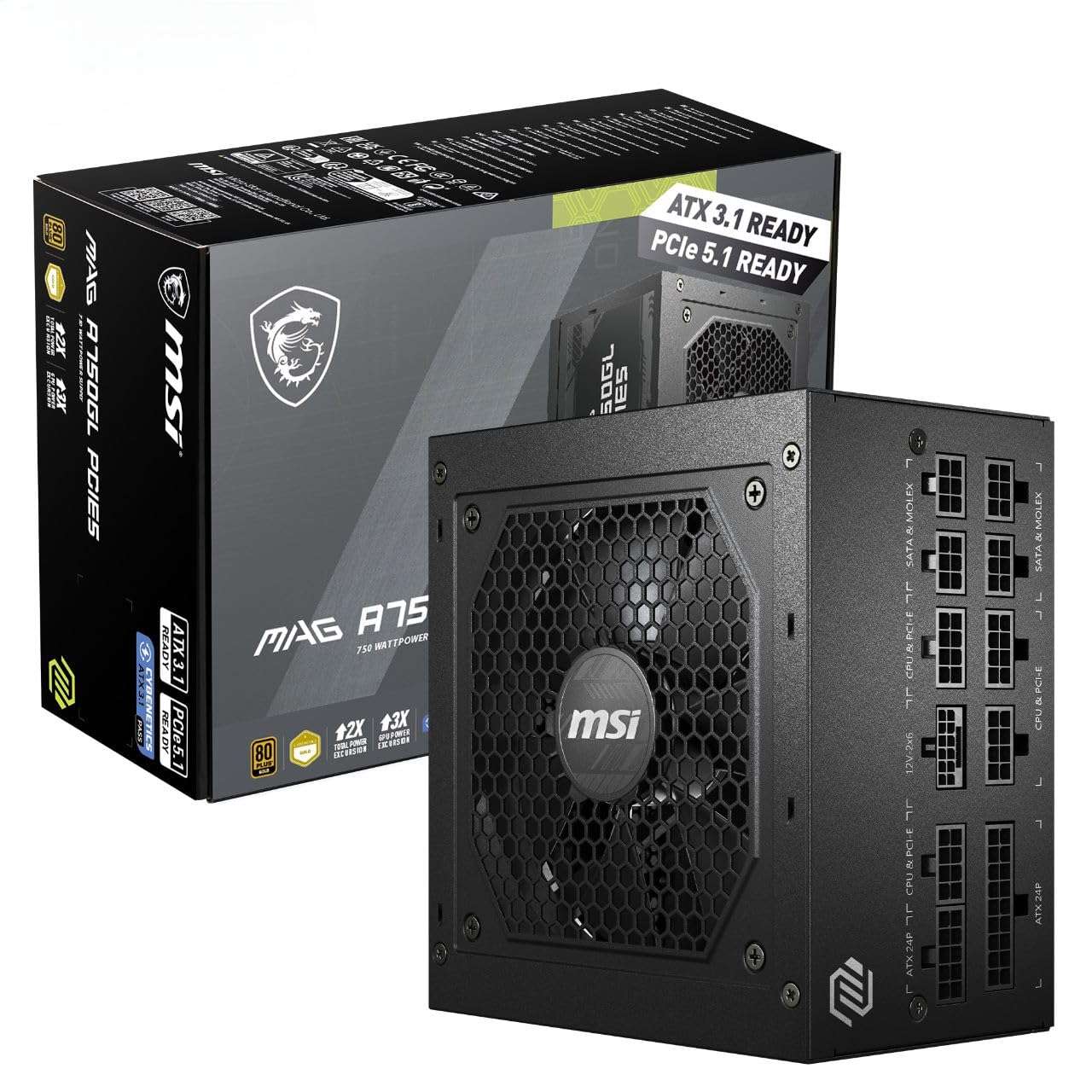 8.5 / 10
MSI MAG A750GL PCIE5 Power Supply Unit, 750W, 80 Plus Gold, Fully Modular, ATX 3.0, PCIe 5.0 GPU Support, Black Flat Cables, 7 Year Warranty
£88.50 · MSI
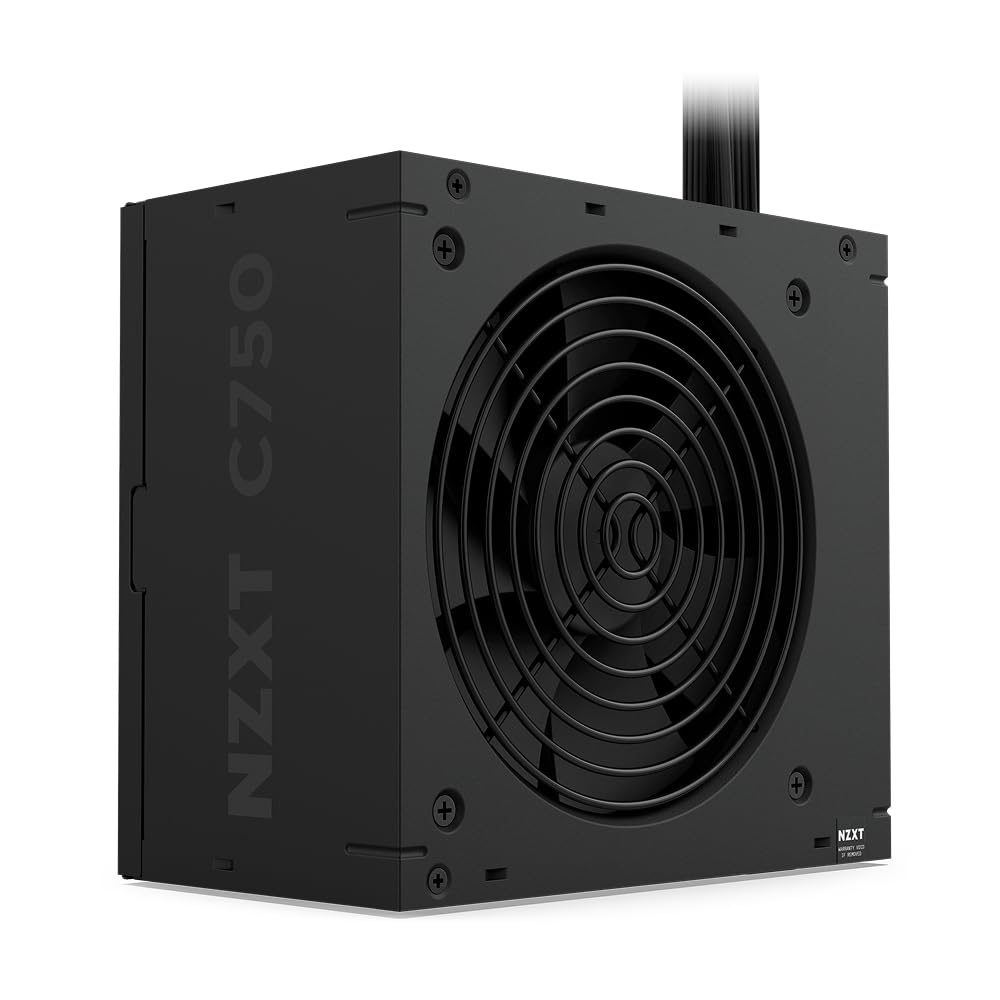 8.2 / 10
NZXT C750 Bronze ATX 3.1 - Non-Modular Power Supply - 750 Watts - 12V-2x6 Connector - 120mm FDB Fan - Compact 140mm Size - Black
£74.99 · NZXT
Frequently asked
5 questions01Is the CORSAIR RM650e (2025) Fully Modular Low-Noise ATX Power Supply with 12V-2x6 Cable, ATX 3.1 & PCIe 5.1 Compliant, Cybenetics Gold Efficiency, 105°C-Rated Capacitors, Modern Standby Mode, Black good for gaming?+
Yes, it's well-suited for mid-range gaming builds. 650W provides comfortable headroom for GPU and CPU combinations drawing up to roughly 450 to 500W at full load, covering the RTX 4070, RTX 4070 Super, RX 7800 XT, and similar GPUs with current-generation CPUs. The ATX 3.1 compliance and native 12V-2x6 connector make it compatible with current and next-generation GPUs without adapters. For RTX 4090 or RX 7900 XTX builds, step up to an 850W or 1000W unit.
02What wattage PSU do I need for an RTX 4070?+
Nvidia recommends a 650W PSU for RTX 4070 systems, assuming a mid-range CPU alongside it. The RM650e at 650W matches that recommendation directly, with enough headroom for a Core i5 or Ryzen 5 CPU without issue. For an RTX 4070 Ti or Ti Super with a high-end CPU like a Core i9 or Ryzen 9, consider stepping up to 750W or 850W to maintain comfortable headroom under sustained load.
03Is 80 Plus Bronze efficiency worth it, or should I pay more for Gold?+
The RM650e's situation is unusual: it holds 80 Plus Bronze but also Cybenetics Gold certification, tested at 230V (UK mains). In practice, the Cybenetics Gold result means this unit performs at Gold-level efficiency in real UK conditions. If comparing to a unit that's only 80 Plus Bronze with no Cybenetics certification, the efficiency gap is real and adds up over years of use. But the RM650e specifically is not a Bronze-efficiency unit in the way that tier label might suggest.
04How long is the warranty on the CORSAIR RM650e (2025) Fully Modular Low-Noise ATX Power Supply with 12V-2x6 Cable, ATX 3.1 & PCIe 5.1 Compliant, Cybenetics Gold Efficiency, 105°C-Rated Capacitors, Modern Standby Mode, Black?+
5 years. That covers manufacturing defects and component failures under normal operating conditions. Corsair's warranty process is handled through their support portal, and the RM series has a generally positive reputation for warranty claim handling. 5 years is competitive for this price bracket, though it's shorter than the 10-year warranty offered by Seasonic on their Focus GX series.
05Is the CORSAIR RM650e (2025) Fully Modular Low-Noise ATX Power Supply with 12V-2x6 Cable, ATX 3.1 & PCIe 5.1 Compliant, Cybenetics Gold Efficiency, 105°C-Rated Capacitors, Modern Standby Mode, Black fully modular?+
Yes, it's fully modular. Every cable, including the ATX 24-pin motherboard connector, detaches completely from the PSU body. This means you only connect the cables your build actually needs, reducing cable clutter and making routing cleaner. The cable set includes flat ribbon-style cables that are easier to route behind the motherboard tray than traditional round cables, which owners consistently highlight as a positive.