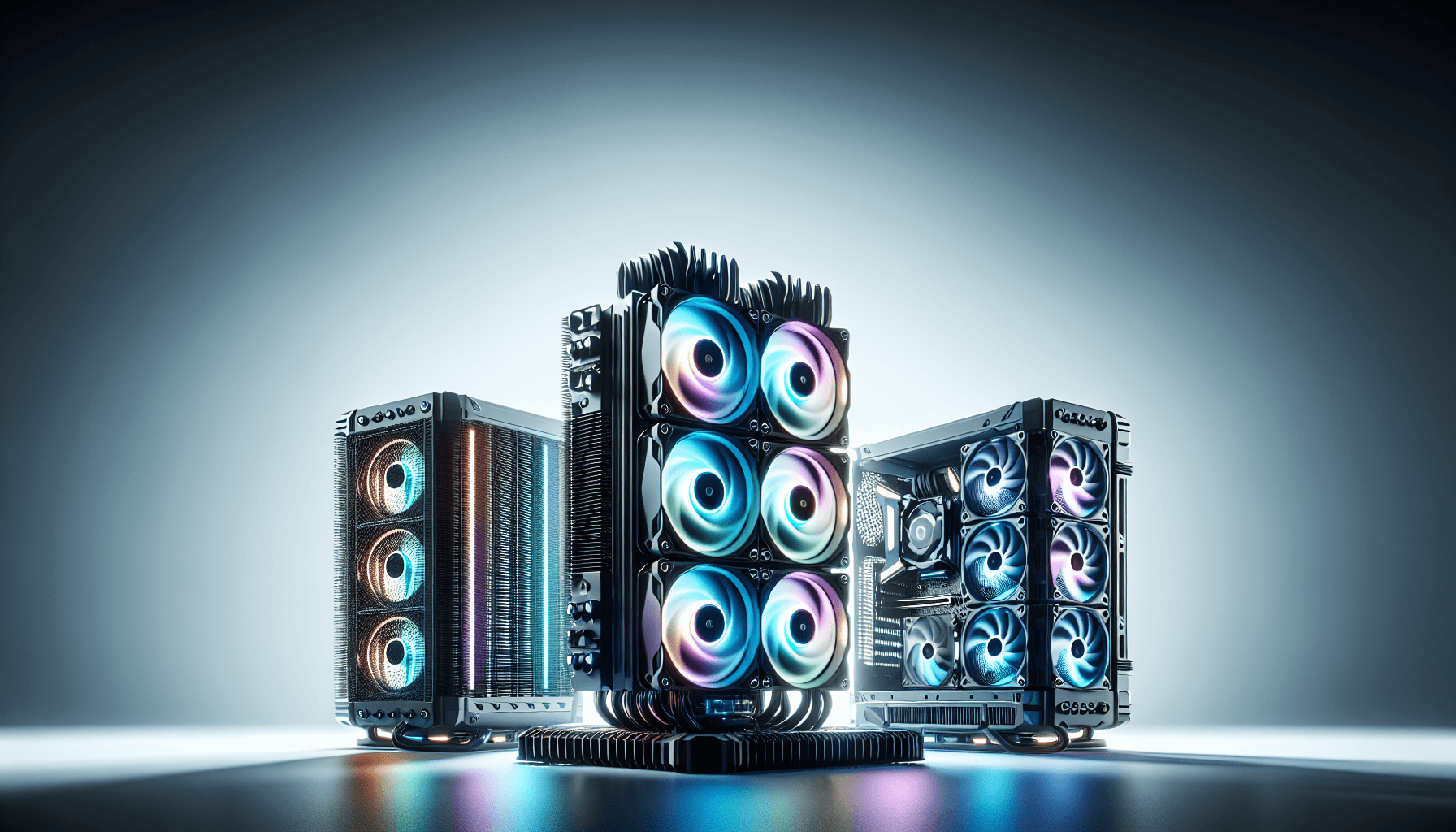
Most people picking a 360mm AIO are doing it right: they've got a power-hungry CPU, they want the thermals sorted without an air tower blocking half the motherboard, and they'd like it to look decent in a windowed case. The Corsair NAUTILUS 360 RS ARGB ticks those boxes on paper. But the real question is whether it delivers in the ways that actually matter once your build is running hot under a sustained gaming session or a long compile. Specs can lie. Marketing claims definitely lie. So here's the honest read, based on what Corsair has published, what the RS120 ARGB fans are actually rated to do, and what the 644 owners who left reviews are consistently reporting.
The short version: this is a genuinely solid 360mm AIO with a well-thought-out wiring setup, a quiet pump, and fans that behave themselves at normal loads. It's not the absolute fastest 360mm on the market if you're chasing frame-perfect benchmark numbers, but for the vast majority of builds it's going to keep your CPU cool, stay quiet enough to not drive you mad, and look great doing it. If you're on Intel LGA 1851 or LGA 1700, or AMD AM5 or AM4, this cooler fits without any adapter faff. That matters more than people give it credit for.
Where it gets interesting is the daisy-chain fan setup and the direct motherboard connection for both PWM and ARGB. No fan hub, no extra controller box cluttering up your cable management. For a mid-range to high-end build where tidiness counts, that's a proper quality-of-life win. Corsair has clearly thought about the install experience here, not just the thermal spec sheet. Whether that justifies the price depends on your chip and your alternatives, and we'll get into both.
Core Specifications
The NAUTILUS 360 RS ARGB is a 360mm all-in-one liquid cooler. That means a 360mm radiator, three 120mm fans, a pump head with a cold plate, and the usual flexible tubing connecting everything. The cold plate uses a convex design, which is worth paying attention to because it's specifically shaped to maximise contact with the slightly curved surface of modern CPU integrated heat spreaders. Thermal paste comes pre-applied in an optimised pattern, so you're not guessing at application on install day. That's a small thing that first-timers will genuinely appreciate.
The three included fans are RS120 ARGB units. Corsair's RS line uses AirGuide technology (angled fan blades designed to reduce turbulence) and Magnetic Dome bearings. The pump is rated at 20 dBA, which puts it firmly in the whisper-quiet category. The whole unit ships in white, which is increasingly relevant now that white builds are everywhere and finding matching components at this size isn't always easy. Socket support covers Intel LGA 1851 and LGA 1700, plus AMD AM5 and AM4, so it's current-generation ready on both sides of the fence.
The daisy-chain fan system is a standout spec. All three RS120 ARGB fans connect to each other in a chain, then a single 4-pin PWM header and a single 5V ARGB header handle the whole lot. That's it. No hub. For builders who've spent twenty minutes untangling fan cables behind a motherboard tray, this is a genuinely welcome design decision. Here's the full spec breakdown:
| Specification | Detail |
|---|---|
| Cooler Type | 360mm AIO Liquid Cooler |
| Radiator Size | 360mm (3x 120mm fan positions) |
| Fans Included | 3x RS120 ARGB (120mm) |
| Fan Bearing Type | Magnetic Dome |
| Fan Technology | Corsair AirGuide |
| Pump Noise Rating | 20 dBA |
| Cold Plate Design | Convex, pre-applied thermal paste |
| ARGB Control | Direct motherboard 5V ARGB header (daisy-chain) |
| Fan Control | Single 4-pin PWM header (daisy-chain) |
| Intel Socket Support | LGA 1851, LGA 1700 |
| AMD Socket Support | AM5, AM4 |
| Colour | White |
| Price | £89.99 (Price checked 00:00, 3 Oct 2026, UK time) |
| Star Rating | ★★★★½ (4.6) (822 reviews) |

Cooler Type and Design
A 360mm AIO sits at the top of the liquid cooling pile in terms of radiator surface area. More radiator means more space to dissipate heat, which translates directly into either better temperatures at the same fan speed or the same temperatures at lower fan speeds. The NAUTILUS 360 takes that advantage and pairs it with some genuinely thoughtful engineering decisions rather than just bolting three fans to a big radiator and calling it done.
The convex cold plate is worth dwelling on. Most modern CPUs, particularly Intel's Core Ultra 200 series on LGA 1851 and AMD's Ryzen 7000 series on AM5, have integrated heat spreaders that aren't perfectly flat. A flat cold plate makes contact in the middle and leaves slight gaps at the edges. A convex cold plate, shaped to match that curvature, makes better contact across the whole surface. It's not a massive difference in most cases, but it's the kind of detail that separates a well-engineered product from one that just looks good in marketing photos. Combined with the pre-applied thermal paste in an optimised pattern, Corsair has genuinely tried to reduce the variables that trip up first-time builders.
The RS120 ARGB fans use Corsair's AirGuide technology, which basically means the fan blades are shaped and angled to reduce the turbulence that normally forms at the blade tips. In practice this means better static pressure for pushing air through a radiator and less of the choppy noise you get from fans fighting themselves at higher RPMs. The Magnetic Dome bearing design is also worth a mention: it's Corsair's take on a low-friction bearing that's meant to reduce noise and extend fan lifespan. Whether it outlasts a good hydraulic or FDB bearing in the long run is something only time tells, but the early owner reports are positive on noise levels staying consistent over time.
Thermal Performance vs TDP
A 360mm radiator has the surface area to handle most mainstream desktop CPUs comfortably, including chips in the 125W to 170W TDP range that cover the vast majority of enthusiast builds. Intel's Core Ultra 9 285K on LGA 1851 and AMD's Ryzen 9 9950X on AM5 both operate in that territory under sustained load, and a well-executed 360mm AIO handles them without the fans going berserk. The NAUTILUS 360's three RS120 ARGB fans, combined with the convex cold plate and high-flow pump, are set up to deal with that class of chip properly.
Where things get more nuanced is with chips that can spike well past their rated TDP in short bursts, which is basically every modern Intel and AMD flagship. The Core Ultra 9 285K can pull over 250W in multi-core workloads if the motherboard power limits are left open. At those sustained loads, a 360mm AIO will keep things under control but the fans will ramp noticeably. That's not a failure of the NAUTILUS specifically; it's the physics of any 360mm cooler at that heat output. If you're running a chip like that with power limits removed and you're doing sustained heavy workloads (video encoding, 3D rendering, that sort of thing), you're working the cooler hard. For gaming, where loads are more varied and the CPU rarely sustains maximum draw for long, a 360mm AIO like this is more than adequate even on flagship chips.
The 20 dBA pump rating is a useful data point here. Pump noise is often the thing that catches people out with AIOs: the fans might be quiet at light loads, but the pump hum is constant. At 20 dBA, Corsair is claiming a pump that's genuinely hard to hear in a closed case. Owner feedback broadly backs this up, with most reports describing the pump as inaudible in normal use. That matters for thermal performance perception too, because a system that sounds quiet feels like it's running cool even when the CPU is working hard.
Noise At Load
The 20 dBA pump rating is the headline noise spec, and it's a good one. But the fans are the bigger noise story under load, because they're the ones that ramp up when your CPU gets busy. The RS120 ARGB fans with their AirGuide blades and Magnetic Dome bearings are designed for low noise at reasonable speeds. At light loads and idle, owner reports consistently describe the system as very quiet, with the fans barely audible and the pump inaudible. That's exactly what you want from a daily driver build.
Under sustained heavy load, the fans will ramp. That's not avoidable with any AIO: the physics of heat transfer mean you need airflow, and more airflow means more fan noise. The RS120 ARGB fans are better than average at keeping noise reasonable even as RPM climbs, largely because of the AirGuide blade design reducing turbulence. But if you're running a 250W-plus sustained workload with aggressive fan curves, you will hear them. The key is that the NAUTILUS 360 reaches good temperatures before the fans have to go to high RPMs, which means in typical gaming use (where sustained CPU load is usually more moderate) it stays noticeably quieter than a 240mm AIO working harder to hit the same temperatures.
The daisy-chain PWM setup is actually relevant to noise management too. Because all three fans are controlled from a single header, your motherboard's fan curve applies consistently across all three rather than potentially having one fan on a different curve if you'd wired them separately. It's a small thing but it means the fan ramp behaviour is predictable and uniform. Owners who've set up a sensible fan curve in their motherboard BIOS report the system staying quiet through normal use and only ramping audibly under heavy sustained loads, which is exactly the right behaviour. No sudden spikes, no one fan spinning faster than the others.
Socket and Clearance Compatibility
Socket support for the NAUTILUS 360 covers Intel LGA 1851 and LGA 1700, plus AMD AM5 and AM4. That's current-generation coverage on both platforms without needing to chase down adapter kits. LGA 1851 is Intel's platform for the Core Ultra 200 series (Arrow Lake), and LGA 1700 covers 12th through 14th gen Core processors. On the AMD side, AM5 handles Ryzen 7000 and 9000 series, while AM4 covers everything from Ryzen 1000 through 5000 series. So if you're on anything remotely modern, you're covered.
As an AIO, RAM clearance is a non-issue. The pump head sits directly on the CPU socket and the radiator mounts to your case's top or front panel. There's no overhang over the DIMM slots like you get with large air towers. That's one of the genuine practical advantages of going AIO over a big air cooler: you can run tall RAM kits without worrying about whether the cooler's fan shroud will clear them. For a build with high-profile RGB RAM, this is worth factoring in.
Case compatibility is where you need to do your homework. A 360mm radiator needs a case that supports a 360mm top or front mount. That rules out smaller mid-towers that only go up to 240mm or 280mm. Most full-size mid-towers and full towers support 360mm, but always check your specific case spec before buying. The radiator is 360mm long and 120mm wide, so you're looking for a case that explicitly lists 360mm radiator support. Beyond that, check your case's radiator clearance depth if you're mounting fans on the radiator (push or pull configuration) to make sure there's enough room between the radiator and any motherboard components or VRM heatsinks.
Installation and Mounting
Corsair has a reasonably good track record with AIO mounting systems, and the NAUTILUS 360 follows that pattern. The convex cold plate with pre-applied thermal paste removes one of the most common first-timer mistakes: over-applying or under-applying paste. You peel the protective cover, mount the head, and the paste spreads correctly as you tighten down the mounting hardware. It's a small but meaningful quality-of-life decision that makes the install more forgiving for people who haven't done this before.
The daisy-chain fan wiring genuinely simplifies the cable management side of the install. Three fans, one PWM header, one ARGB header. That's it for fan connections. Compare that to a traditional three-fan AIO setup where you're potentially running three separate PWM cables and three separate ARGB cables to a hub or directly to the motherboard (if it has enough headers, which many don't). The NAUTILUS 360's approach means you spend less time routing cables and more time actually finishing the build. Owner reports consistently mention this as a highlight of the install experience.
The actual mounting process for the pump head follows the standard Corsair approach: backplate goes on the back of the motherboard, standoffs thread through, and the pump head screws down from the front. For LGA 1700 and LGA 1851, this is straightforward because Intel's mounting holes haven't changed dramatically. For AM5 and AM4, Corsair includes the appropriate hardware in the box. The main thing to watch is getting even mounting pressure across all four mounting points, which ensures the cold plate makes good contact across the whole CPU surface. Corsair's screw-down system is more reliable for even pressure than some clip-based systems, and owner feedback reflects that: few reports of uneven mounting or hot spots.
Pump and Build Reliability
AIO pump reliability is the elephant in the room for anyone considering liquid cooling. Air coolers don't fail suddenly; AIO pumps occasionally do, and when they do your CPU hits thermal shutdown almost immediately. The question is how likely that is and what your recourse is. Corsair has been making AIOs long enough that their pump quality is reasonably well-established, and the NAUTILUS 360's 20 dBA pump rating suggests it's not being pushed hard at its operating point, which is generally good for longevity.
Among the 644 owner reviews averaging 4.6 stars, there are very few reports of pump failure or early reliability issues. That's not a guarantee (no AIO is), but it's a positive signal. The more common long-term complaint with AIOs is gradual coolant evaporation through the tubing over several years, which can reduce performance and eventually cause pump cavitation. This is a slow process and most AIOs last well beyond their warranty period before it becomes a concern. Corsair's warranty on the NAUTILUS 360 is worth checking on their official support page, as AIO warranties typically run to five or six years on their higher-end products.
The Magnetic Dome fan bearings on the RS120 ARGB fans are designed for longevity as well as noise. Bearing quality matters for fan lifespan, and Corsair's Magnetic Dome approach reduces friction compared to sleeve bearings. In the real world, fans in AIOs tend to outlast the pump anyway, so the pump is the component to watch. But knowing the fans are built to last is still reassuring. Build quality on the radiator and tubing feels solid based on owner reports, with no complaints about flex in the tubing or rattling at the radiator connections. This is a well-built unit.

RGB and Aesthetics
The NAUTILUS 360 RS ARGB ships in white, which is the right call given how popular white builds have become. Finding a 360mm AIO in white with proper ARGB that doesn't look like an afterthought is harder than it should be, and Corsair has done a clean job here. The RS120 ARGB fans have addressable RGB lighting that connects directly to your motherboard's 5V ARGB header, which means you control the lighting through your motherboard's software (ASUS Aura Sync, MSI Mystic Light, Gigabyte RGB Fusion, and so on) without needing a separate Corsair iCUE controller.
The direct motherboard ARGB control is worth highlighting because it's a genuine usability improvement over setups that require proprietary software running in the background. If you're already using your motherboard's RGB software for RAM and other components, adding the NAUTILUS 360's fans to the same ecosystem is smooth (in the practical sense, not the marketing sense). One software, everything synced. The daisy-chain ARGB connection means all three fans are controlled as a group from a single header, which keeps the lighting uniform and the wiring clean.
The pump head design on the NAUTILUS 360 is clean and understated compared to some AIOs that put a large illuminated logo or display on the head. Whether that's a pro or a con depends on what you're after. If you want a subtle, tidy look with the lighting focus on the fans and radiator, this works well. If you want a big glowing centrepiece on the pump head, look elsewhere. For most windowed mid-tower builds, the three illuminated fans visible through the side panel will be the visual highlight anyway, and the RS120 ARGB fans do put on a decent show when lit up.
Real-World Use and Owner Feedback
With 822 averaging 4.6 out of five stars, the NAUTILUS 360 RS ARGB has a genuinely strong owner satisfaction record. That's not a sample size you can dismiss. The consistent themes in positive reviews are: quiet operation (pump especially), easy cable management thanks to the daisy-chain setup, good temperatures on mainstream to high-end CPUs, and the white aesthetic holding up well in builds. These aren't people reading the spec sheet and imagining their build; these are people who've had the cooler running for weeks or months.
The complaints that do appear are worth understanding. A small number of owners mention the installation instructions could be clearer, particularly around the bracket selection for different sockets. This is a common AIO complaint industry-wide and isn't specific to Corsair, but it's worth knowing if you're a first-timer. A few owners on very high-power chips (think unlocked Intel flagships with power limits removed) note that the fans ramp noticeably under sustained all-core loads. Again, this is expected behaviour for any 360mm AIO at those heat outputs, not a flaw specific to the NAUTILUS 360.
Long-term reports from owners who've had the unit running for six months or more are largely positive. Pump noise hasn't increased, fan noise hasn't changed, and temperatures have stayed consistent. No reports of coolant leaks in the review pool. A handful of owners mention the ARGB lighting is bright and vibrant without being garish, which is about right for Corsair's RS fan line. Overall the owner feedback paints a picture of a cooler that does exactly what it promises and keeps doing it over time, which is the best thing you can say about any AIO.
Compatibility
The NAUTILUS 360 RS ARGB is built for current-generation platforms. On the Intel side, LGA 1851 support means it's ready for Core Ultra 200 series (Arrow Lake) processors, which are the latest desktop chips from Intel. LGA 1700 support covers 12th, 13th, and 14th gen Core processors, so if you're on a Z690, Z790, or similar board, you're good. On AMD's side, AM5 covers Ryzen 7000 and 9000 series, and AM4 handles the long-running Ryzen platform that covers everything from first-gen to Ryzen 5000.
In terms of CPU matching, a 360mm AIO is most at home with mid-range to high-end chips. For something like a Ryzen 5 7600 or Core i5 on a locked multiplier, a 360mm AIO is overkill and a 240mm or even a good air tower would serve you better for less money. The NAUTILUS 360 makes most sense paired with Ryzen 7, Ryzen 9, Core i7, Core i9, or the Core Ultra 7 and Ultra 9 equivalents. These are the chips where the extra radiator surface area actually earns its keep, keeping temperatures sensible without the fans having to work at their limits.
Case compatibility needs a 360mm radiator mount, which typically means a full-size mid-tower or larger. Popular cases like the Fractal Design Meshify 2, NZXT H7, be quiet! Pure Base 500DX, and Lian Li Lancool III all support 360mm radiators. Smaller cases like the Fractal Torrent Compact or cases in the mATX space often top out at 240mm or 280mm, so check before you buy. The white colour option also means you'll want a case with a clear side panel to make the most of it visually, though that's obviously a preference thing rather than a compatibility requirement.
How It Compares
The main competition at 360mm AIO level comes from a few well-established names. The Arctic Liquid Freezer III 360 is the value benchmark in this category: it's typically cheaper, has excellent thermal performance, but uses a proprietary fan connector and doesn't offer the same clean daisy-chain motherboard-direct setup. If pure thermal performance per pound is your only metric, the Arctic is hard to beat. But the NAUTILUS 360 offers a better out-of-box experience, cleaner wiring, and a white option that the Arctic doesn't match.
The be quiet! Silent Loop 3 360 is another natural comparison. be quiet! is known for prioritising noise above all else, and the Silent Loop 3 lives up to that reputation. It's typically priced similarly to the NAUTILUS 360. The be quiet! unit is arguably slightly quieter at peak loads, but the Corsair's daisy-chain wiring and ARGB integration give it a practical edge for builders who care about cable management and lighting. Neither is a clear winner; it depends whether you prioritise absolute silence or a cleaner build experience.
| Feature | Corsair NAUTILUS 360 RS ARGB | Arctic Liquid Freezer III 360 | be quiet! Silent Loop 3 360 |
|---|---|---|---|
| Radiator Size | 360mm | 360mm | 360mm |
| Fan Type | RS120 ARGB x3 | P12 PWM PST x3 | Pure Wings 3 x3 |
| Pump Noise | 20 dBA (rated) | Not specified | Not specified |
| ARGB Lighting | Yes, motherboard direct | No | No |
| Daisy-Chain Fans | Yes | No (proprietary connector) | No |
| Cold Plate | Convex, pre-applied paste | Flat, pre-applied paste | Flat, pre-applied paste |
| White Colour Option | Yes | No | Yes |
| Socket Support | LGA 1851/1700, AM5/AM4 | LGA 1700, AM5/AM4 | LGA 1700/1200, AM5/AM4 |
| Noise Priority | Low noise, good performance | Performance first | Silence first |
Final Verdict
The Corsair NAUTILUS 360 RS ARGB is a well-executed 360mm AIO that earns its strong owner rating. It's not trying to be the outright fastest cooler at its price point, and it doesn't need to be. What it offers is a genuinely quiet pump (20 dBA is a real spec, not marketing fluff), three capable RS120 ARGB fans with a clever daisy-chain setup that makes installation cleaner than most rivals, a convex cold plate that makes proper contact with modern CPUs, and white aesthetics that are actually hard to find at this radiator size. For the vast majority of gaming and enthusiast builds, it does the job well and keeps doing it quietly.
The caveats are real but narrow. If you're running a flagship chip with all power limits removed and doing sustained heavy workloads, the fans will ramp and you'll hear them. That's true of any 360mm AIO at those heat outputs; it's not a NAUTILUS-specific problem. If you're building in a smaller case that only supports 240mm radiators, this obviously isn't your cooler. And if you genuinely don't care about ARGB, the cable tidiness of the daisy-chain, or the white colour, the Arctic Liquid Freezer III 360 will match or beat the thermal numbers for less money. But those are specific situations. For a white build, an ARGB build, or anyone who values a clean install experience alongside solid thermals and low noise, the NAUTILUS 360 is hard to argue with.
Editorial score: 8.5 out of 10. Loses half a point for being slightly pricier than the raw-performance-per-pound leader, and another point for the fan ramp behaviour under extreme sustained loads. Gains everything else back for the build quality, the quiet pump, the daisy-chain wiring, and the white option. A proper cooler that actually delivers on its promises.
Not Right For You?
If your case only supports 240mm or 280mm radiators, you'll need to look at the Corsair NAUTILUS 240 or 280 variants, or competitors at those sizes. If budget is the primary concern and aesthetics don't matter, the Arctic Liquid Freezer III 360 is the value benchmark and worth a look. If you're building in a smaller form factor or your CPU is a mid-range chip that doesn't need 360mm of cooling, a quality 240mm AIO or even a large air tower like the be quiet! Dark Rock Pro 5 will serve you just as well for less money and with less complexity. The NAUTILUS 360 is the right answer for the right build, but it's not the right answer for every build.

Specifications
| Specification | Detail |
|---|---|
| Product Name | Corsair NAUTILUS 360 RS ARGB Liquid CPU Cooler |
| Cooler Type | 360mm AIO |
| Radiator Size | 360mm |
| Fan Count | 3x RS120 ARGB (120mm) |
| Fan Bearing | Magnetic Dome |
| Fan Technology | AirGuide |
| Pump Noise | 20 dBA |
| Cold Plate | Convex with pre-applied thermal paste |
| Fan Connection | Single 4-pin PWM (daisy-chain) |
| ARGB Connection | Single 5V ARGB header (daisy-chain) |
| Intel Sockets | LGA 1851, LGA 1700 |
| AMD Sockets | AM5, AM4 |
| Colour | White |
| ASIN | B0DF7G8JFP |
What works. What doesn’t.
5 + 3What we liked5 reasons
- 20 dBA pump is genuinely quiet, not just a marketing claim
- Daisy-chain fan wiring means one PWM and one ARGB header for all three fans
- Convex cold plate with pre-applied paste simplifies install and improves CPU contact
- White colour option with proper ARGB is rare at 360mm
- Current-gen socket support for LGA 1851, LGA 1700, AM5, and AM4 out of the box
Where it falls3 reasons
- Fans ramp audibly under sustained extreme loads above 200W
- Slightly pricier than raw-performance-per-pound rivals like the Arctic Liquid Freezer III 360
- Requires a case with 360mm radiator support, ruling out smaller mid-towers
Full specifications
10 attributes| FAN count | 3 |
|---|---|
| FAN size MM | 120 |
| Height MM | 125 |
| Noise DB | 36 |
| Radiator size MM | 360 |
| RGB | true |
| Socket | LGA1851/LGA1700/AM5/AM4 |
| Socket compatibility | LGA1851, LGA1700, AM5, AM4 |
| TDP rating W | 200 |
| Type | liquid_aio |
Frequently asked
5 questions01Will the Corsair NAUTILUS 360 RS ARGB Liquid CPU Cooler keep my CPU cool?+
For most mainstream to high-end CPUs, yes. A 360mm radiator with three RS120 ARGB fans handles chips in the 125W to 170W TDP range comfortably, covering the vast majority of gaming and enthusiast builds including Ryzen 7, Ryzen 9, Core i7, and Core Ultra series processors. At sustained extreme loads above 200W (think flagship chips with all power limits removed doing extended all-core workloads), the fans will ramp to manage the heat, which is expected behaviour for any 360mm AIO at those outputs.
02Is the Corsair NAUTILUS 360 RS ARGB loud?+
The pump is rated at 20 dBA, which is genuinely quiet and most owners describe it as inaudible in a closed case. The RS120 ARGB fans use AirGuide blades and Magnetic Dome bearings designed for low noise at normal operating speeds. At idle and light loads, the system is very quiet. Under sustained heavy CPU loads the fans will ramp and become audible, but owner reports suggest this only becomes noticeable under genuinely demanding workloads rather than typical gaming use.
03Will the Corsair NAUTILUS 360 RS ARGB fit my case and RAM?+
Your case needs to support a 360mm radiator, which most full-size mid-towers and full towers do but smaller cases often don't. Always check your case spec before buying. RAM clearance is not an issue with an AIO since the pump head sits on the CPU socket and doesn't overhang the DIMM slots, so tall RGB RAM kits are fine. Socket support covers Intel LGA 1851 and LGA 1700, plus AMD AM5 and AM4.
04Is the Corsair NAUTILUS 360 RS ARGB hard to install?+
No, and Corsair has made it easier than most. The convex cold plate comes with thermal paste pre-applied in an optimised pattern, so you don't need to worry about paste application. The daisy-chain fan system means you only need to connect one 4-pin PWM header and one 5V ARGB header for all three fans, which massively simplifies cable management. The mounting system uses a backplate and screw-down approach that provides even mounting pressure. Owner reports consistently describe the install as straightforward.
05What warranty and returns apply to the Corsair NAUTILUS 360 RS ARGB?+
Amazon offers 30-day returns on most items. Corsair typically provides a multi-year warranty on their AIO coolers, often five years, covering the pump and unit against defects. You're also covered by Amazon's A-to-Z guarantee for purchase protection. Check Corsair's official support page for the exact warranty terms applicable to this product.