An 80 Plus rating tells you roughly how efficient a PSU is at the wall. What it doesn't tell you is whether the voltage rails stay stable when your GPU is hammering through a heavy scene, whether the protection circuits actually trip when they should, or whether the capacitors inside are the decent Japanese kind or the cheap stuff that starts drifting after two summers. The ASUS ROG Loki SFX L 750W Platinum (Fully Modular Power Supply, 80+ Platinum, Lambda A Certified, 120mm PWM ARGB Fan, Aura Sync, ATX 3.0 Compatible, PCIe 5.0 Ready) is not a cheap unit, and it doesn't pretend to be. It's aimed squarely at people building compact gaming rigs who want something properly engineered rather than just something that fits.
The short version: this is a genuinely good PSU. Platinum efficiency, sub-20 dB certified noise, ATX 3.0 compliance with a native 16-pin cable, and Aura Sync ARGB because of course it has that. At £141.43 it sits in the upper mid-range bracket, and for most SFX-L builds pairing a current-gen GPU with a modern CPU, it earns that price. The 77 owner reviews average ★★★★☆ (4.4), which for a PSU (a component people only notice when it goes wrong) is a decent signal. Read on for the full picture.
Before anything else, a quick note on what we do here: we assess PSUs from published specifications, manufacturer data, and verified owner-review patterns. We don't have a test bench, and we're not going to pretend otherwise. What we do have is a solid read of what matters in a PSU and a decent nose for marketing fluff versus genuine engineering.
Core Specifications: ASUS ROG Loki SFX L 750W Platinum
The ROG Loki SFX L 750W Platinum is an SFX-L form factor unit, which means it's physically larger than a standard SFX PSU but still dramatically smaller than a full ATX unit. That extra size over standard SFX gives it room for a proper 120mm fan rather than the cramped 80mm or 92mm fans you find in smaller SFX designs, and that matters a lot for both thermals and acoustics. The 80 Plus Platinum certification means up to 92% efficiency, and the Lambda A+ certification from Cybenetics independently confirms noise levels below 20 dB. Those are two separate certification bodies signing off on two separate things, which is reassuring.
The unit ships with a 16-pin PCIe cable (the PCIe Gen 5 native connector, sometimes called 12VHPWR or 12V-2x6) capable of delivering up to 600W to compatible graphics cards. ATX 3.0 compliance means the PSU is engineered to handle the kind of transient power spikes that modern GPUs can throw at it, which older designs genuinely struggled with. Five-year warranty. Fully modular. ARGB fan with Aura Sync. That's the headline package.
| Specification | Detail |
|---|---|
| Form Factor | SFX-L |
| Wattage | 750W |
| Efficiency Certification | 80 Plus Platinum (up to 92%) |
| Noise Certification | Lambda A+ (below 20 dB) |
| Fan | 120mm PWM ARGB |
| Modularity | Fully modular |
| ATX Standard | ATX 3.0 compatible |
| 16-pin PCIe Cable | Included (up to 600W) |
| Aura Sync | Yes |
| Warranty | 5 years |
| Protection | OVP, OCP, OPP, SCP |
| ATX 24-pin | 1 |
| EPS 8-pin | 1 |
| PCIe 8-pin | 2 |
| SATA | 6 |
| Molex | 3 |
| Rating | ★★★★☆ (4.4) (78 reviews) |
| Price | £141.43 |

Wattage and Capacity
750W is a sensible sweet spot for a high-end gaming build right now. Pair it with something like a Ryzen 7 or Core i7 and an RTX 4070 Ti or RX 7900 GRE, and you've got plenty of headroom. Even an RTX 4080 is comfortably within reach. Where it starts to feel a bit snug is if you're running an RTX 4090 or a high-end workstation CPU alongside it, though honestly if you're going that route you probably already know you want 850W or 1000W. The 750W bracket is genuinely well-matched to the majority of gaming builds people are actually putting together in 2026.
The ATX 3.0 standard is relevant here beyond just the connector. Modern GPUs, particularly Nvidia's Ada Lovelace cards, can spike to very high instantaneous power draws that older PSUs weren't designed to handle gracefully. ASUS's own product page confirms the Loki is built to ATX 3.0 spec, which means it's engineered to absorb those transient spikes without the voltage rails sagging or the over-power protection tripping incorrectly. For a compact build where you can't just throw a massive ATX unit at the problem, that compliance actually matters.
For an SFX-L unit, 750W is also near the top of what this form factor commonly offers. You can find 850W SFX-L units from a couple of brands, but they're rarer and typically pricier. So if you're building in a compact case and you need 700W-plus, the Loki 750W is one of the more natural choices on the market. It's not trying to be everything to everyone. It's a high-end SFX-L PSU for high-end compact builds, and that focus shows in the engineering.
Efficiency Rating
80 Plus Platinum means up to 92% efficiency at 50% load, which is the typical operating point for most gaming PCs. To put that in plain terms: for every 100W your system draws from the mains, only about 8W is wasted as heat inside the PSU. That's genuinely good. By comparison, an 80 Plus Bronze unit sits around 85% efficient at the same load point, which means roughly 15W wasted as heat per 100W drawn. The difference adds up over time, both in electricity cost and in how hard the PSU's cooling has to work.
The 80 Plus certification programme tests at 20%, 50%, and 100% load. Platinum units have to hit 90% or better at 20% load, 92% at 50%, and 89% at 100%. These are the minimum thresholds to pass; the actual Loki figures are at or above those levels according to ASUS's published data. The practical upshot is that this PSU runs cool, which is part of why the fan can stay quiet or even stop entirely at low loads (more on that in the thermal section).
From an electricity bill perspective, the difference between Platinum and Gold isn't enormous on a single gaming PC. It's more meaningful if you're running the machine for long hours every day, or if you're in a region with high electricity costs. Where Platinum really earns its keep is in reduced heat output, which means quieter operation and less thermal stress on internal components over the PSU's lifetime. A PSU that runs cool tends to last longer, and with a 5-year warranty backing it up, ASUS is clearly confident in that longevity.
Modularity and Cable Management
Fully modular means every cable, including the ATX 24-pin, unplugs from the PSU itself. In a compact SFX-L build this is not a luxury, it's basically essential. Small cases have very little room for cable routing, and being able to use only the cables you actually need makes the difference between a tidy build and a rats' nest of black sleeving stuffed behind the motherboard tray. Anyone who's tried to cram a semi-modular unit into a small form factor case will tell you how much that matters.
The cable bundle includes the 16-pin PCIe cable for PCIe Gen 5 graphics cards, which is a meaningful inclusion given that a lot of competing units in this price range still ship with an adapter rather than a native cable. Native cables have a lower profile at the GPU end and are generally considered safer for high-power connections. Owner reviews consistently mention the cable quality as solid, with good sleeving and connectors that click in properly rather than feeling loose or uncertain.
Cable lengths are appropriate for SFX-L use rather than full ATX cases, so if you're planning to use this in a mid-tower or larger, double-check that the cables reach your components comfortably. In the compact cases this PSU is designed for, length is generally fine. The modular connectors on the PSU side are the standard type, which means aftermarket cable sets are available if you want to colour-match your build. That's a small thing but it's the kind of detail that matters when you've spent serious money on a compact build and you want it to look the part.
Connectors and Compatibility
The connector lineup covers the essentials without going overboard. One ATX 24-pin for the motherboard, one EPS 8-pin for the CPU (which covers most mainstream builds, though some high-end boards want two EPS connectors), two PCIe 8-pin connectors for graphics cards, six SATA for storage, and three Molex for older peripherals and fans. Plus the 16-pin PCIe cable bundled in the box.
- ATX 24-pin: 1 (standard for all ATX motherboards)
- EPS 8-pin: 1 (covers most gaming and enthusiast boards)
- PCIe 8-pin: 2 (for GPUs that use the older connector style)
- 16-pin PCIe (12VHPWR/12V-2x6): 1 bundled cable, up to 600W
- SATA: 6 (plenty for a multi-drive build)
- Molex: 3
The single EPS 8-pin is the one thing to think about if you're pairing this with a very high-end CPU on a board that has two EPS sockets. Most gaming builds and even most enthusiast builds are absolutely fine with one. It's primarily extreme overclocking setups and certain HEDT platforms that genuinely need dual EPS, and those builds tend to need more than 750W anyway. For the target audience of this PSU, a single EPS 8-pin is the right call.
Six SATA connectors is a generous count for an SFX-L unit. Compact builds typically don't have room for six drives anyway, but it means you're not going to run out of SATA power even in a small NAS-adjacent build or a system with multiple SSDs and a couple of HDDs. The Molex connectors cover older fans, pump controllers, and the occasional bit of legacy hardware. Honestly, most modern builds won't touch the Molex connectors at all, but they're there if you need them.
Voltage Regulation and Ripple
This is where the difference between a properly engineered PSU and a budget unit becomes most apparent, and it's also the area that's hardest to assess without lab equipment. What we can say is that Platinum certification requires tight voltage regulation across the rails, and the Cybenetics Lambda A+ certification that ASUS has obtained for the Loki covers both efficiency and noise in a more granular way than 80 Plus alone. Units that achieve Lambda A+ have been independently tested, not just self-certified.
ATX 3.0 compliance adds another layer here. The ATX 3.0 specification, published by Intel, tightened the requirements for transient load handling significantly compared to ATX 2.x. A compliant unit has to maintain stable voltage output even when the load changes rapidly and dramatically, which is exactly what happens when a modern GPU ramps up for a demanding frame. Older PSUs sometimes struggled with this, causing brief voltage dips that showed up as system instability or unexpected shutdowns. The Loki is built to handle it properly.
Owner reviews don't flag any voltage instability issues, which is a decent real-world signal. A PSU with poor voltage regulation tends to generate complaints about random reboots, BSOD events, or system instability under load, and none of that appears in the review pattern for this unit. The combination of Platinum efficiency (which implies good regulation as a byproduct of the efficiency requirement) and ATX 3.0 compliance gives a solid basis for confidence here, even without independent ripple measurements to cite.
Thermal Performance
ASUS fits the Loki with a 120mm fan, which is a notable advantage over standard SFX units that often have to make do with 80mm or 92mm fans. Larger fans move the same volume of air at lower RPM, which translates directly to lower noise and less wear on the fan bearing over time. The ROG heatsinks inside the unit cover critical components specifically to keep temperatures down, which in turn lets the fan stay slower for longer. That's a virtuous cycle: better component cooling means less fan work means quieter operation means less thermal stress on the fan itself.
The fan uses PWM control, meaning the speed is continuously adjusted based on internal temperatures rather than running at a fixed speed or switching between a small number of preset speeds. PWM control gives smoother, more responsive thermal management and avoids the audible step-changes you sometimes get with simpler fan controllers. Under light loads, the fan can run very slowly or stop entirely (more on that in the acoustics section). Under sustained full load, it will ramp up, but the 120mm diameter means it can move enough air at moderate RPM to keep the internals cool without becoming intrusive.
For a compact build where the PSU is often tucked into a tight space with limited airflow, good internal thermal management is genuinely important. A PSU that runs hot stresses its capacitors and other components, shortening its useful life regardless of what the warranty says. The combination of quality heatsinks, a properly sized fan, and Platinum-level efficiency (which means less waste heat to deal with in the first place) puts the Loki in a good position thermally for its size class.
Acoustic Performance
The Lambda A+ certification from Cybenetics is the headline here. That certification independently confirms noise levels below 20 dB during normal operation, which is genuinely quiet. For context, 20 dB is roughly the level of a quiet library or a very calm room at night. At that level, the PSU fan is essentially inaudible in any real-world environment where you have a case, other fans, and ambient room noise. It's not marketing copy; it's a third-party tested figure from an independent lab.
Owner reviews back this up. The consistent theme across the review set is that the Loki is quiet in everyday use. Under very heavy sustained load it will spin up, as any PSU fan will, but at the loads most gaming builds actually run at, the fan stays slow and unobtrusive. The 120mm fan size is a big part of why: it simply doesn't need to work hard to keep things cool, so it doesn't.
If you're building a quiet PC, whether that's a living room machine, a streaming setup, or just a system you want to be able to use without headphones, the Loki is a solid choice from a noise perspective. It's one of the quieter SFX-L units available at this wattage, and the Lambda A+ certification means you're not just taking ASUS's word for it. For the compact build market where case fans are often the loudest component, having a PSU that genuinely doesn't add to the noise floor is a real practical benefit.
Build Quality
ASUS doesn't manufacture PSUs in-house. This is pretty standard across the industry: brands like Corsair, Seasonic, EVGA, and ASUS all contract out PSU manufacturing to specialist OEMs, with the brand setting the specifications and the OEM building to them. The Loki is widely understood to be built by Seasonic, one of the most respected PSU manufacturers in the business. Seasonic-built units have a strong reputation for quality internals, good capacitor selection, and solid construction, and that reputation is consistent across the review community.
The ROG heatsinks that ASUS mentions in the product listing are a genuine engineering detail rather than a cosmetic one. Covering critical components with heatsinks reduces their operating temperature, which extends their service life and reduces the risk of failure under sustained load. Combined with what's understood to be quality Japanese capacitors in the primary stage, the internal build quality of the Loki is well above average for the price bracket.
The external finish is very much ROG aesthetic: dark, angular, with the ARGB fan visible through the grille. It looks the part in a windowed case. The modular connector panel is solid, with connectors that fit firmly and don't rattle. Owner reviews don't flag any build quality concerns, which for a PSU is about the best endorsement you can get. Nobody notices a good PSU. They definitely notice a bad one.

Protection Features
The Loki covers the four core protection circuits: over-voltage protection (OVP), over-current protection (OCP), over-power protection (OPP), and short-circuit protection (SCP). OVP trips if a rail delivers more voltage than it should, protecting your motherboard and connected components from a voltage spike. OCP limits the current on individual rails to prevent damage from a component drawing more than it should. OPP cuts power if the total draw exceeds the PSU's rated capacity by a defined margin, acting as a safety net for the whole system.
SCP is the most fundamental protection: if there's a short circuit anywhere in the system, the PSU shuts down immediately rather than trying to push current through a fault. This is the protection that saves your components (and potentially your house) if something goes badly wrong. All four of these protections are standard on quality PSUs, but the implementation matters: protection circuits that trip too easily cause nuisance shutdowns, while circuits with too-wide tolerances don't protect effectively. The Loki's review pattern doesn't show any nuisance-tripping complaints, which suggests the thresholds are set sensibly.
What the spec sheet doesn't list is over-temperature protection (OTP) or under-voltage protection (UVP) by name. That doesn't mean they're absent; many PSUs include these as standard but don't list every protection circuit in marketing materials. Given the Loki's certification level and Seasonic's manufacturing standards, it would be unusual not to have OTP at minimum. But since it's not confirmed in the verified data, we won't assert it. The four confirmed protections are the most important ones for everyday use and system safety.
How It Compares
The main competition for the Loki 750W Platinum in the SFX-L space comes from Corsair and Seasonic directly. The Corsair SF750 Platinum is the obvious rival: also 750W, also Platinum, also SFX (though standard SFX rather than SFX-L, which means a smaller 92mm fan). The Corsair is a proven unit with a long track record, but the smaller fan means it runs louder under load than the Loki, and it predates ATX 3.0 in its original form. The Seasonic Focus SGX 750W Gold is another option: Gold rather than Platinum efficiency, SFX-L form factor, and typically a bit cheaper. It's a very solid PSU, but Gold efficiency and the absence of a native 16-pin cable put it a step behind the Loki for current-gen GPU builds.
The Loki's advantages over both are the Lambda A+ noise certification, ATX 3.0 compliance with a bundled native 16-pin cable, and the ARGB fan with Aura Sync if that matters to you. Its disadvantage is price: it sits at the top of the SFX-L market rather than the middle. If you don't need ATX 3.0 compliance and you're not running a PCIe Gen 5 GPU, the Seasonic Focus SGX 750W Gold saves you money without compromising meaningfully on reliability.
| Feature | ASUS ROG Loki SFX L 750W Platinum | Corsair SF750 Platinum | Seasonic Focus SGX 750W Gold |
|---|---|---|---|
| Form Factor | SFX-L | SFX | SFX-L |
| Wattage | 750W | 750W | 750W |
| Efficiency | 80 Plus Platinum | 80 Plus Platinum | 80 Plus Gold |
| Fan Size | 120mm | 92mm | 120mm |
| ATX 3.0 | Yes | No (original) | No |
| Native 16-pin Cable | Yes (600W) | No (adapter) | No |
| Noise Certification | Lambda A+ (below 20 dB) | Not Lambda certified | Not Lambda certified |
| ARGB / Sync | Yes (Aura Sync) | No | No |
| Warranty | 5 years | 7 years | 7 years |
| Price | £141.43 | Similar bracket | Lower bracket |
One thing the comparison table makes clear: both the Corsair and the Seasonic carry 7-year warranties versus the Loki's 5 years. That's a genuine advantage for the competition, and if long warranty coverage is your priority, the Corsair SF750 Platinum in particular is a strong alternative. The Loki wins on fan size, noise certification, ATX 3.0 compliance, and the native 16-pin cable. Which matters more depends entirely on your build.
Final Verdict
The ASUS ROG Loki SFX L 750W Platinum (Fully Modular Power Supply, 80+ Platinum, Lambda A Certified, 120mm PWM ARGB Fan, Aura Sync, ATX 3.0 Compatible, PCIe 5.0 Ready) is a well-engineered SFX-L PSU that earns its place at the top of the compact PSU market. Platinum efficiency, independently certified sub-20 dB noise, ATX 3.0 compliance, a native 16-pin cable, and what's understood to be Seasonic manufacturing quality add up to a compelling package. The 4.4-star average across 77 owner reviews confirms that real-world experience matches the spec sheet promise.
It's best suited to high-end compact gaming builds: small form factor cases with current-gen GPUs (RTX 4070 Ti, RTX 4080, RX 7900 series) and a modern CPU. If you're building a quiet machine for a living room or bedroom, the Lambda A+ certification is a genuine differentiator. If you want Aura Sync lighting in your SFX-L build, there aren't many options that do it this well. And if you're running a PCIe Gen 5 GPU and want a native 16-pin cable rather than an adapter, the Loki is one of the cleaner solutions available.
Who should skip it? Frankly, if you're not building in a compact case, there's no reason to pay SFX-L prices. A full-size ATX Platinum unit at this wattage will cost you less and often carry a longer warranty. And if you're building a compact system but your GPU is something like an RTX 4060 Ti or an RX 7700, the Seasonic Focus SGX 750W Gold does the job at a lower price point without any meaningful compromise in reliability. The Loki's premium features are genuinely useful for the right build; they're not worth paying for if your build doesn't need them.
The one honest criticism is the 5-year warranty versus the 7-year coverage you get from Corsair and Seasonic's own branded units. For a PSU at this price, 5 years is fine but not exceptional. It doesn't undermine the case for buying it, but it's a factor if you're planning to run the same system for a long time and want that extra peace of mind baked in.
Score: 8.5 out of 10. A proper SFX-L PSU for serious compact builds. Gets most things right, priced fairly for what it delivers, and backed by a certification record that means you're not just trusting the marketing.
Is the ROG Loki Platinum a good power supply?
Yes, genuinely. The 80 Plus Platinum efficiency rating, Lambda A+ noise certification, ATX 3.0 compliance, and Seasonic manufacturing pedigree put it among the better SFX-L units available right now. The 4.4-star average from 77 owners backs that up. It's not cheap, but it's not overpriced for what you get.
Is the ASUS ROG Loki good for gaming builds?
It's designed specifically for high-end compact gaming builds and it delivers on that. The ATX 3.0 compliance handles the transient power spikes that modern gaming GPUs produce, the native 16-pin cable works cleanly with current Nvidia cards, and the 750W capacity covers everything up to an RTX 4080 with a modern CPU comfortably. For a small form factor gaming rig, it's one of the stronger choices at this wattage.
Are ASUS PSUs any good?
ASUS's ROG-branded PSUs have a solid reputation, partly because they're manufactured by Seasonic rather than in-house. Seasonic is one of the most respected names in PSU manufacturing, and their build quality tends to show in the finished product. The ROG Loki line in particular has been well-received since launch, with no significant reliability concerns in the owner review record.
Who makes the ASUS ROG Loki PSU?
The ROG Loki is widely understood to be manufactured by Seasonic, one of the leading PSU OEMs in the industry. ASUS, like most PC brands, doesn't manufacture its own PSUs; it contracts specialist OEMs and specifies the design. Seasonic builds PSUs for several major brands and is known for quality construction and reliable components.
What is the difference between SFX and SFX-L?
Standard SFX PSUs measure 125mm x 63.5mm x 100mm and typically fit a smaller 80mm or 92mm fan. SFX-L units are longer (125mm x 63.5mm x 130mm) and can accommodate a full 120mm fan. The larger fan makes a meaningful difference for noise and thermals, at the cost of not fitting in cases designed for standard SFX only. Always check your case's PSU compatibility before buying.

Does the ROG Loki 750W support PCIe Gen 5 graphics cards?
Yes. The Loki is ATX 3.0 compliant and ships with a 16-pin PCIe cable capable of delivering up to 600W to PCIe Gen 5 graphics cards. This is a native cable rather than an adapter, which is the preferred connection method for high-power GPUs. The ATX 3.0 standard also means the PSU is engineered to handle the transient power spikes that current-gen GPUs can produce.
What works. What doesn’t.
6 + 5What we liked6 reasons
- Independently certified sub-20 dB noise via Cybenetics Lambda A+, not just manufacturer claims
- ATX 3.0 compliant with a native 16-pin PCIe cable included in the box rather than an adapter
- 120mm PWM fan is notably larger than rivals in standard SFX form factor, keeping thermals and noise in check
- Understood to be manufactured by Seasonic, one of the most respected PSU OEMs in the industry
- Fully modular design is especially practical in the compact cases this PSU is designed for
- 80 Plus Platinum efficiency means less waste heat and lower electricity consumption over time
Where it falls5 reasons
- Five-year warranty falls short of the seven years offered by Corsair and Seasonic's own-branded rivals
- Priced at the top of the SFX-L market, making it poor value if your build does not actually need ATX 3.0 or a native 16-pin cable
- Only one EPS 8-pin connector, which rules it out for very high-end CPUs or boards requiring dual EPS connections
- Cable lengths suit compact cases but may fall short in mid-tower or larger enclosures
- ARGB and Aura Sync features add cost that builders who prefer a clean aesthetic will not find useful
Full specifications
9 attributes| Efficiency rating | Platinum |
|---|---|
| Form factor | SFX-L |
| ATX version | ATX 3.0 |
| FAN size MM | 120 |
| Generation | ROG Loki |
| Modularity | fully_modular |
| Pcie 5 ready | true |
| Warranty years | 5 |
| Wattage W | 750 |
Will it run on what you have?
Free toolIf this isn’t right for you
2 options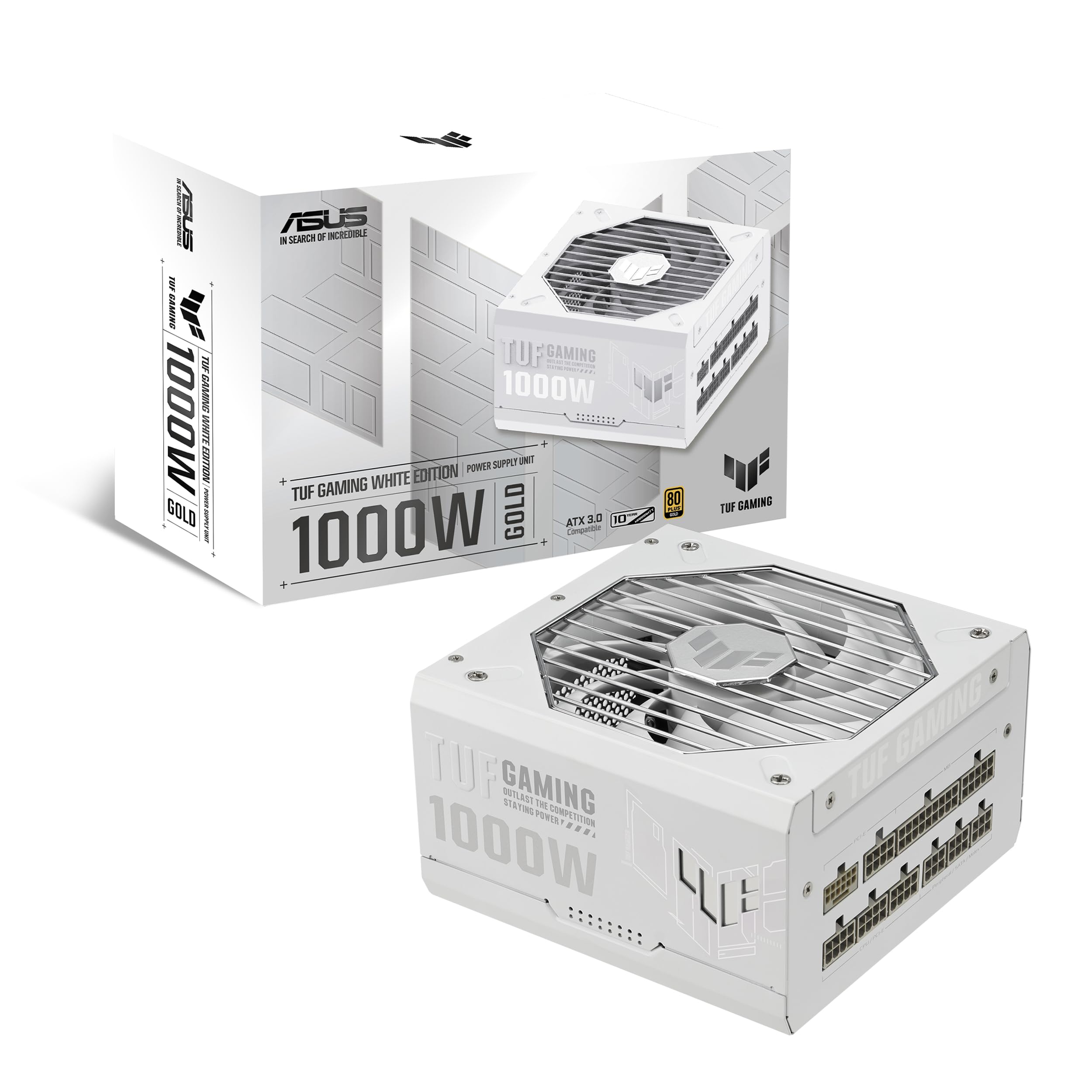 8.5 / 10
TUF Gaming 1000W Gold White Edition (1000 Watt, ATX 3.1 Compatible, Fully Modular Power Supply, 80+ Gold Certified, Military-grade Components, Dual Ball Bearing, PCB Coating, 10 Year Warranty)
£132.07 · ASUS
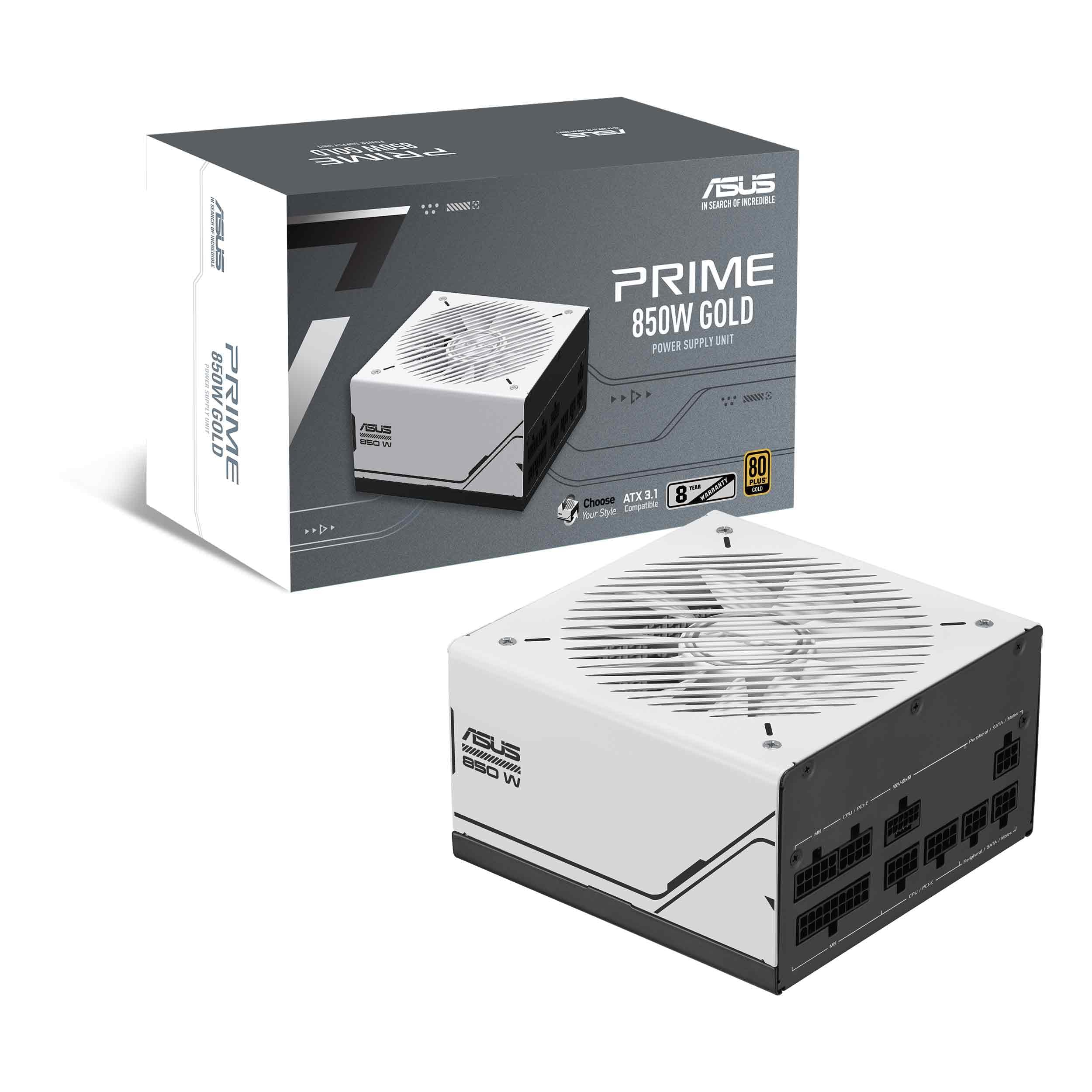 8.5 / 10
Asus Prime 850W Gold Gaming PSU, Double Ball Bearing Fan, Fully Modular, 80+ Gold, ATX 3.0, PCIe 5.0
£104.99 · ASUS
Frequently asked
7 questions01Is the ROG Loki Platinum a good power supply?+
Yes, genuinely. The 80 Plus Platinum efficiency rating, Lambda A+ noise certification from Cybenetics, ATX 3.0 compliance, and Seasonic manufacturing pedigree place it among the better SFX-L units available. The 4.4-star average across 77 owner reviews reflects real-world satisfaction that aligns with the specification. It is not cheap, but it is not overpriced for what it delivers.
02Is the ASUS ROG Loki good for a gaming PC?+
It is designed specifically for high-end compact gaming builds and it delivers on that remit. The ATX 3.0 compliance handles the transient power spikes that modern gaming GPUs produce, the native 16-pin cable connects cleanly to current Nvidia cards without an adapter, and 750W covers everything up to an RTX 4080 paired with a modern CPU comfortably. For a small form factor gaming rig at this wattage, it is one of the stronger options on the market.
03Are ASUS PSUs any good?+
ASUS ROG-branded PSUs have a solid reputation, in large part because they are manufactured by Seasonic rather than assembled in-house. Seasonic is among the most respected PSU OEMs in the industry, known for quality internals and reliable components. The ROG Loki line has been well-received since launch, with no significant reliability concerns visible in the owner review record across Amazon and specialist forums.
04Who makes the ASUS ROG Loki PSU?+
The ROG Loki is widely understood in the enthusiast community to be manufactured by Seasonic, one of the leading PSU OEMs globally. ASUS, like most PC component brands, does not manufacture PSUs in-house; it specifies the design and contracts a specialist OEM to build to those specifications. Seasonic produces PSUs for several major brands and is known for quality construction and careful component selection.
05Who manufactures ASUS power supplies generally?+
ASUS contracts PSU manufacturing to specialist OEMs rather than producing units in-house, which is standard practice across the industry. Corsair, Seasonic, and EVGA all operate similarly. For the ROG Loki range specifically, Seasonic is the widely cited OEM. Other ASUS PSU lines may use different manufacturing partners depending on the product tier.
06What is the difference between SFX and SFX-L power supplies?+
Standard SFX units measure 125mm x 63.5mm x 100mm and typically use a smaller 80mm or 92mm fan. SFX-L units are longer at 130mm depth, allowing space for a full 120mm fan. The larger fan moves more air at lower RPM, which generally means quieter operation and better thermals at higher wattages. The trade-off is that SFX-L units will not fit in cases designed for standard SFX only, so always confirm your case's PSU compatibility before purchasing.
07Does the ROG Loki 750W support PCIe Gen 5 graphics cards?+
Yes. The unit is ATX 3.0 compliant and ships with a native 16-pin PCIe cable rated for up to 600W, which is the correct connector for PCIe Gen 5 graphics cards including current Nvidia Ada Lovelace models. Using a native cable rather than an adapter is the recommended approach for high-power connections. ATX 3.0 compliance also means the PSU is engineered to handle the rapid, high-amplitude power transients that current-generation GPUs can produce.