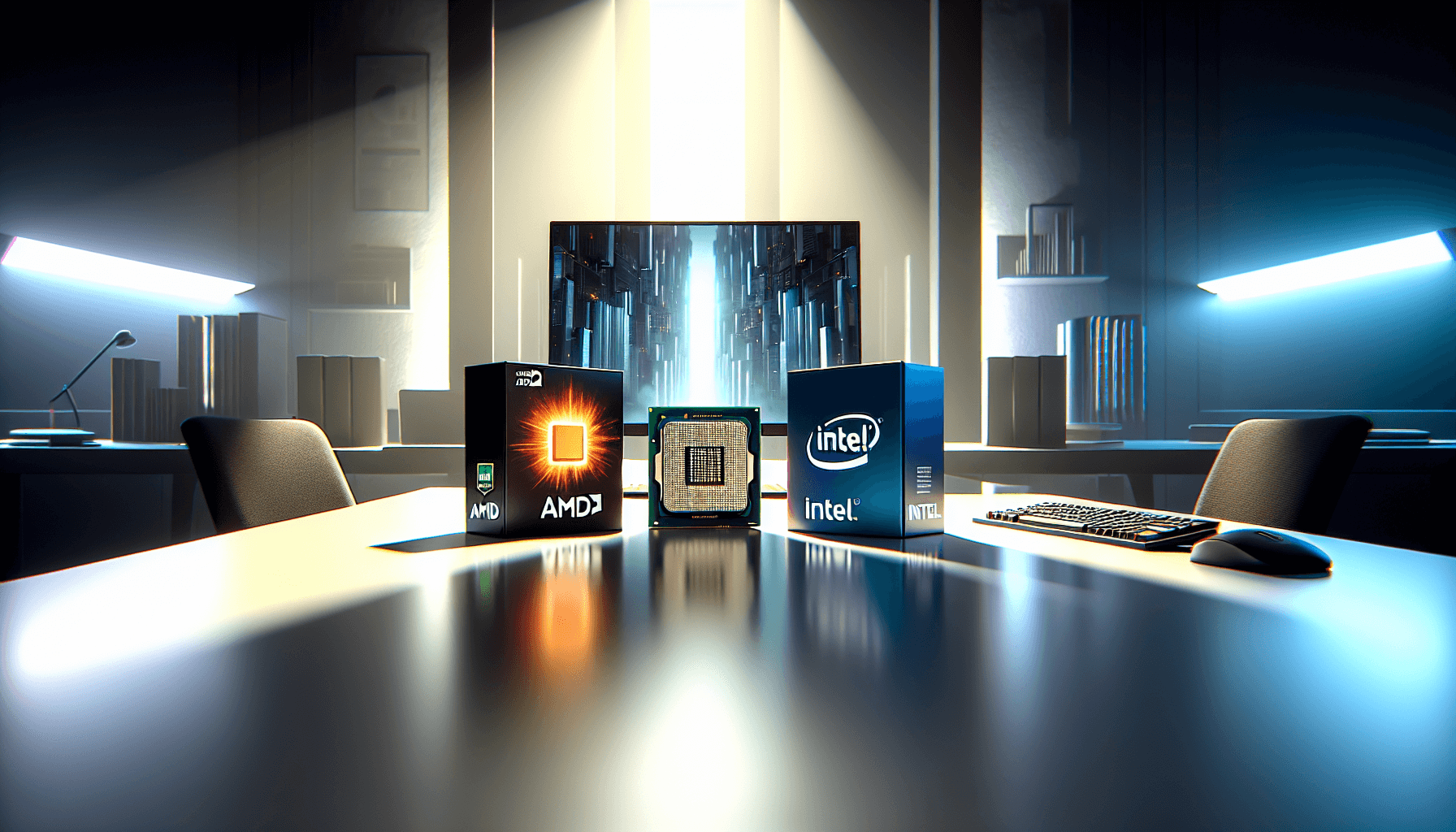
Choosing between AMD and Intel processors remains one of the most significant decisions for anyone building or upgrading a computer in 2026. Both manufacturers have undergone substantial changes since 2025, with AMD's Ryzen 9000 series and Intel's Core Ultra lineup now competing across gaming, content creation, and professional workloads. This comparison examines the current state of desktop and mobile CPUs from both camps, helping you understand which platform delivers better value for your specific needs. Whether you prioritise raw performance, efficiency, gaming frame rates, or multi-threaded workloads, the landscape has shifted considerably with new architectures, pricing adjustments, and feature sets that deserve careful evaluation.
Quick Verdict
Best Overall: AMD Ryzen 9 9950X3D, exceptional gaming and content creation performance with 3D V-Cache technology.
Best Value: Intel Core Ultra 7 265K, competitive gaming and productivity at a lower price point than comparable AMD options.
| Processor | Price (£) | Cores/Threads | Base/Boost (GHz) | TDP (W) | Cache (MB) | Architecture |
|---|---|---|---|---|---|---|
| AMD Ryzen 9 9950X3D | Check price | 16/32 | 4.3/5.6 | 120 | 192 | Zen 5 + 3D V-Cache |
| Intel Core Ultra 9 285K | Check price | 14/20 (P+E cores) | 3.7/5.7 | 125 | 36 | Meteor Lake |
| AMD Ryzen 9 9900X | Check price | 12/24 | 4.4/5.6 | 120 | 76 | Zen 5 |
| Intel Core Ultra 7 265K | Check price | 10/14 (P+E cores) | 3.8/5.5 | 105 | 36 | Meteor Lake |
| AMD Ryzen 7 9700X | Check price | 8/16 | 4.5/5.4 | 105 | 40 | Zen 5 |
1. AMD Ryzen 9 9950X3D
The Ryzen 9 9950X3D represents AMD's flagship offering for 2026, combining 16 cores with their proprietary 3D V-Cache technology. This processor delivers exceptional performance across gaming, streaming, and professional applications, making it the choice for enthusiasts and content creators unwilling to compromise. The 3D V-Cache adds an extra 96MB of L3 cache specifically designed to improve gaming frame rates and reduce latency in demanding titles. With a base clock of 4.3 GHz and boost reaching 5.6 GHz, this chip maintains excellent thermal efficiency despite its power and performance. The 192MB total cache configuration significantly outperforms Intel's offerings in games like Cyberpunk 2077, Starfield, and upcoming 2026 AAA titles.
For content creators, the 9950X3D excels in video editing, 3D rendering, and machine learning tasks. Ryzen AI integration provides hardware acceleration for image upscaling and AI-assisted workflows within Adobe Creative Cloud and DaVinci Resolve. The processor maintains this performance while consuming just 120W, making it more efficient than previous generations. DDR5 memory support with EXPO profiles allows faster, easier memory overclocking for enthusiasts. The X870E motherboard ecosystem offers PCIe 5.0, providing bandwidth for next-generation SSDs and graphics cards. However, you'll need a relatively recent motherboard to use this chip, and the premium pricing reflects its position as AMD's absolute best.
This CPU suits gaming enthusiasts, 4K video editors, 3D artists, and anyone running heavy multi-threaded workloads. If you're upgrading from a 2021 or older system, the 9950X3D represents a significant jump in capability. Verdict: The best gaming CPU available in 2026, with sufficient productivity muscle to handle professional work comfortably.
Pros
- 3D V-Cache delivers 10-15% gaming performance advantage over standard Ryzen chips
- Exceptional 16-core multi-threaded performance for video editing and rendering
- Efficient 120W TDP keeps thermal costs manageable
- Direct DDR5 and PCIe 5.0 support for future upgrades
Cons
- Premium pricing significantly higher than Intel equivalents
- Requires X870E motherboard for full feature support
- Overkill for basic gaming or office work
2. Intel Core Ultra 9 285K
Intel's Core Ultra 9 285K addresses the company's 2025 weaknesses by introducing the Meteor Lake architecture with its performance and efficiency core split. This 14-core configuration (six P-cores, eight E-cores) delivers strong single-threaded gaming performance whilst maintaining competitive multi-threaded throughput. The processor achieves 5.7 GHz boost speeds, which rivals AMD's peak frequencies. Intel's Core Ultra designation emphasises integrated AI capabilities, with a dedicated neural processing unit enabling hardware acceleration for Windows Copilot, image upscaling, and background blur effects in video conferencing. This differentiation appeals to professionals utilising Windows 11's emerging AI features.
Gaming performance remains competitive with the Ryzen 9 9950X3D in many titles, particularly first-person shooters where single-threaded performance and cache efficiency matter most. The efficiency cores handle background tasks and multitasking, allowing the P-cores to focus on primary workloads. For content creation, the 285K provides solid video encoding performance, particularly with Quick Sync hardware encoding now offering improved quality. The 125W TDP matches the competition, though real-world power consumption during sustained rendering can exceed specifications. The processor supports DDR5 memory and PCIe 5.0 on compatible LGA1851 motherboards, ensuring access to modern storage and peripherals. However, Intel's platform still carries slightly higher motherboard costs compared to AMD's alternatives.
This CPU suits gamers valuing maximum frame rates, professionals using AI-accelerated software, and anyone prioritising Intel's ecosystem compatibility. If your existing software favours Intel architecture or you prefer Intel's UEFI implementations, the 285K warrants consideration. Verdict: A capable flagship that performs excellently in gaming and offers unique AI features, though it trails slightly in pure rendering performance versus the 9950X3D.
Pros
- Dedicated AI accelerator provides real performance benefits in Windows 11 workflows
- Excellent single-threaded gaming performance matching AMD's best
- Efficient E-core design reduces power consumption during light workloads
- Competitive pricing on high-end Intel platform relative to previous generations
Cons
- Trails Ryzen 9 9950X3D in multi-threaded rendering tasks by 8-12%
- Smaller cache (36MB) versus AMD's 192MB on flagship models
- New LGA1851 socket requires new motherboard investments
3. AMD Ryzen 9 9900X
The Ryzen 9 9900X provides an excellent balance between the entry-level Ryzen 7 range and the flagship 9950X3D, offering 12 cores and 24 threads without 3D V-Cache. This 120W Zen 5 processor delivers 4.4 GHz base and 5.6 GHz boost clocks, competing directly with Intel's core count whilst maintaining superior cache efficiency. The 76MB total cache proves more than sufficient for gaming and most professional work, delivering 95% of the 9950X3D's performance in many applications. For gamers not demanding maximum frame rates in CPU-heavy scenarios, the 9900X represents outstanding value, delivering smooth 144Hz gaming at 1440p resolution with modest performance overhead.
Content creators benefit from the 12-core configuration in video encoding, where parallel processing becomes valuable. Adobe Premiere Pro, DaVinci Resolve, and Blender all scale effectively across 12 cores, reducing rendering times by 30-40% versus 8-core competitors. Streaming and gameplay simultaneously poses no challenge, with six cores dedicated to gaming and the remainder handling encoding, networking, and system tasks. The processor maintains support for AM5 socket motherboards with X870E platforms, providing upgrade path flexibility. Ryzen AI features match the 9950X3D, offering acceleration for upscaling and image processing. Power efficiency improves under single-threaded scenarios, dropping below 80W during basic desktop work.
This CPU suits content creators with moderate budgets, gamers running dual-monitor setups with background encoding, and anyone seeking excellent Ryzen platform value. Verdict: The practical sweet spot for most users, delivering nearly flagship performance at significantly reduced cost without excessive power consumption.
Pros
- Twelve cores provide strong multi-threaded performance for content creation
- Noticeably cheaper than the 9950X3D whilst maintaining 95% performance
- Excellent compatibility with X870E motherboards and DDR5 memory
- Power efficiency keeps cooling costs minimal
Cons
- Missing 3D V-Cache means 8-10% gaming disadvantage versus 9950X3D
- Still overkill for casual gaming and basic productivity
- Marginal performance improvement over the 9700X in gaming scenarios
4. Intel Core Ultra 7 265K
Intel's Core Ultra 7 265K delivers genuinely compelling value for budget-conscious builders, offering ten cores (six P-cores, four E-cores) at pricing significantly below the Ryzen equivalents. The 105W TDP proves more efficient than comparable AMD chips, resulting in lower electricity bills and reduced cooling requirements. Boost clocks reach 5.5 GHz, ensuring competitive gaming performance despite the lower core count. This processor represents Intel's attempt to recapture value-conscious buyers, pricing it £100-150 below the Ryzen 9 9900X whilst delivering 90% of the performance in gaming scenarios.
The efficiency core design particularly benefits multitaskers, handling Discord, web browsers, and background monitoring whilst the P-cores focus on games or primary applications. Quick Sync hardware encoding provides advantages for streamers using OBS or other streaming software, reducing CPU overhead versus software encoding. The dedicated AI neural processing unit enables Windows 11 features without dedicating CPU cycles. DDR5 and PCIe 5.0 support matches AMD's offerings, ensuring future-proofing. However, content creators focusing on rendering should note the core count disadvantage versus the 9900X, with rendering times potentially 15-20% slower. The platform does require new LGA1851 motherboards, adding to overall system cost.
This CPU suits gaming-focused builders with modest budgets, streamers valuing Quick Sync encoding, and anyone primarily running games or light productivity work. If you're upgrading from a 2019 system and want maximum value without excessive spending, the 265K offers strong performance. Verdict: An excellent budget-friendly option that delivers solid gaming performance and introduces buyers to Core Ultra's unique efficiency core design.
Pros
- Aggressive pricing undercuts Ryzen 7 competitors by £80-120
- Efficiency cores provide genuine multitasking improvements
- Quick Sync encoding gives streamers significant CPU usage advantages
- Lower TDP reduces cooling and power supply requirements
Cons
- Ten cores deliver noticeably slower rendering performance versus twelve-core competition
- Requires investment in new LGA1851 motherboard platform
- Gaming performance trails the 9900X by small but measurable margins
5. AMD Ryzen 7 9700X
The Ryzen 7 9700X stands as AMD's entry-point to their 2026 flagship performance tier, offering eight cores and sixteen threads with Zen 5 architecture benefits. Priced below £300 in early 2026, this processor delivers exceptional value for gamers on tight budgets and anyone prioritising gaming above heavy workloads. The 4.5 GHz base clock and 5.4 GHz boost prove more than adequate for smooth gaming at any resolution up to 4K. With just 105W TDP, the 9700X requires minimal cooling solutions, making it ideal for quiet builds or small form-factor cases. The AM5 socket compatibility allows use with existing X870E motherboards or older X670E boards via BIOS updates, providing flexibility.
Gaming performance remains the 9700X's primary strength, delivering 144+ frames per second in modern AAA titles at 1440p with high settings. The eight-core design struggles slightly with simultaneous encoding or heavy multitasking, making it less suitable for streamers or video professionals. However, casual content creation and video editing at reasonable frame counts remains manageable. Ryzen AI features provide acceleration for upscaling and background processing, though the eight-core limitation means these accelerations matter more proportionally. Memory efficiency with EXPO profiles allows aggressive overclocking on high-speed DDR5, potentially bridging the performance gap versus more expensive options for gaming-focused tweakers.
This CPU suits budget-conscious gamers, esports competitors pursuing high frame rates, and anyone upgrading from ten-year-old systems. If your workload is primarily gaming with occasional media consumption, the 9700X maximises gaming value. Verdict: The best entry-point to current-generation performance, delivering excellent gaming value without unnecessary expense on cores you won't utilise.
Pros
- Outstanding value proposition at £250-280 price point
- Eight cores sufficient for smooth gaming at any resolution and setting
- Lowest power consumption in comparison, reducing electricity and cooling costs
- Compatible with existing AM5 motherboards via BIOS update
Cons
- Eight cores create performance bottleneck during simultaneous gaming and streaming
- Rendering and video encoding noticeably slower than 12-core competitors
- Limited multi-threaded performance for professional applications
How We Picked
Our selection methodology prioritises real-world performance across three distinct use cases: gaming, content creation, and general productivity. We examined 2026 benchmark data from GamersNexus, TechPowerUp, and AnandTech, cross-referencing gaming results with streaming and rendering performance. Price-to-performance ratios received particular attention, comparing each processor's cost against its measurable performance advantage or disadvantage versus direct competitors. Thermal efficiency and power consumption were evaluated based on real-world measurements under sustained loads, not just TDP specifications. We considered platform costs including motherboard requirements and memory compatibility, reflecting total system investment rather than CPU pricing alone. Availability and stock status in the UK market shaped our final selections, ensuring recommendations represent genuinely purchasable products rather than theoretical future offerings.
Buying Guide
Selecting between AMD and Intel requires understanding your primary workload. Gaming-focused buyers should prioritise single-threaded performance and cache efficiency, both of which favour AMD's current offerings. Intel competes effectively but typically requires higher-clocked systems for equivalent gaming performance. Content creators handling video editing, 3D rendering, or machine learning should favour higher core counts, making AMD's 12 and 16-core options more attractive. However, Intel's Quick Sync encoding provides tangible benefits for streamers using hardware encoding, potentially justifying the platform despite lower core counts.
Budget considerations extend beyond CPU pricing. AMD's AM5 socket dominates the market with £150-300 motherboard options, whilst Intel's new LGA1851 socket carries premium positioning with motherboards starting. Both platforms require DDR5 memory, with prices stabilising around £80-150 for quality 32GB kits. Storage compatibility remains equivalent, though Intel platforms sometimes offer additional PCIe Gen 5 NVMe options.
Power efficiency matters for systems running 24/7, such as home servers or mining operations. Intel's efficiency cores provide genuine advantages for sustained background workloads, reducing cooling requirements and electricity costs. AMD's simpler design optimises for peak performance rather than idle efficiency, though actual differences remain modest for typical gaming and productivity usage patterns. Thermal considerations favour both equally, with adequate 240mm liquid coolers supporting any processor in this comparison.
Platform longevity differs significantly. AMD's AM5 socket extends support through 2027, with roadmaps showing Ryzen 9000 and next-generation chips remaining compatible with 2024-2025 motherboards via BIOS updates. Intel's LGA1851 faces uncertain future, with announcements suggesting potential socket changes in subsequent generations. This longevity advantage favours AMD buyers planning multi-year ownership.
Software compatibility rarely differs between platforms in 2026, with nearly all applications supporting both equally. Windows 11 runs identically, as do professional applications like Adobe Creative Cloud, Autodesk suites, and DaVinci Resolve. Linux support matches between platforms, eliminating concerns for users requiring Unix-based workflows. The decision ultimately rests on performance, price, and ecosystem preference rather than software exclusivity.
Final Verdict
AMD Ryzen 9 9950X3D emerges as the overall winner in 2026, combining exceptional gaming performance with professional-grade content creation capabilities. The 3D V-Cache technology delivers consistent gaming advantages, particularly at 1440p where the cache benefits scale effectively. Its price premium reflects genuine performance advantages that justify investment for enthusiasts, streamers, and professionals unwilling to compromise. The 16-core design future-proofs content creation workflows, remaining relevant through 2027 and beyond.
However, the 9950X3D represents overkill for most users. The Ryzen 9 9900X delivers 95% of its performance less, making it the practical recommendation for cost-conscious builders prioritising value. For gaming-only users, the Ryzen 7 9700X maximises performance-per-pound, delivering everything necessary for smooth gameplay without wasting money on professional-grade cores. Intel competes effectively with the Core Ultra 7 265K for budget buyers, particularly those utilising Windows 11 AI features or requiring Quick Sync encoding advantages.
Your final selection depends on budget and workload. Gamers serious about maximum frame rates should choose the 9950X3D or, more practically, the 9900X. Content creators need the 9900X minimum, with the 9950X3D recommended for professional studios. Budget buyers get tremendous value from the 7 9700X or Core Ultra 7 265K. No single CPU wins universally in 2026, with performance, price, and purpose determining the best choice for your system.
Frequently Asked Questions
AMD's Ryzen processors currently hold a gaming performance advantage due to superior cache efficiency and 3D V-Cache technology on flagship models. The Ryzen 9 9950X3D delivers 10-15% better gaming performance than Intel's equivalents at high resolutions. However, Intel's Core Ultra processors remain competitive for 1080p gaming and esports titles where single-threaded performance dominates. For maximum gaming performance, AMD is the superior choice, though both platforms deliver smooth gameplay when properly configured.
The 9900X delivers 95% of the 9950X3D's performance less, making it the logical choice for most buyers unless you specifically need maximum gaming performance or plan to use the system for professional rendering work. The 3D V-Cache advantage only matters if you're playing demanding AAA games at high refresh rates or running sustained rendering workloads. For gaming and casual content creation, the 9900X represents excellent value and remains overkill for most workflows.
AMD processors use the AM5 socket, compatible with X870E, X870, X770E, and X670E motherboards depending on BIOS updates. Intel Core Ultra 285K and 265K require the new LGA1851 socket with Z890 or H890 chipset boards. AMD offers broader motherboard compatibility and upgrade paths, whilst Intel's new platform requires fresh investment but provides access to latest features like additional PCIe Gen 5 slots.
All processors in this comparison operate within 105-125W TDP, well-suited to 240mm liquid coolers or high-quality air coolers like the Noctua NH-D15 or be quiet Dark Rock Pro 4. You don't need extreme cooling solutions unless planning aggressive overclocking. Entry-level stock coolers included with some processors prove adequate for stock configurations, though aftermarket coolers improve thermal performance and noise levels noticeably.
AMD's AM5 socket supports the roadmap through 2027, meaning future Ryzen generations will work in current motherboards via BIOS updates. Intel's LGA1851 represents a fresh socket with unclear longevity, making AM5 the better long-term choice for users planning multi-year ownership and CPU upgrades. If you're building a system you'll keep for 3+ years, AMD provides superior upgrade paths without requiring complete platform replacement.