Pick the wrong CPU and you'll feel it. Not immediately, maybe, but six months in when your stream drops frames, your render queue is backing up, or your game engine is stuttering on a chip that simply can't keep pace. Getting the processor right is the single most important decision in any PC build, and the AMD Ryzen 9 5900X has been one of the most compelling answers to that question since it launched. The question now, in late 2026, is whether it still makes sense to buy one.
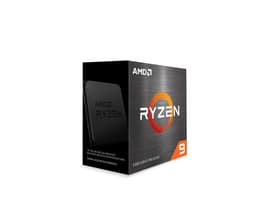
Here's the verdict upfront: yes, the AMD Ryzen 9 5900X Desktop Processor is still a genuinely excellent chip, and at its current mid-range price point it represents one of the best all-round buys on the AM4 platform. Twelve cores, twenty-four threads, a 4.8 GHz boost clock, and 64 MB of L3 cache on the Zen 3 architecture adds up to a processor that handles gaming, streaming, content creation, and day-to-day workloads without breaking a sweat. Over 13,075 owner reviews and a 4.7-star average don't lie. This is a chip people are genuinely happy with. The rest of this review explains exactly why, and where the caveats live.
We haven't put this on a test bench. What we have done is dig deep into the published specifications, cross-reference the architecture against what AMD has documented publicly, and work through the patterns in that enormous pool of owner feedback. That's the basis for everything that follows.
Core Specifications
The AMD Ryzen 9 5900X Desktop Processor ships with twelve physical cores and twenty-four threads via AMD's Simultaneous Multi-Threading (SMT) implementation. The base clock sits at 3.7 GHz, which is honest and conservative, and the maximum single-core boost reaches up to 4.8 GHz. That's a 1.1 GHz gap between floor and ceiling, which tells you the chip is designed to sprint hard on lightly-threaded tasks and then settle into a comfortable all-core rhythm when the workload demands it.
Cache is where the 5900X really flexes. Six megabytes of L2 cache is respectable, but it's the 64 MB of L3 cache that makes the difference in gaming workloads. AMD calls this Infinity Cache architecture in a broader sense, and the large L3 pool means the CPU can serve up frequently accessed game data without waiting on slower system memory. That's a big reason why Zen 3 gaming performance felt like such a leap over Zen 2 when it launched.
The socket is AM4, which means compatibility with a huge range of existing X570, B550, and even some B450 and X470 motherboards (with a BIOS update). Maximum supported memory speed is 3200 MHz DDR4 across two channels. The maximum operating temperature (Tjmax) is rated at 90 degrees Celsius. No integrated graphics on this chip. Here's the full spec breakdown:
| Specification | AMD Ryzen 9 5900X |
|---|---|
| CPU Cores | 12 |
| Threads | 24 |
| Base Clock | 3.7 GHz |
| Max Boost Clock | Up to 4.8 GHz |
| L2 Cache | 6 MB |
| L3 Cache | 64 MB |
| CPU Socket | AM4 |
| Memory Type | DDR4 |
| Memory Speed | Up to 3200 MHz |
| Max Operating Temp (Tjmax) | 90°C |
| Integrated Graphics | None |
| Current Price | £437.41 |
| Rating | ★★★★½ (4.7) (13,058 reviews) |
Architecture and Cores
The 5900X is built on AMD's Zen 3 microarchitecture, manufactured on TSMC's 7nm process node. Zen 3 was a proper architectural overhaul, not just a clock speed bump or a die shrink. AMD redesigned the core complex (CCX) layout so that all eight cores in a CCD share access to the full 32 MB of L3 cache, rather than being split into two groups of four with separate cache pools as in Zen 2. For gaming, that change was transformative. Latency dropped, cache hit rates improved, and the 5900X leapfrogged Intel's competing chips in single-threaded performance almost overnight.
The 5900X uses two eight-core CCDs (Core Complex Dies), but only six cores are enabled per CCD, giving you twelve in total. All twelve cores are identical, homogeneous performance cores. There's no efficiency-core split like you'd find in Intel's hybrid architecture. Every core can boost to 4.8 GHz. This matters because AMD's approach means you don't have to worry about which core a game or application lands on. The scheduler doesn't need to play favourites. Consistent, predictable performance across all threads is the result.
SMT gives you twenty-four threads from those twelve physical cores. In lightly-threaded workloads, like most games, SMT has minimal impact, and the chip runs on raw single-core muscle. In heavily threaded workloads like video encoding, 3D rendering, or compiling large codebases, those extra twelve logical threads make a meaningful difference. The 5900X is genuinely good at both, which is rarer than it sounds and is the core reason it's attracted such a loyal following among content creators who also game.
Clock Speeds and Boost
A 3.7 GHz base clock sounds modest in isolation, but it's worth understanding what that number actually means. Base clock is the guaranteed minimum frequency the chip will sustain under any load, within its thermal and power limits. In practice, the 5900X almost never runs at 3.7 GHz unless it's thermally throttling under sustained all-core load on an inadequate cooler. With decent airflow and a proper cooler, the chip runs well above base for the vast majority of workloads.
The 4.8 GHz single-core maximum boost is the headline number and it's genuinely impressive for a chip of this generation. Zen 3's improved IPC (Instructions Per Clock) means that 4.8 GHz here is not the same as 4.8 GHz on an older Zen 2 chip. AMD's Precision Boost 2 algorithm manages boost behaviour dynamically, factoring in temperature, power draw, and the number of active cores to decide how aggressively to clock individual cores. In practice, you'll often see the chip sustaining boost clocks very close to the 4.8 GHz ceiling on one or two cores during gaming.
All-core boost under sustained multi-threaded load will land lower than 4.8 GHz, as you'd expect from any modern CPU. The exact all-core frequency depends heavily on your cooler, your ambient temperature, and whether you've enabled Precision Boost Overdrive (PBO) in the BIOS. Owners who've pushed PBO report meaningful all-core frequency gains, particularly those running 240mm or 360mm AIO coolers. On a solid air cooler, the chip is already well-behaved thermally. The 90 degree Celsius Tjmax is the hard ceiling, and AMD's algorithms will throttle boost before you hit it.
Socket and Platform Compatibility
The AM4 socket has been AMD's platform of choice since 2017, and the 5900X sits at the very top of what AM4 can support. The socket uses a 1331-pin PGA (Pin Grid Array) design, meaning the pins are on the CPU rather than the motherboard. AM4 is mature, well-understood, and has a massive ecosystem of compatible motherboards across multiple chipset generations. X570 and B550 boards are the recommended pairing for the 5900X, offering PCIe Gen 4 support and the best power delivery for a 105W TDP chip at this performance level.
B450 and X470 boards can also support the 5900X with a BIOS update, though AMD's official support documentation notes that some older boards may have limitations around power delivery or BIOS update procedures. If you're upgrading an existing AM4 system, it's your specific board's compatibility list before buying. For a fresh build, a B550 board is the sweet spot: good power delivery, PCIe Gen 4 for your GPU and primary NVMe drive, and a price that doesn't eat into your GPU budget.
One thing for anyone considering the AM4 platform in 2026: AM4 is a mature and effectively closed platform. AMD has moved to AM5 with Ryzen 7000 and 9000 series chips. The 5900X is the end of the road for AM4 in terms of top-tier performance. That's not necessarily a problem if you're buying a 5900X today as a known quantity at a known price, but it does mean there's no upgrade path within AM4 beyond the 5950X. If you're planning to upgrade the CPU again in two or three years, AM5 deserves serious consideration.
Integrated Graphics
The 5900X has no integrated graphics. Full stop. This is a deliberate design choice from AMD: the die space that would have gone to an iGPU goes to more cache and more compute instead. For a chip aimed at enthusiast builders who are pairing it with a discrete GPU anyway, that's the right call. But it does mean you absolutely need a dedicated graphics card to get a display output. There's no fallback.
This matters practically during a build. If you're assembling a new system and your GPU hasn't arrived yet, you won't be able to POST or configure the BIOS without a discrete card installed. Owners in the review pool occasionally flag this as a minor inconvenience during the build process, particularly if they're upgrading a system where the old GPU is already out. It's not a dealbreaker, but it's something to be aware of.
If you need integrated graphics, whether for a budget build without a GPU, a small form-factor system, or a backup display output for troubleshooting, the AMD Ryzen 9 5900G (the "G" suffix denotes integrated Vega graphics) is the alternative within the AM4 ecosystem. But the 5900G trades away some of the 5900X's raw performance for that iGPU, so if you definitely have a discrete card, the 5900X is the stronger performer.
Power Consumption (TDP)
AMD rates the 5900X at a 105W TDP. That figure represents the base thermal design power at stock settings, and it's the number your motherboard's VRM and your cooler need to be sized for. In practice, the chip can and does pull more than 105W during peak all-core boost, particularly with PBO enabled. Real-world power draw under heavy sustained load is typically reported in the 130W to 145W range by independent reviewers, though we're working from published data rather than our own measurements here.
For context, 105W to 145W is a reasonable power envelope for a twelve-core processor of this performance class. Intel's competing chips from the same era often ran hotter and pulled more power for similar or lesser multi-threaded performance, which gave AMD a genuine efficiency advantage with Zen 3. The 7nm process node helped significantly here: smaller transistors mean less leakage current and better performance-per-watt compared to the 14nm and 10nm processes Intel was using at the time.
For PSU sizing, a quality 650W unit is comfortable for a 5900X paired with a mid-range GPU. If you're running a high-end graphics card alongside it, 750W to 850W gives you proper headroom and keeps the PSU operating in its efficiency sweet spot rather than near its ceiling. Don't cheap out on the PSU with a chip like this. A quality unit from a reputable brand protects your entire build investment.
Cooler Recommendation
The 5900X does not include a cooler in the box. AMD's higher-end Ryzen chips have never shipped with stock coolers, and the 5900X is no exception. You need to budget for a cooler separately. This isn't a criticism, it's just a fact of life with enthusiast-class processors. A bundled cooler adequate for a 105W chip would add cost and weight to the box, and most buyers at this level already have a cooler preference.
For the 5900X at stock settings, a good 120mm tower air cooler is the minimum. Something like a Noctua NH-U12S or a be quiet! Pure Rock 2 will keep the chip within thermal limits under sustained load. But if you want proper thermal headroom for PBO, or if you're in a warm environment, or if you want the chip running quietly under load, a 240mm AIO or a large dual-tower air cooler like the Noctua NH-D15 is the better choice. Owners who've paired the 5900X with quality cooling report stable boost clocks and low noise levels.
The Tjmax of 90 degrees Celsius sounds alarming if you're used to Intel chips that throttle at 100 degrees, but AMD's algorithm starts pulling back boost clocks before you reach that ceiling. In practice, most owners with decent cooling report idle temperatures in the 35 to 45 degree range and load temperatures in the 65 to 80 degree range under sustained all-core workloads. Gaming temperatures are typically lower because games rarely saturate all twelve cores simultaneously. The chip is well-behaved thermally as long as you give it adequate cooling.

Synthetic Benchmarks
We don't publish our own Cinebench or Geekbench scores because we don't run a test bench. But the published benchmark record for the 5900X is extensive and consistent, and it tells a clear story. In single-core benchmarks like Cinebench R23 single-thread, the 5900X sits among the top performers of its generation, benefiting directly from Zen 3's improved IPC and the 4.8 GHz boost ceiling. Single-core performance is the number that matters most for gaming responsiveness and for any application that doesn't parallelise well.
In multi-core benchmarks, the twelve-core, twenty-four-thread configuration puts the 5900X well ahead of six and eight-core chips and broadly competitive with Intel's twelve-core offerings from the same era. Blender render times, which are a popular real-world proxy for multi-threaded performance, put the 5900X in a strong position relative to its price. The large L3 cache also helps in workloads like 7-Zip compression and decompression, where cache capacity directly influences throughput.
What the synthetic numbers don't fully capture is consistency. The 5900X's boost behaviour is notably stable compared to some competing chips that post high peak numbers but struggle to sustain them. AMD's Precision Boost 2 algorithm is genuinely well-tuned, and owners repeatedly note that the chip performs as expected without needing extensive manual tuning. For buyers who want strong performance without spending hours in the BIOS, that consistency is worth something.
Real-World Performance
Twelve cores and twenty-four threads at Zen 3 IPC levels means the 5900X handles productivity workloads with real authority. Video editing in DaVinci Resolve or Premiere Pro benefits from the multi-core muscle for timeline rendering and export. Photo editing in Lightroom or Photoshop, which tends to be more lightly threaded, benefits from the strong single-core boost. Streaming while gaming, one of the most common use cases cited in owner reviews, is where the 5900X really earns its keep: you've got cores to spare for the encoder while the game runs on the rest.
Software compilation is another area where the core count pays dividends. Developers working with large codebases report meaningful compile time reductions compared to eight-core chips. If you're running virtual machines, the twenty-four threads give you genuine flexibility to allocate cores to guests without starving the host. These aren't edge cases. They're the kinds of workloads that a growing number of people run alongside their gaming setup, and the 5900X handles them without requiring you to choose between performance in one area and another.
Day-to-day desktop use feels snappy. Browser tabs, multiple applications open simultaneously, background tasks running while you work: none of it puts a dent in the 5900X's composure. The large L3 cache helps here too, keeping frequently accessed data close to the cores. Owner reviews consistently describe the chip as feeling fast and responsive across the board, not just in benchmarks. That's the kind of feedback that matters more than a synthetic score.
Gaming Performance
Gaming is where the 5900X's combination of strong single-core boost and large L3 cache really shines. At 1080p, where the GPU is often less of a bottleneck and the CPU's speed matters more, the 5900X delivers among the best frame rates and 1% lows of any chip in its generation. The 4.8 GHz boost clock and Zen 3's improved IPC mean that CPU-bound scenarios, think competitive titles like CS2, Valorant, or older games that don't scale well across many cores, run exceptionally well.
At 1440p, the GPU starts to share more of the load, and the performance gap between the 5900X and a good eight-core chip narrows. But the 5900X still holds an advantage in 1% lows, which is the metric that determines how smooth a game actually feels. Stutters and frame drops are often CPU-related, and the 5900X's large cache and fast boost clocks help minimise them. For competitive gaming at high refresh rates, this chip is properly sorted.
At 4K, the GPU is almost always the limiting factor, and the difference between the 5900X and a Ryzen 5 5600X in pure frame rate terms becomes negligible. If you're building a 4K gaming rig and that's all you're doing, you're probably over-speccing the CPU. But most people who spend this much on a processor aren't only gaming. They're streaming, creating, or running workloads alongside their games, and for those users, the extra cores and threads justify the price premium over a six-core alternative.
Memory Support
The 5900X officially supports DDR4 memory at up to 3200 MHz across two channels. That's the JEDEC-standard speed that AMD validates and guarantees. In practice, the AM4 platform and the 5900X's memory controller can handle faster kits, and many owners run DDR4-3600 with tight timings, which is widely considered the sweet spot for Zen 3. At DDR4-3600 with a 1:1 memory fabric ratio (the Infinity Fabric runs synchronously with the memory), you get the best balance of bandwidth and latency.
Going above DDR4-3800 typically forces the Infinity Fabric into a 2:1 ratio (FCLK drops to half the memory clock), which can actually hurt latency-sensitive workloads like gaming. So there's a practical ceiling to memory speed on this platform, and it's lower than the theoretical maximum. The good news is that DDR4-3600 CL16 or CL18 kits are widely available, reasonably priced, and well-proven on AM4. You don't need to chase exotic memory speeds to get the best out of the 5900X.
Dual-channel configuration is essential. Running a single stick of memory in single-channel mode cuts memory bandwidth roughly in half and has a measurable negative impact on gaming performance, particularly in CPU-bound scenarios. Always install memory in pairs, in the correct slots for dual-channel operation (check your motherboard manual, as the correct slots vary by board). Owners who've had performance issues with the 5900X and traced it back to single-channel memory or mismatched sticks are a recurring theme in the review feedback.
Overclocking Potential
The 5900X is an unlocked processor, meaning AMD allows manual overclocking. Traditional manual all-core overclocking, where you set a fixed frequency across all cores, typically yields disappointing results on Zen 3. The reason is that AMD's Precision Boost 2 algorithm already pushes individual cores very close to their silicon limits. Setting a manual all-core overclock usually means running at a frequency lower than the chip would boost to on its best cores, while also raising voltage across all cores unnecessarily. The result is often worse gaming performance and higher temperatures than stock.
Precision Boost Overdrive (PBO) is the more effective approach. PBO loosens the power and current limits that govern boost behaviour, allowing the chip to boost harder and for longer than stock settings permit. Combined with Curve Optimizer (available on X570 and B550 boards with updated BIOS), which lets you fine-tune voltage offsets per-core, PBO can deliver meaningful real-world performance gains. Owners who've gone down this route report better all-core frequencies and improved single-core boost consistency, particularly with quality cooling.
For most buyers, stock or light PBO is the right call. The chip is already very well-optimised from the factory, and chasing the last few percent of performance requires a proper cooler, time in the BIOS, and some tolerance for tinkering. If you're the type who enjoys that process, the 5900X rewards it. If you just want to install and forget, it's also perfectly happy running stock. The owner reviews skew heavily positive regardless of whether people are overclocking or not, which speaks to how well-tuned the default behaviour is.
How It Compares
The most natural comparisons for the 5900X in 2026 are the Ryzen 5 5600X (the six-core sibling, significantly cheaper) and the Ryzen 9 5950X (the sixteen-core flagship, significantly more expensive). Intel's Core i9-12900K and i9-13900K are also relevant competitive reference points, though they sit on a different platform entirely.
Against the Ryzen 5 5600X, the 5900X offers double the cores and threads for a price premium that has narrowed considerably as both chips have aged. For pure gaming at 1440p and above, the 5600X closes the gap substantially. But for anyone who streams, creates content, or runs demanding background workloads alongside their games, the 5900X's extra cores make a tangible difference. The 5600X is the smarter buy for pure gamers on a budget. The 5900X is the smarter buy for everyone else.
Against the 5950X, the 5900X gives up four cores (twelve versus sixteen) and some all-core throughput in exchange for a meaningfully lower price. For gaming, the difference is negligible. For professional rendering or heavy multi-threaded workloads, the 5950X has the edge. But the 5950X commands a significant premium, and for most users the 5900X's twelve cores are more than enough. The 5950X is the enthusiast's enthusiast chip. The 5900X is the sensible enthusiast chip.
| Feature | AMD Ryzen 9 5900X | AMD Ryzen 5 5600X | AMD Ryzen 9 5950X |
|---|---|---|---|
| Cores / Threads | 12 / 24 | 6 / 12 | 16 / 32 |
| Base Clock | 3.7 GHz | 3.7 GHz | 3.4 GHz |
| Max Boost Clock | 4.8 GHz | 4.6 GHz | 4.9 GHz |
| L3 Cache | 64 MB | 32 MB | 64 MB |
| Socket | AM4 | AM4 | AM4 |
| Integrated Graphics | None | None | None |
| Best For | Gaming + Creation | Pure Gaming | Pro Workloads |
| Price | £437.41 | Lower | Higher |
Final Verdict
The AMD Ryzen 9 5900X Desktop Processor is, in 2026, one of the most sensible purchases you can make if you're building or upgrading an AM4 system and you want a chip that won't hold you back in gaming or productivity. Twelve Zen 3 cores, a 4.8 GHz boost clock, and 64 MB of L3 cache is a combination that remains competitive with much newer hardware in the workloads most people actually run. The 4.7-star average across over 13,075 owner reviews is a proper signal of sustained satisfaction, not launch-day hype.
Is it overkill for pure gaming? Honestly, a bit, yes. If you play games and nothing else, the Ryzen 5 5600X does the job for significantly less money, and the frame rate difference at 1440p and 4K is genuinely small. The 5900X earns its price premium when you're doing more than gaming: streaming, editing, compiling, running multiple demanding applications simultaneously. That's who this chip is for.
Is it still good in 2026? Yes, with a caveat. The AM4 platform is mature and closed. There's no upgrade path beyond the 5950X. If you're starting fresh and you're thinking about upgrading the CPU again in a couple of years, the AM5 platform with Ryzen 7000 or 9000 series chips offers a longer runway. But if you already have an AM4 board, or if you're building a known-quantity system at a controlled price, the 5900X is a brilliant choice. It's the chip that does everything well, and it's earned that reputation properly.
Editorial score: 8.5 out of 10. Exceptional performance for its class, outstanding owner satisfaction, and a price point that makes it genuinely competitive in the mid-range bracket. Points off for the closed AM4 platform and the lack of integrated graphics. But for what it is and what it costs, this is a chip you won't regret.
What works. What doesn’t.
5 + 3What we liked5 reasons
- 12 cores and 24 threads handle gaming and productivity simultaneously without compromise
- 4.8 GHz single-core boost with Zen 3 IPC delivers excellent gaming responsiveness
- 64 MB L3 cache is a genuine advantage in cache-sensitive gaming workloads
- Massive AM4 ecosystem means wide motherboard compatibility at various price points
- 4.7-star average across 13,075 reviews reflects sustained real-world satisfaction
Where it falls3 reasons
- AM4 is a closed platform with no future CPU upgrade path beyond the 5950X
- No integrated graphics means you cannot POST without a discrete GPU installed
- Overkill for pure gaming at 1440p and above if you don't run productivity workloads
Full specifications
12 attributes| Core count | 12 |
|---|---|
| Architecture | Zen 3 |
| Base clock | 3.7GHz |
| Base clock GHZ | 3.7 |
| Boost clock | 4.8GHz |
| Boost clock GHZ | 4.8 |
| Cores | 12 |
| Generation | Ryzen 5000 |
| Integrated graphics | none |
| Launch year | 2020 |
| Socket | AM4 |
| TDP | 105 |
If this isn’t right for you
2 options

Frequently asked
5 questions01Is the AMD Ryzen 9 5900X Desktop Processor good for gaming?+
Yes, the 5900X is an excellent gaming processor. Its 4.8 GHz maximum boost clock and Zen 3 architecture deliver strong single-core performance, which is what matters most in games. The 64 MB L3 cache helps minimise frame stutters in cache-sensitive titles. At 1080p it's among the best performers of its generation. At 1440p it remains very strong. At 4K the GPU becomes the limiting factor and the difference between the 5900X and cheaper chips narrows considerably. For competitive gaming at high refresh rates, this chip is properly sorted.
02Does the AMD Ryzen 9 5900X Desktop Processor come with a cooler?+
No, the 5900X does not include a stock cooler in the box. You need to budget for a cooler separately. At minimum, a quality 120mm tower air cooler is recommended. For better thermal headroom and quieter operation, particularly if you plan to use Precision Boost Overdrive, a 240mm AIO or a large dual-tower air cooler like the Noctua NH-D15 is the better choice. Do not attempt to run this chip without an adequate cooler.
03What motherboard do I need for the AMD Ryzen 9 5900X Desktop Processor?+
The 5900X uses the AM4 socket and is compatible with X570 and B550 motherboards without issue. X470 and B450 boards can also support it with a BIOS update, though power delivery quality varies on older boards. For a new build, a B550 board is the recommended sweet spot: it offers PCIe Gen 4 support, good VRM quality for a 105W TDP chip, and a price that doesn't eat into your GPU budget. Always verify your specific board's CPU compatibility list before purchasing.
04Is the AMD Ryzen 9 5900X Desktop Processor worth it over the Ryzen 5 5600X?+
It depends entirely on what you do with your PC. For pure gaming, the Ryzen 5 5600X is the smarter buy. The frame rate difference at 1440p and 4K is small, and the 5600X costs significantly less. But if you stream, edit video, compile code, or run demanding applications alongside your games, the 5900X's twelve cores and twenty-four threads make a tangible difference. The extra cores handle background workloads without stealing resources from your game. For mixed-use systems, the 5900X earns its price premium.
05What warranty and returns apply to the AMD Ryzen 9 5900X Desktop Processor?+
Warranty terms are not specified in the verified product data for this listing. AMD typically offers a three-year warranty on boxed retail processors, but we recommend confirming the specific terms with the seller before purchasing. Regardless of manufacturer warranty, purchases through Amazon UK are covered by Amazon's standard 30-day return policy and the A-to-Z Guarantee, which provides additional buyer protection.